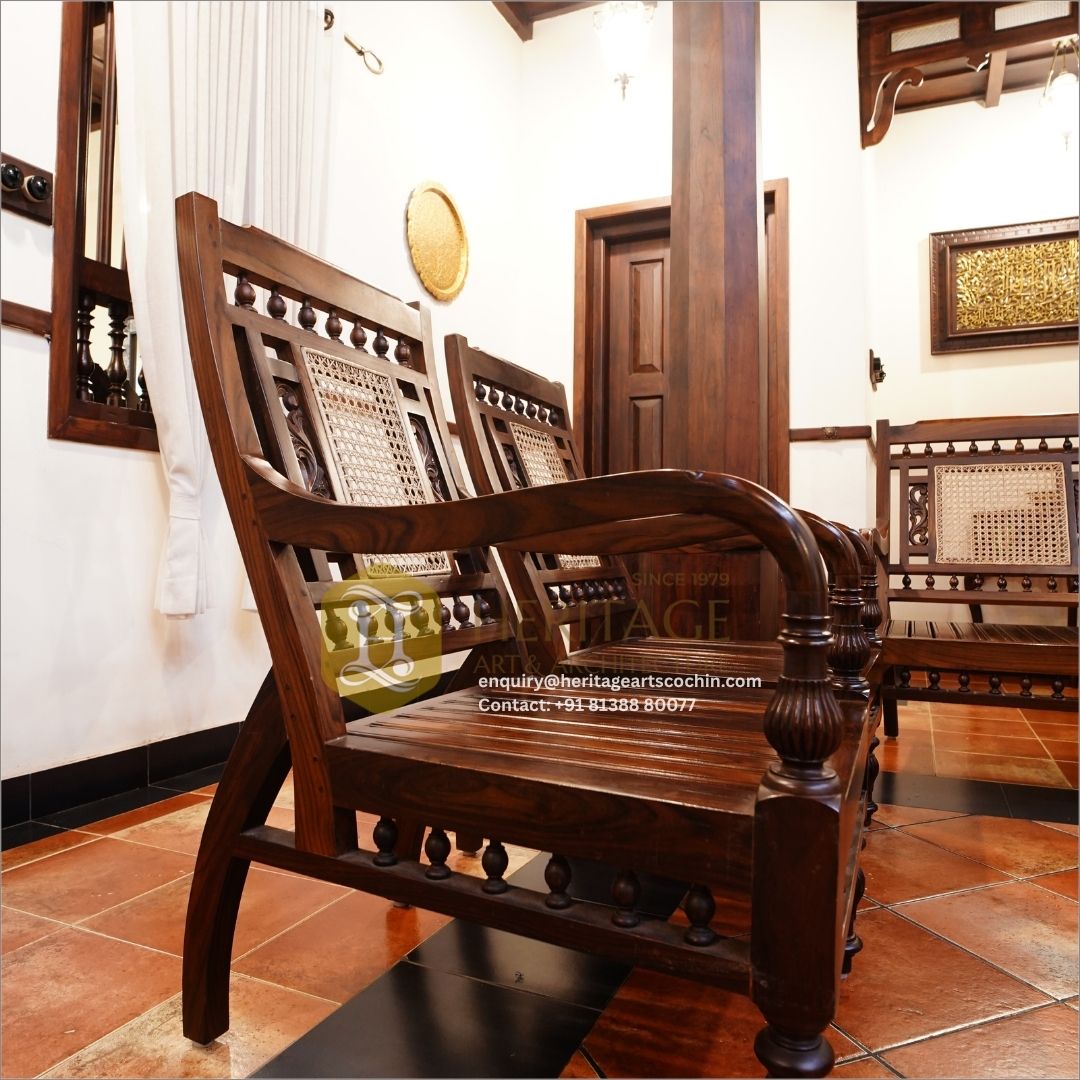
Whether placed in a colonial bungalow or a modern heritage home, the Mandira Ensemble transforms living spaces into chambers of dialogue, tradition, and timeless beauty. Every joint and curve is a tribute to skilled artisans who carve not just wood—but stories.
| Part | English Name | Malayalam Name | Meaning & Notes |
|---|---|---|---|
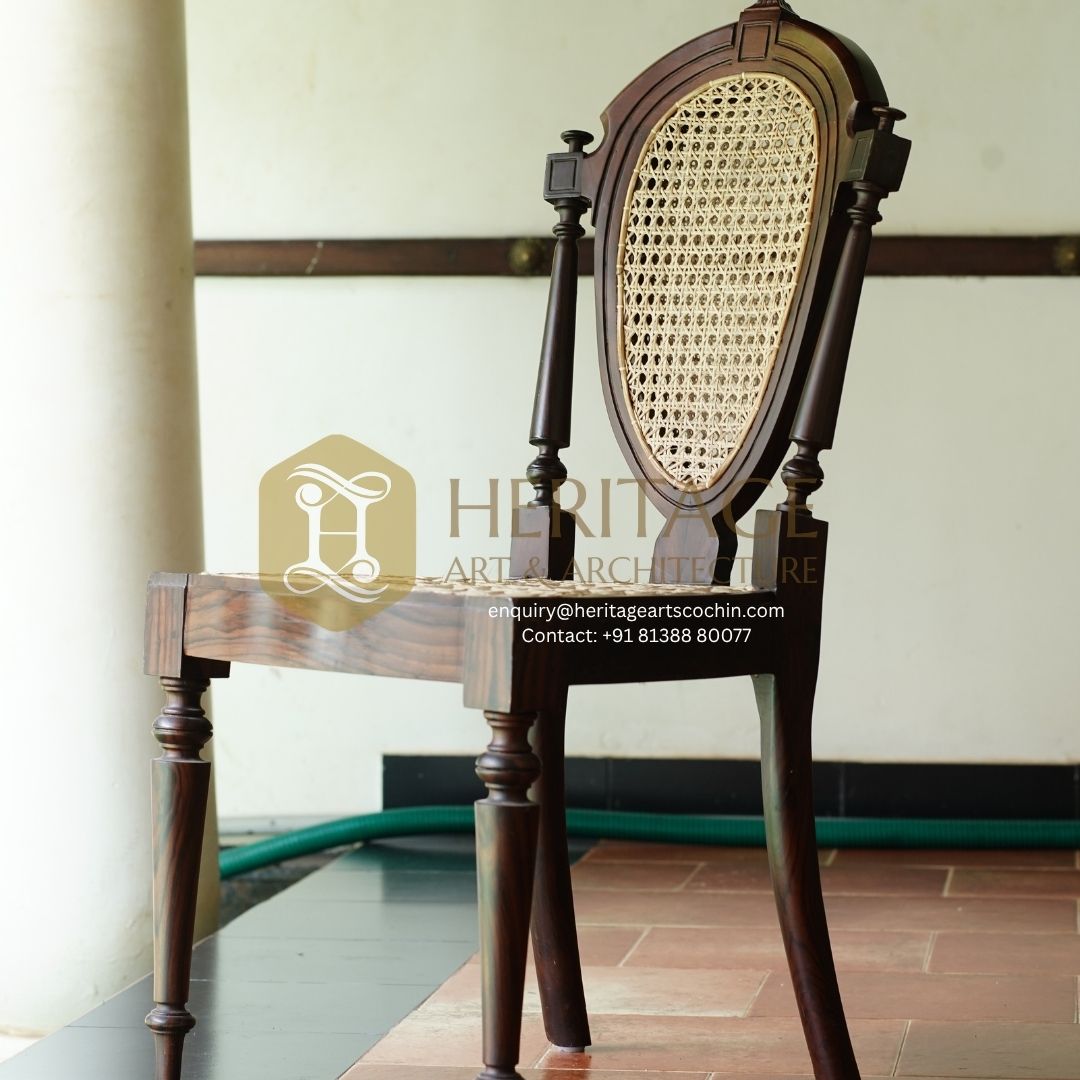
| Backrest Frame | Temple Crown | ശിരോവളം (Śirōvalam) | Tall, sculpted frame like the ornamental backrest seen in pooja manchams or thrones. |
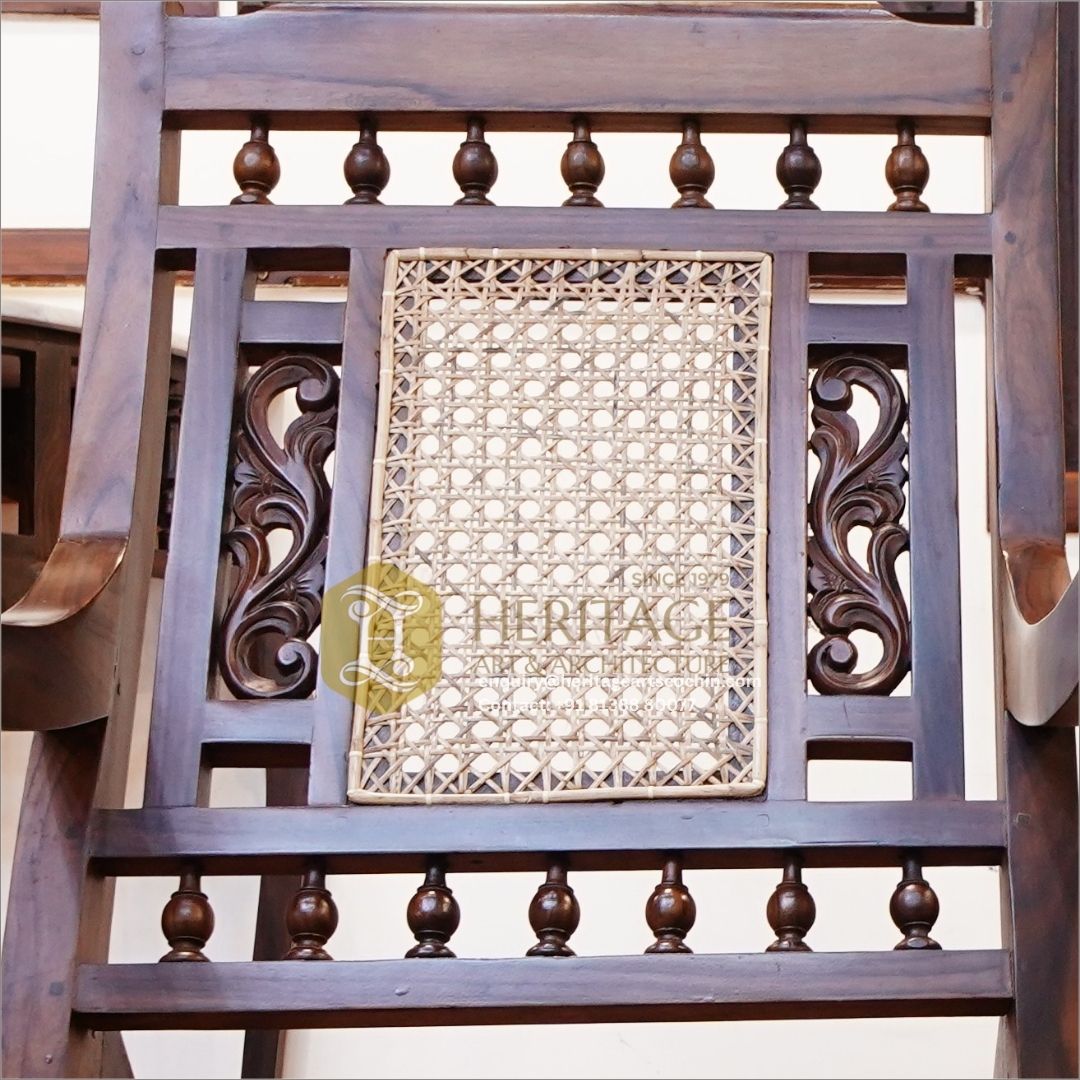
| Cane Panel | Soul Weave | നൂൽമുഖം (Nūlmukham) | Woven cane pattern breathes lightness into solid structure; represents legacy. |
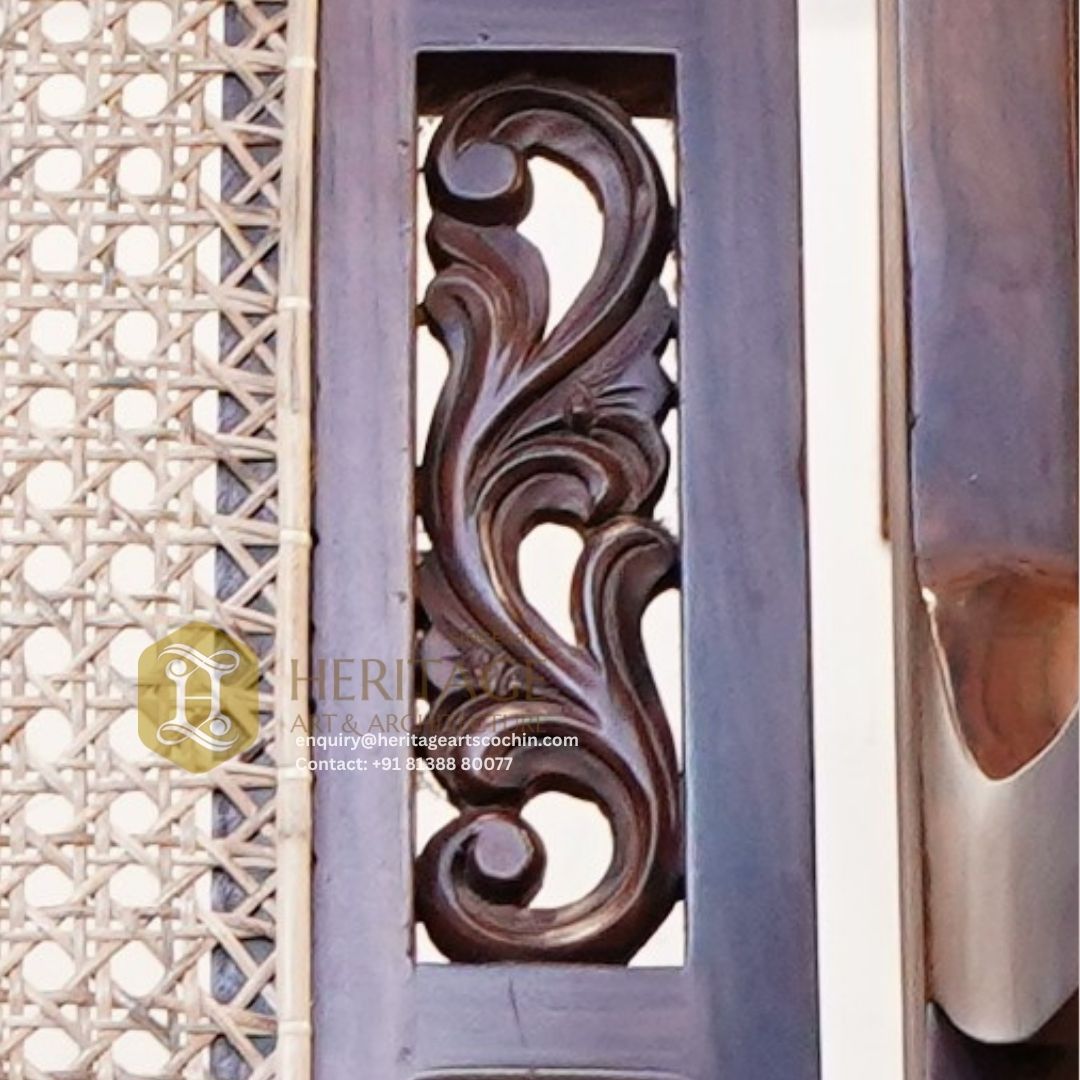
| Scroll Panels | Heritage Scrolls | ശില്പരേഖ (Śilparekha) | Intricate scrollwork symbolizing flowing art and rhythm, present on either side. |
| Spindle Railing | Garland Spindles | മണിമാല (Maṇimāla) | Turned spindles along the top and base—like festive beaded garlands. |
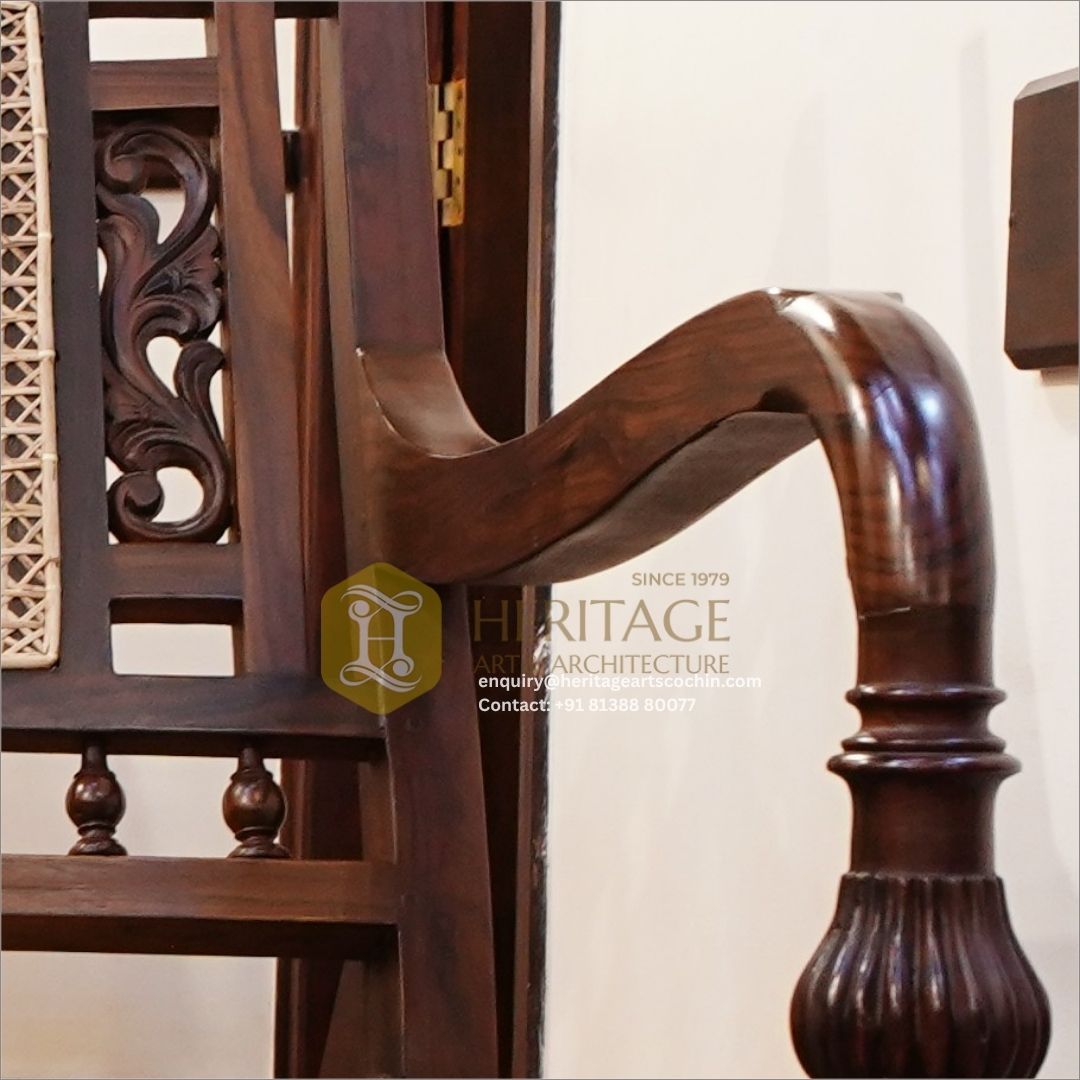
| Armrests | Swan Arches | ഹംസചാലുകൾ (Haṁsa Chālukaḷ) | Flowing armrests mimicking the graceful arc of a swan’s neck—inviting and elegant. |
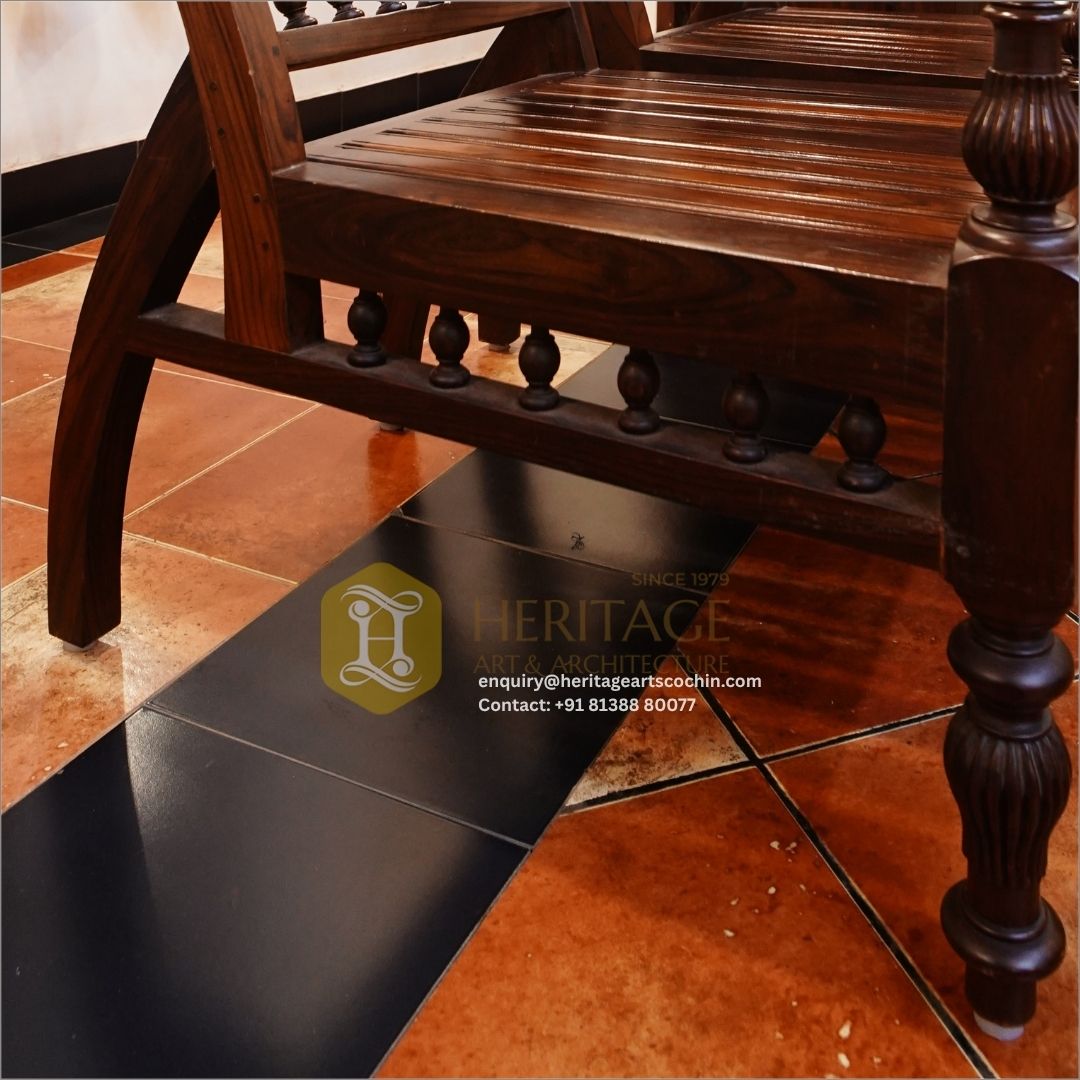
| Seat (Planked) | Royal Deck | അധിരോഹപീഠം (Adhirōhapīṭham) | Slatted seat crafted for breathability and firmness, echoing traditional thrones. |
| Legs | Temple Pillars | സ്തംഭങ്ങൾ (Stambhaṅṅaḷ) | Tiered, fluted, and firm—like the columns of Nalukettu courtyards. |
| Feet/Base Ends | Lotus Footing | താമരക്കാൽ (Tāmarakkāl) | Rounded leg ends symbolizing the lotus bloom—cultural beauty and grounding. |