1. Crown Deck – “Melpadam” (മേൽപടം)
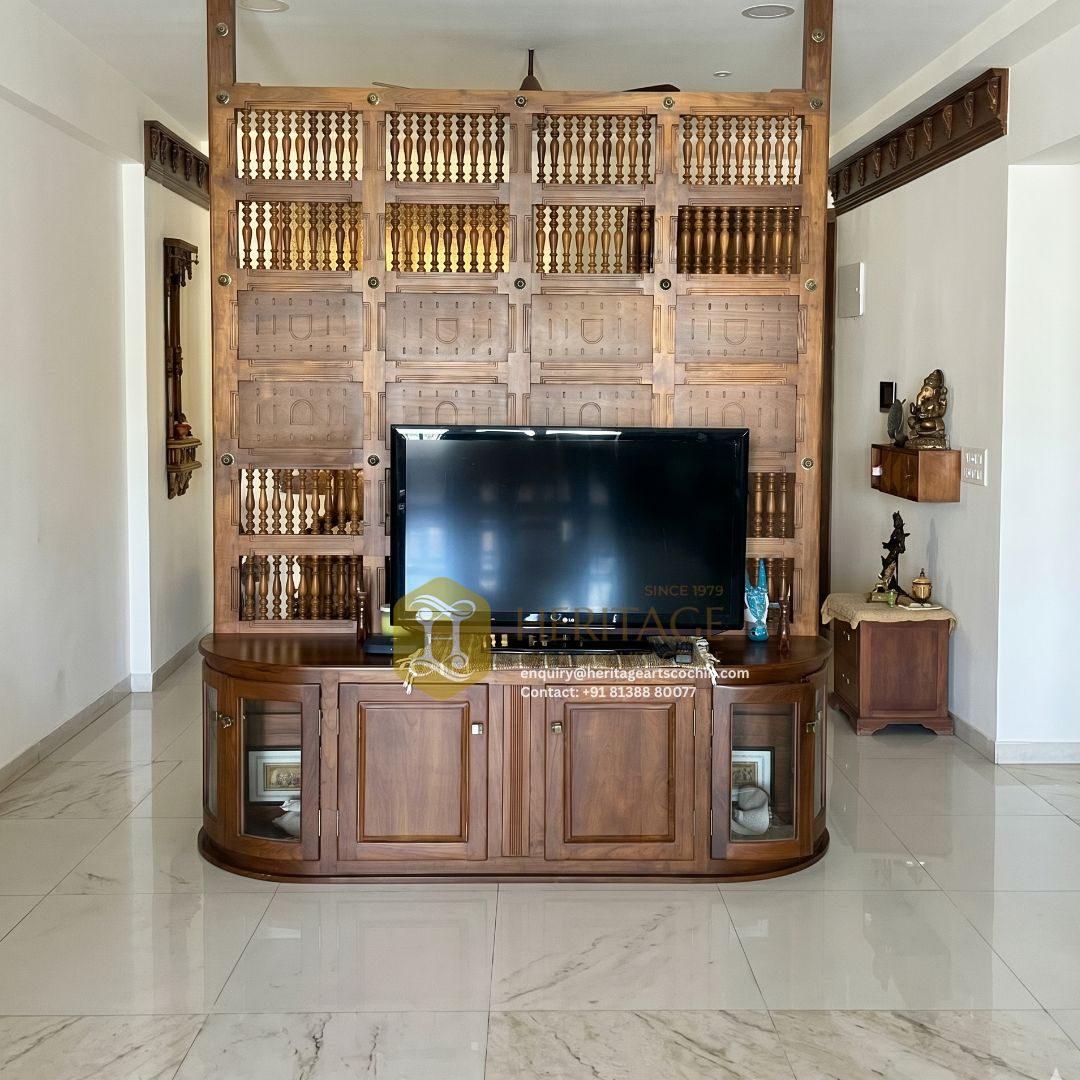
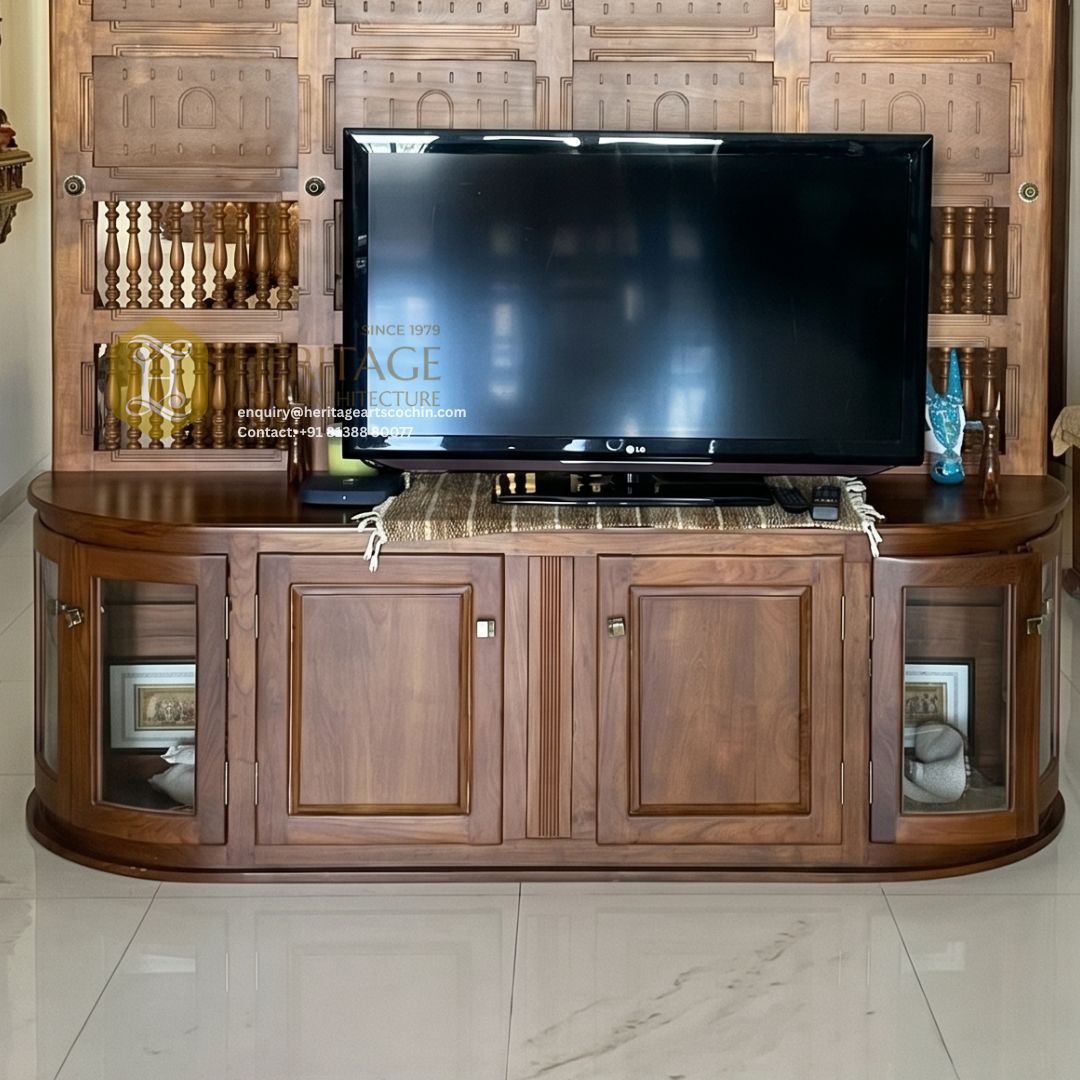
The broad upper surface of the unit where the television rests, flanked by minimal detailing.
Purpose: Serves as the primary visual anchor — a ceremonial top like the capstone of a sanctum, ideal for screens, sculptures, or idols.
2. Central Shutter Cabinets – “Nimisha Chaarth” (നിമിഷ ചാർത്ത്)
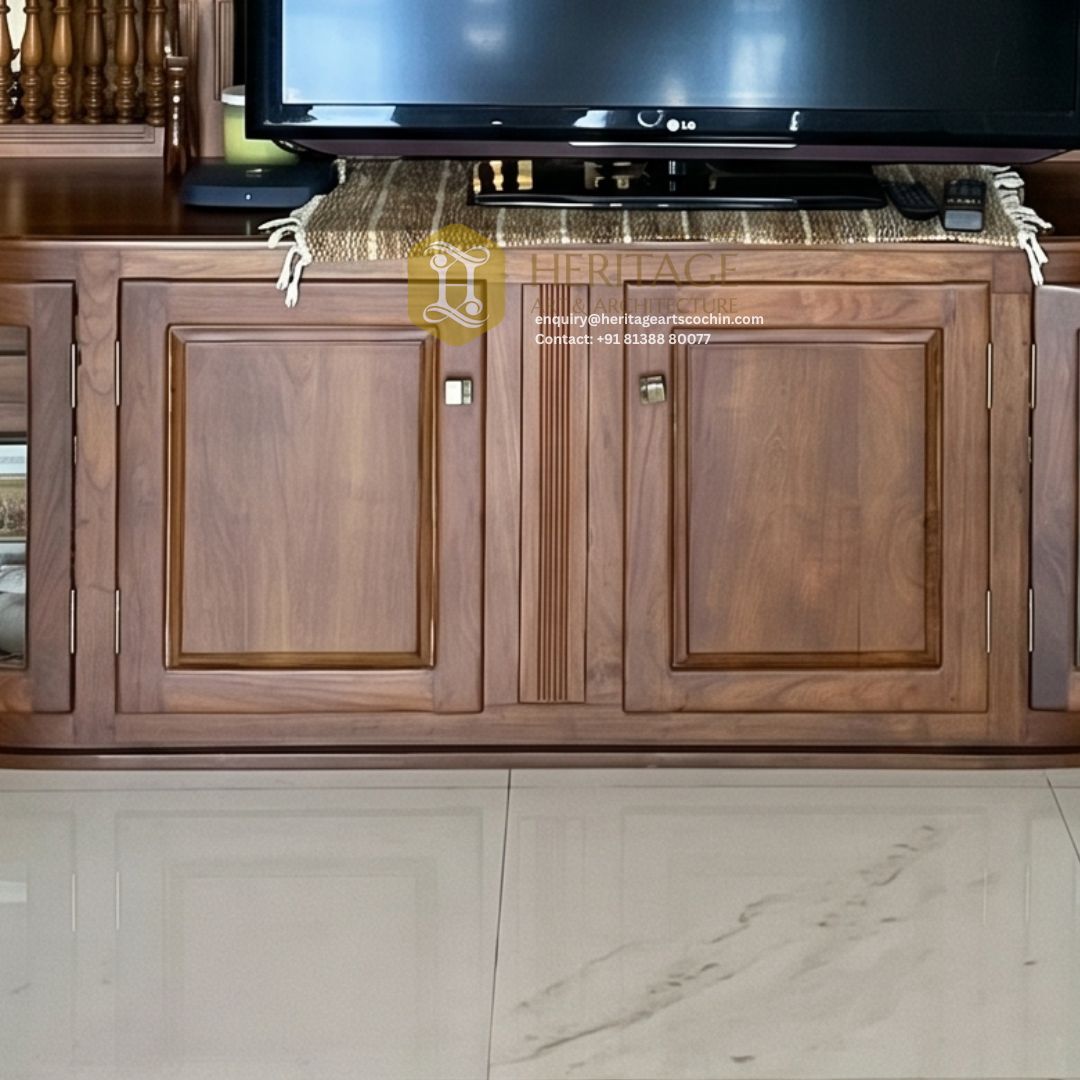
Grooved double-door compartments with subtle vertical lines, echoing the rhythm of temple shutters.
Purpose: Offers concealed storage for devices, books, or pooja items — its design pattern subtly mirrors the cadence of sacred time cycles (Nimisham).
3. Side Display Cabinets – “Aarha Petti” (ആര്ഹ പെട്ടി)
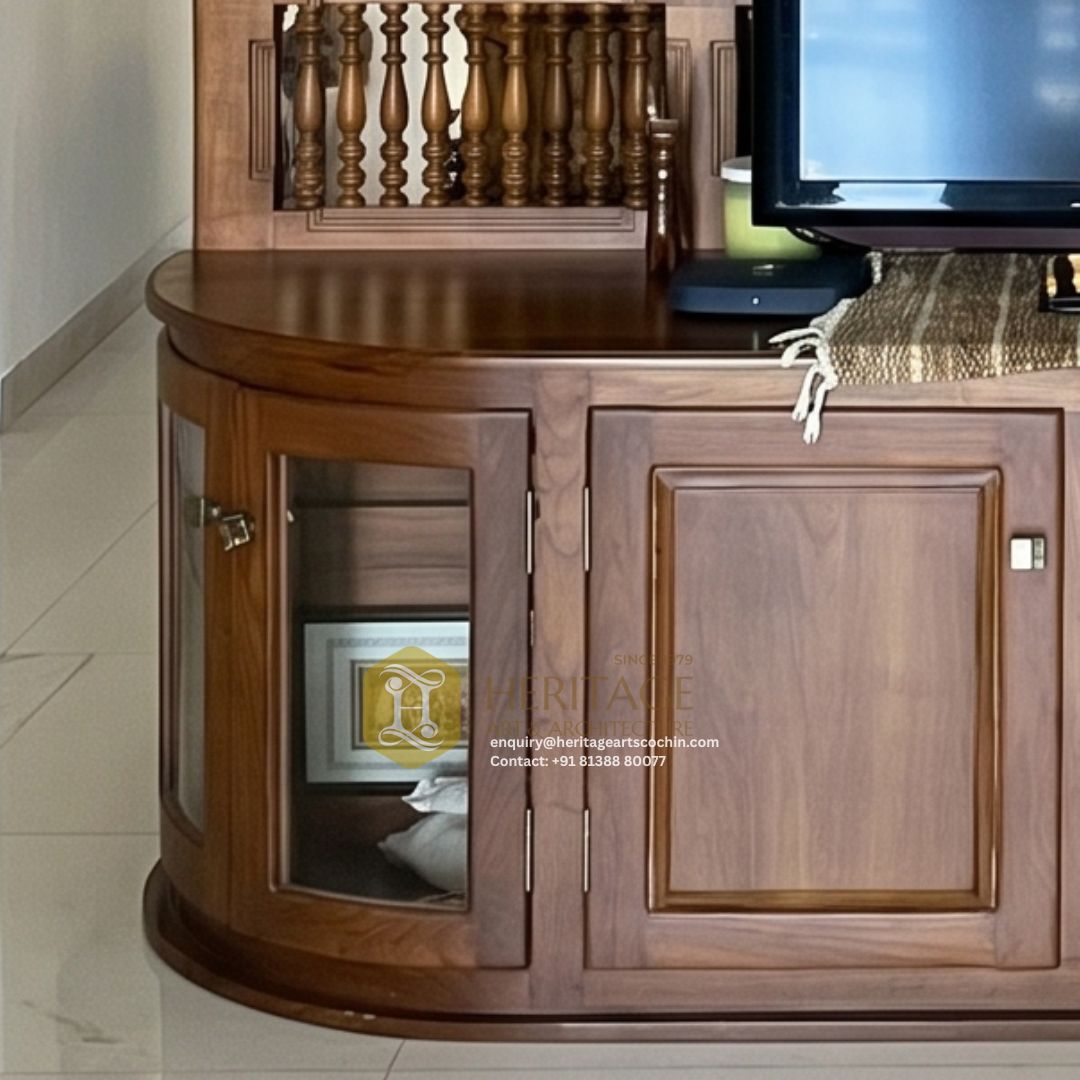
Gracefully curved, glass-fronted cabinets on either side — blending openness with enclosure.
Purpose: Designed for showcasing revered objects or artifacts, this chamber-like form honors what is placed within — sacred or storied.
4. Drawer Handles – “Chathura Mudra” (ചതുരമുദ്ര)
Square-shaped metal knobs with defined edges, evoking geometric mudras of temple dance and sculpture.
Purpose: A gesture of welcome — allowing touch to meet tradition through a precisely shaped point of entry.
5. Base Platform – “Thala Peetam” (തള പീഠം)
A slightly elevated, full-length wooden footing beneath the cabinet body.
Purpose: Grounds the unit like a temple plinth — providing stability, elevation, and architectural authority.
Craftsmanship & Legacy
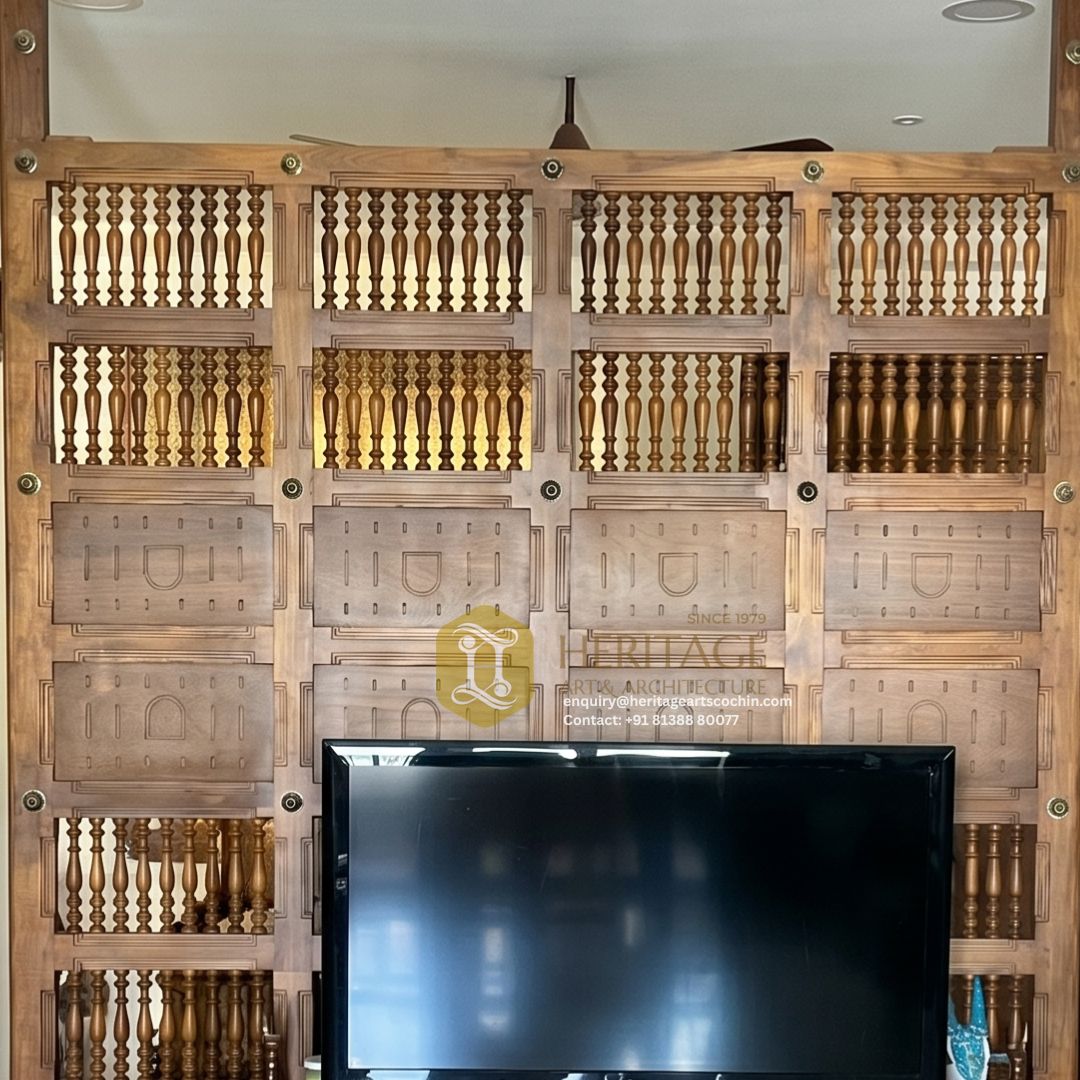
Built from seasoned Thekku (തേക്ക്), Mandira Vedika reimagines the principles of sacred South Indian architecture into a living room format. From the Chathura Mudra handle to the Raaga Vēli above, every detail reflects the rhythm of Kerala’s devotional design language.
It’s not merely a media console — it’s a curated stage for your home’s rituals, memories, and reflections.
Ideal Setting
Pair the Mandira Vedika with antique brass lamps, mural backdrops, or tulsi planters. Perfect for pooja corners, heritage-themed living rooms, or vastu-aligned walls — where the past speaks softly through teak, and the present listens in silence.