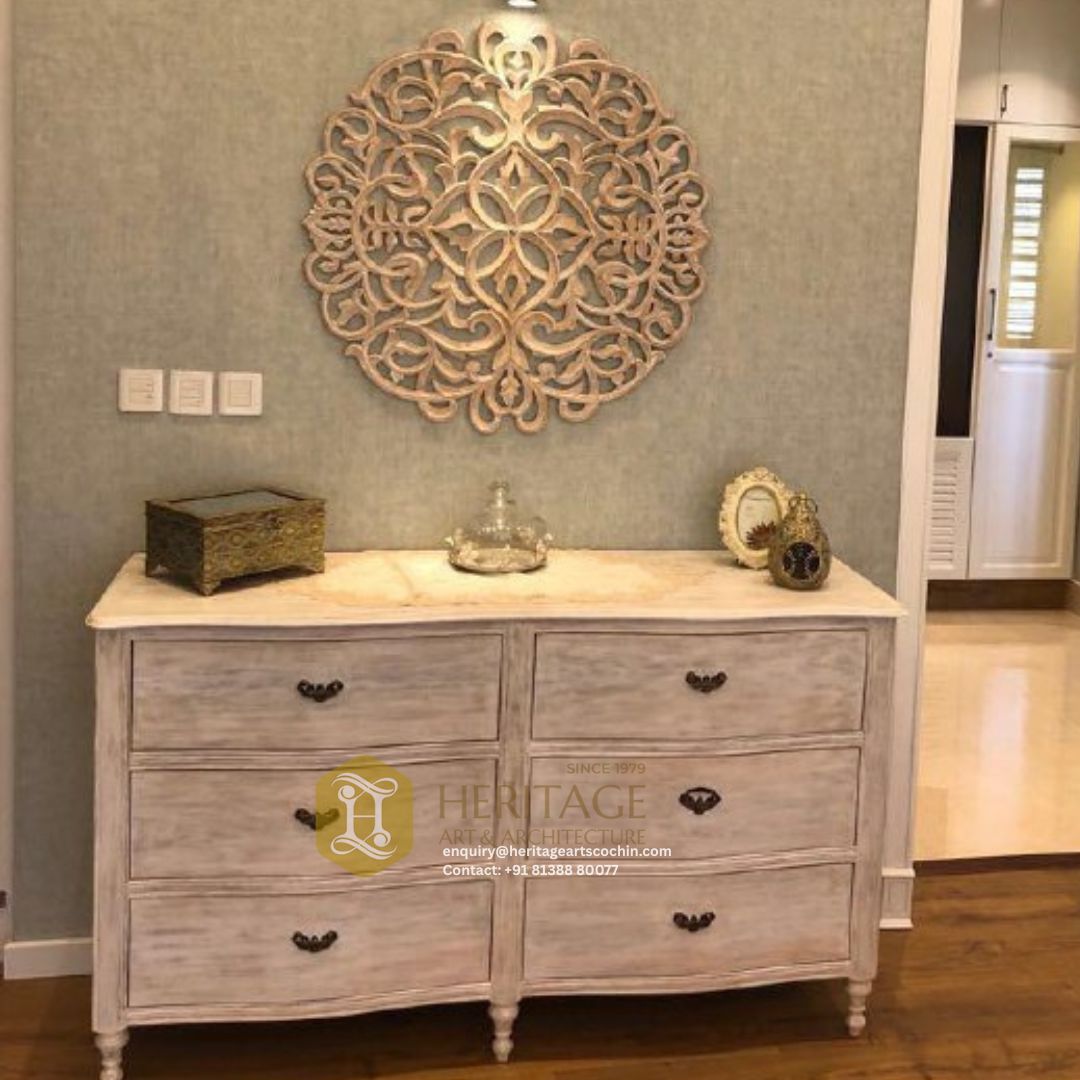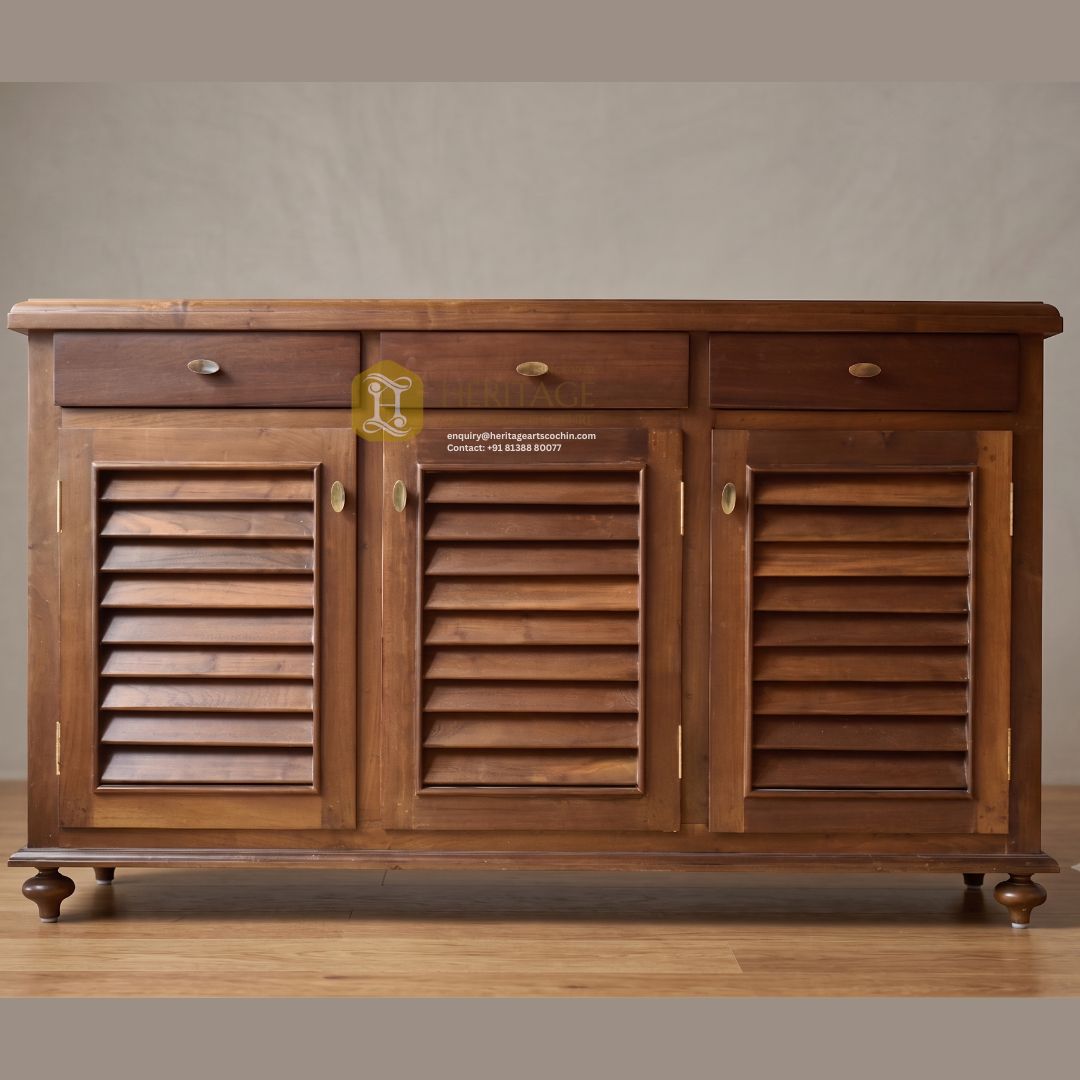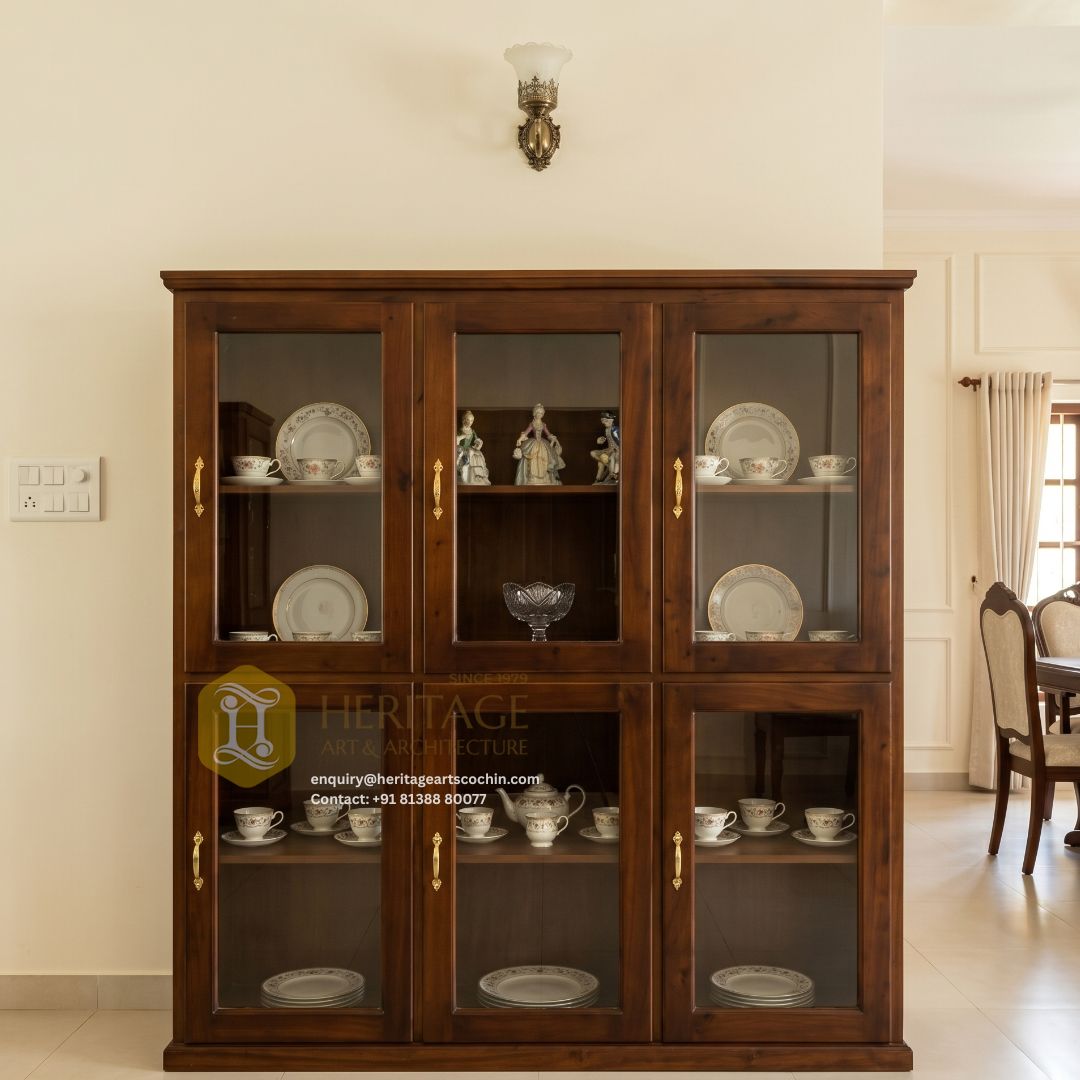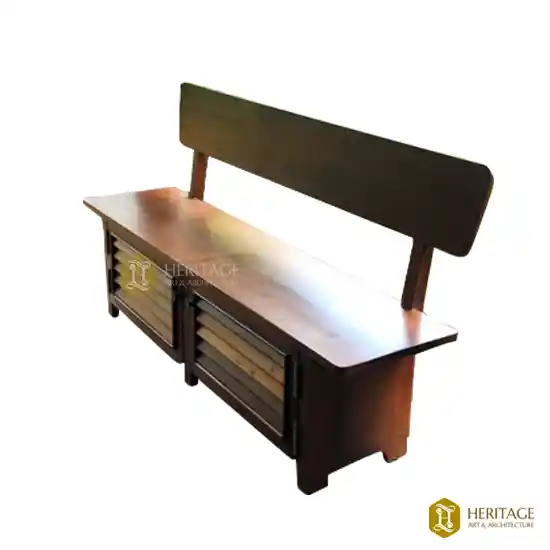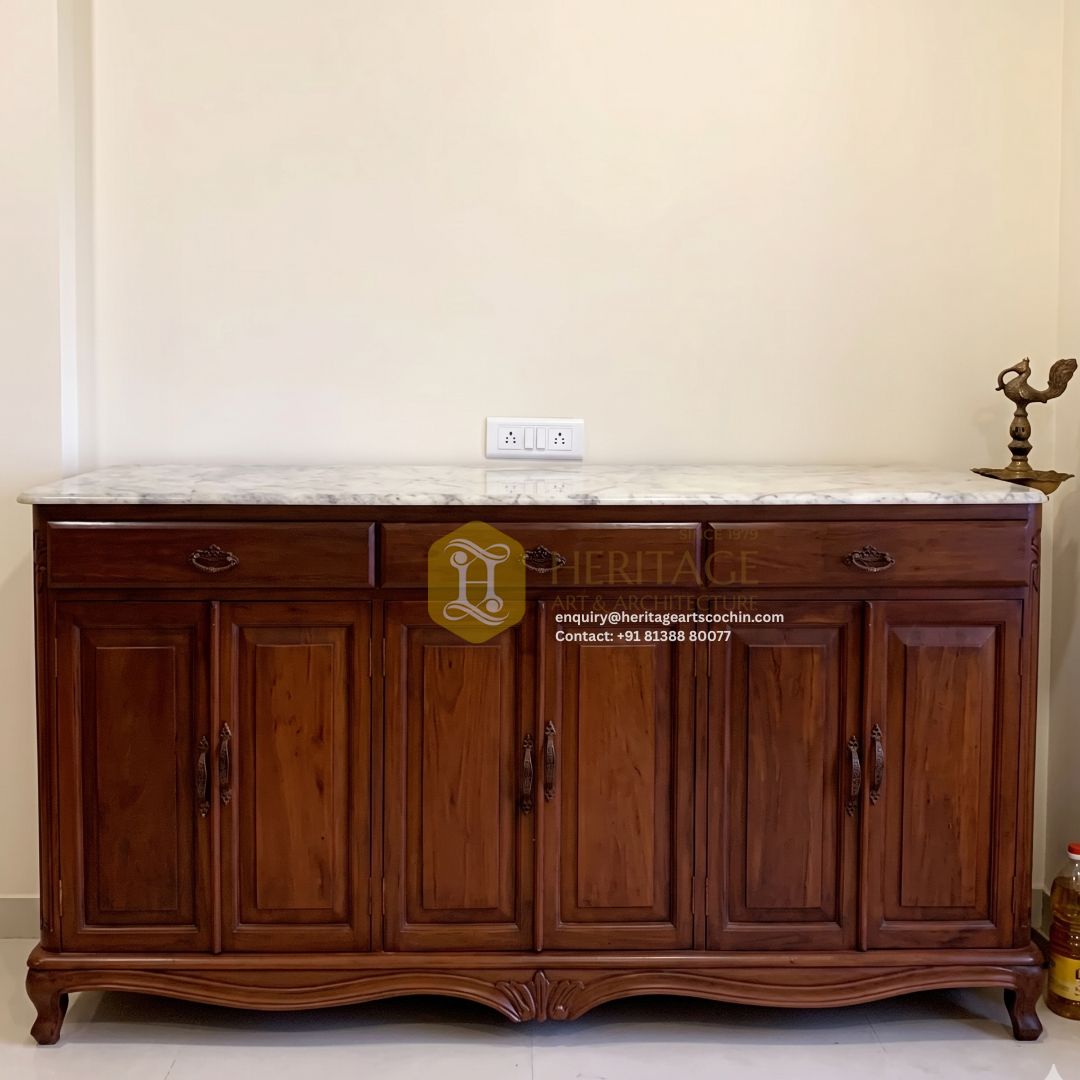
Taruni – Grace Cabinet is where refined tradition meets quiet utility. Designed as a ceremonial counter, it rests at the intersection of ritual and rhythm, femininity and form. Inspired by the grace of a maiden in motion, it holds objects not just in storage, but in honor.
Crafted in seasoned teakwood, with a polished white marble top and hand-painted ceramic tiles, this cabinet is more than functional — it is an altar of elegance. The brass handles are designed to be touched with care, and every joinery detail reflects a heritage of silent mastery.
Place it in a pooja alcove, foyer, or reading corner — Taruni brings beauty to utility, and ritual to everyday life.
Essential Part-by-Part Breakdown
1. Chūḍaratna (चूड़रत्न)
English Name: Crown Jewel
The white marble top — smooth, serene, and regal. It crowns the cabinet like a head ornament and becomes a ceremonial resting plane for lamps, trays, or sacred objects.
2. Chitravalli (चित्रवल्लि)
English Name: Art Garland
A decorative tile panel across the front — like a saree border brought to life. Each tile carries brushstrokes of heritage, forming a visual rhythm of color and pattern.
3. Varnamukha (वर्णमुख)
English Name: Colored Face
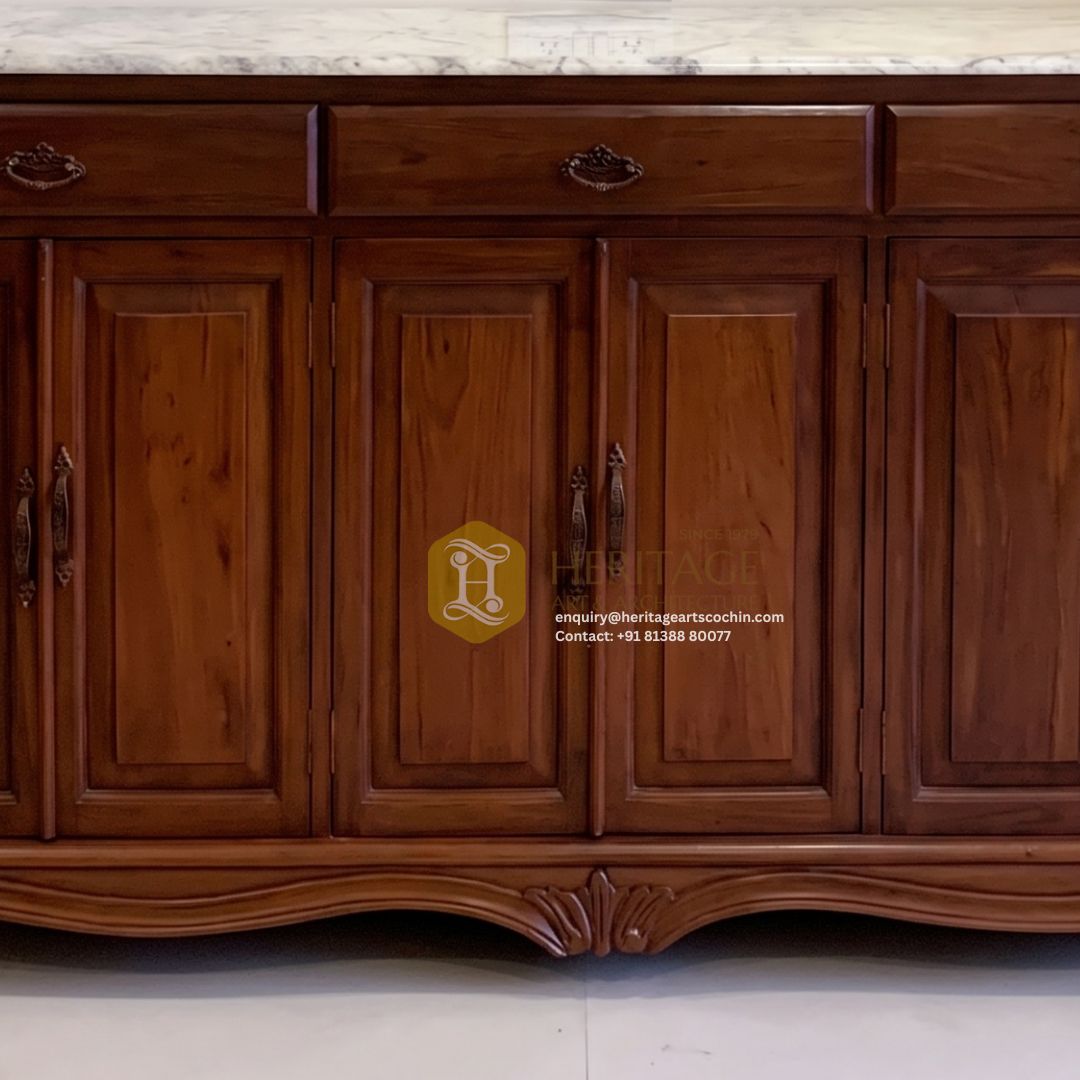
The drawer front that speaks of symmetry, proportion, and character. It’s the expressive face of the cabinet — quiet, crafted, and composed.
4. Kavachadvāra (कवचद्वार)
English Name: Shielded Doors
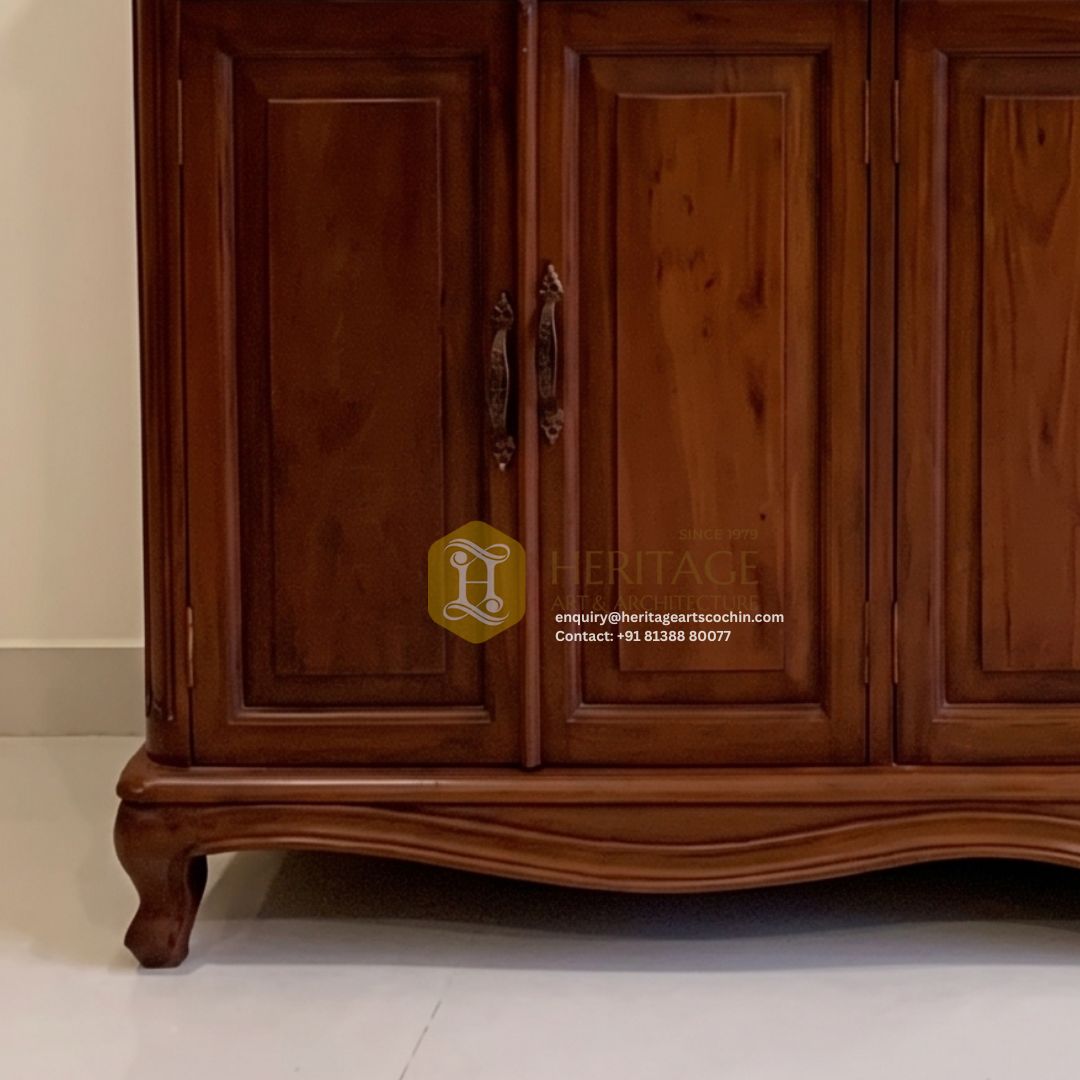
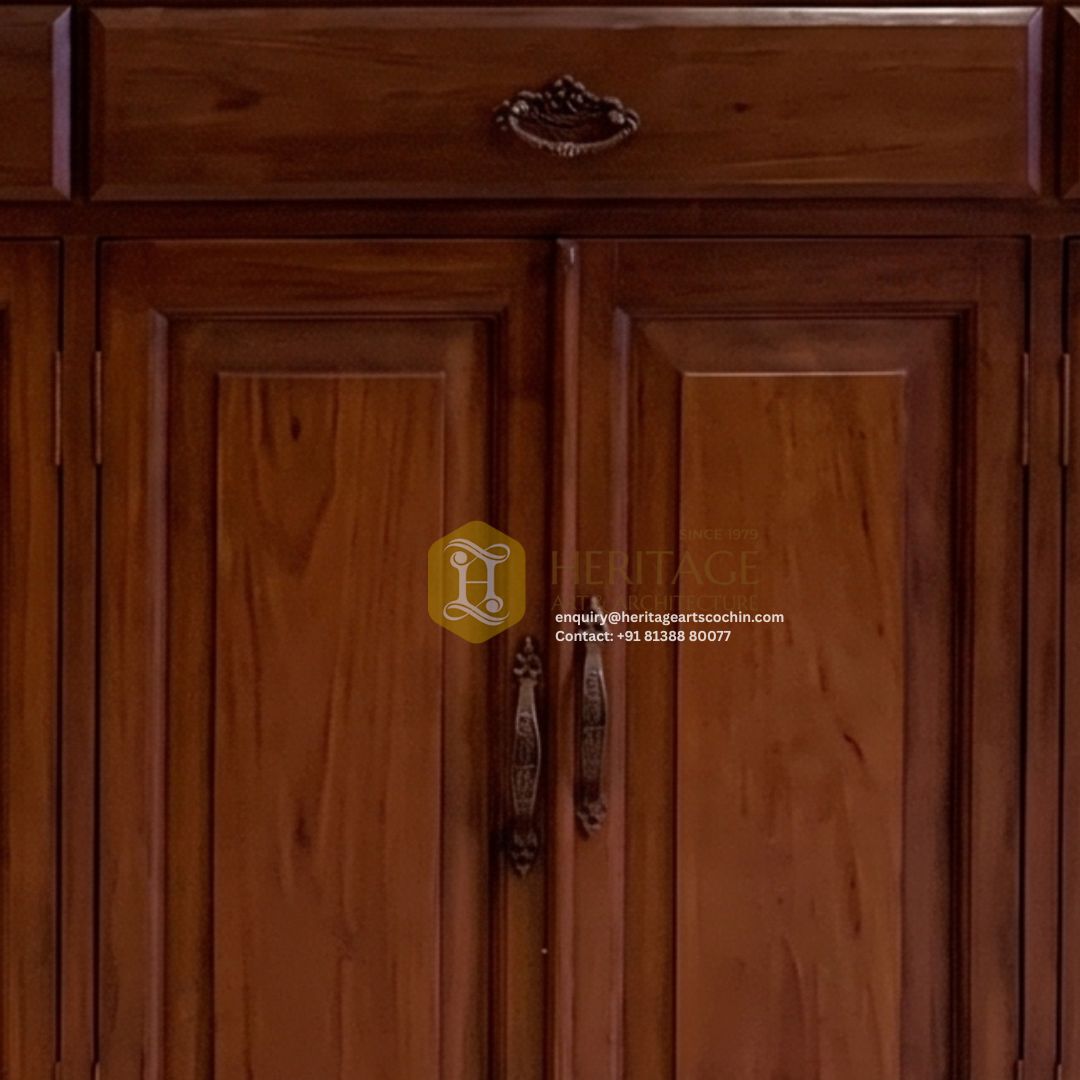
Framed teakwood doors that gently guard the contents within — whether ritual tools, books, or textiles. Protective yet elegant.
5. Mudrāmaṇi (मुद्रामणि)
English Name: Gesture Gem
Brass drawer pulls designed as tactile medallions. They invite you to engage with intention — each pull like a ritual gesture.
Material & Craftsmanship
The Grace Cabinet is carved from aged teakwood (तेक्), hand-joined using mortise and peg techniques. The white marble top is cool to touch and highly durable. The ceramic tiles are hand-painted and kiln-fired — carrying stories from mural traditions across India.
From grain to groove, it is made to age with dignity and deepen in beauty — a cabinet built not just to serve, but to last.
Ideal Placement
Let Taruni stand in your sacred space, a quiet hallway, or a thoughtful corner. Let it hold incense, heirloom vessels, folded prayer cloths, or morning tea trays. Whether adorned with brass or left bare in silence — it brings a still beauty to every surface it touches.
Not just a counter. A cabinet with posture. A shrine to grace.