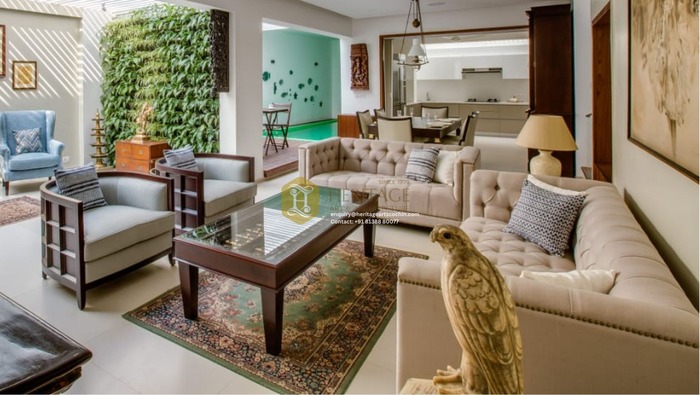
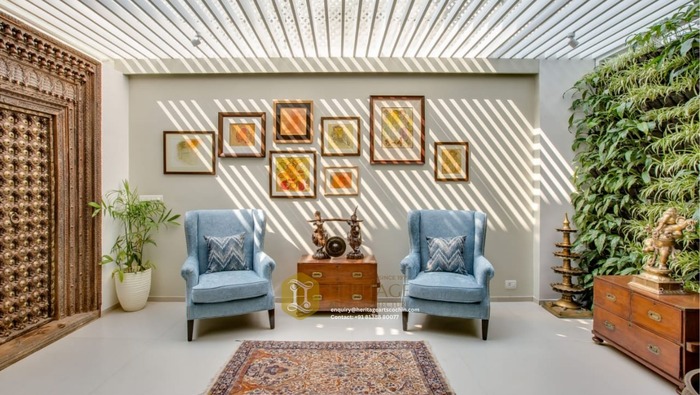
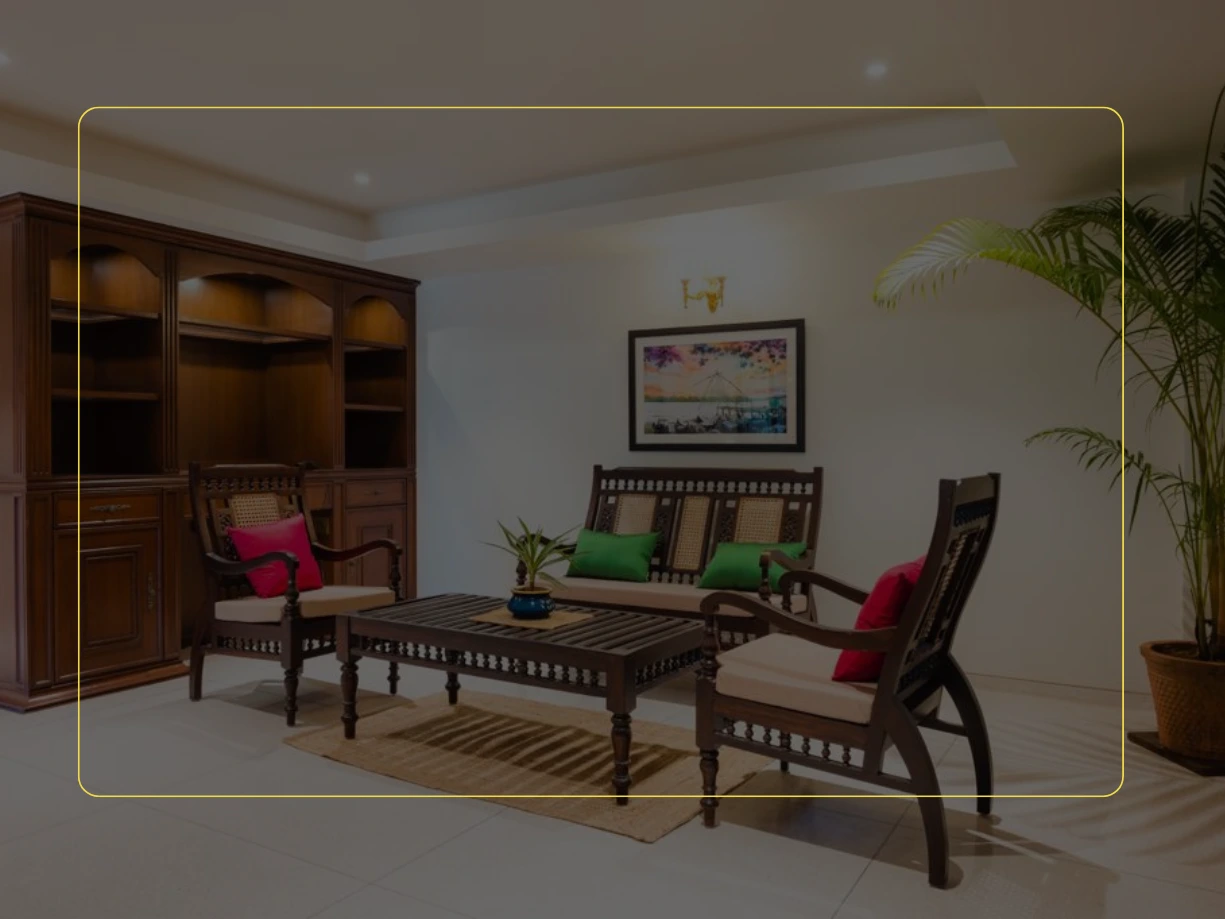
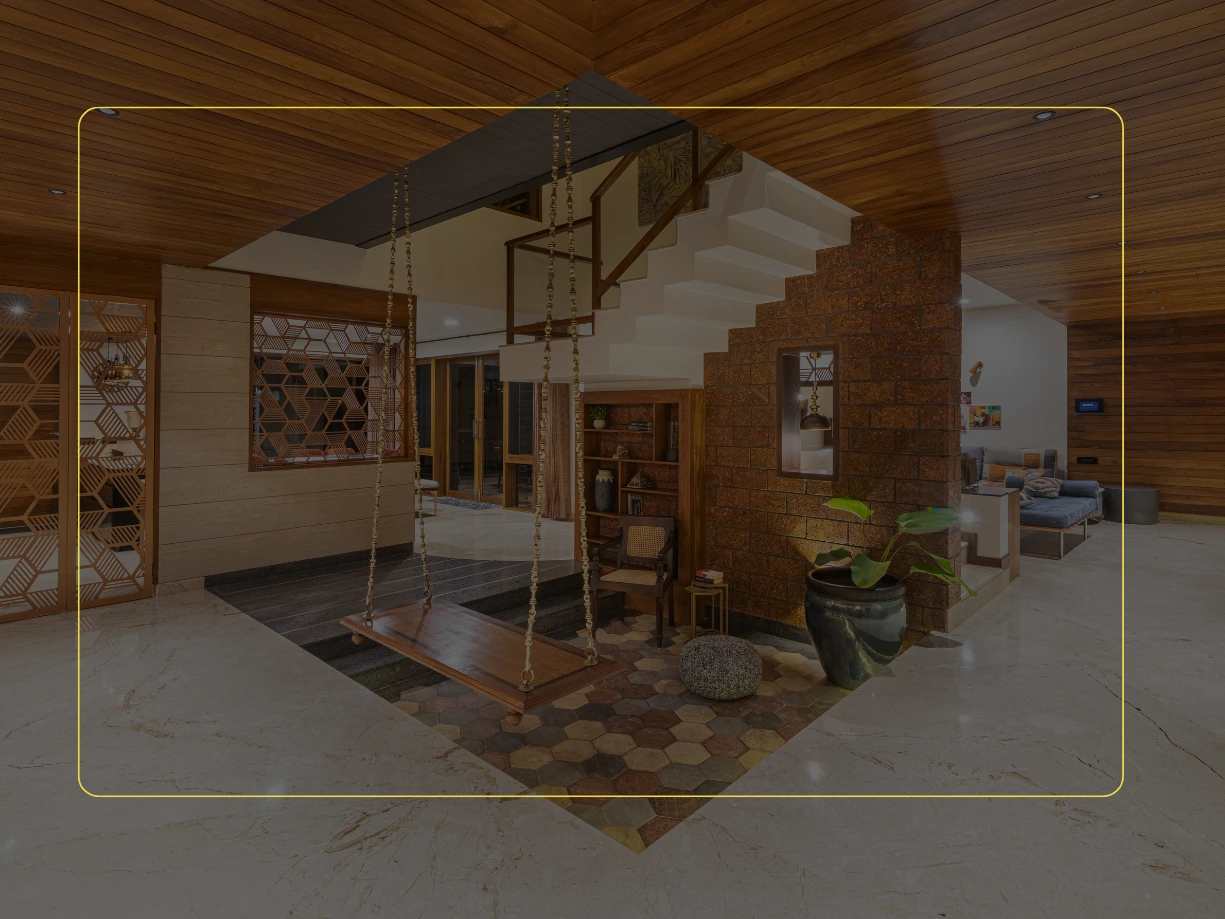
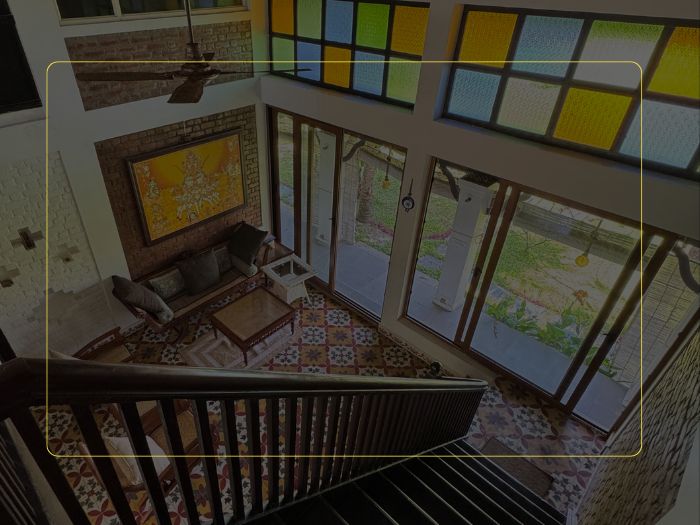
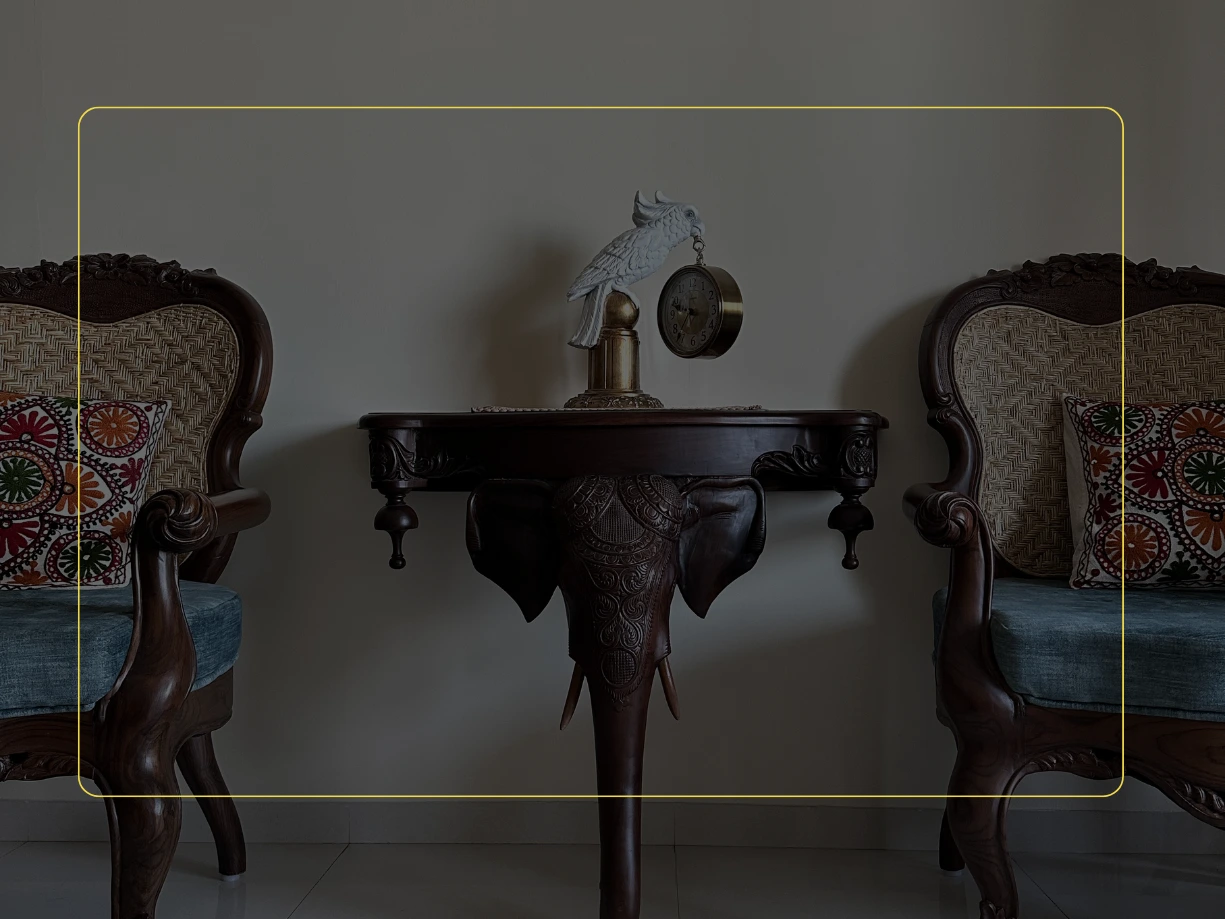
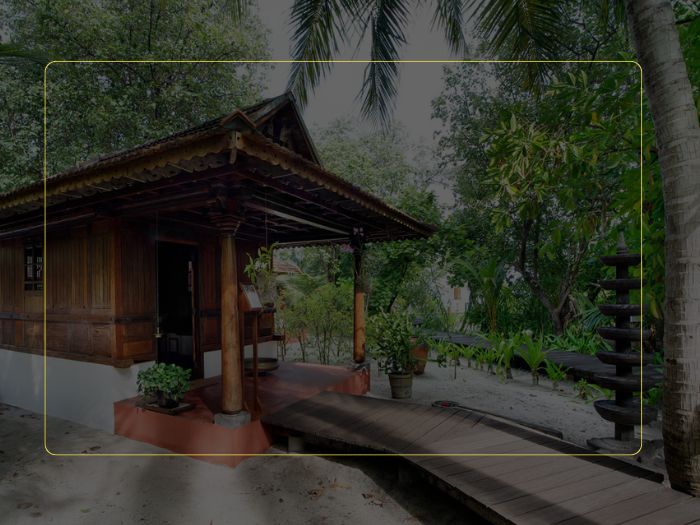
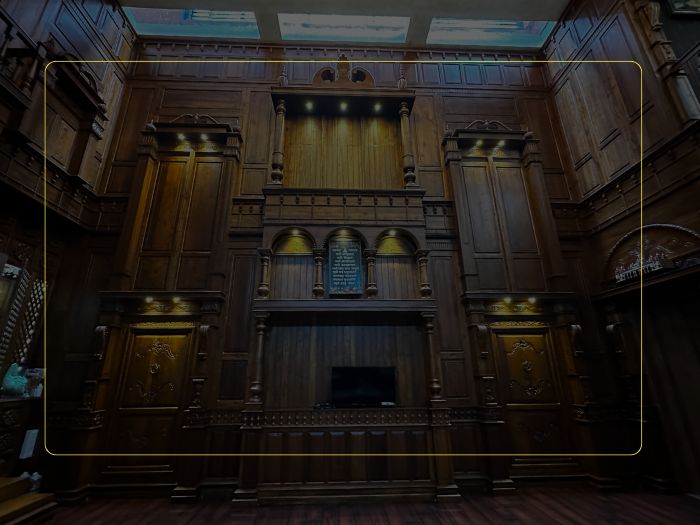
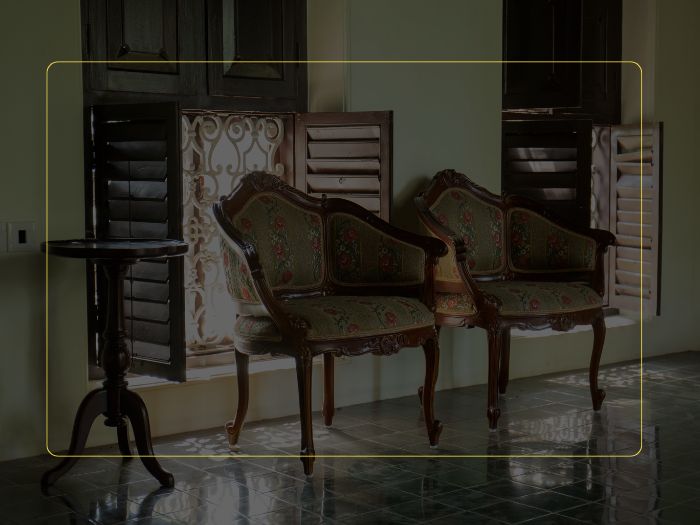
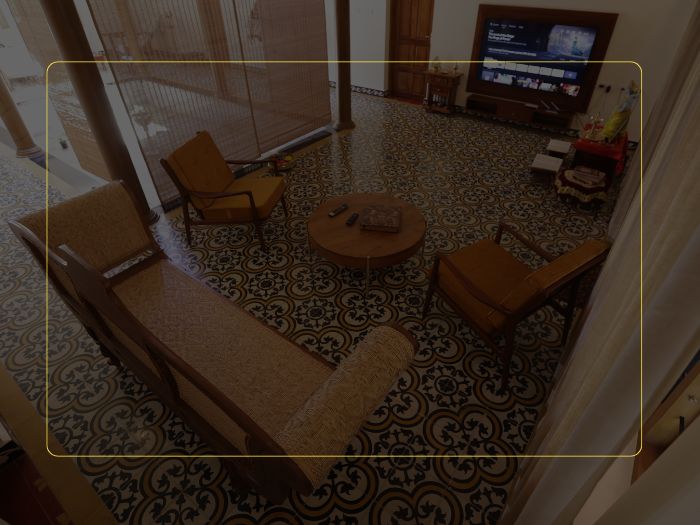
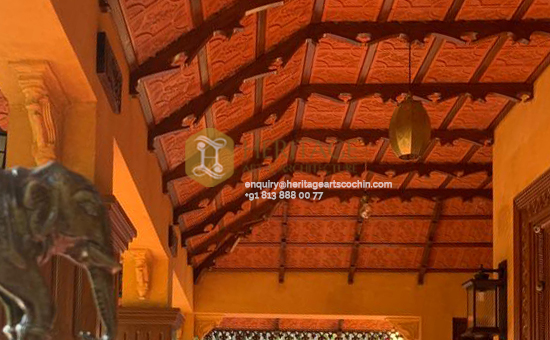
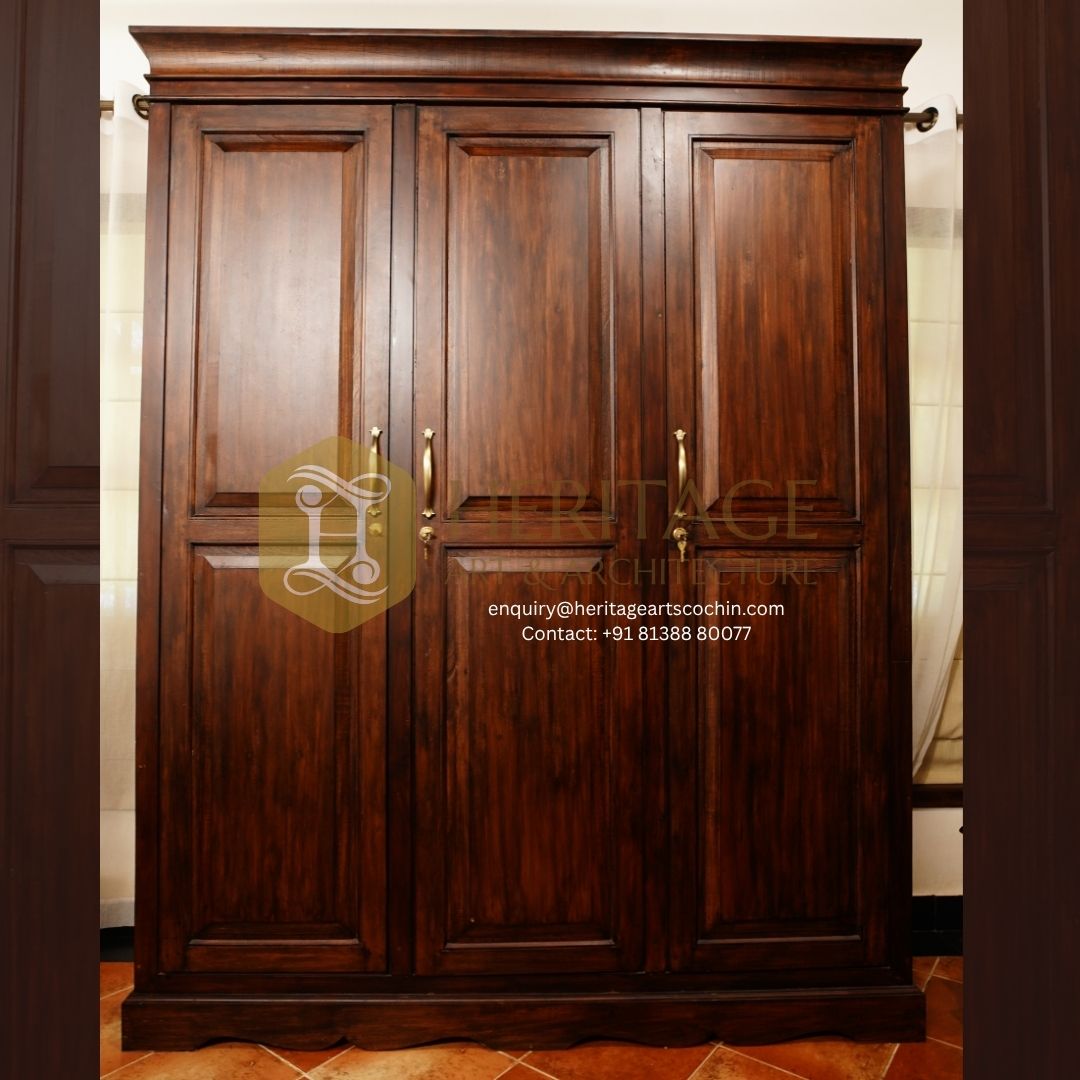
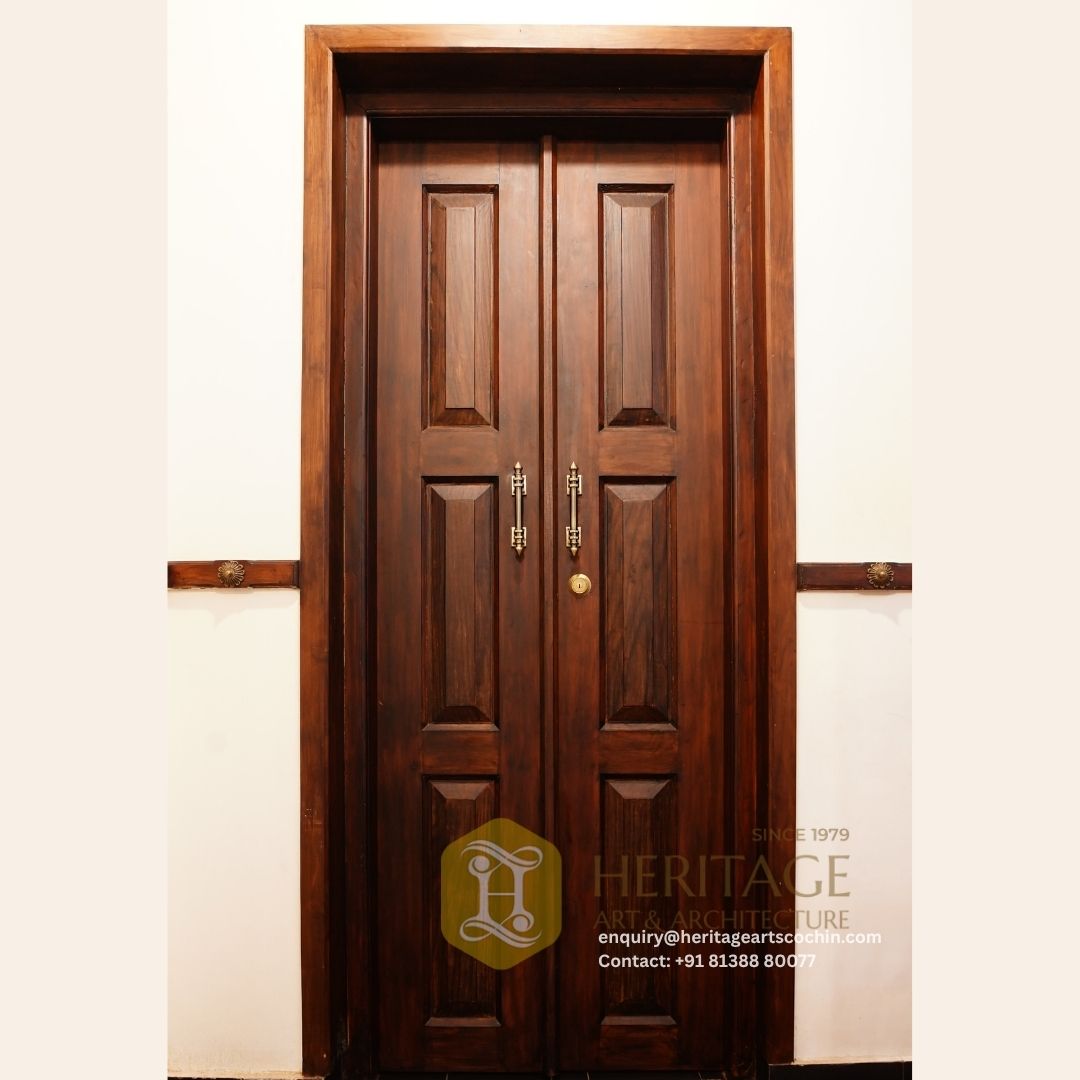
The living room holds its antiques without apology. A Campaign chest in honey-toned wood sits in the courtyard zone, while a pair of blue wingback chairs ground one corner with old-world ease. The tufted Chester sofas and the dark lacquered coffee table create contrast that feels earned rather than arranged. Persian rugs layer underneath, and the ivory falcon sculpture perched on the sofa arm is the kind of detail that stops a conversation mid-sentence.
Custom Design
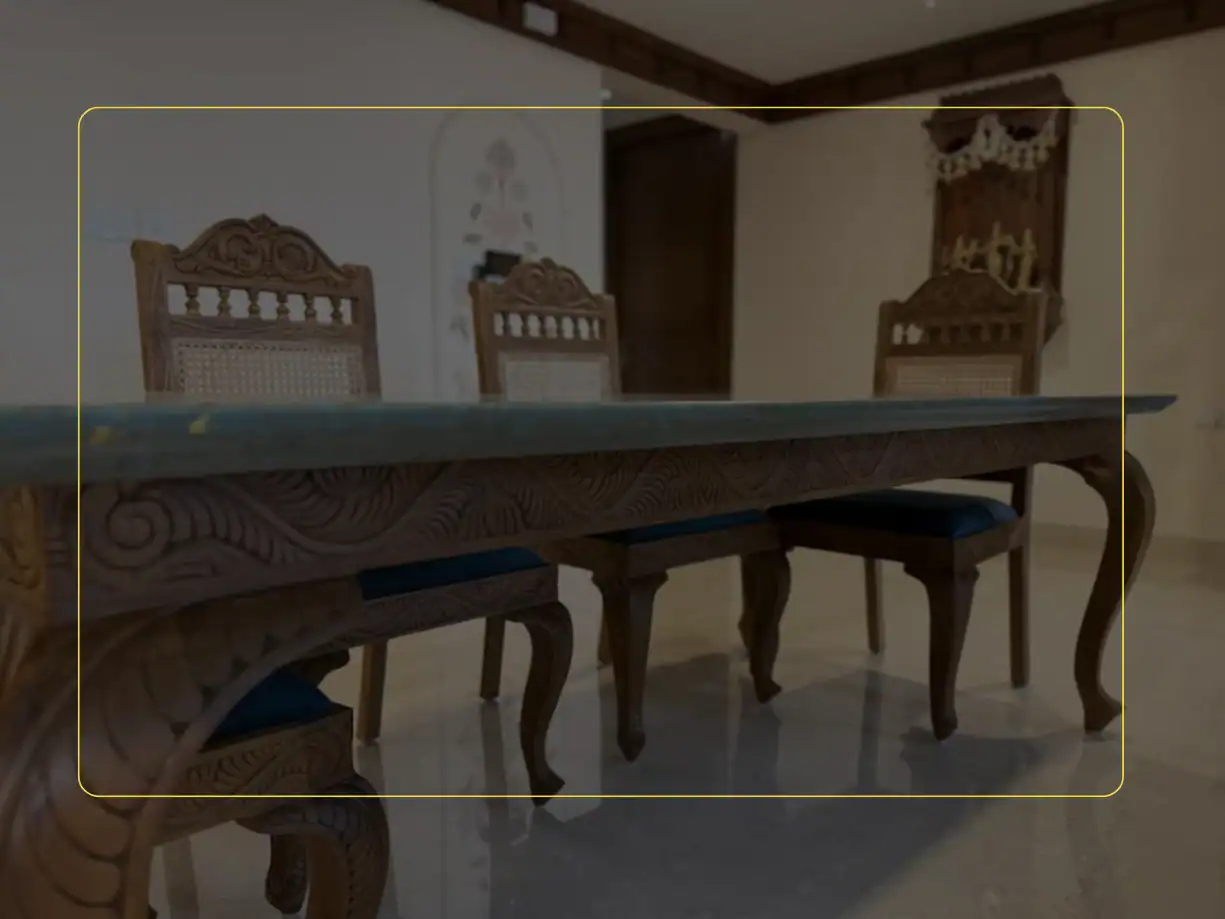
Premium Wood Finish
The Cane Headboard
That Sets the Bedroom's Tone
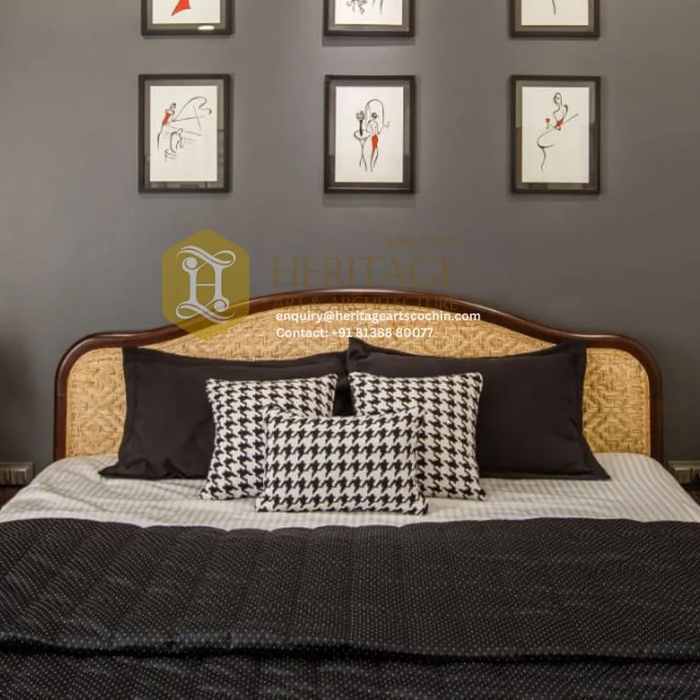
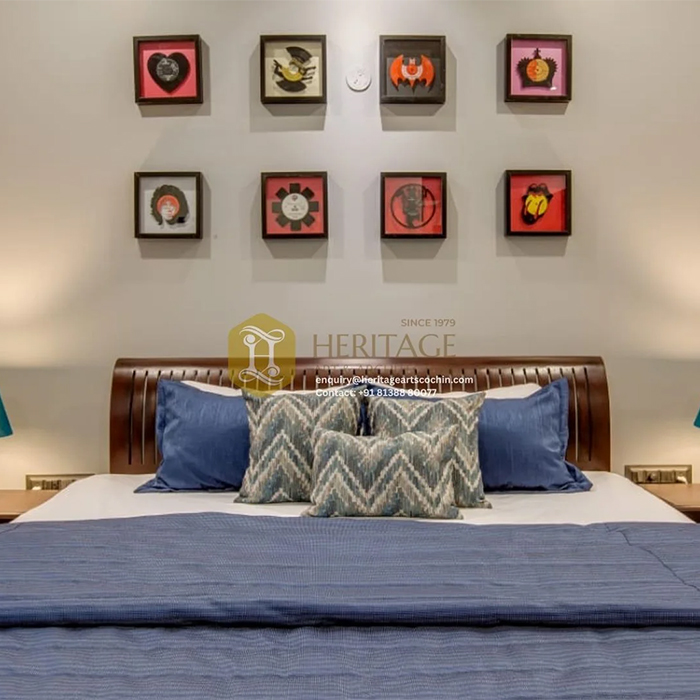
The master bedroom’s arched cane headboard, framed in dark wood, does more work than any other element in the room. Against a deep charcoal accent wall, it reads like furniture retrieved from another era entirely. Silver orb lamps keep the bedsides from becoming too heavy, and the houndstooth cushions add just enough graphic energy to prevent the room from settling into period-piece territory. Six fashion illustration prints above, spare and red-accented, seal the look.
A Kitchen That Earns Its Restraint
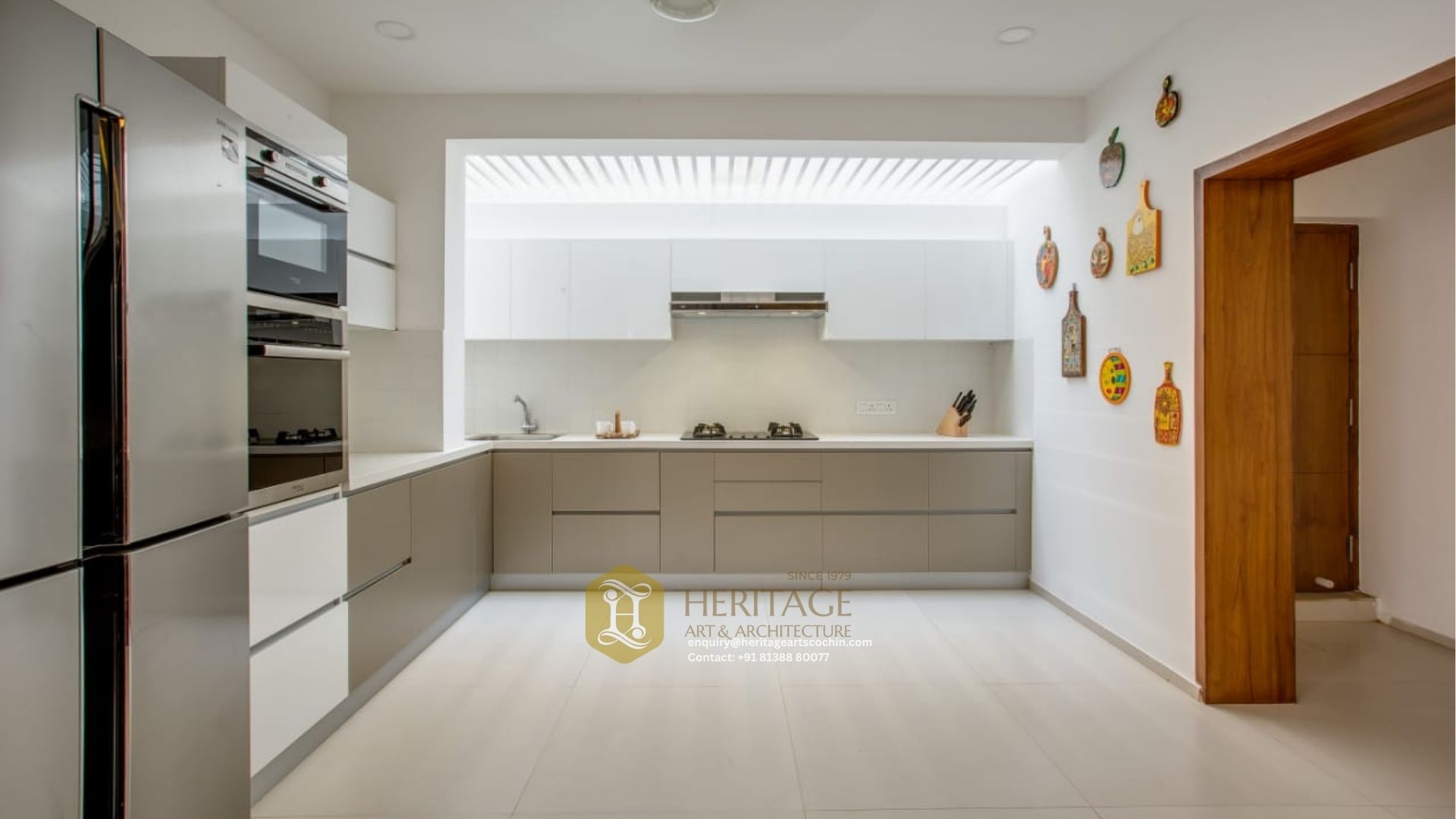
The kitchen takes the opposite position from every other room in the house. Greige matte cabinetry, white uppers, a seamless stone worktop — nothing competes for attention. A louvered skylight runs natural light across the entire counter length without a single pendant in sight. The one indulgence: a cluster of hand-painted ceramic chopping boards mounted on the side wall. The kitchen earns that playfulness by being so disciplined everywhere else.
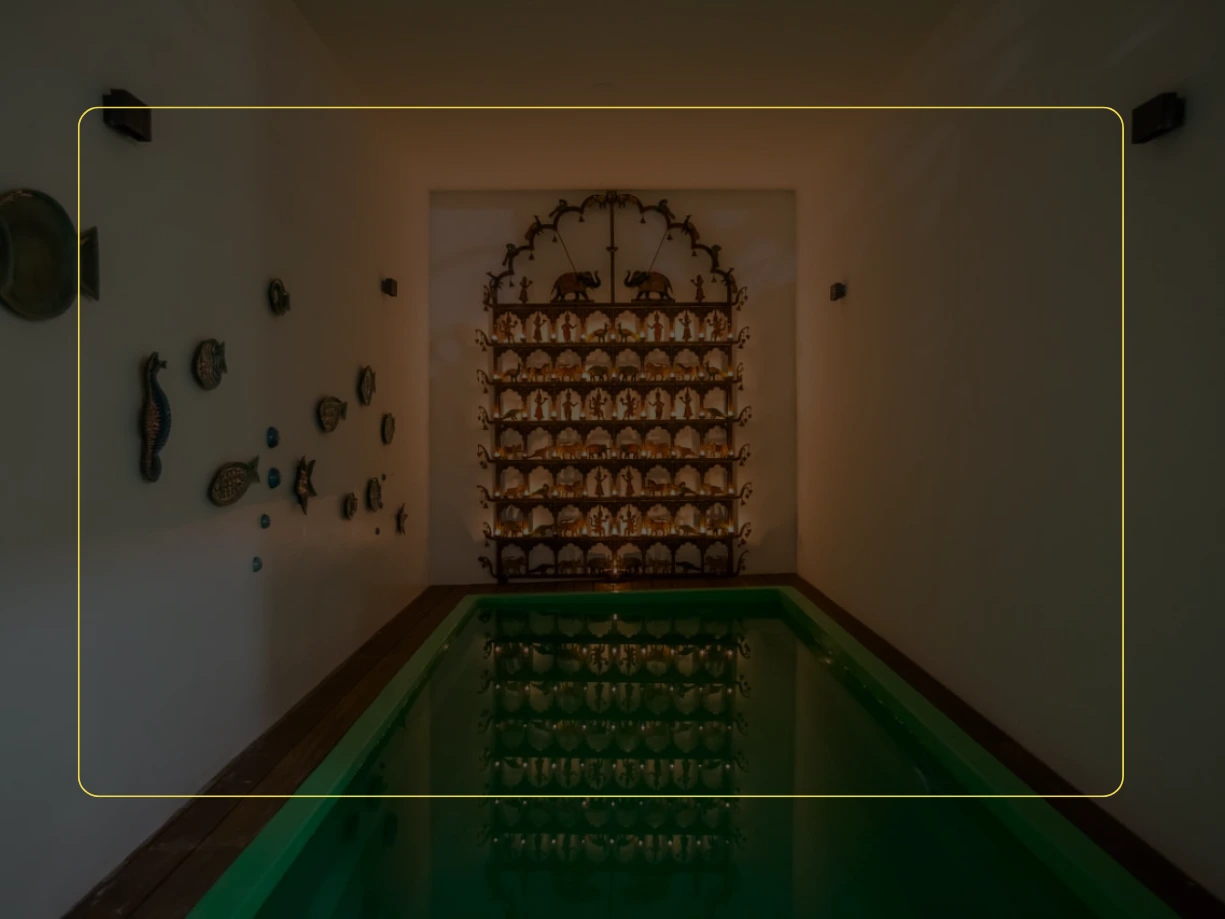
An open living room dissolving into a courtyard, an indoor pool anchored by a brass deepam, a study lined with vivid contemporary prints, and a kitchen that keeps everything out of the way except what matters.
The Study
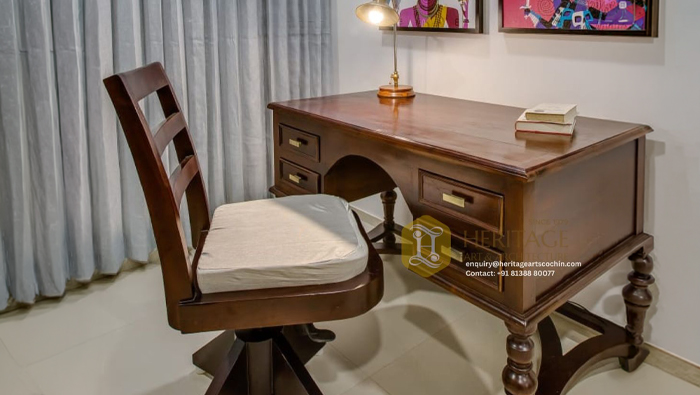
A solid teak wood writing desk with turned legs and brass pulls is the kind of piece people inherit and never let go of. Here it anchors a compact study that punches well above its square footage. Six bold contemporary prints — vivid reinterpretations of Indian mythological figures — cover the wall behind in a loose grid. The tension between the antique desk and the flat graphic art works precisely because neither piece is trying to accommodate the other.
Art Treated as
Architecture
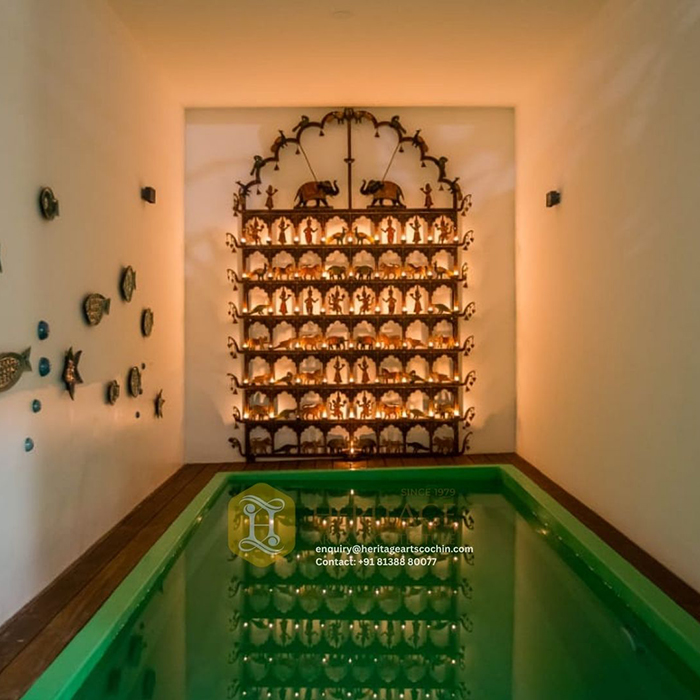
The home doesn’t hang art; it builds around it. A large Chinese ink painting covers a full wall panel in the living zone. In the open courtyard section, smaller abstract works cluster at varying heights, flanked by carved wooden panels that act as anchors. The indoor pool room takes this furthest: ceramic fish scatter across one wall in a school formation, while a backlit brass deepam structure at the far end reflects its entire form across the green water below.
Light and Air as
Design Material
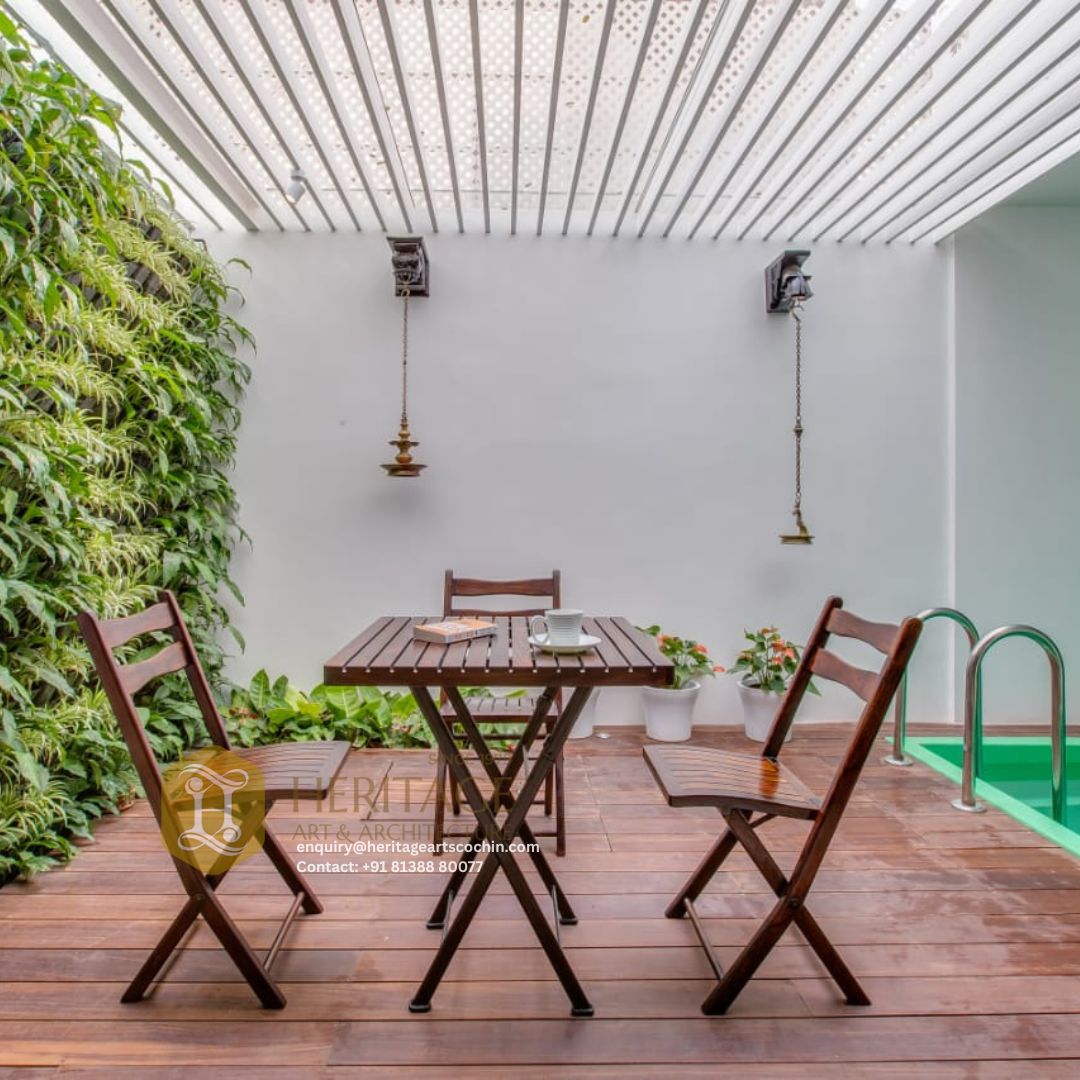
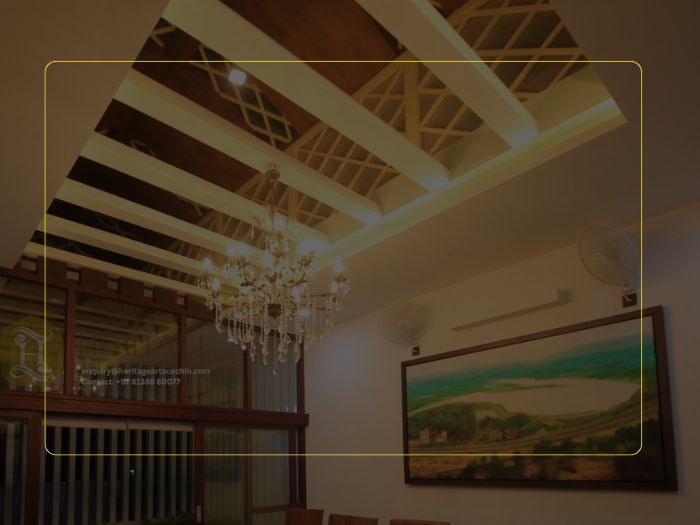
The architecture makes the largest single contribution to how this home feels. Louvered pergola structures above the living zone and the kitchen break direct sunlight into strips and allow heat to rise rather than collect. The vertical green wall in the central courtyard cools the air flowing into the adjacent living room. These aren’t passive features — they are a deliberate plan to keep the house breathable across seasons, reducing the load on mechanical systems without sacrificing comfort.