Materials & Craftsmanship
| Detail | Specification |
| Primary Material | Kerala Rosewood (Dalbergia latifolia) |
| Finish | Hand-rubbed natural lacquer, Natural Rosewood Tone |
| Tabletop Insert | Bevelled clear glass, recessed centre |
| Carving Technique | Hand-chisel relief carving; no machine routing |
| Artisan Origin | Malabar Coast, North Kerala |
| Style | Traditional Kerala / South Indian Classical |
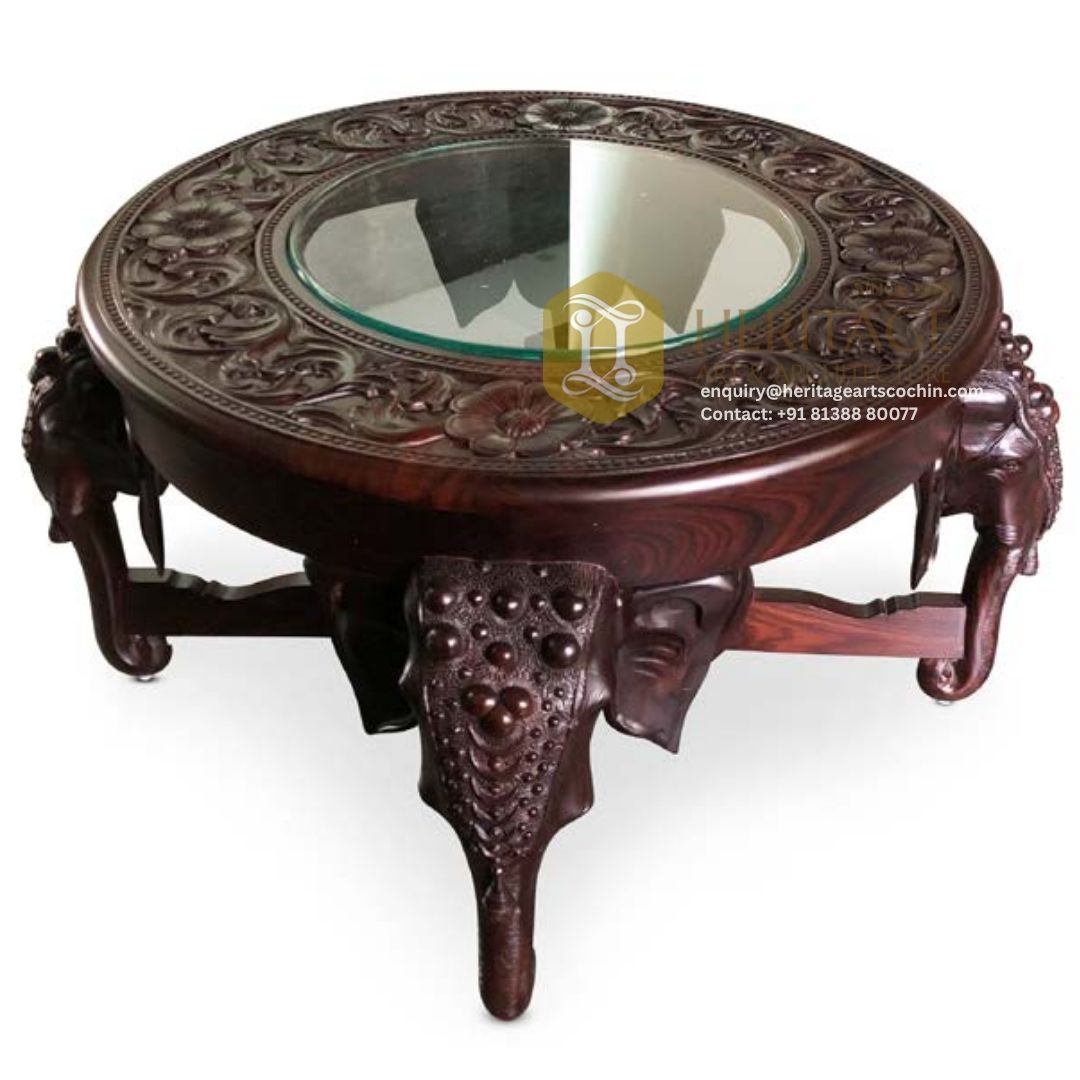
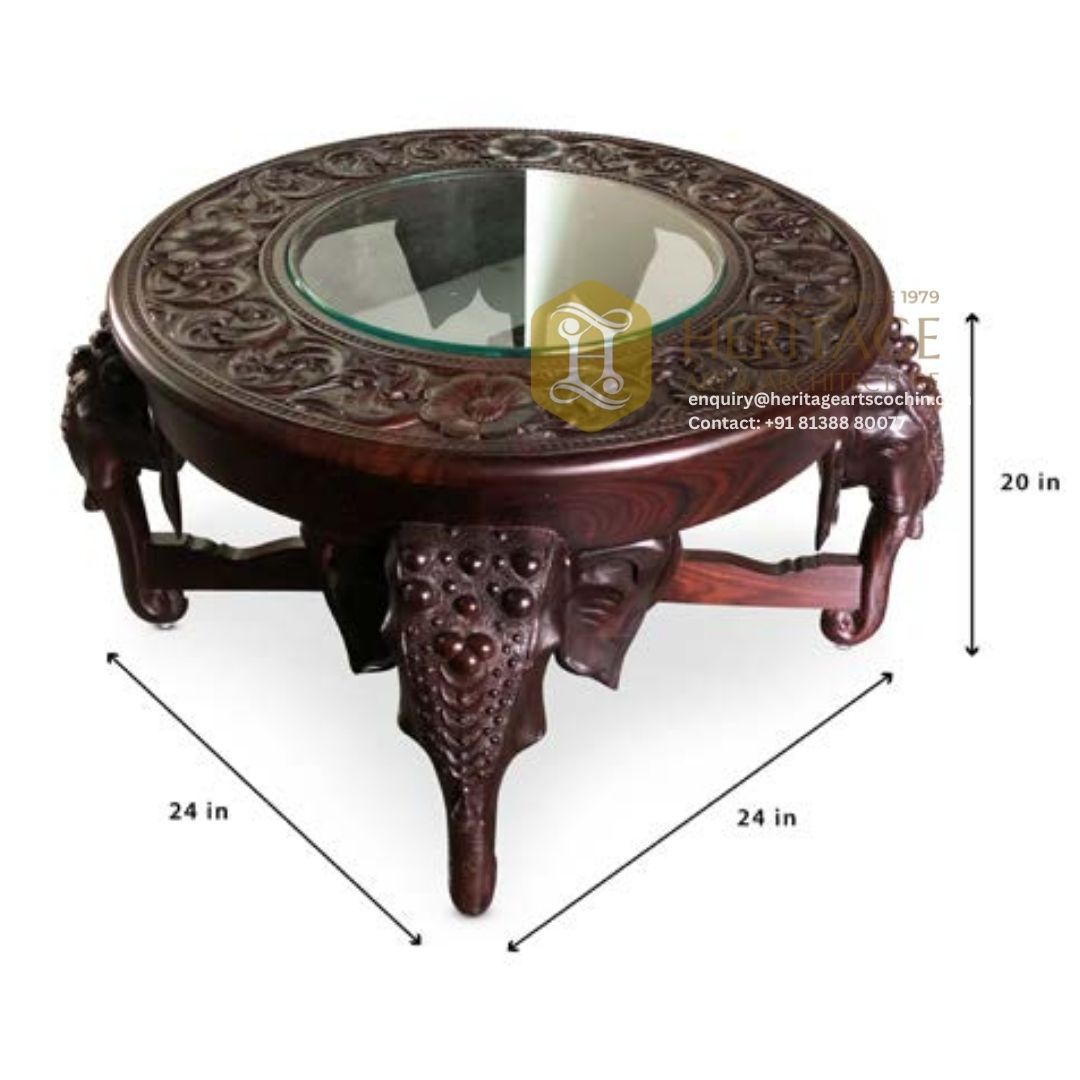
| Form | Oval-round occasional centre table |
Design Inspiration
Nettipattam — The Crown of the Elephant
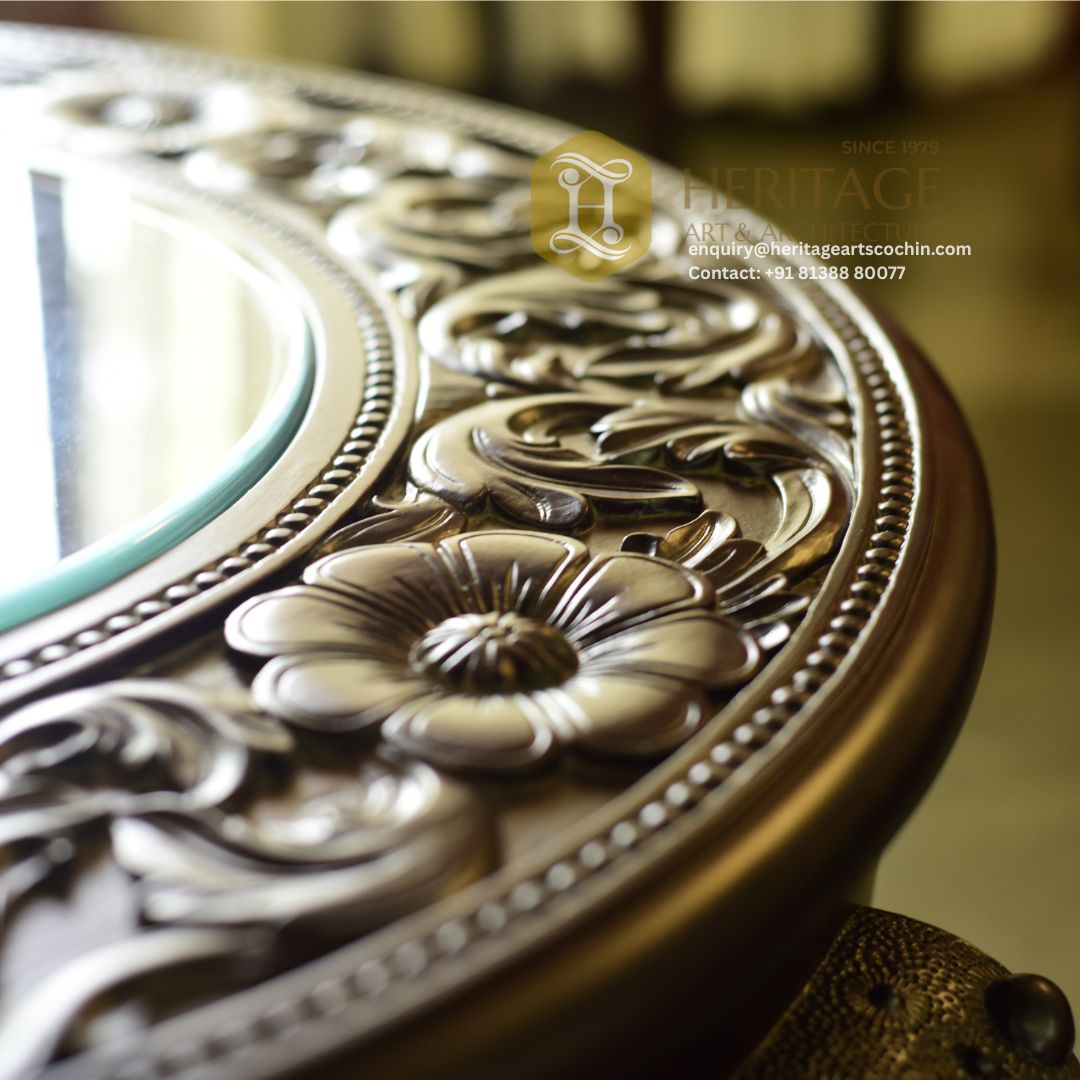
The sweeping border carved around the tabletop is a direct homage to the Nettipattam, the elaborate gold-and-jewel-encrusted headpiece placed upon temple elephants during pooram festivities. The radiating scrollwork, concentric bead-line borders, and bold floral medallions mirror the layered symmetry of this iconic ornament, rendered here in the warmth of dark rosewood rather than hammered gold.
Floral Motifs — The Gardens of Kerala
Woven throughout the surface are full-bloom floral rosettes and flowing acanthus-style foliage, evoking the lush botanical abundance of Kerala’s spice gardens and temple courtyards. Each flower is individually relief-carved, with petalled centres and leafwork that curls and spirals in the classical Malabar decorative style.
The Elephant Base — Guardians of the Home
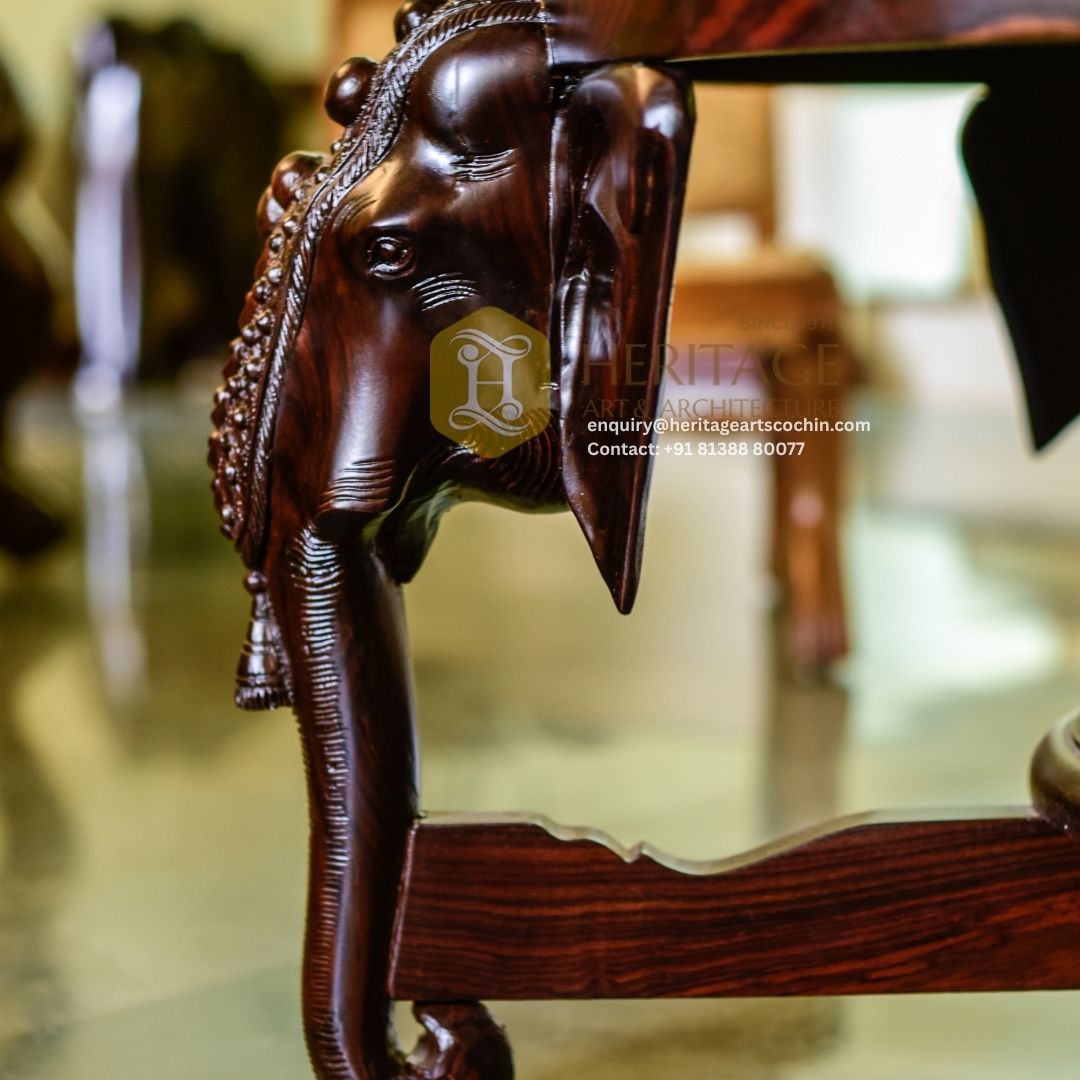
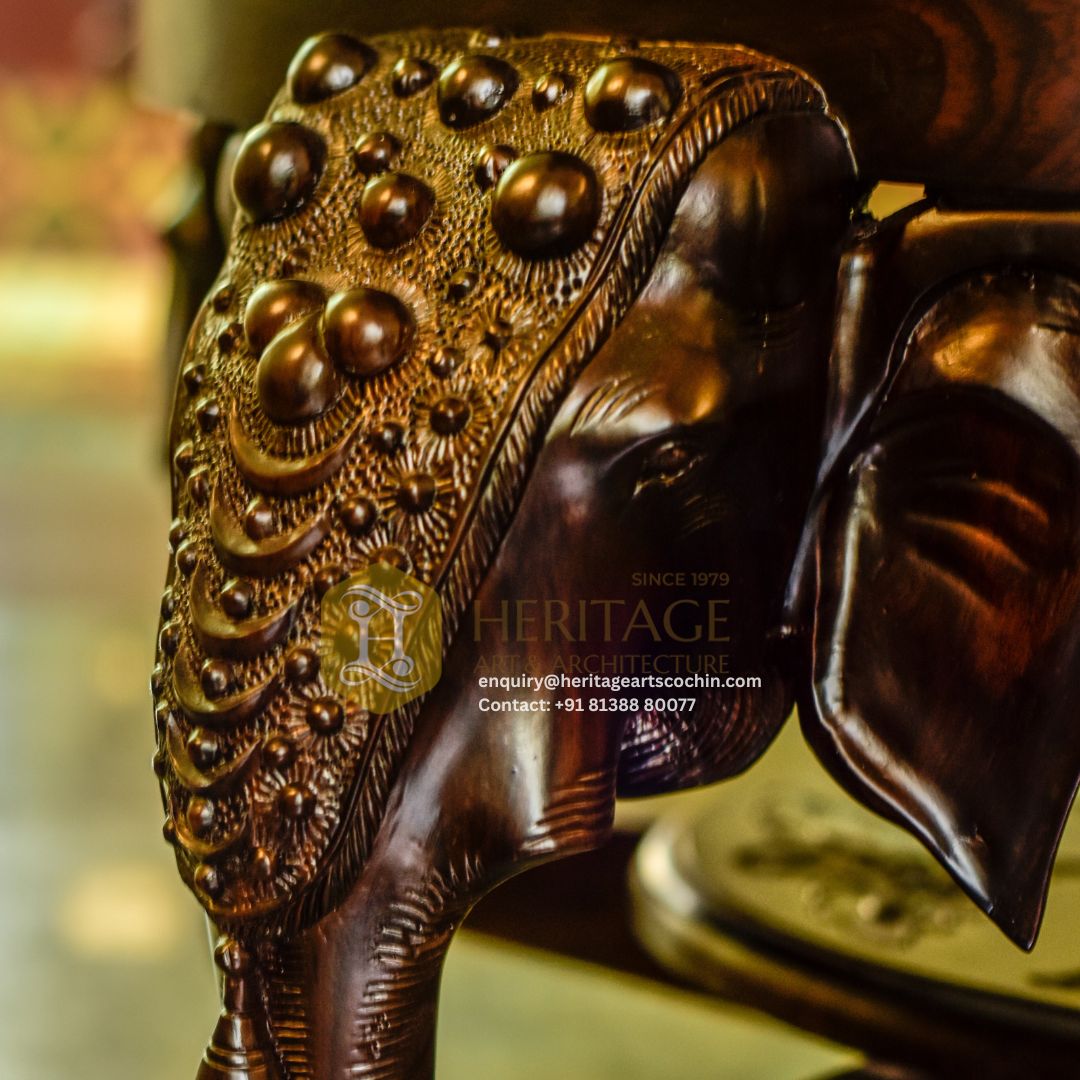
Four sculptural elephant legs support the tabletop, each carved with remarkable anatomical care and adorned with etched blanket-drapery, anklet bands, and floral saddle motifs.
Artisan Heritage
Kerala’s woodcarving tradition is among the oldest living craft lineages in India, nurtured over centuries by the Vishwakarma community of master craftsmen. The intricate technique employed on the Aanavari Mandalam — deep relief carving with layered floral and scroll detail — is the same style seen in the carved wooden ceilings of Padmanabhapuram Palace and the pillared interiors of Vadakkumnathan Temple, Thrissur.