Nilaya Heritage Ottomans

/
/
Nilaya Heritage Ottomans

Nilaya Heritage Ottomans

Nilaya (निालय, നിലയം) means “abode” or “dwelling place” in Sanskrit-influenced Malayalam and many Indian languages. The word carries a warm sense of welcome for South-Indian buyers, while its mellifluous sound and clear meaning (“home”) speak instantly to international clients. “Heritage” anchors the piece in Kerala’s long craft lineage, and “Ottomans” signals its modern, multipurpose role to global audiences.

Categories ,

Description

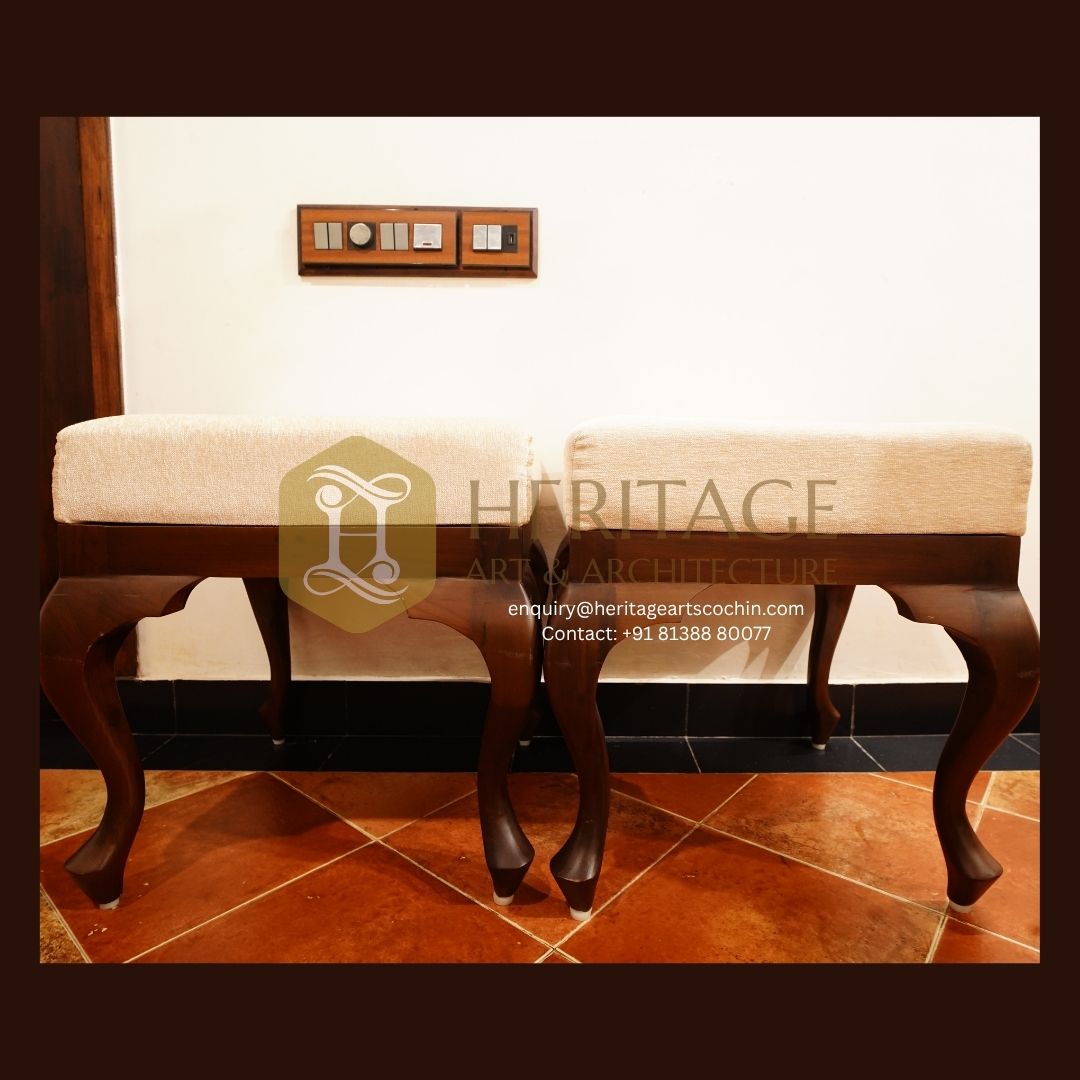
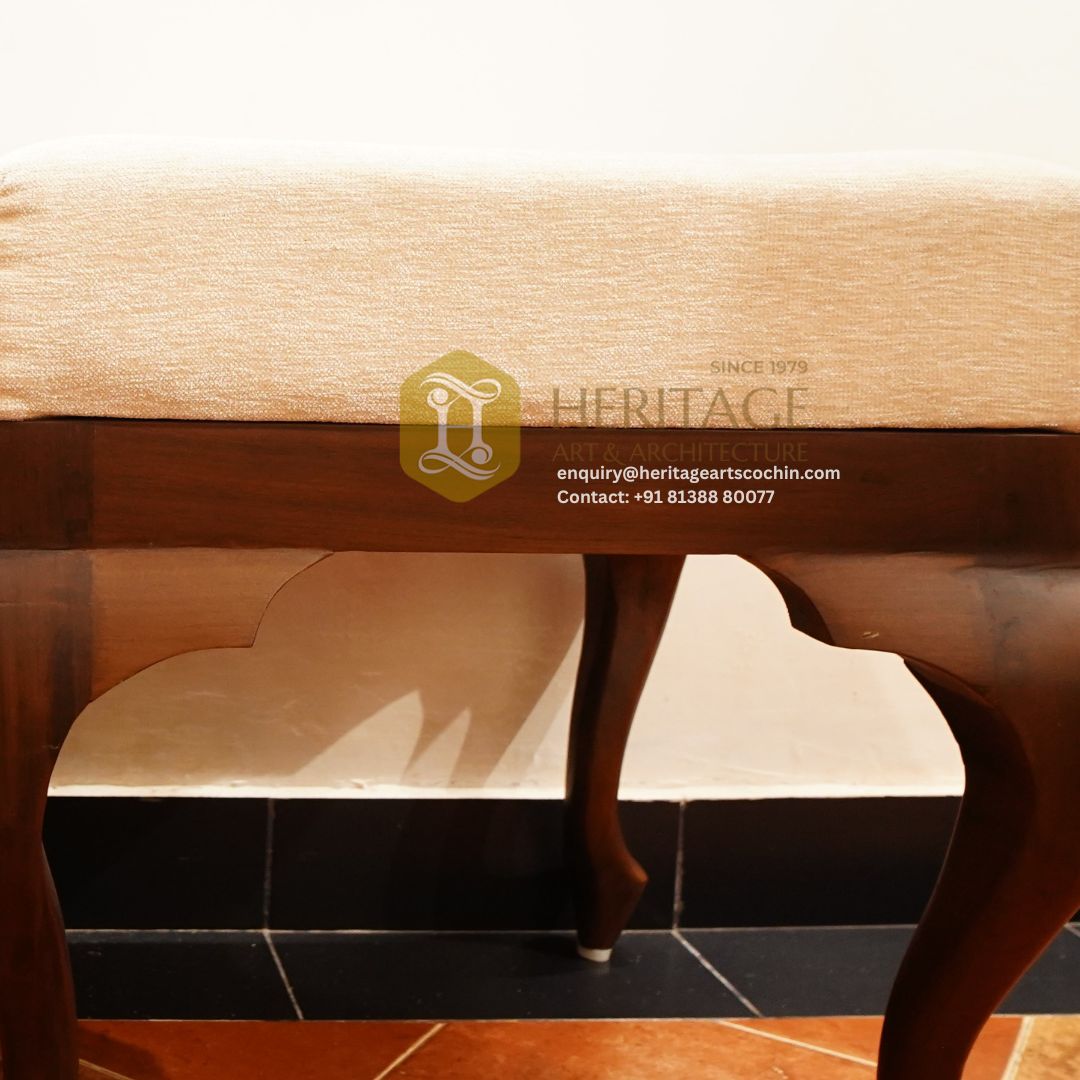
Carved from seasoned Malayattoor teak and dressed with a hand-loomed, sand-hued cotton-silk weave, the Nilaya Heritage Ottomans blend the quiet elegance of a colonial planter’s club with the curving grace of a Kerala kovilakam (palace) archway.

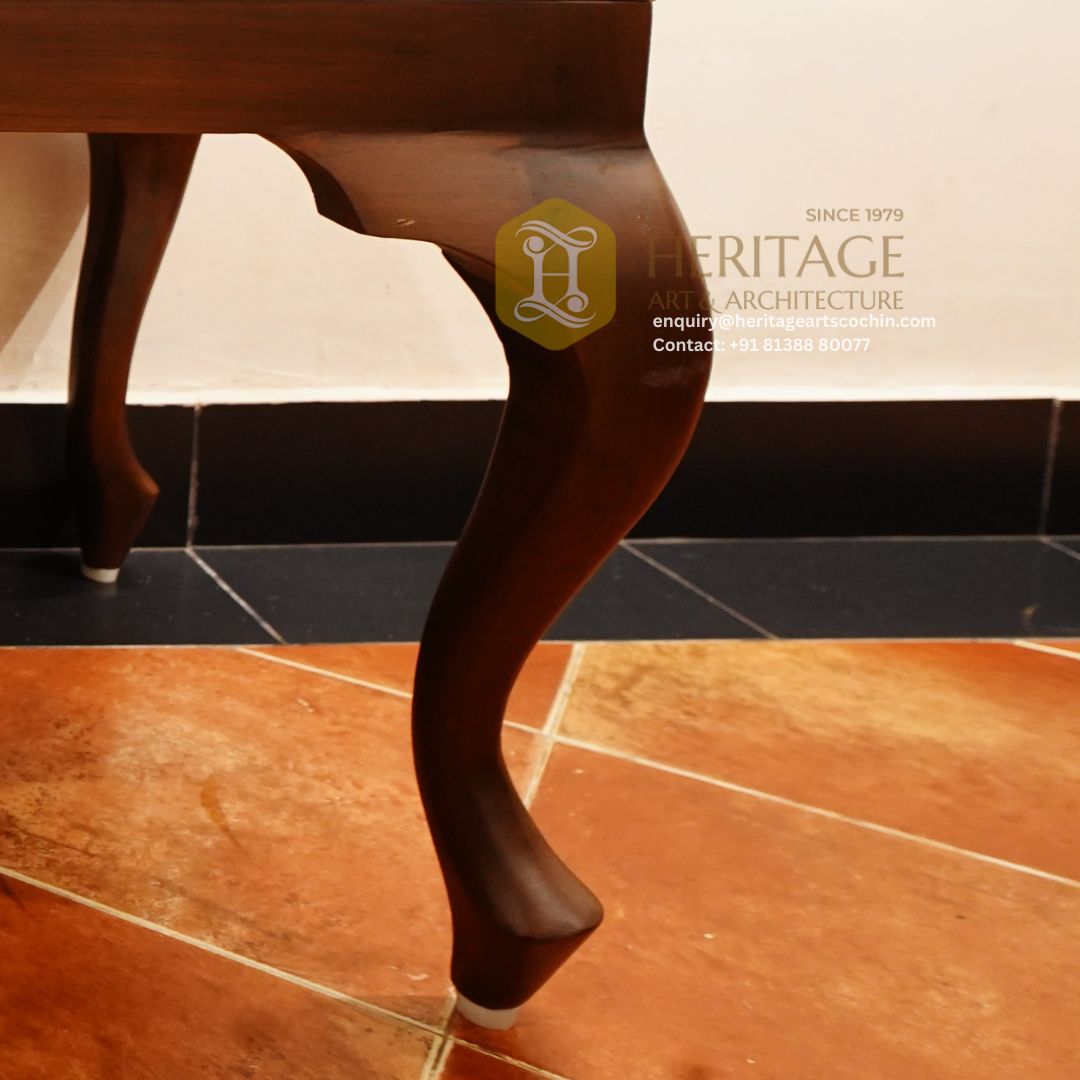
Placed as twins, they create a convivial two-seat bench for verandas; used singly, each becomes a personal foot-rest, a low side-table, or an accent perch beside a divan. The gently flared cabriole legs echo the prows of vallam racing boats, while the broad, lightly domed cushion recalls the platters of jasmine offered during athapoo festivals.

Every curve is hand-finished with natural shellac, letting the teak’s deep cocoa grain glow under soft light. Brass pins at the leg tips reference the muthukkuda (pearl-topped parasols) of temple processions, adding a discreet glint that catches the eye without shouting. In short, Nilaya marries the nostalgia of Kerala courtyards with the versatility demanded by contemporary interiors—making it at home from Kochi to Copenhagen.
More Products

Established in 1979, we carry a legacy that we proudly unfold in front of you. Here tradition blends with creation, art blends with heritage, and finally, a whole new story is carved out in pure wood exclusively for you. 

Shopping Cart0

Cart

Shopping Cart0

Cart

Description

Carved from seasoned Malayattoor teak and dressed with a hand-loomed, sand-hued cotton-silk weave, the Nilaya Heritage Ottomans blend the quiet elegance of a colonial planter’s club with the curving grace of a Kerala kovilakam (palace) archway.

Placed as twins, they create a convivial two-seat bench for verandas; used singly, each becomes a personal foot-rest, a low side-table, or an accent perch beside a divan. The gently flared cabriole legs echo the prows of vallam racing boats, while the broad, lightly domed cushion recalls the platters of jasmine offered during athapoo festivals.

Every curve is hand-finished with natural shellac, letting the teak’s deep cocoa grain glow under soft light. Brass pins at the leg tips reference the muthukkuda (pearl-topped parasols) of temple processions, adding a discreet glint that catches the eye without shouting. In short, Nilaya marries the nostalgia of Kerala courtyards with the versatility demanded by contemporary interiors—making it at home from Kochi to Copenhagen.