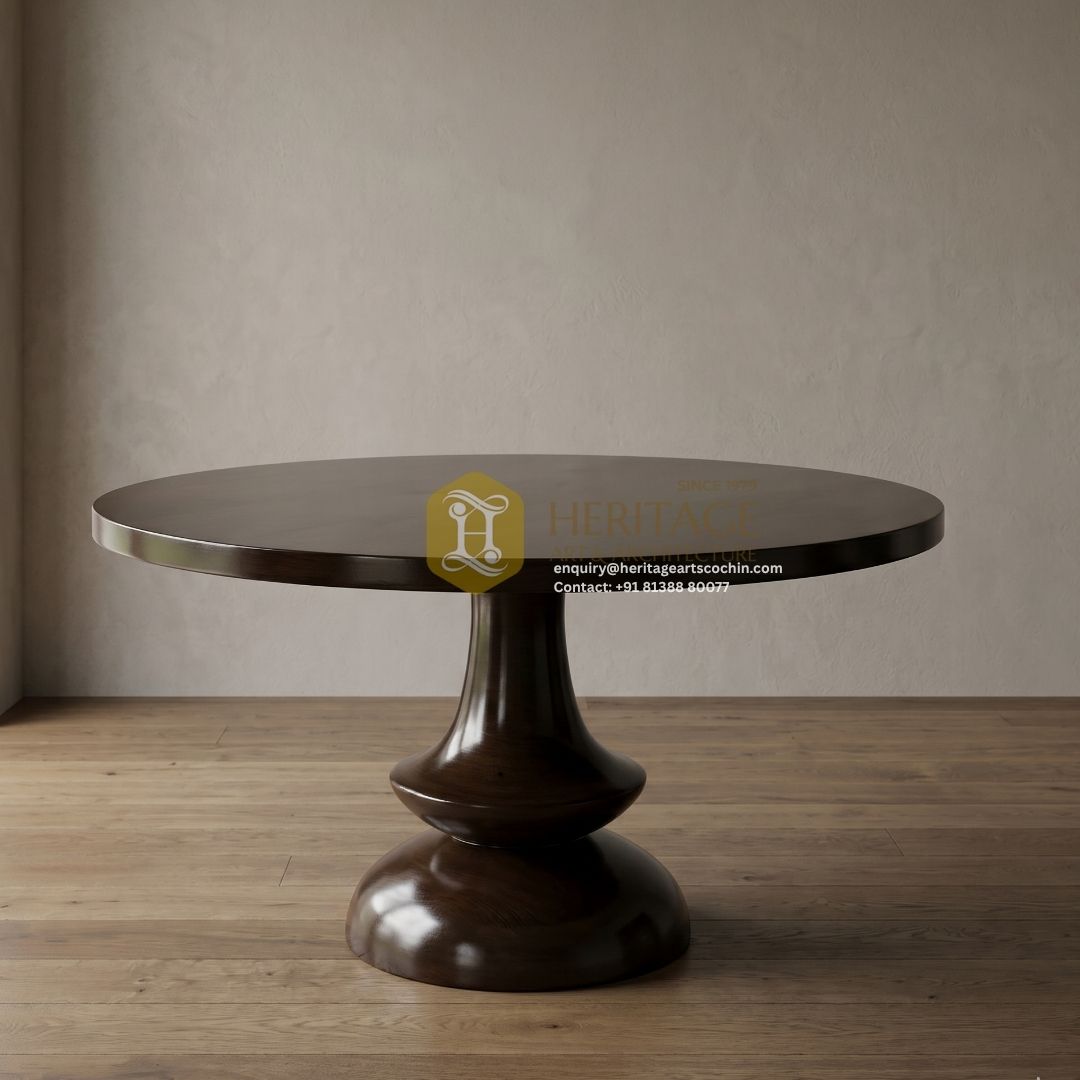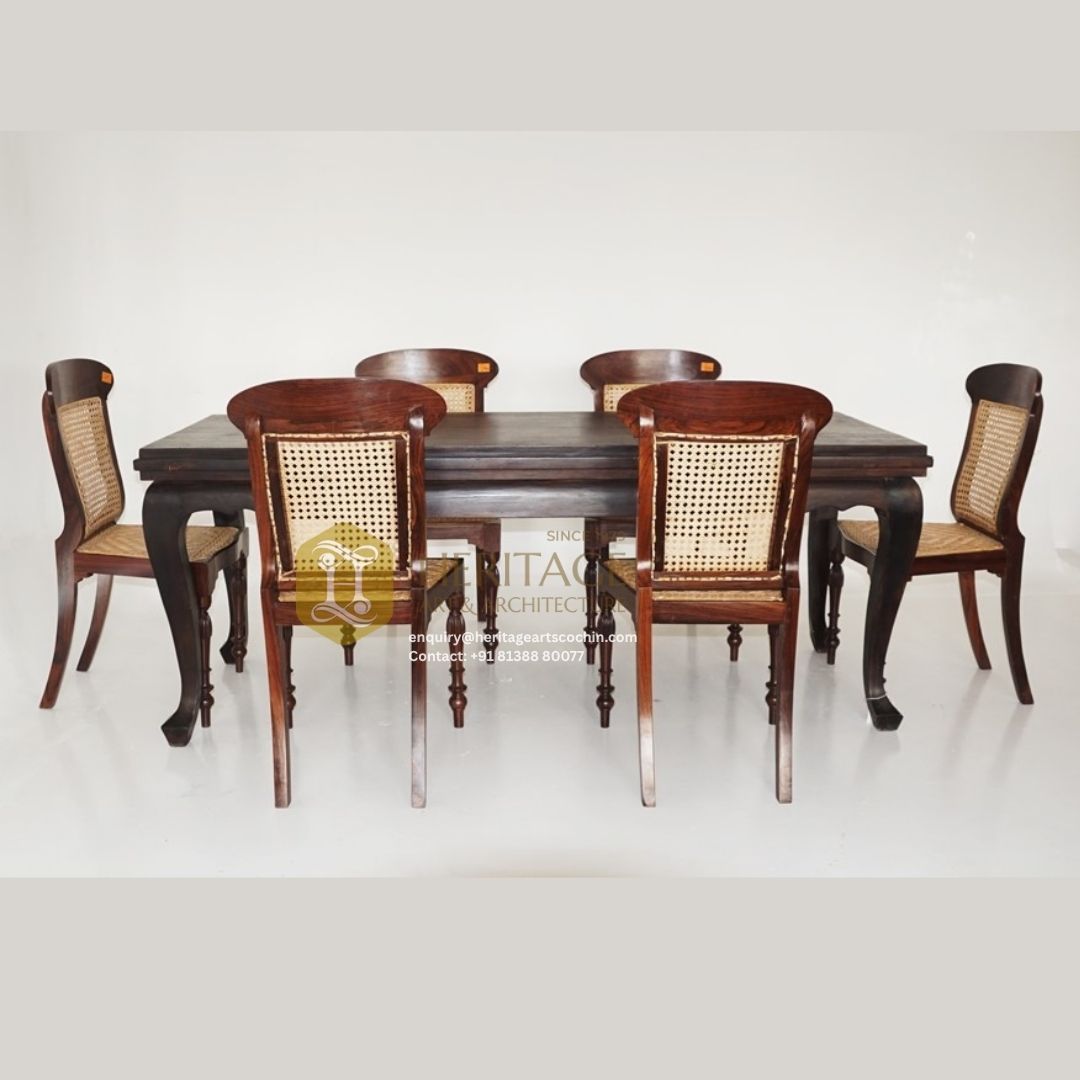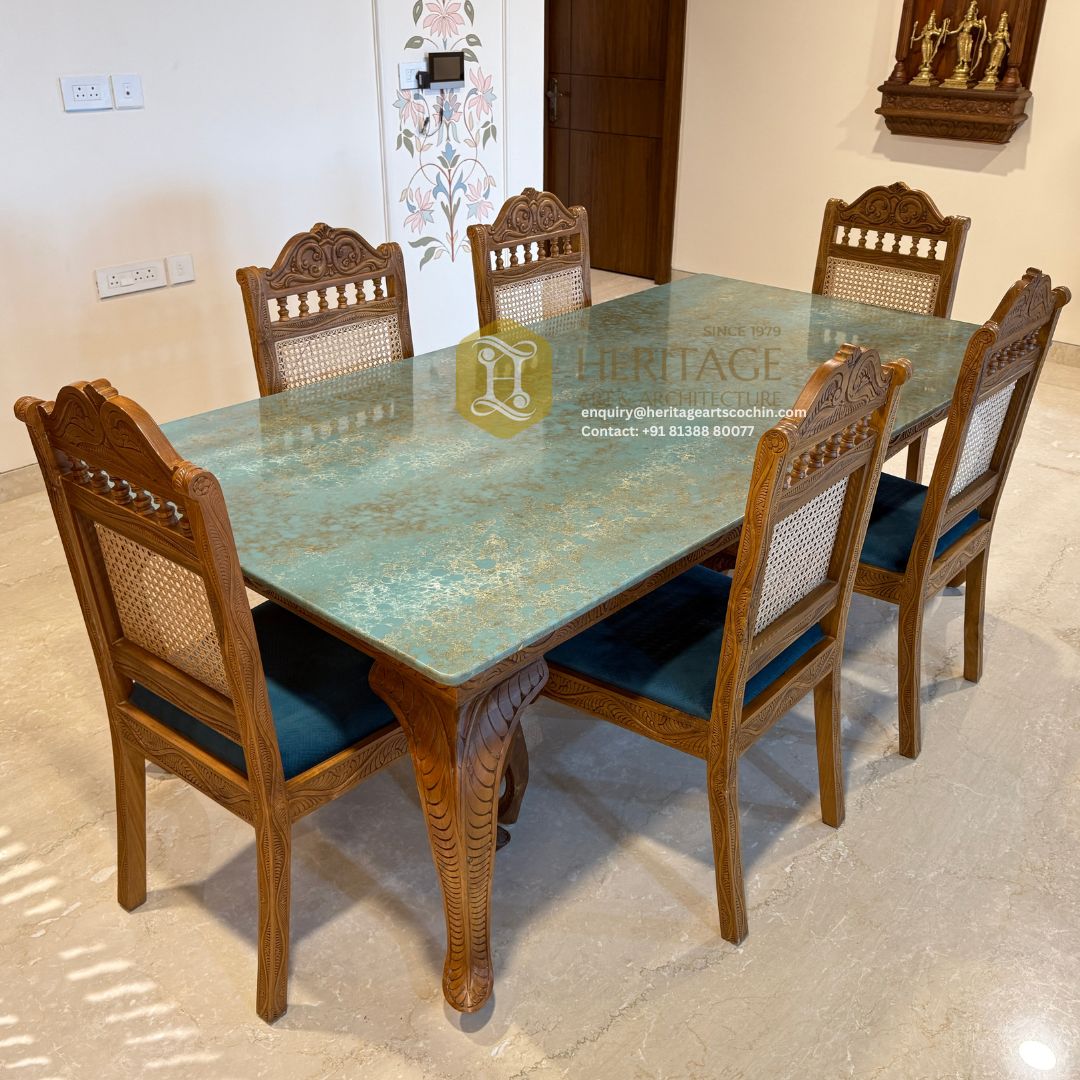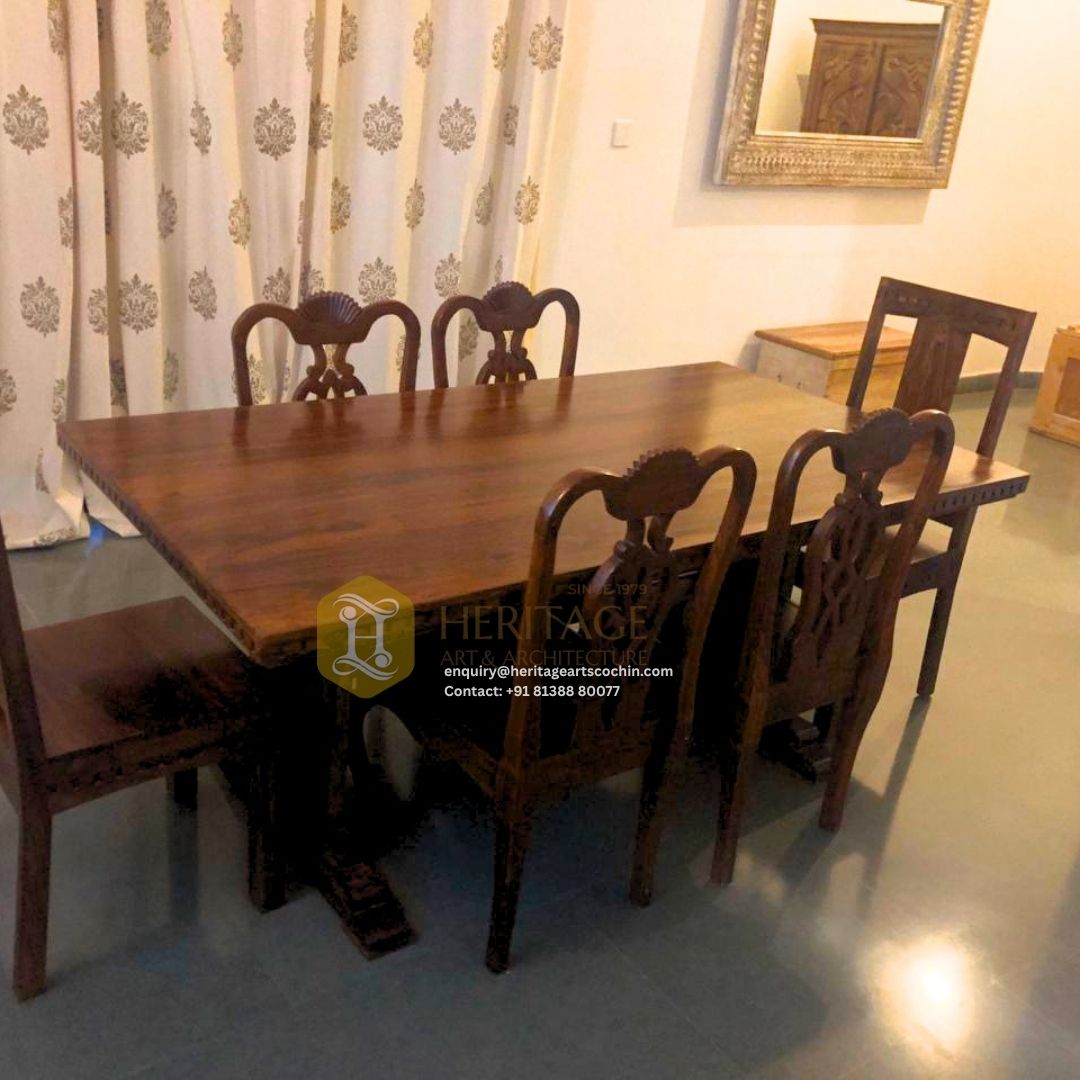

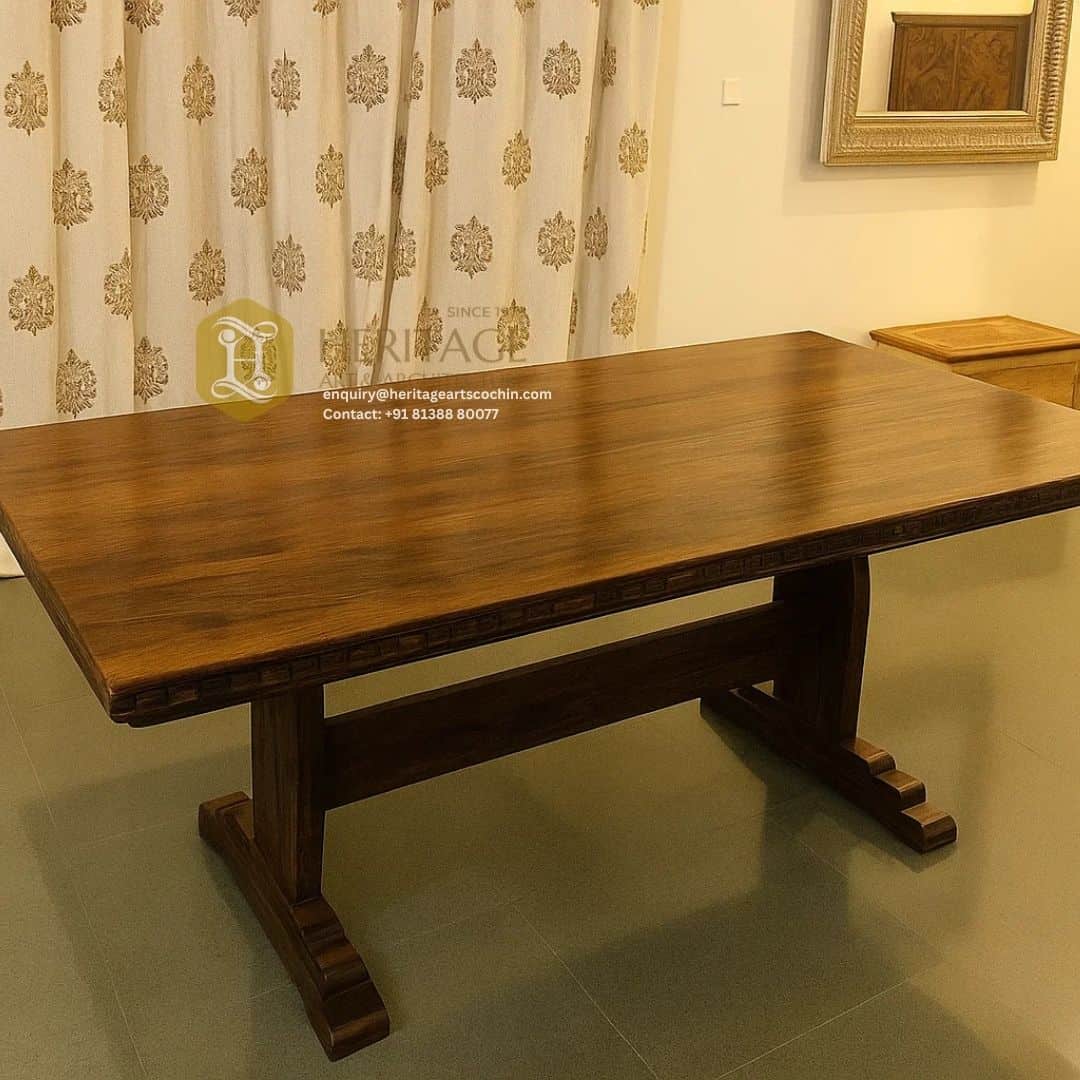
The tabletop is a wide, flat-planed slab with a clean rectangular form and a deeply stained walnut-brown finish that shows the wood grain clearly. The edge carries a carved border detail — a recurring floral and vines motif that wraps the perimeter. The base is the most distinctive element: a trestle-style pedestal with double columnar legs joined by a carved stretcher at the floor, giving the understructure a church-hall or refectory quality.
The Chairs
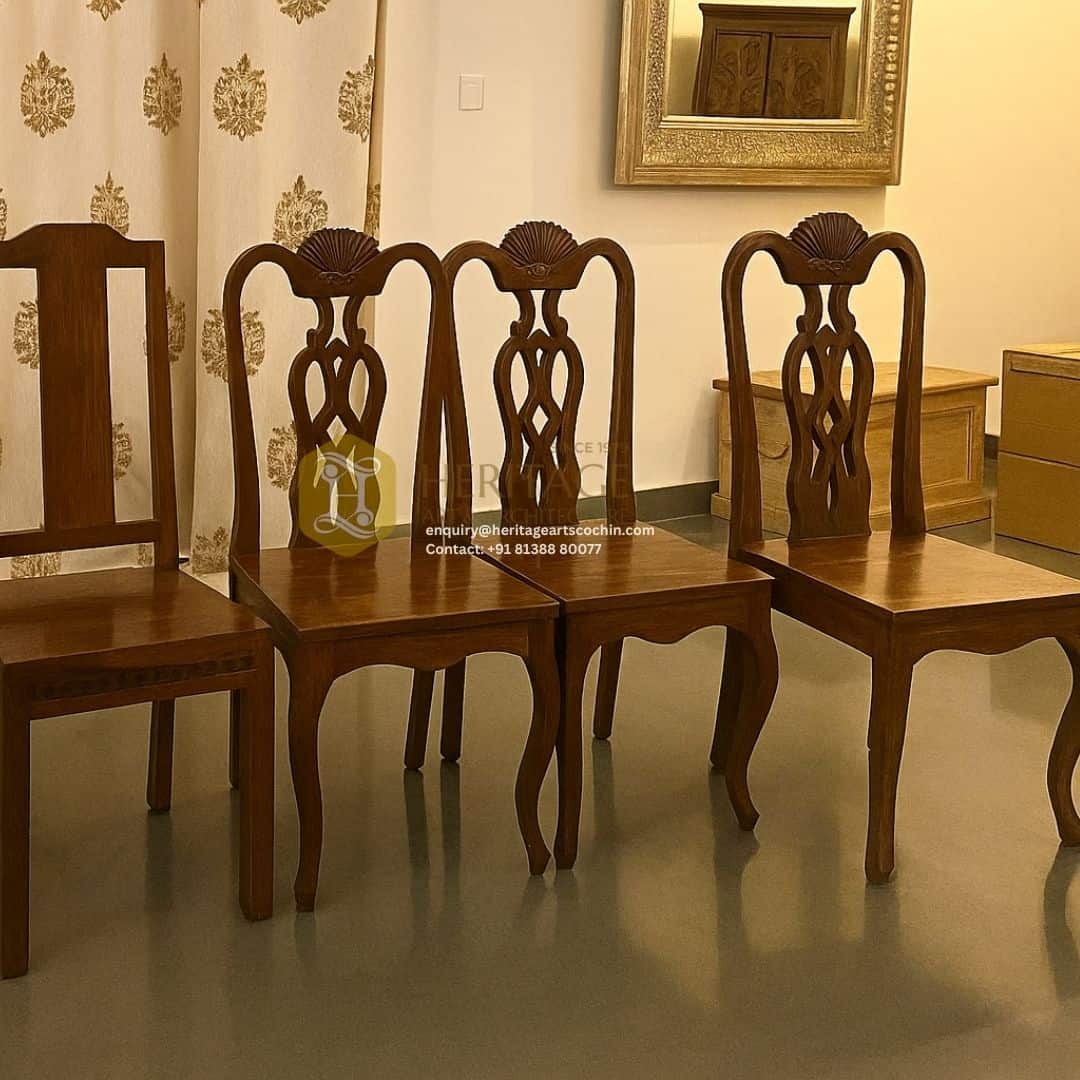
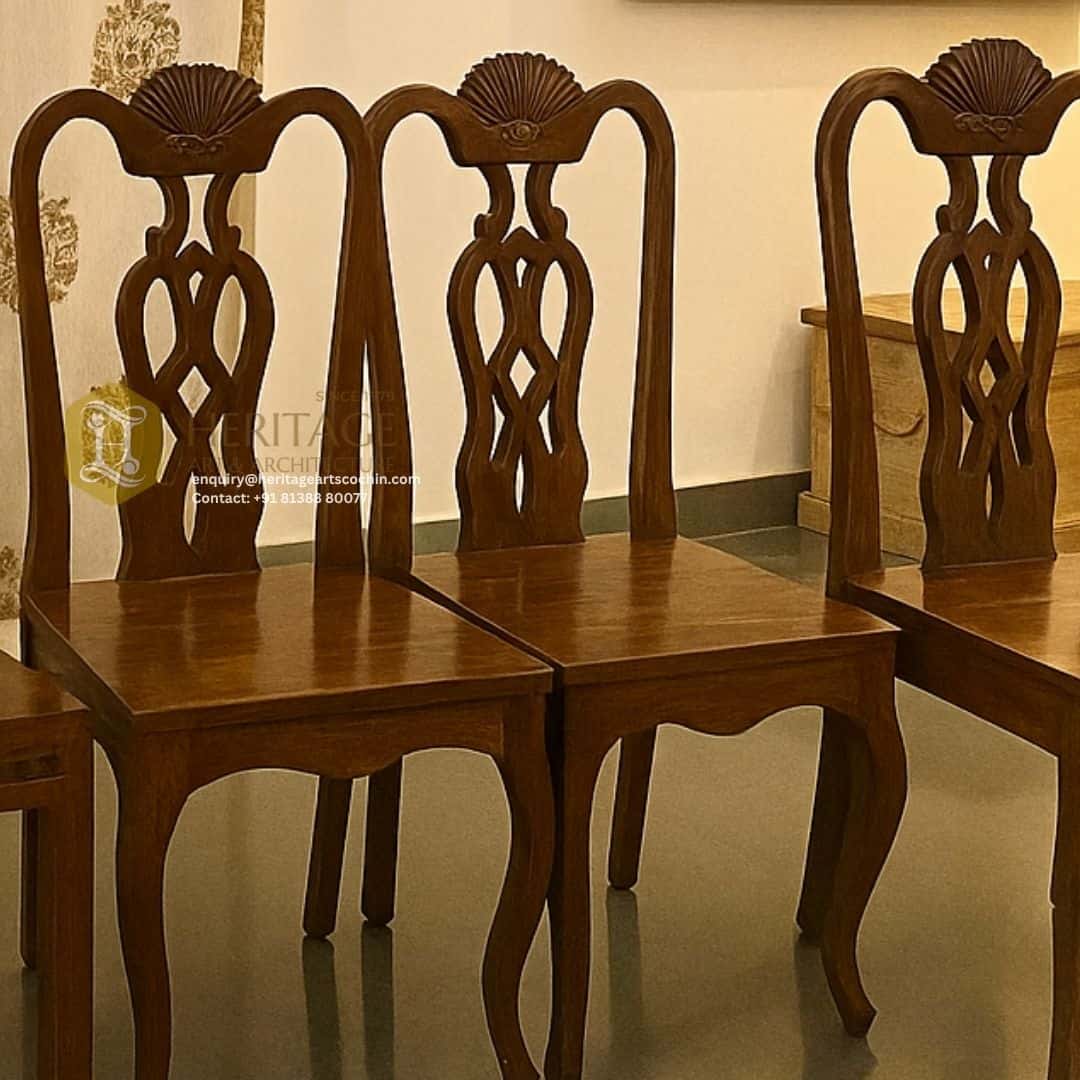
The set has two chair types — the back chairs along the far side feature a fan-shell or palmette carving at the top rail, with an open fiddle-back splat beneath, a detail that reads directly from Queen Anne and Chippendale traditions filtered through Indian craftsmanship. The side chairs closer to the foreground have a different back treatment — a geometric lattice splat — suggesting the set may mix chair styles deliberately, a common practice in Anglo-Indian furniture commissions. All chairs have upright posture, solid wood seats, and straight tapered legs.
Carving & Craft
The carving throughout is hand-done. The motifs — shells, foliate scrolls, lattice openwork — are not stamped or routed but individually worked. This is one of the defining qualities of South and Central Indian wood working style that produced furniture for colonial households.
Dimensions
Table: 200 × 95 cm (L × W), height around 76 cm. Seats 6
Chairs: 45 cm seat width, 100 cm total back height.
Colour
Deep walnut brown with warm amber undertones where light catches the grain. No two surfaces read identically — the stain sits differently on the tabletop, the turned legs, and the carved splats, giving the set a tonal depth that painted or veneered furniture cannot replicate.