Yugmaśraya

/
/
Yugmaśraya

Yugmaśraya

“A Duet in Wood — Where Balance Becomes Beauty”

In the timeless language of Indian architecture, duality is more than a design principle — it is philosophy made visible. Every temple has twin Dvārapālas. Every home has two thresholds — one for coming in, one for letting go. Every sacred space, a pairing of light and shadow. It is within this ancient tradition of twinned grace that Yugmaśraya was born — a pair of handcrafted wooden pillars that don’t just hold space — they hold meaning.

Category

Description

Derived from Yugma (pair) and Āśraya (shelter or resting place), Yugmaśraya speaks of shared strength, mirrored presence, and the quiet intimacy of symmetry. These are not just columns — they are sculptural companions, designed to flank life’s most memorable moments: the sway of a wooden swing, the threshold between two rooms, the in-between pause where a home breathes.
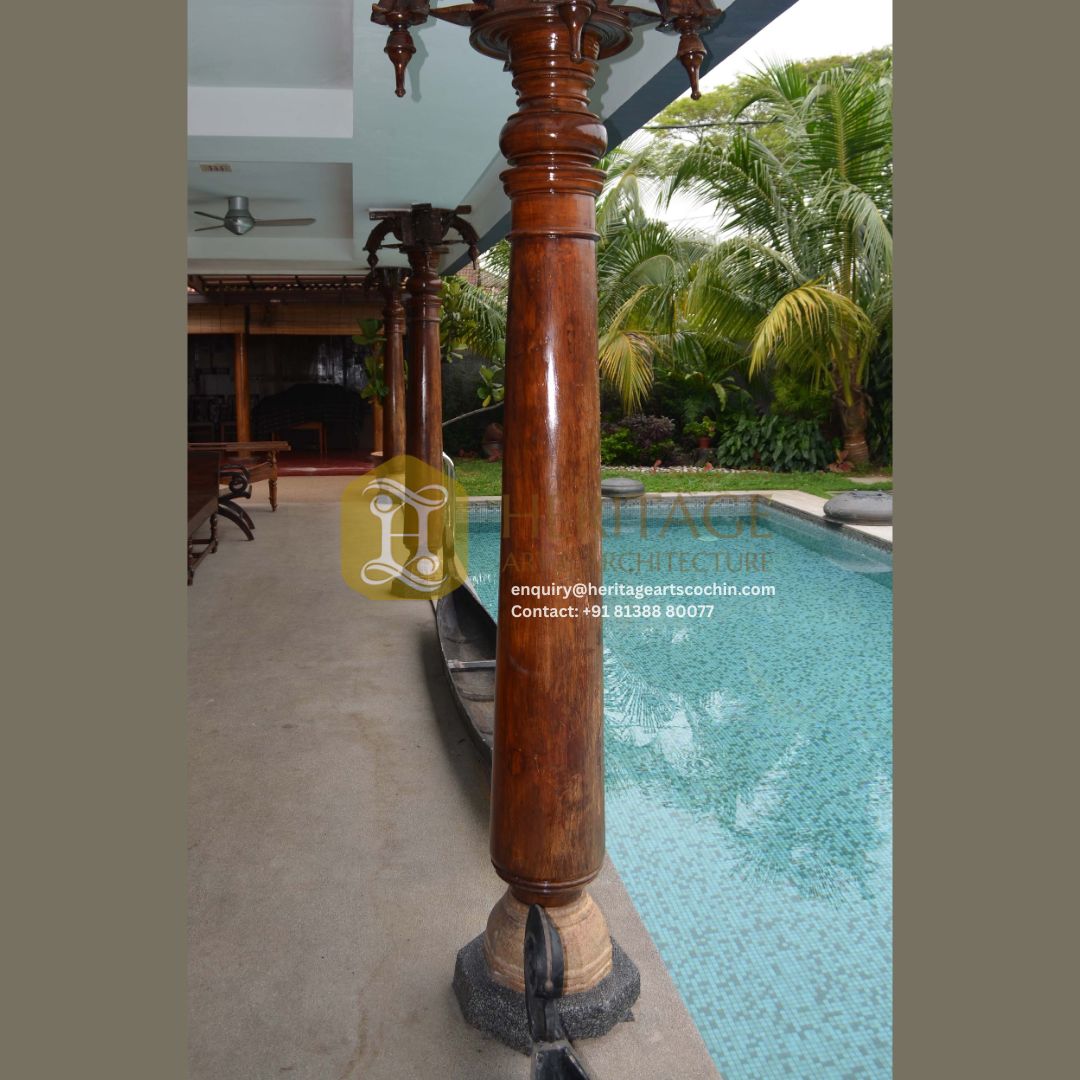
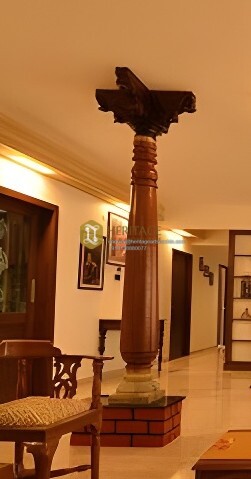
Handcrafted from seasoned teak, each pillar rises with minimal ornamentation — and yet, every curve tells a story. The rounded shaft flows upward with quiet confidence, reminiscent of the stillness of temple corridors. At the base, a lotus-foot moulding holds it in place, grounding the form like a mantra etched in wood. The circular crown atop each column is not just decorative — it’s a gesture of closure, balance, and respect for architectural order.

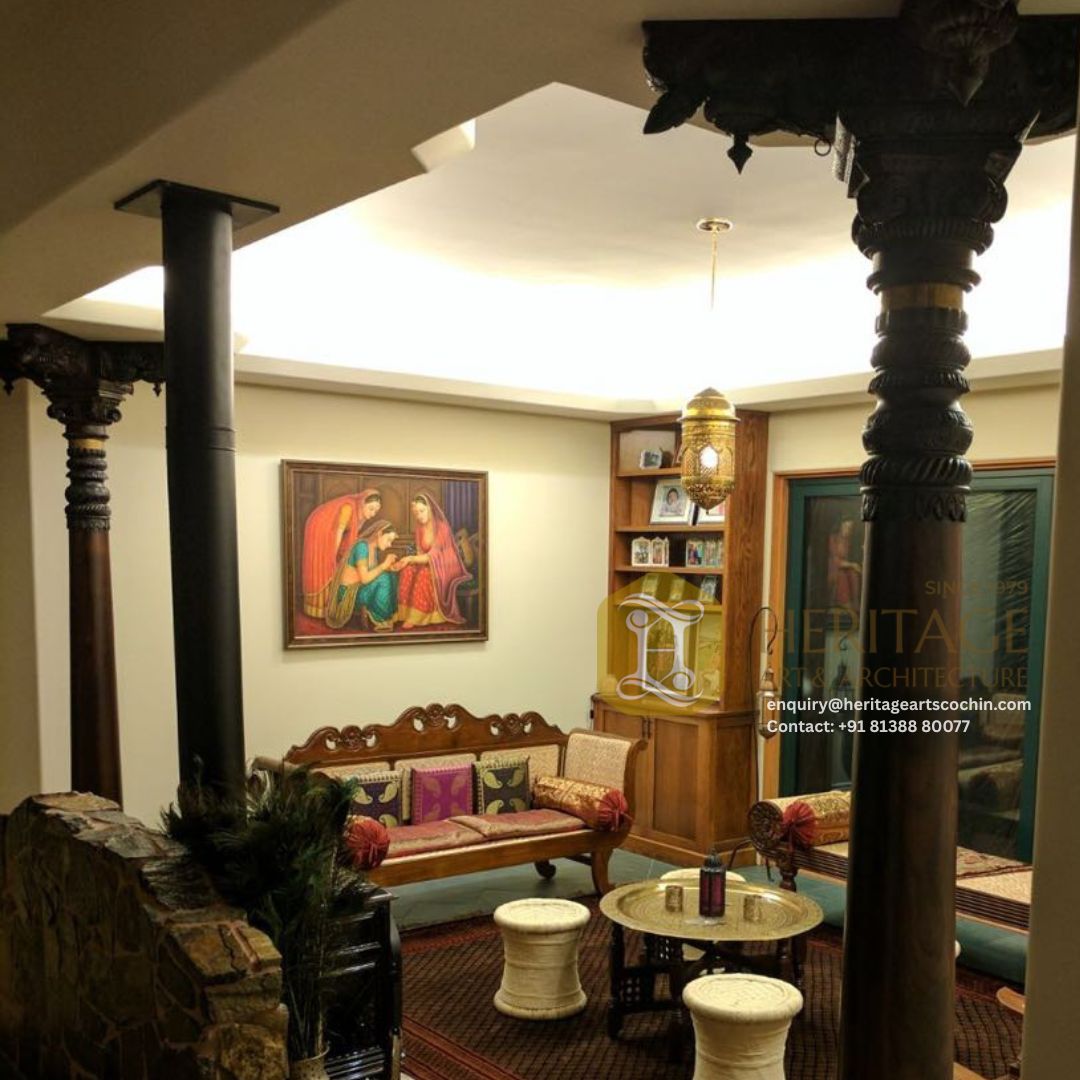
When placed beside a traditional oonjal (floor swing) in a formal living room, these pillars do not simply support — they compose. Like the twin strings of a veena, they frame the emptiness in between, allowing life — laughter, silence, ritual — to flow through. When installed between a dining area and a family lounge, they become visual punctuation — marking transition, yet never breaking continuity.
Their elegance lies in what they withhold — no heavy carvings, no ornate distractions. Just proportion, rhythm, and grace, shaped by the hands of artisans whose craft has echoed through generations of South Indian woodwork. The dark polish glows under ambient light, allowing each detail — from the turned waist to the stepped base — to reveal itself slowly, like verses in a classical rāga.
Yugmaśraya is ideal for:

  • Framing heritage floor swings in luxury living rooms
  • Marking quiet separation between pooja corners and living spaces
  • Adding sculptural rhythm to boutique villas, resorts, or heritage restorations
  • Standing as an architectural focal point in modern South Indian homes

In a world of fleeting trends, Yugmaśraya stands rooted — a reminder that symmetry can be soulful, and that two can indeed feel like one.
Because a pillar can hold more than a ceiling — it can hold a story in balance.

Craftsmanship Details

  • Material: Premium seasoned teak or rosewood
  • Finish: Satin-sheen hand polish with deep burnishing
  • Construction: Mortise-and-tenon joinery with invisible locking pegs
  • Carving Technique: Traditional lathe-turned and hand-chiseled forms, finished by senior artisans from Tamil Nadu

Ideal Usage Context

  • Designed for luxury living rooms, verandahs, or transitional thresholds
  • Best placed as a pair flanking a floor swing, console, or pooja step
  • Complements heritage-inspired interiors, resort villas, or boutique hospitality spaces
  • Can also serve as room dividers in open floor plans or as decorative guardians at entrances
More Products

Established in 1979, we carry a legacy that we proudly unfold in front of you. Here tradition blends with creation, art blends with heritage, and finally, a whole new story is carved out in pure wood exclusively for you. 

Shopping Cart0

Cart

Shopping Cart0

Cart

Description

Derived from Yugma (pair) and Āśraya (shelter or resting place), Yugmaśraya speaks of shared strength, mirrored presence, and the quiet intimacy of symmetry. These are not just columns — they are sculptural companions, designed to flank life’s most memorable moments: the sway of a wooden swing, the threshold between two rooms, the in-between pause where a home breathes.
Handcrafted from seasoned teak, each pillar rises with minimal ornamentation — and yet, every curve tells a story. The rounded shaft flows upward with quiet confidence, reminiscent of the stillness of temple corridors. At the base, a lotus-foot moulding holds it in place, grounding the form like a mantra etched in wood. The circular crown atop each column is not just decorative — it’s a gesture of closure, balance, and respect for architectural order.

When placed beside a traditional oonjal (floor swing) in a formal living room, these pillars do not simply support — they compose. Like the twin strings of a veena, they frame the emptiness in between, allowing life — laughter, silence, ritual — to flow through. When installed between a dining area and a family lounge, they become visual punctuation — marking transition, yet never breaking continuity.
Their elegance lies in what they withhold — no heavy carvings, no ornate distractions. Just proportion, rhythm, and grace, shaped by the hands of artisans whose craft has echoed through generations of South Indian woodwork. The dark polish glows under ambient light, allowing each detail — from the turned waist to the stepped base — to reveal itself slowly, like verses in a classical rāga.

Yugmaśraya is ideal for:

  • Framing heritage floor swings in luxury living rooms
  • Marking quiet separation between pooja corners and living spaces
  • Adding sculptural rhythm to boutique villas, resorts, or heritage restorations
  • Standing as an architectural focal point in modern South Indian homes

In a world of fleeting trends, Yugmaśraya stands rooted — a reminder that symmetry can be soulful, and that two can indeed feel like one.
Because a pillar can hold more than a ceiling — it can hold a story in balance.

Craftsmanship Details

  • Material: Premium seasoned teak or rosewood
  • Finish: Satin-sheen hand polish with deep burnishing
  • Construction: Mortise-and-tenon joinery with invisible locking pegs
  • Carving Technique: Traditional lathe-turned and hand-chiseled forms, finished by senior artisans from Tamil Nadu

Ideal Usage Context

  • Designed for luxury living rooms, verandahs, or transitional thresholds
  • Best placed as a pair flanking a floor swing, console, or pooja step
  • Complements heritage-inspired interiors, resort villas, or boutique hospitality spaces
  • Can also serve as room dividers in open floor plans or as decorative guardians at entrances