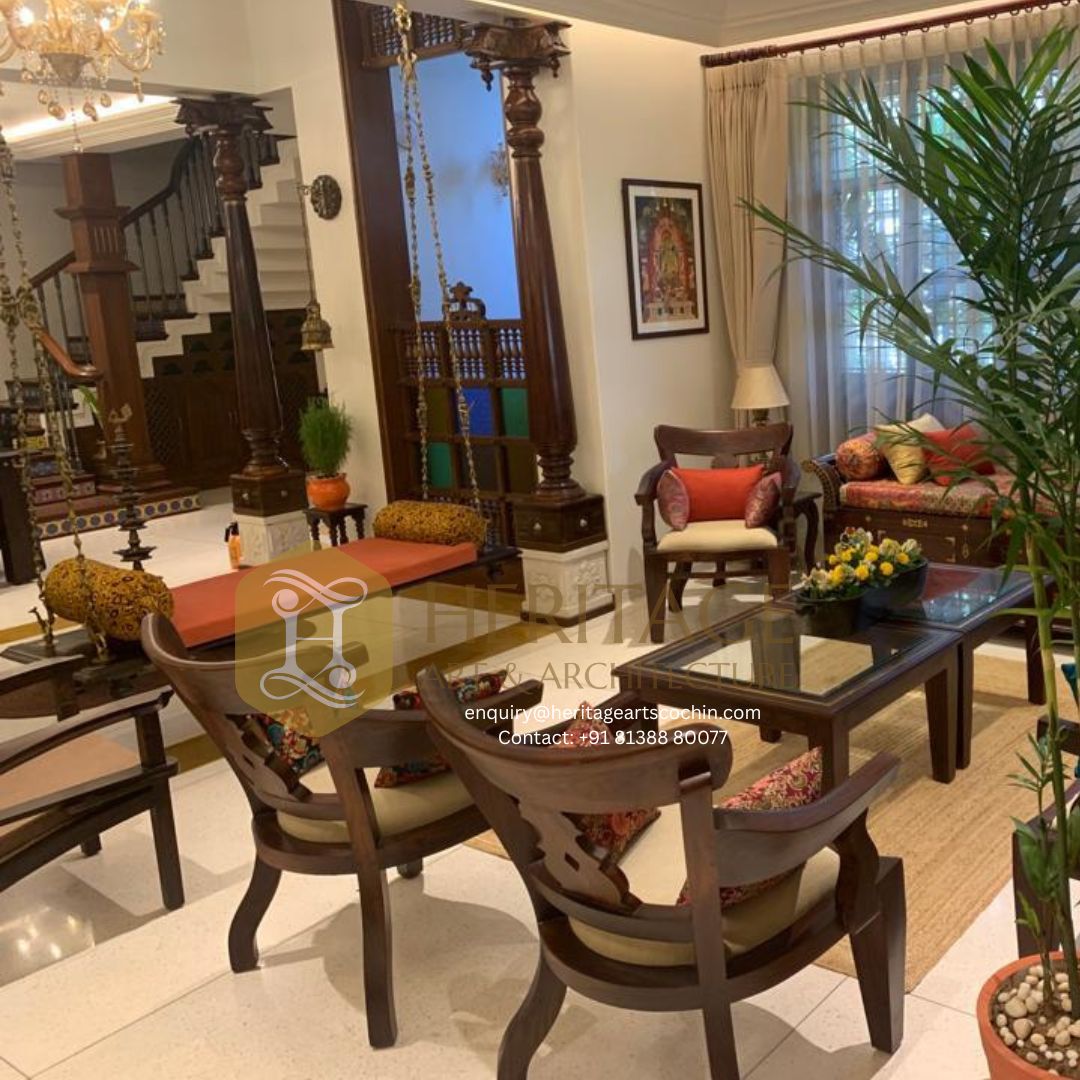

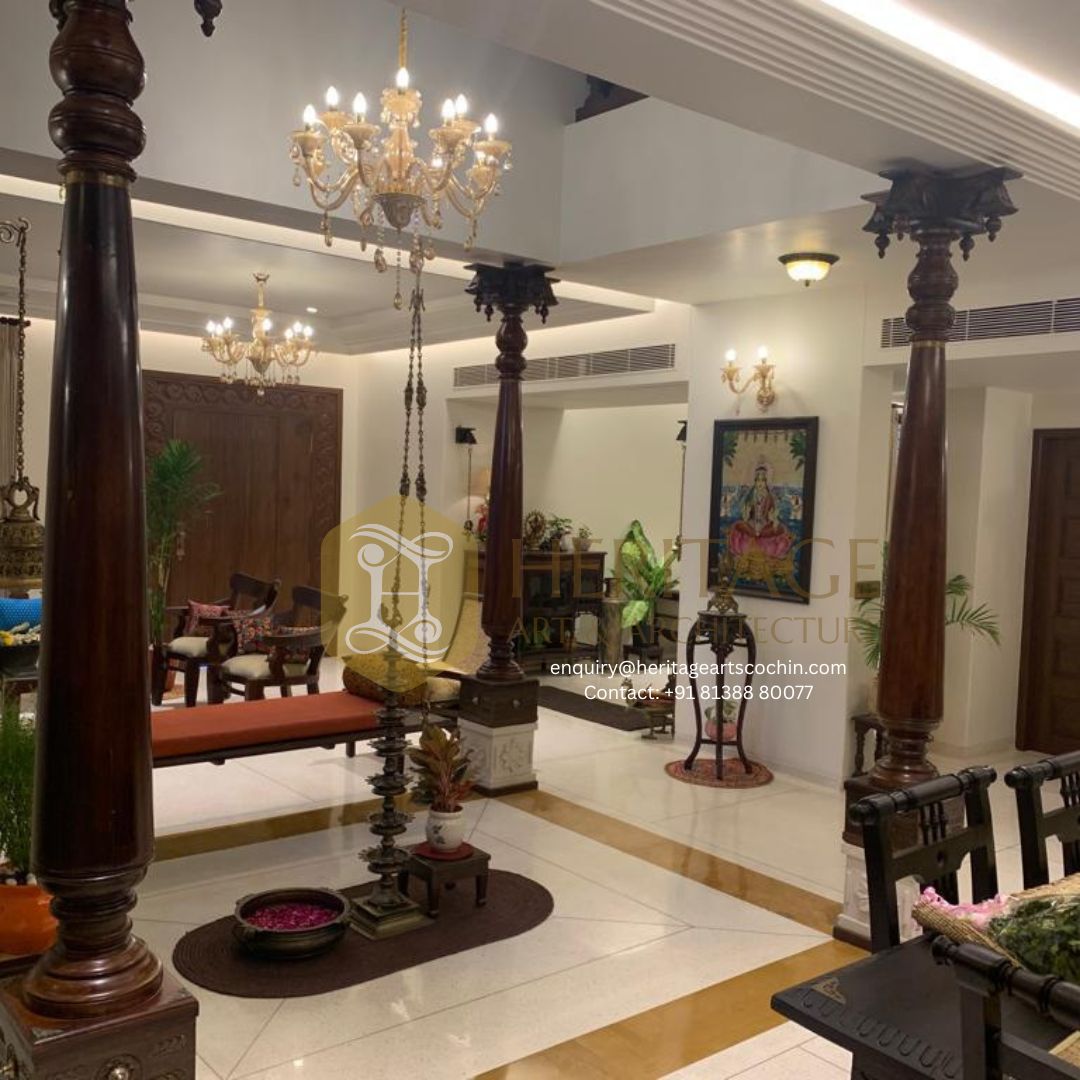
By the grand window, draped in sheer curtains, a majestic paalaka divan (daybed) rests as a centerpiece of grace. Cushions sit in abundance, inviting repose, storytelling, perhaps even an afternoon nap under the gentle spill of natural light. By evening, this same divan transforms into a regal backdrop for conversation, every glance enriched by its polished chest-like base, ornamented with metallic clasps and locks that whisper echoes of craftsmanship.
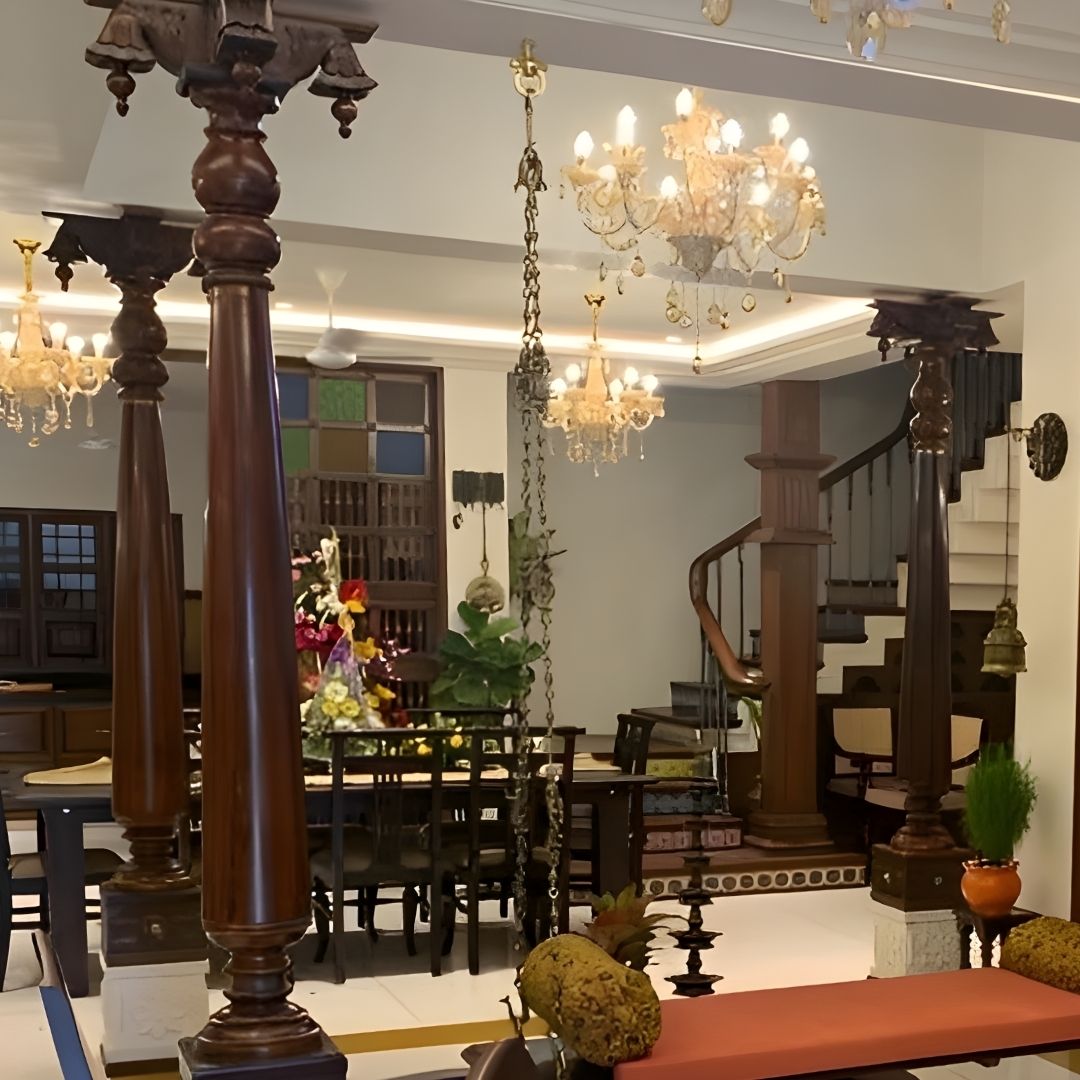
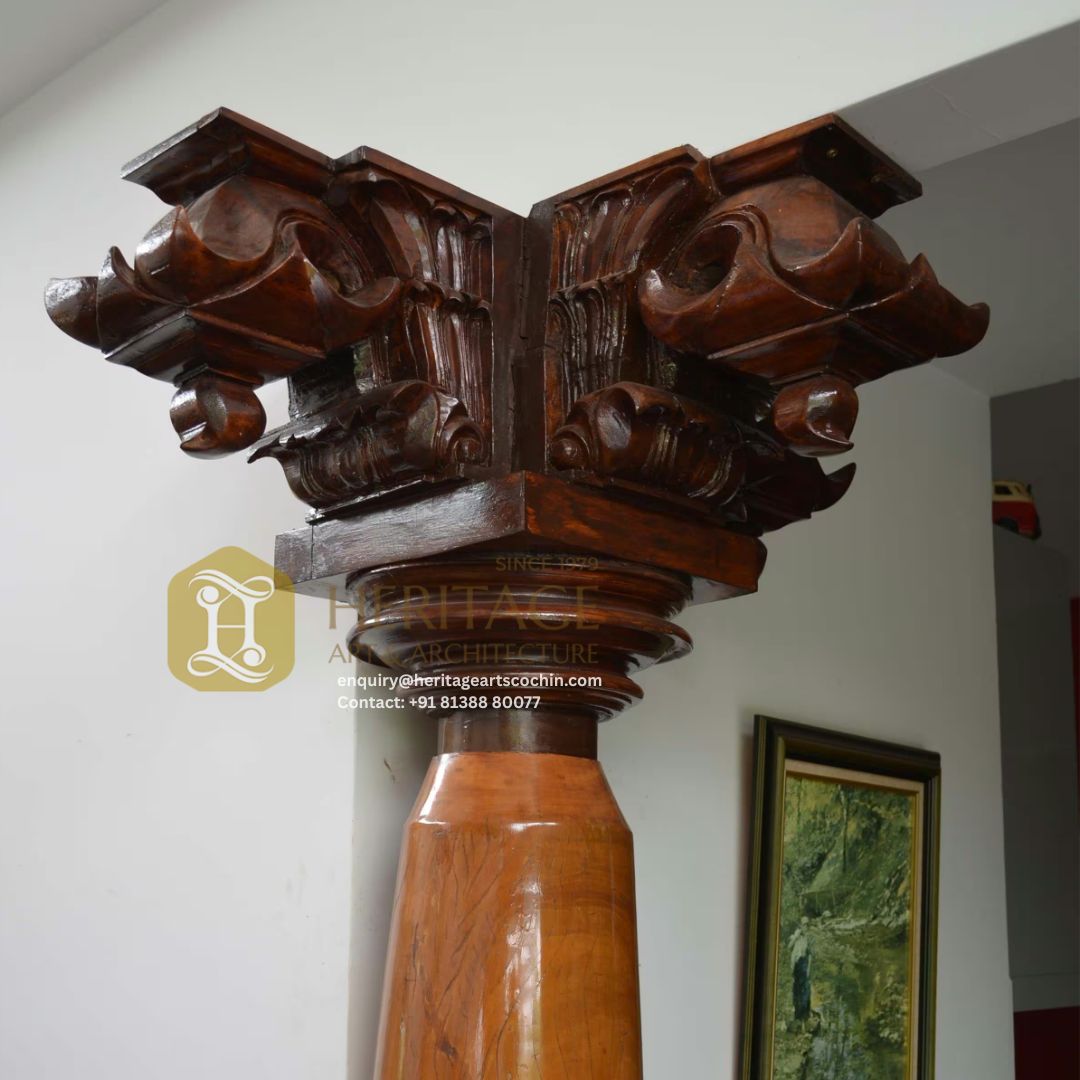
Anchoring the pavilion are the pillars—stately, turned in rich wood, holding steady the home with a temple-like solemnity. From them hangs a wooden swing draped in cushions, a timeless piece that bridges generations: a throne for children’s laughter, grandparents’ soft songs, and adults’ unhurried conversations carried on long into the evening. The gentle sway of the swing seems to set the rhythm of the room itself, reminding everyone to linger, not rush.
Golden chandeliers bloom above, their crystals scattering warm light across cream walls, freshly potted palms, and well-placed artwork. Brass lamps and urulis filled with petals add finishing touches of heritage, tying this modern living ensemble back to its Kerala roots.
This is not a sterile “living room.” It is a living pavilion—a house in miniature, with places to sit, to swing, to dream, to gather. It bursts with warmth, laughter, elegance, and a sense of kinship that Kerala homes often embody so naturally.