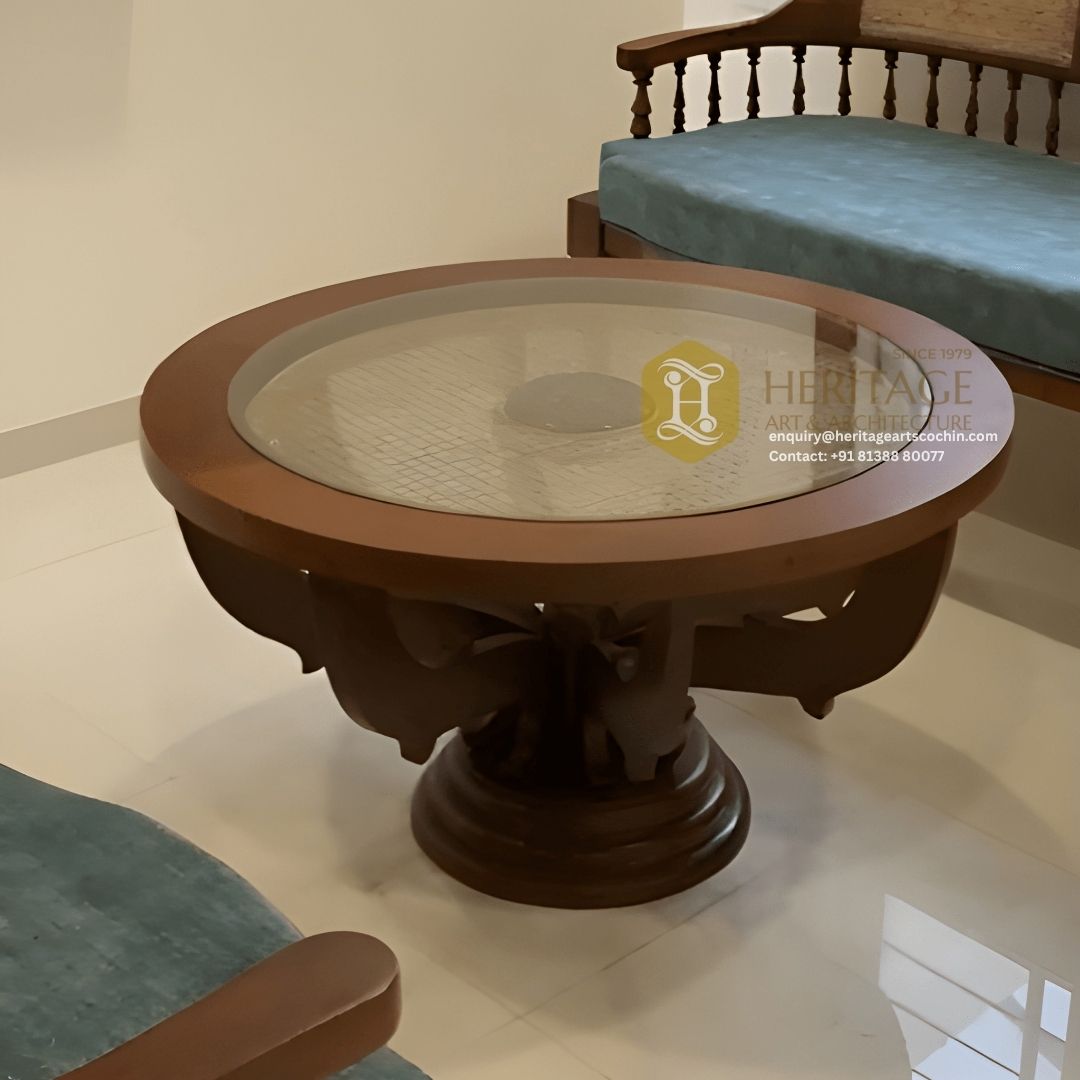
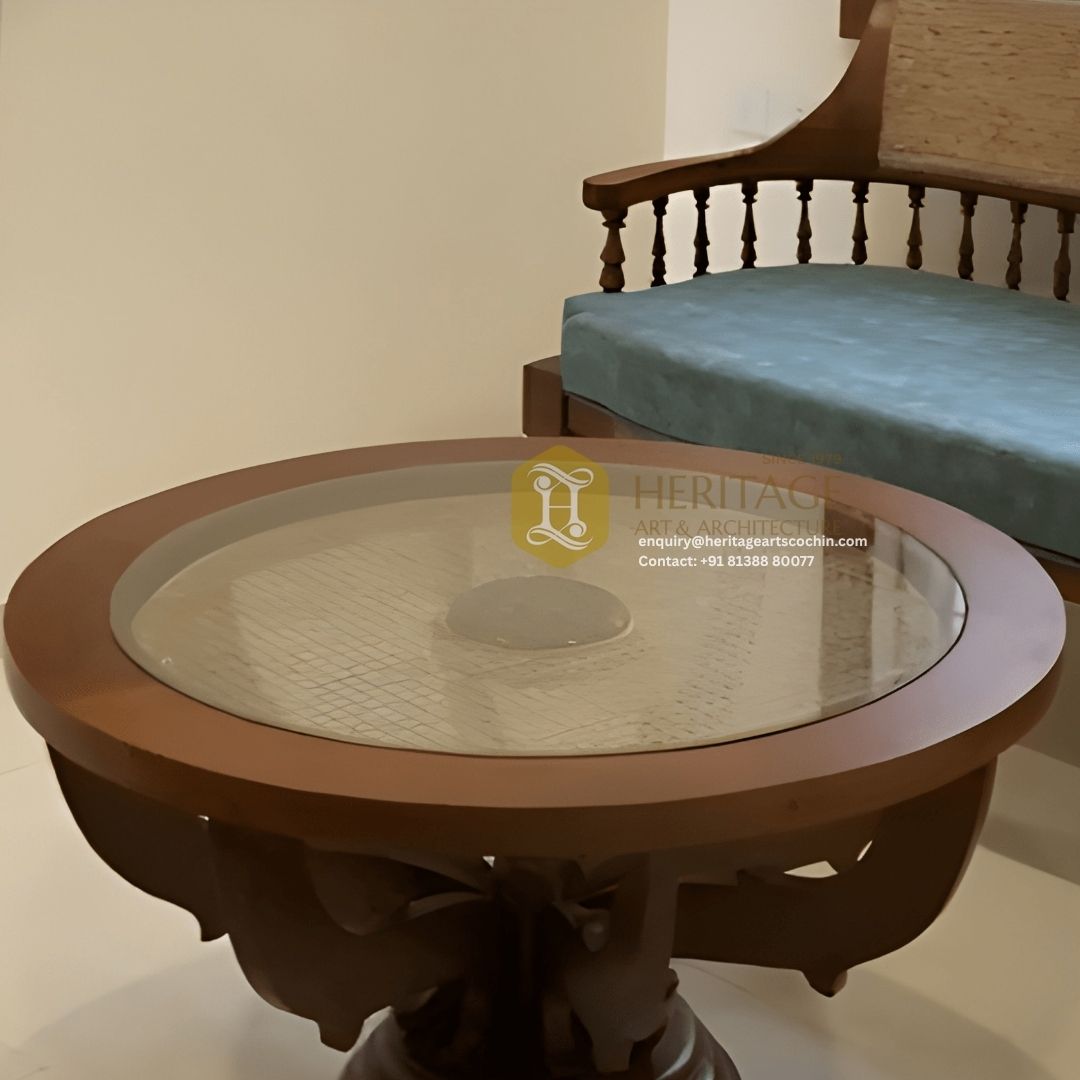
Inspired by the sacred yantras and lotus-shaped mandapas of temples, Jyothimandala brings together the radiance of light, the order of geometry, and the comfort of craftsmanship. Its name, drawn from Jyothi (light) and Mandala (circle or sacred field), speaks to its very essence — a circular beacon, around which lives and conversations gently revolve.
At its heart lies a handwoven cane medallion — soft, textural, and rhythmic, reminiscent of temple lattices or ancestral storytelling mats. The glass surface above acts like a skylight: transparent, resilient, reflective. It allows the eye to see through into the pattern beneath, just as a still pond reveals the mandala of its depths when kissed by morning light.
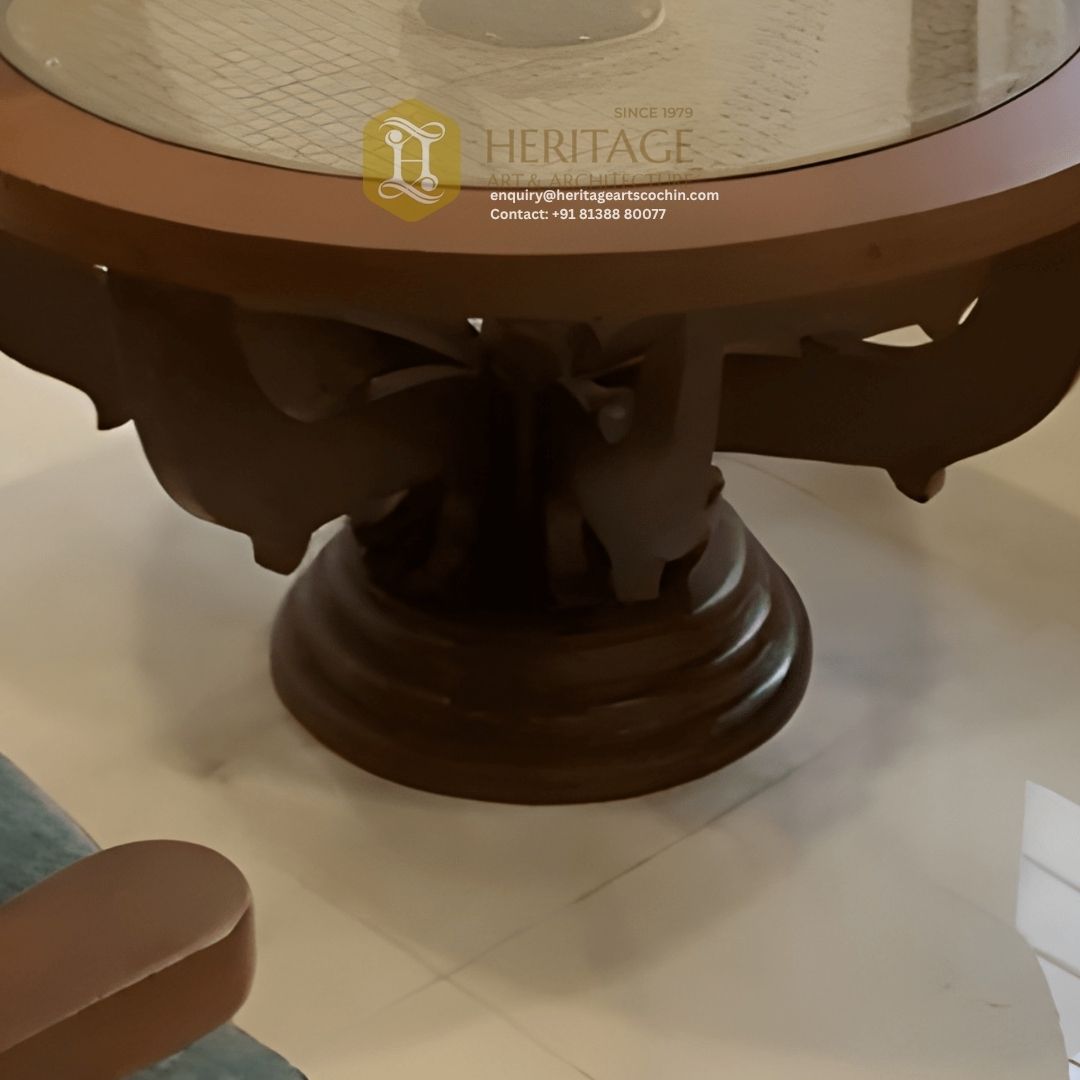
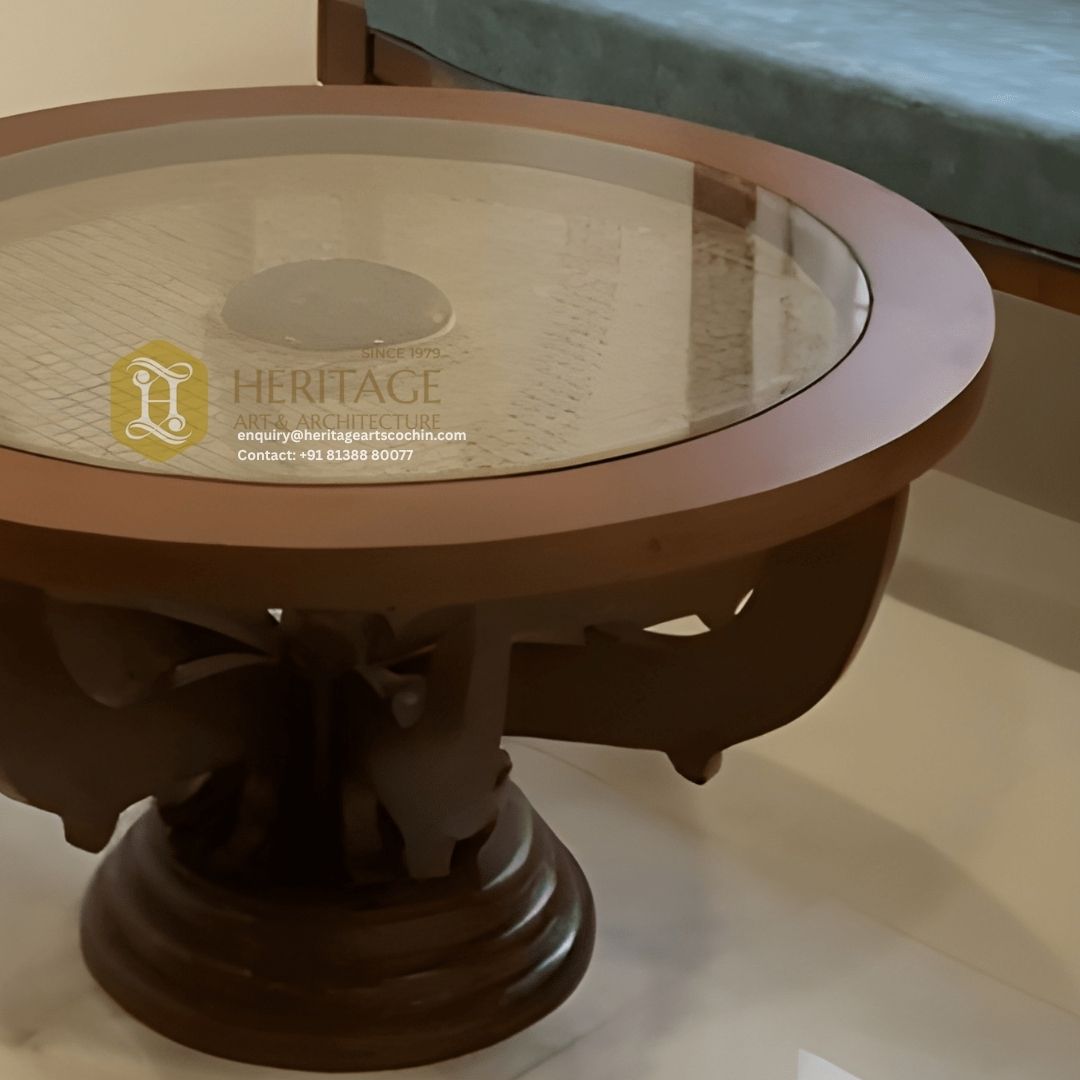
Held within a solid wood rim, framed by lotus-carved brackets and anchored by a pillar-like pedestal, Jyothimandala merges temple architecture with tactile comfort. The circular form invites openness. It gathers people in shared orbit — for laughter, tea, reflection, or silence.
It is a table not meant to dominate the room — but to center it. Whether placed under a skylight, between two woven armchairs, or surrounded by urulis and jasmine, Jyothimandala quietly sanctifies its surroundings. It doesn’t seek attention — it radiates intention.
1. Prakasha Top (Glass Surface)
A thick, circular glass top that forms the main surface of the table.
Description: Prakāśa means “radiance” or “light.” The Prakāśa Top offers clarity and durability, allowing the eye to see the artistry beneath—like a lens for the beauty below.
2. Jāla Medallion (Cane Center)
A handwoven cane disc set into the center below the glass.
Description: Jāla means “weave” or “lattice.” The Jāla Medallion evokes sacred geometry, breathability, and the rhythm of ancestral storytelling mats.
3. Valaya Rim (Wooden Frame)
The robust hardwood ring that holds the glass and defines the table’s circular form.
Description: Valaya means “bangle” or “ring”.The Valaya Rim frames the table like a ritual halo, marking the spiritual boundary of shared space.
4. Pādma Bracket (Carved Supports)
Four sculpted wooden brackets extending from the central stem to support the top.
Description: Pādma means “lotus.” The Pādma Brackets add stability and ornate drama, shaped like petals or temple eaves, holding the upper plane with quiet strength.
5. Stambha Base (Central Pedestal)
A solid, turned pedestal that tapers into concentric rings.
Description: Stambha means “pillar.” The Stambha Base anchors the piece like a temple column, providing weight, symmetry, and a foundation rooted in classical form.
Craftsmanship & Materials
- Wood: Seasoned teak or rosewood
- Top: Tempered glass
- Inset: Natural handwoven cane
- Construction: Mortise joinery, sculpted legs, embedded glass support
- Finish: Natural polish in warm walnut or heritage mahogany
Ideal Placement
- Between traditional seating sets like Sugandhira and Samavr̥tta
- In heritage-themed lounges or inner courtyards
- As a standalone piece under a skylight or near brass lamps
- Adorn with an uruli, books, or fresh jasmine for added sensory depth