In South Indian homes where jasmine once perfumed the corridors and stories echoed through timbered verandahs, seats like these were more than utility. They were invitations — to linger, to listen, to lean in.
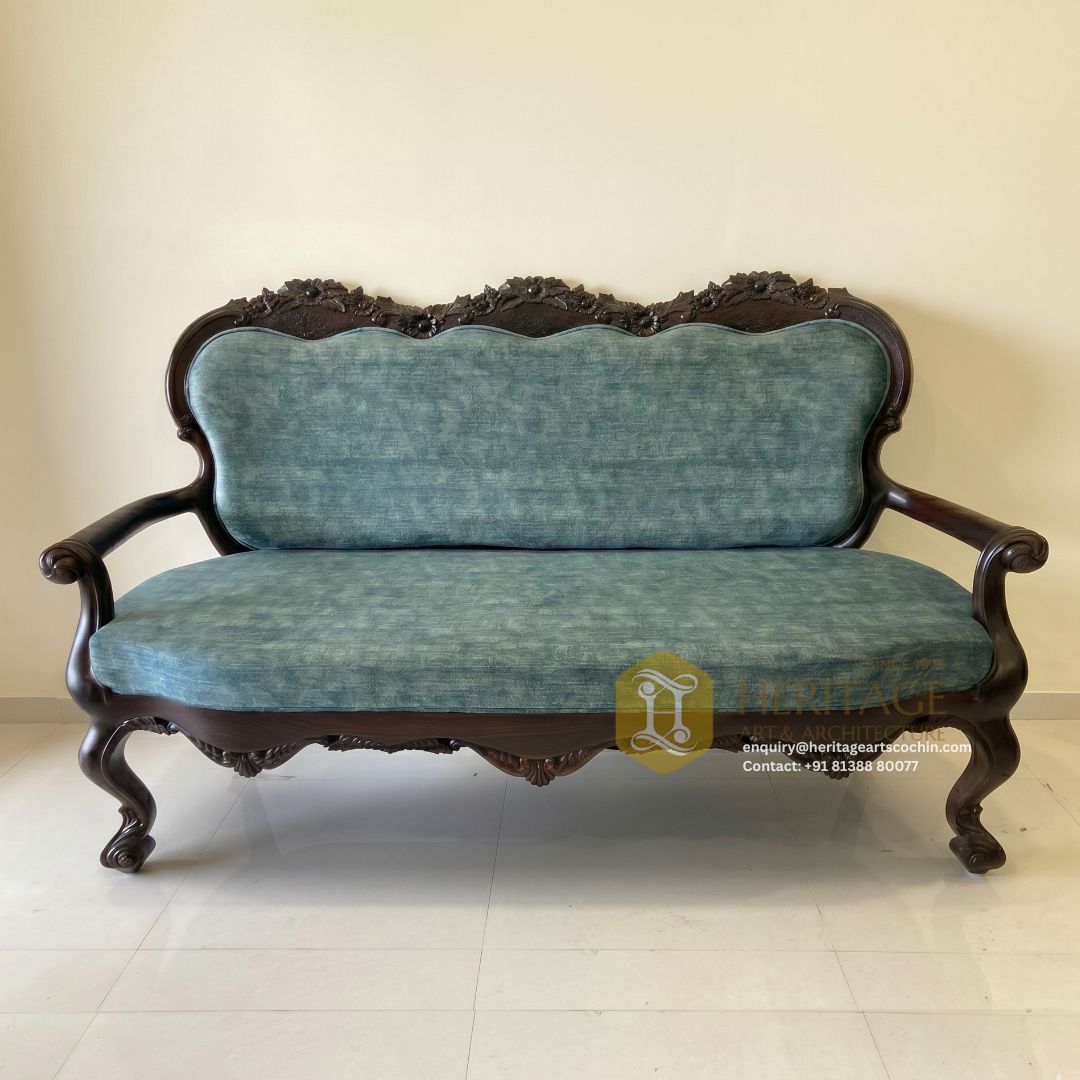
Mandārika emerges from this sensibility. A two-seater crafted in kiln-dried teak, it draws its lines from colonial-era settees, temple mandapams, and the floral rhythm of garden creepers carved into wood. Yet, its presence is minimal, modern, and masterfully composed — echoing tradition without burdening it.
Its arched wooden back flows into gentle scroll arms, the carvings subtle like a whisper, never loud. A soft-cushioned base nestles between carved legs, poised like the lotus from which its name draws inspiration. The entire piece speaks of balance — between structure and softness, between ritual and repose.
Place it beside a pooja alcove, under a canopy of brass lamps, or in the sun-drenched corner of your living room. Whether for conversation, contemplation, or simply to sit beside someone in silence — Mandārika becomes a companion to memory, not just to rest.
It is not merely a chair.
It is a place where you arrive — and remain.
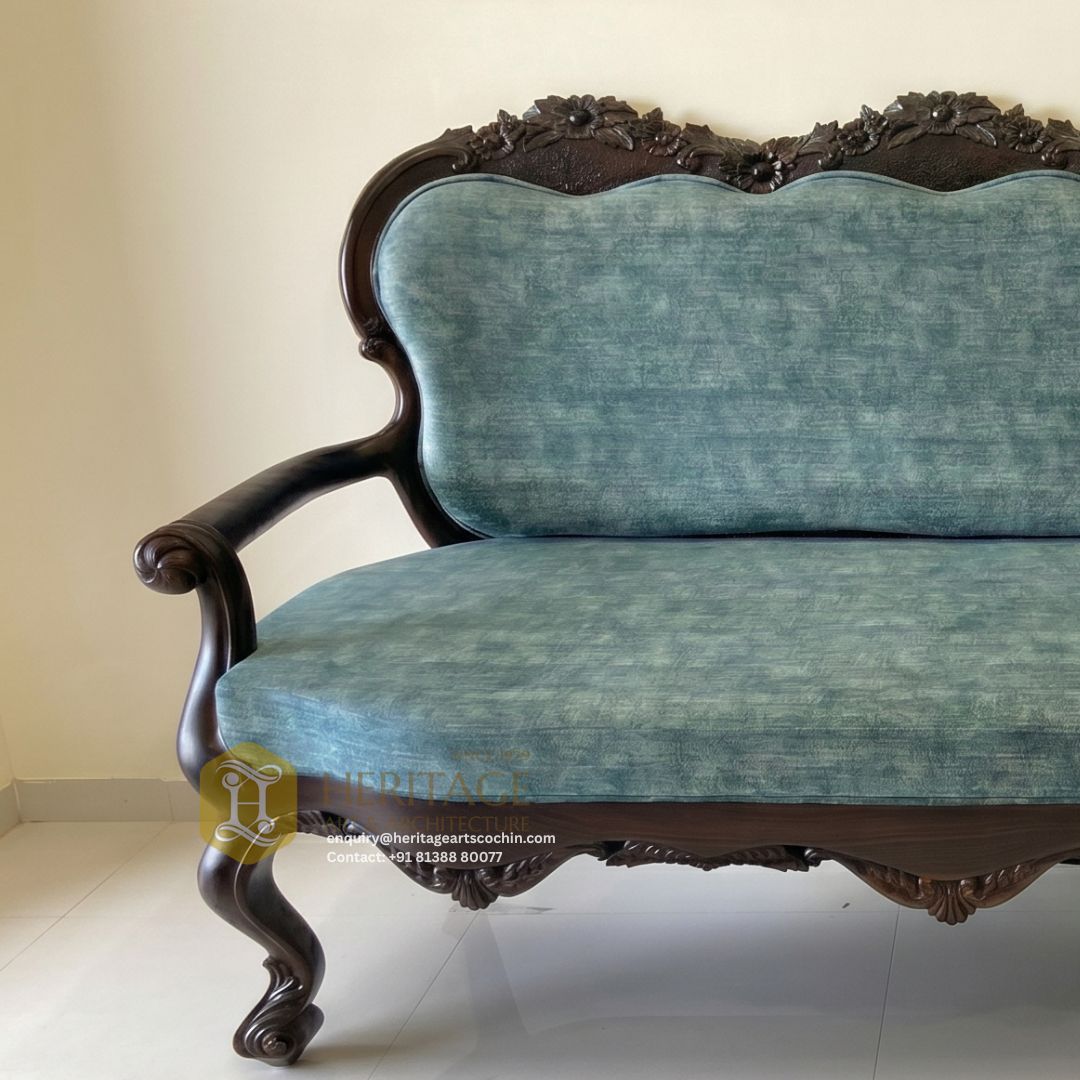
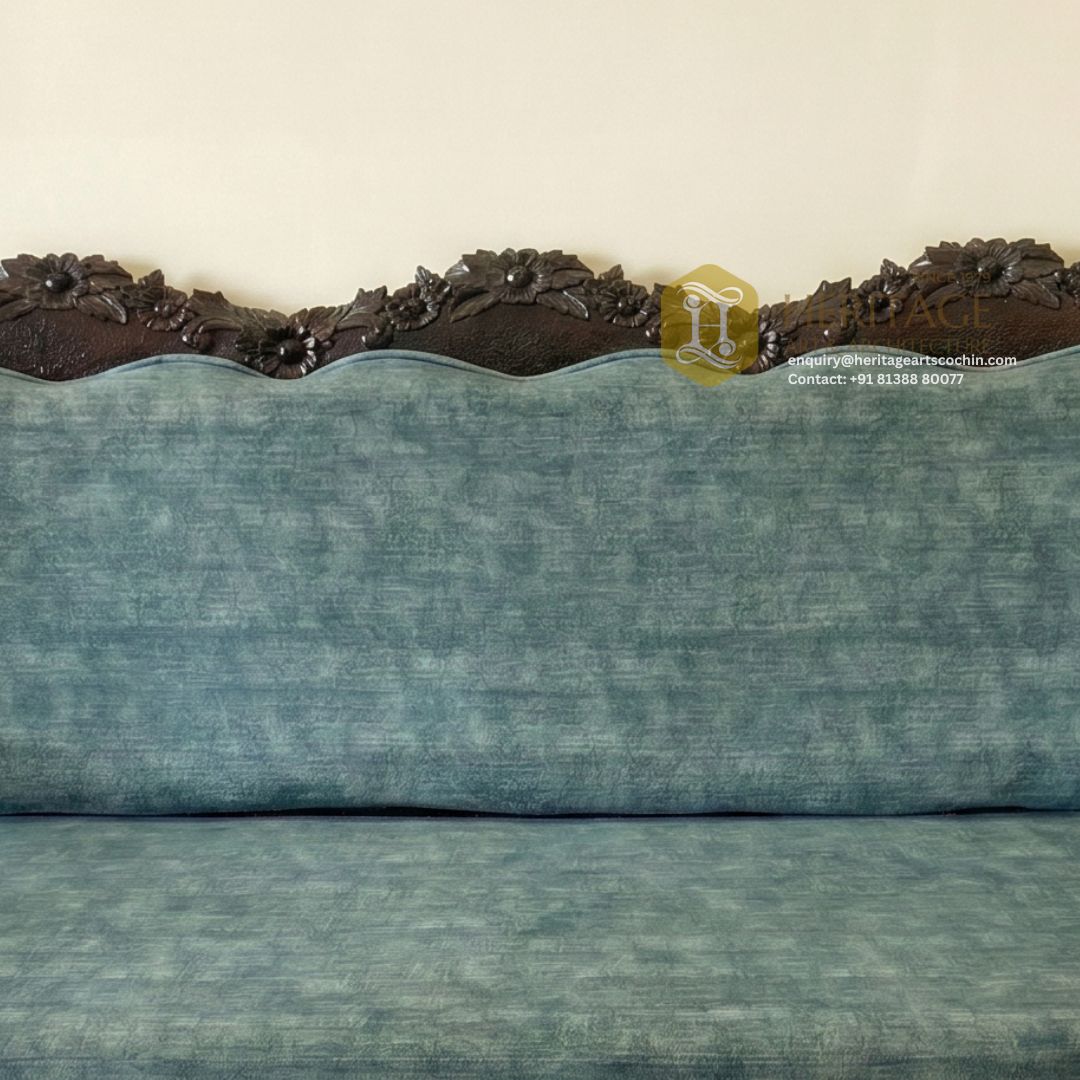
1. Backrest Crest – Pushpaśira (പുഷ്പശിര)
English Name: Floral Crown
A carved arch rising above the backrest, with gentle botanical flourishes. Like the crown of a temple or the outline of a leaf canopy, it draws the eye upward and gives the seat a quiet majesty.
2. Back Cushion Panel – Saukhyapaṭa (സൗഖ്യപട)
English Name: Panel of Ease
Upholstered for comfort, the curved back supports the spine with grace. “Saukhyam” means deep well being — here, it rests behind you like a gentle hand.
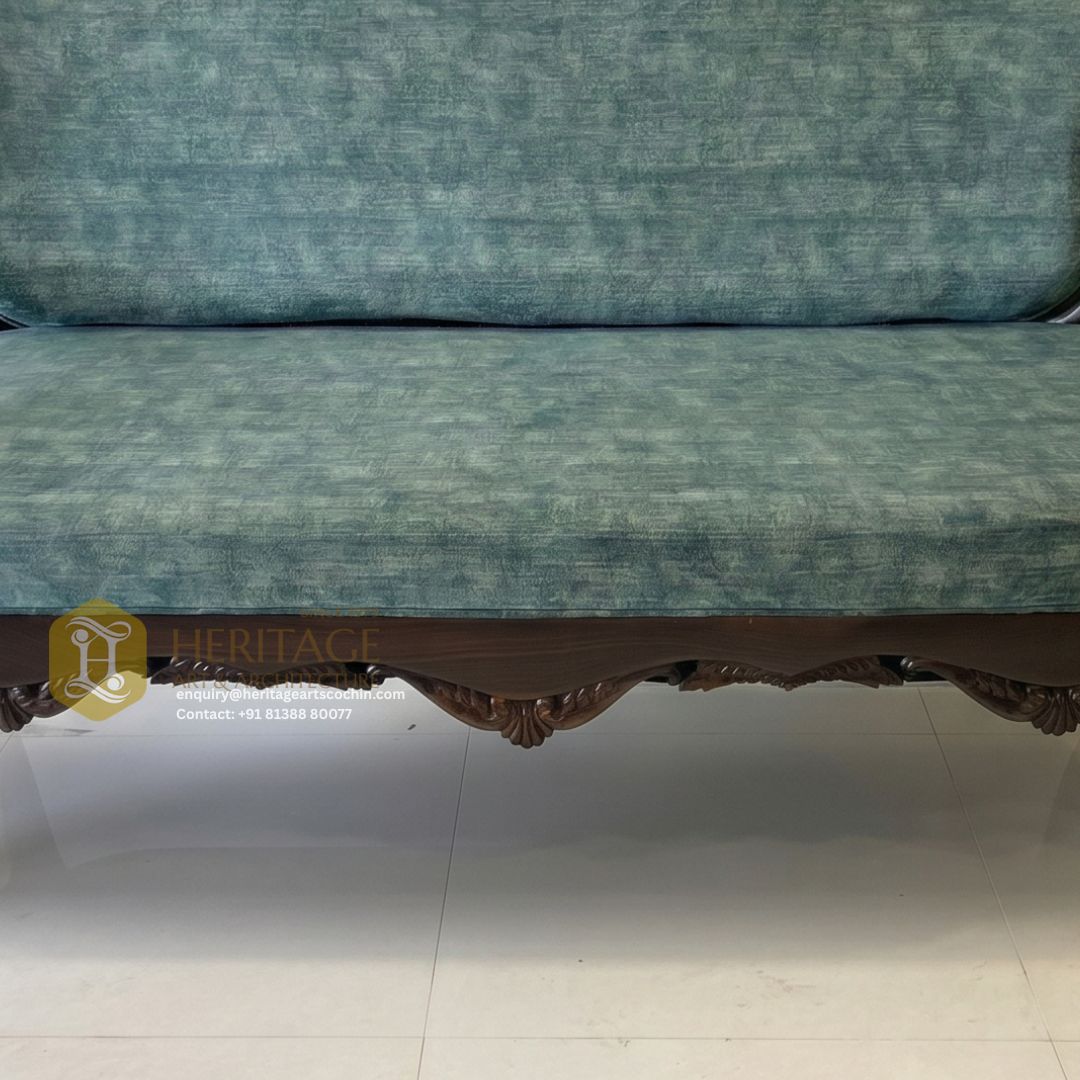
3. Seat Base – Kusumāsana (കുസുമാസന)
English Name: Blossom Seat
The broad padded cushion, framed in warm polished wood. A seat wide enough for shared comfort — layered like petals on a sacred bloom.
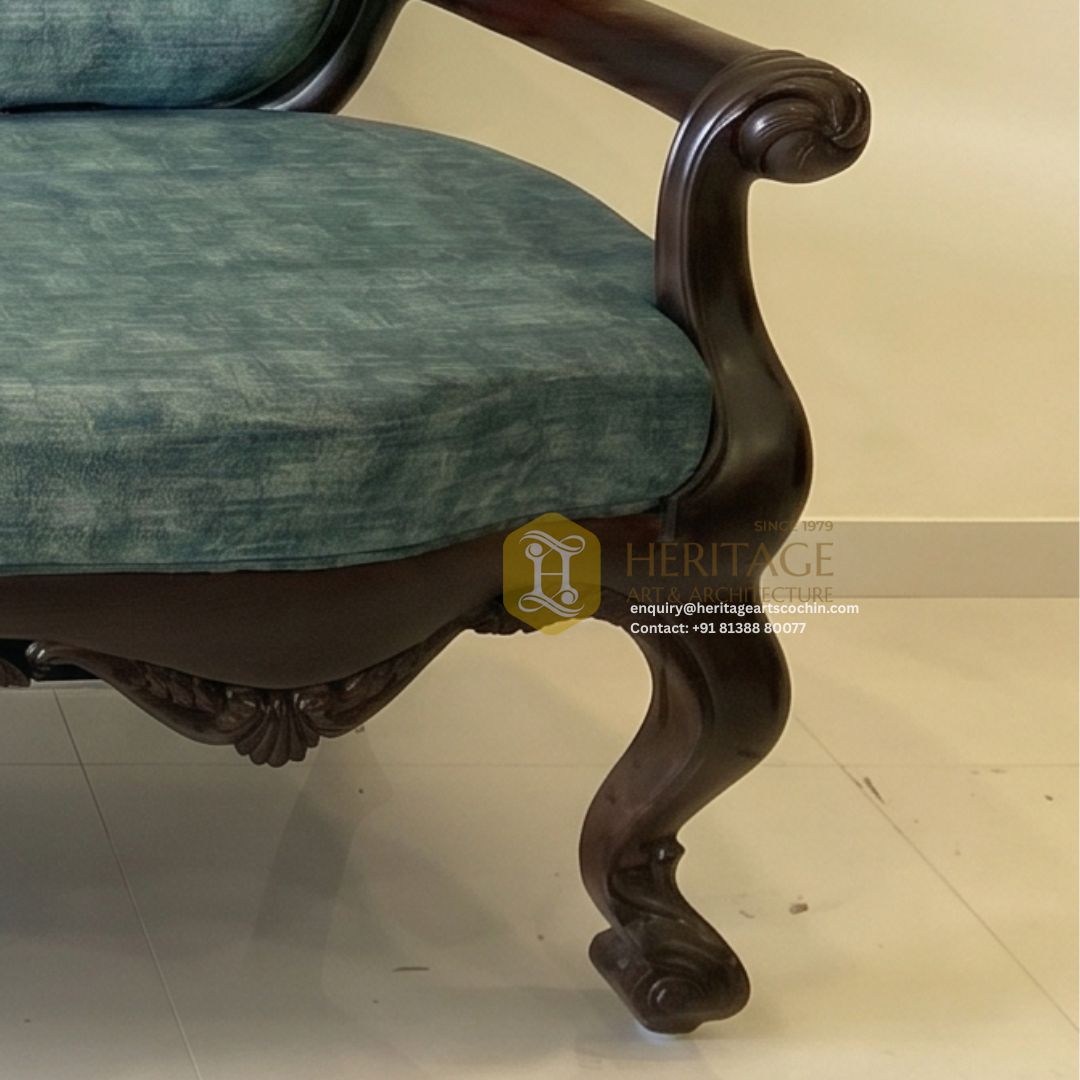
4. Arm Scrolls – Mantravarta (മന്ത്രവർത്ത)
English Name: Scroll of Rhythm
Twisting armrests carved into flowing spirals — mirroring the motion of chanting, spinning, or flowing water.They offer rest not only to the body, but to the eye.
5. Front Skirt Carving – Varnamālā (വർണ്ണമാല)
English Name: Garland of Form
A continuous carved apron beneath the seat — unfurling like a floral border or the edge of a temple saree. It holds visual rhythm, offering subtle drama and poise.
6. Legs – Mayūraka (മയൂരക)
English Name: Peacock Feet
Graceful, S-shaped legs that taper delicately — evoking the stance of a poised peacock. They lend both lift and lineage to the overall silhouette.
Craftsmanship & Finish
- Material: Kiln-dried Kerala teak
- Technique: Mortise & tenon joinery, hand carving, hand-rubbed finish
- Finish: Matte oil polish in heritage teak tone
- Upholstery: Cotton-linen blend in neutral or custom tones
Ideal Placement
- Heritage verandahs and foyers.
- Reading nooks or temple-adjacent salons.
- Boutique resort lounges.
- Paired with brass floor lamps, handwoven rugs, or carved side tables.