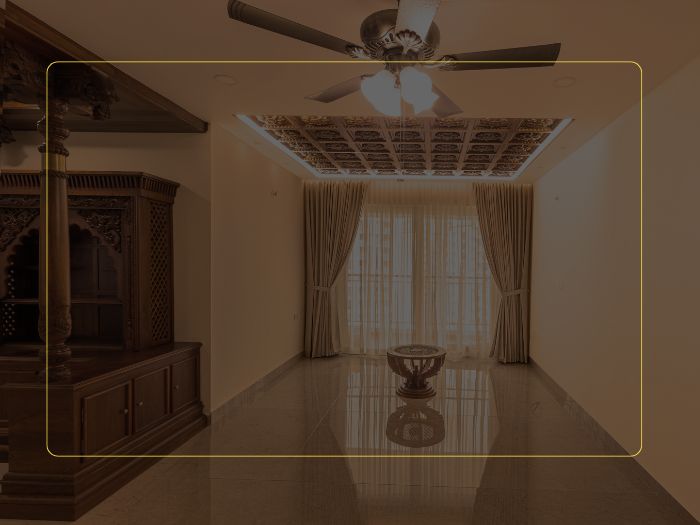
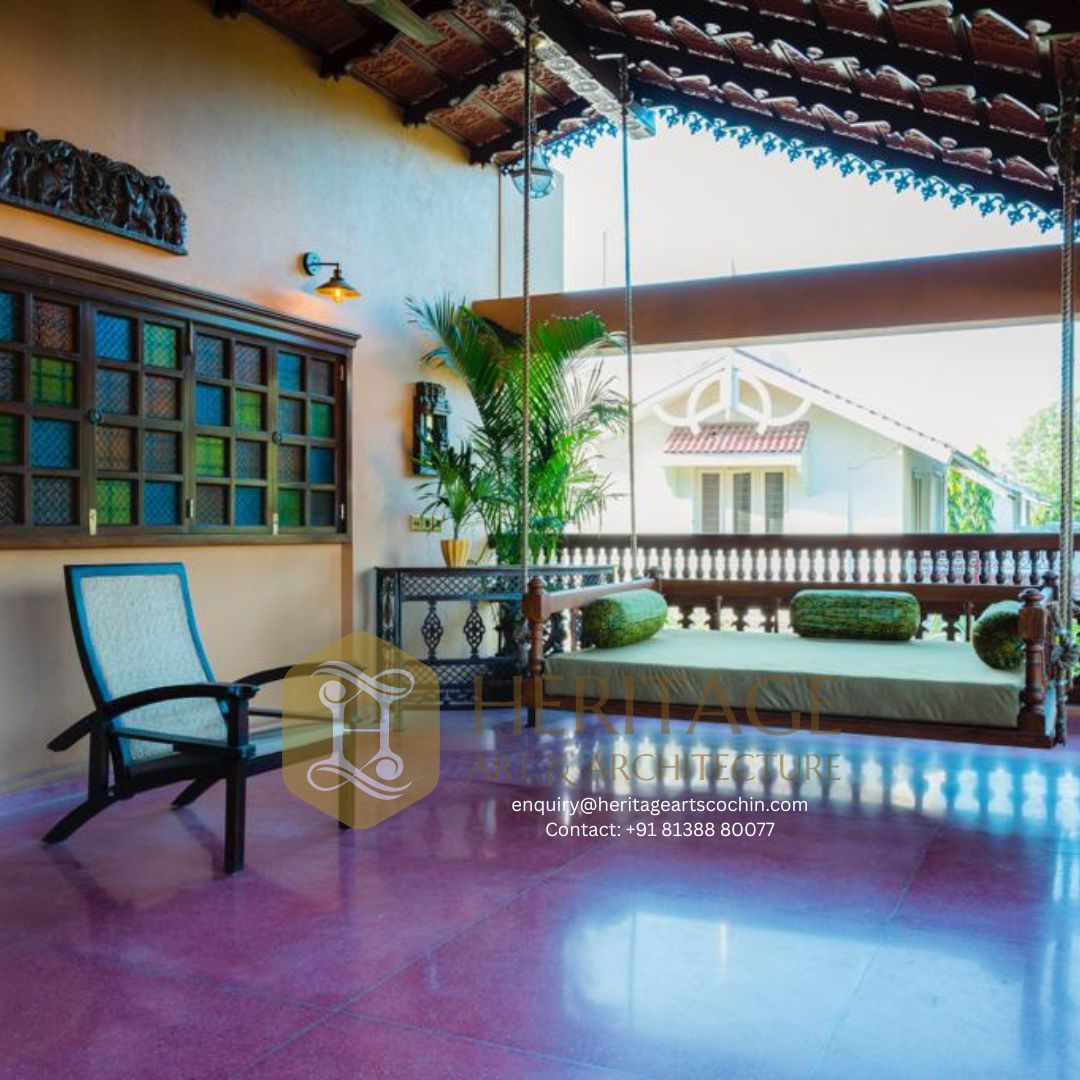
This project involved the complete woodwork specification and execution for an Ayurvedic spa compound built in the Kerala Nalukettu tradition. The brief required reclaimed teak throughout — structural columns, wall cladding, ceiling joists, doors with period ironmongery, and site furniture — with all material sourced from dismantled heritage houses. The result is a compound where no two panels read the same, grain patterns accumulate across rooms, and the age of the wood is openly visible rather than concealed.
WOODWORK IN DETAIL
What was designed and built
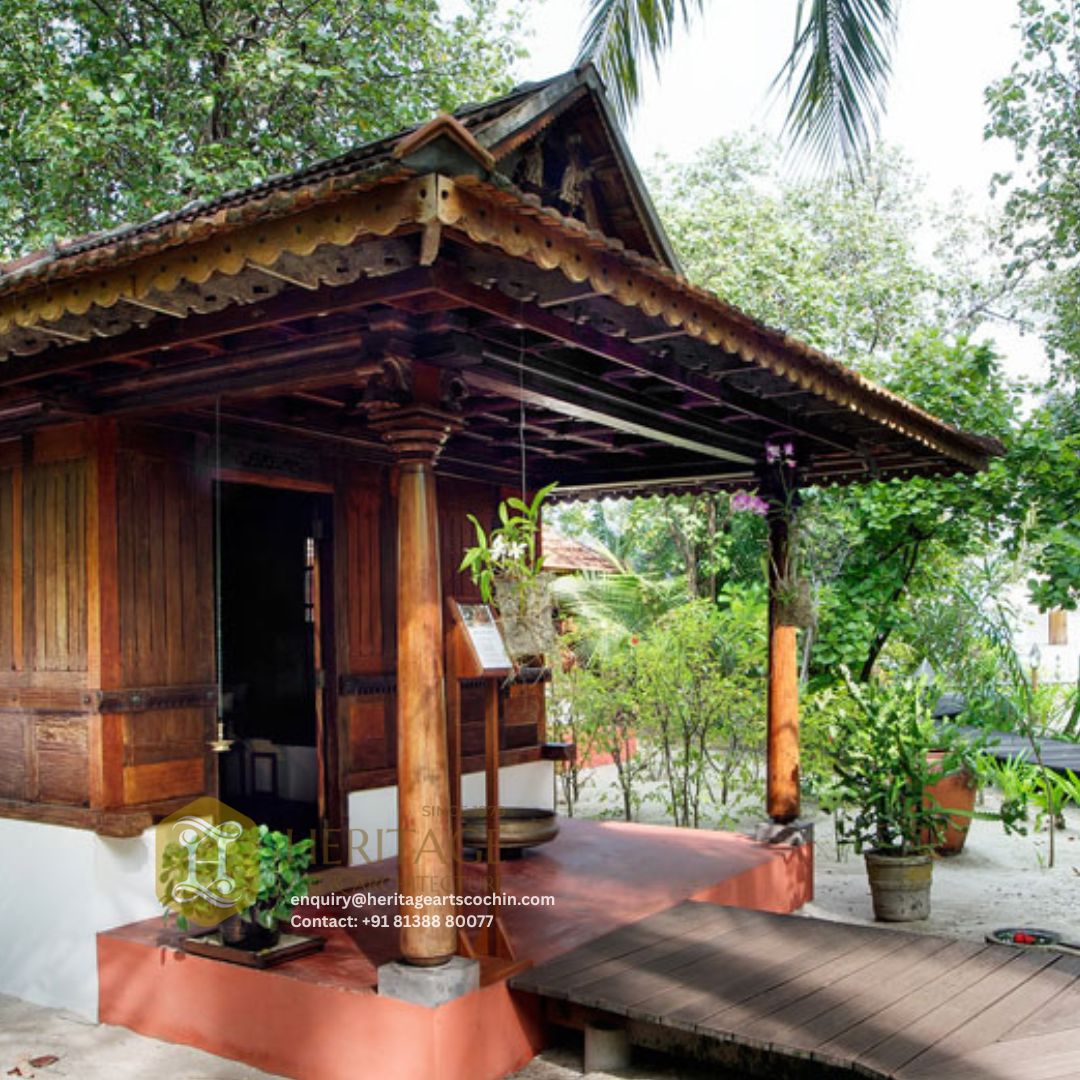
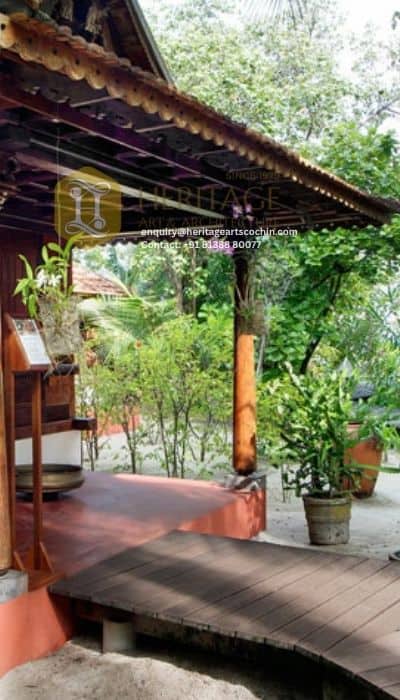
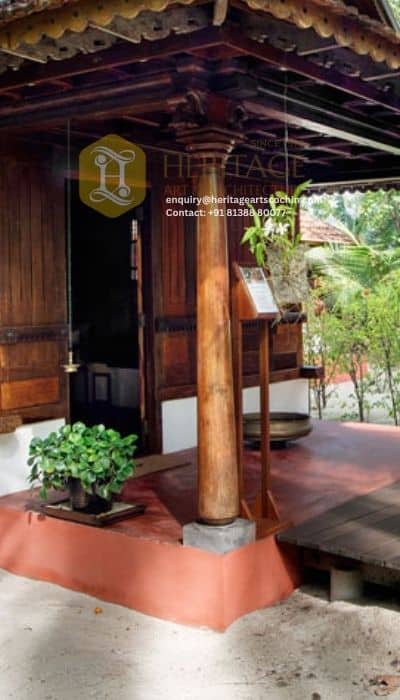
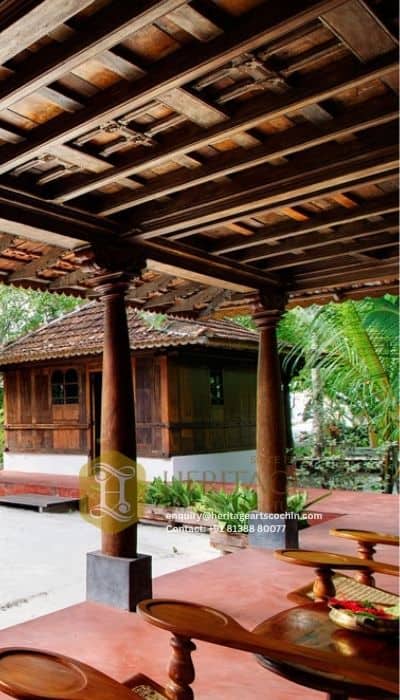
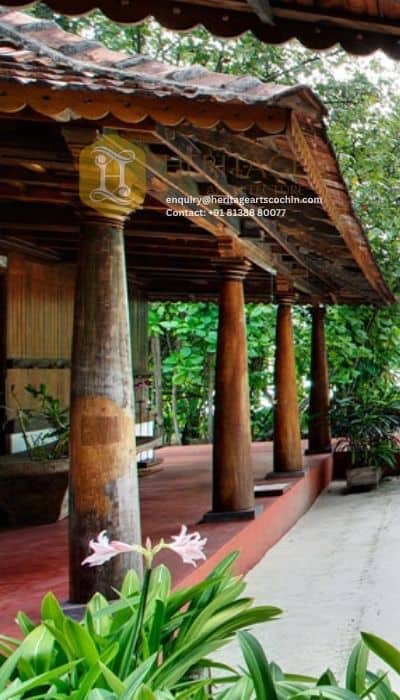
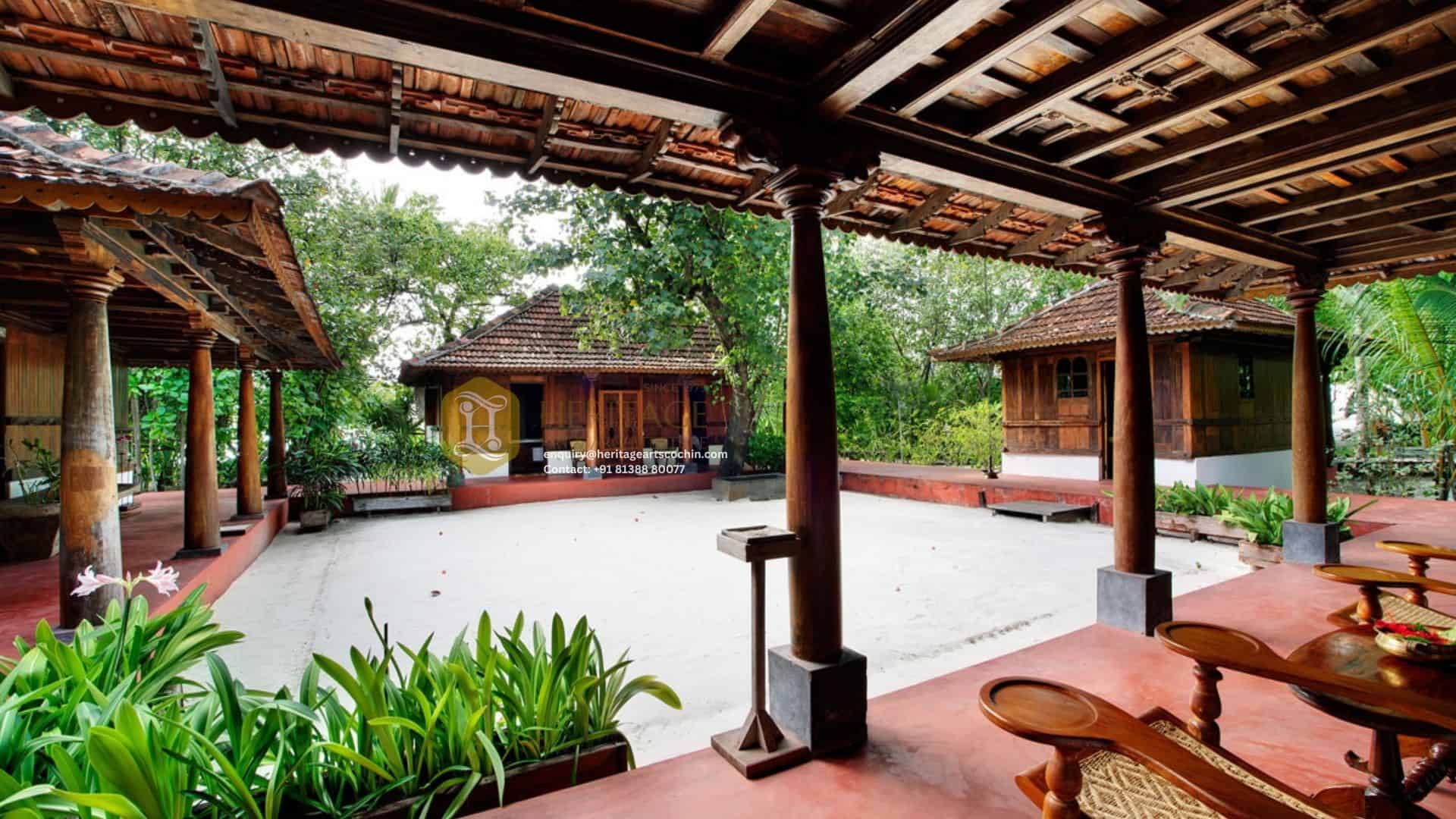
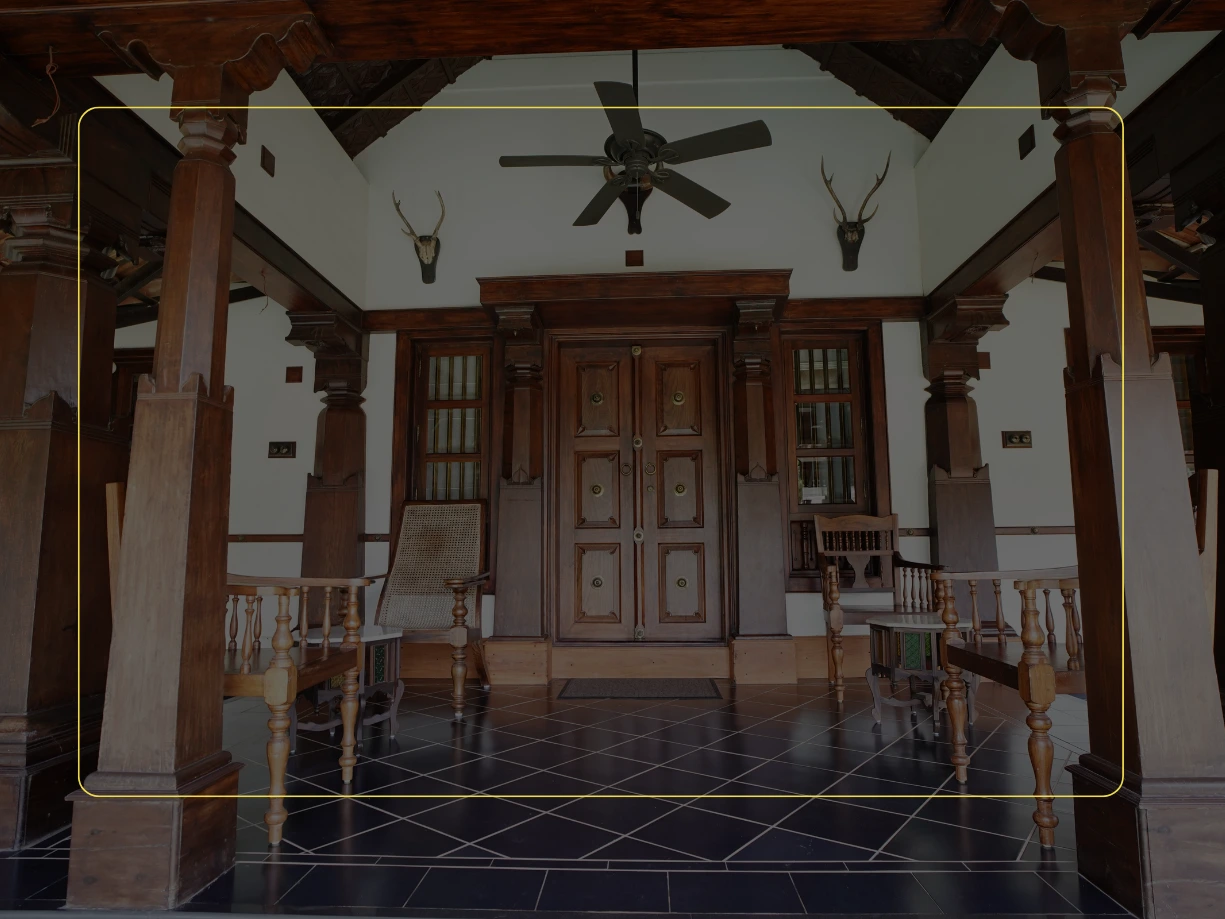
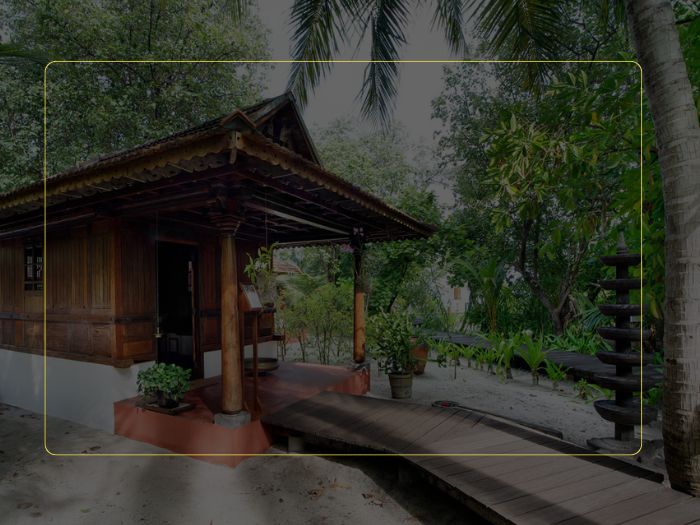
Turned columns and the open veranda
The kitchen takes the opposite position from every other room in the house. Greige matte cabinetry, white uppers, a seamless stone worktop — nothing competes for attention. A louvered skylight runs natural light across the entire counter length without a single pendant in sight. The one indulgence: a cluster of hand-painted ceramic chopping boards mounted on the side wall. The kitchen earns that playfulness by being so disciplined everywhere else.
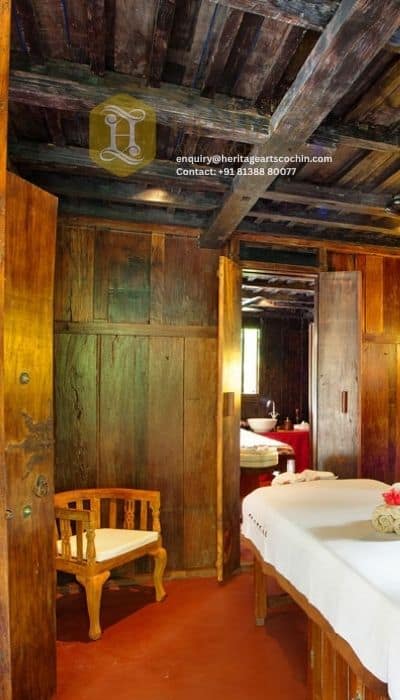
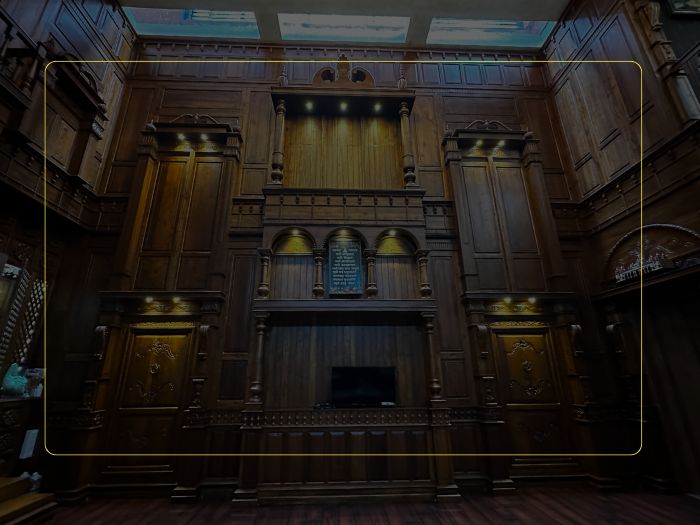
Full-height interior cladding
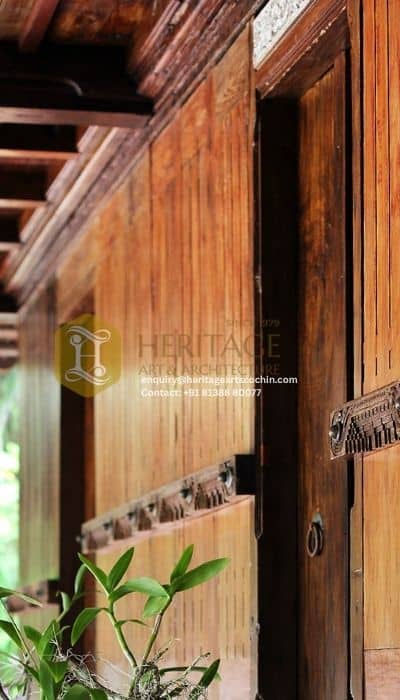
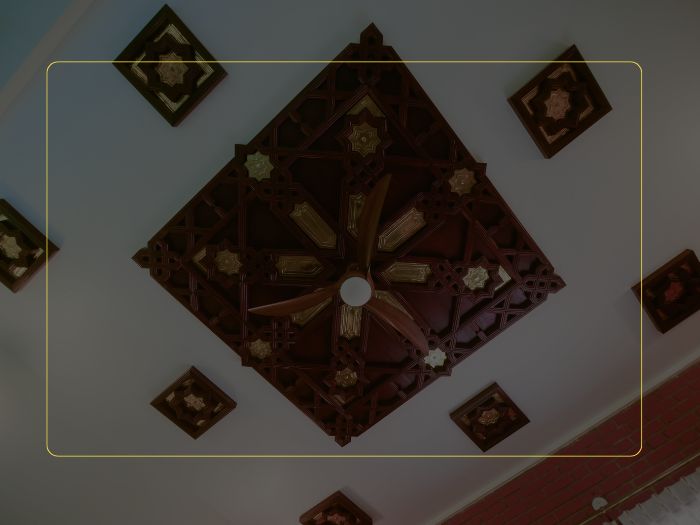
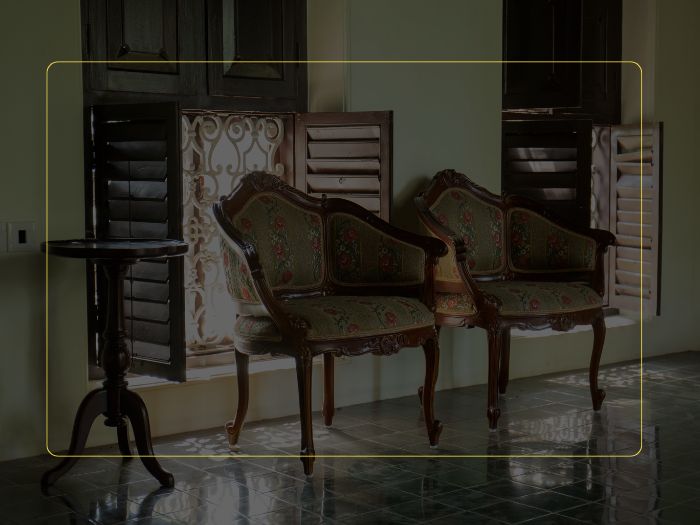
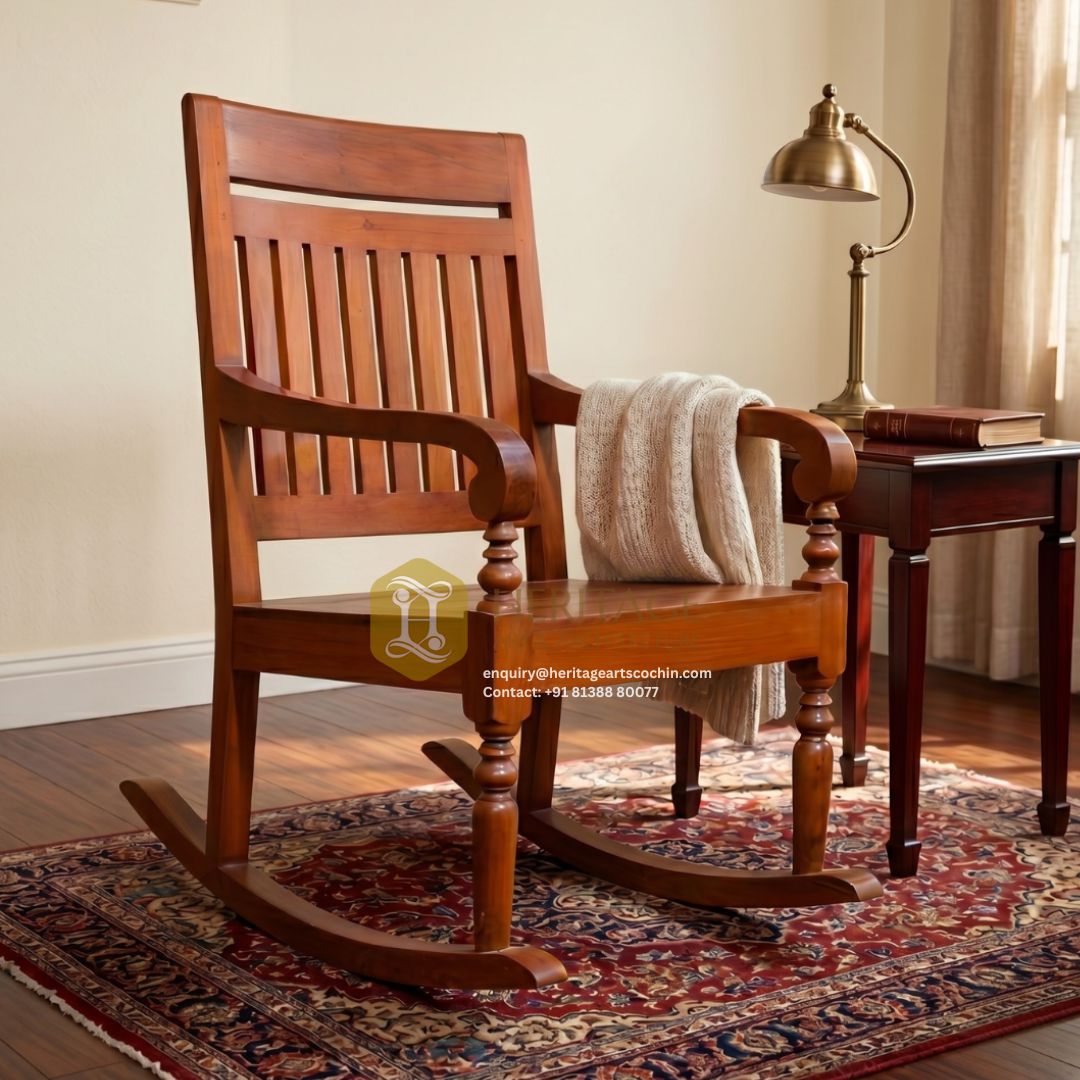
Treatment rooms are clad floor to ceiling in reclaimed teak panels, assembled in vertical runs with shadow-gap joints rather than tongue-and-groove. The panels are drawn from a single batch of salvaged material, so the colour variation across the walls is a product of the original grain rather than finishing inconsistency. Darkened ceiling joists — untreated, allowed to oxidise naturally — give the rooms their characteristic depth. A single piece of heritage furniture, a carved wooden chair in colonial-influenced joinery, is placed in each room.
Ironmongery from the original houses
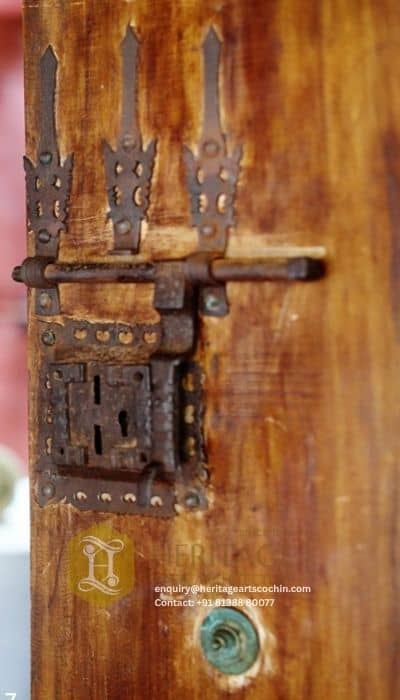
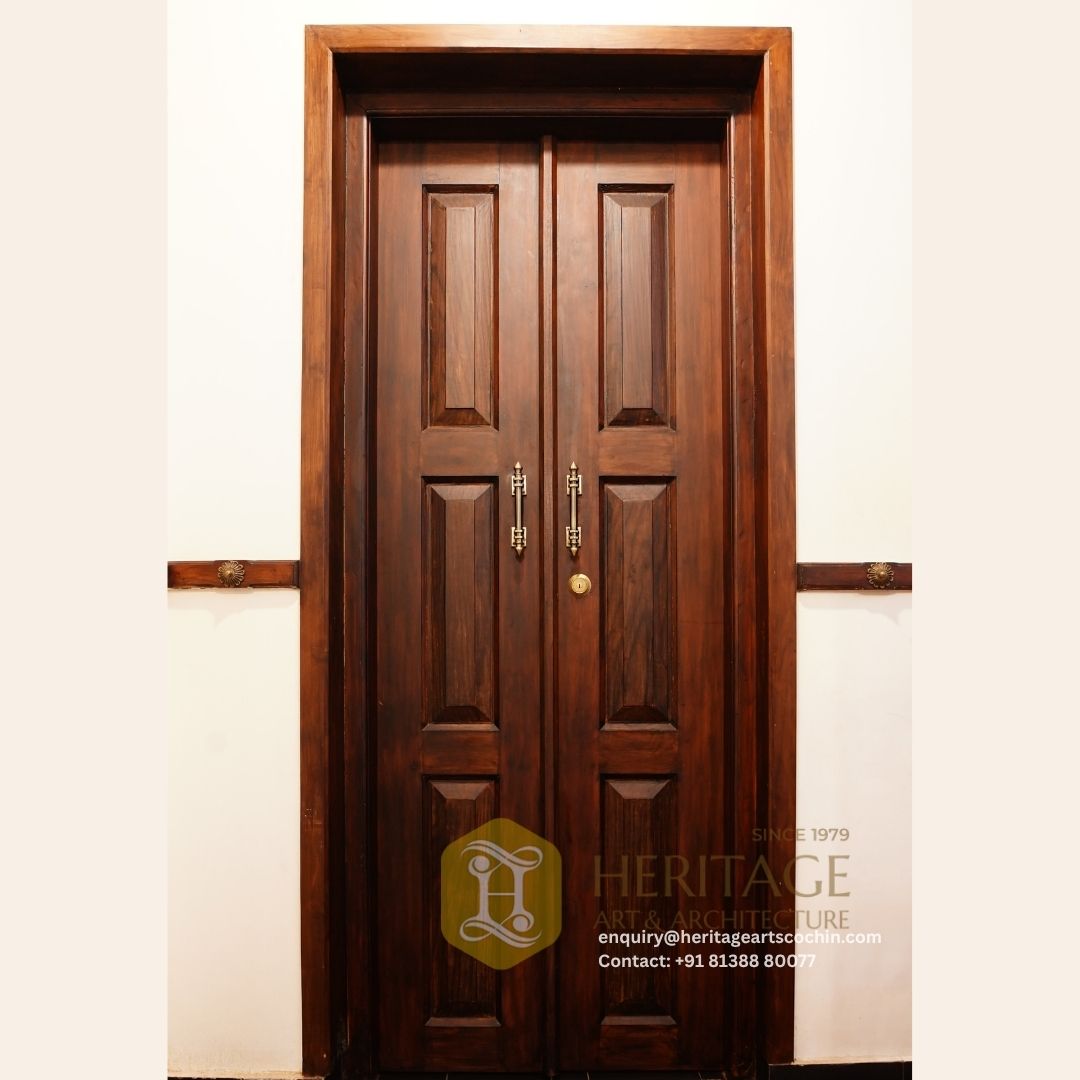
Doors throughout the compound retain their original hand-forged iron hardware — strap hinges with trailing peacock-tail extensions, heavy box locks with separate slam latches, and brass ring-pulls cast in the shell motif that appears across Kerala’s maritime-era domestic architecture. All ironmongery was recovered from the same batch of dismantled structures as the timber. Pieces were cleaned, not polished — surface oxidation and patina retained.
Site furniture and planter troughs
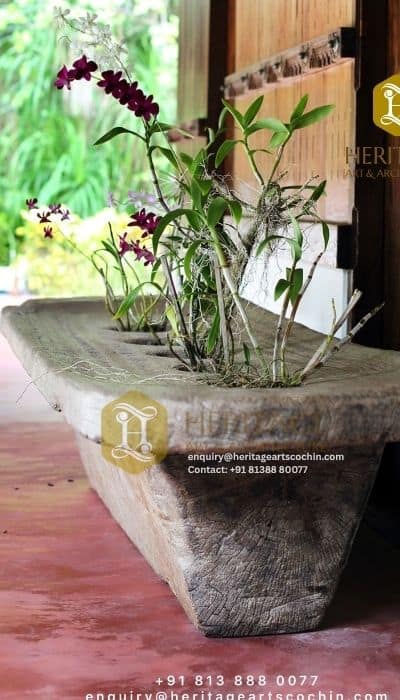
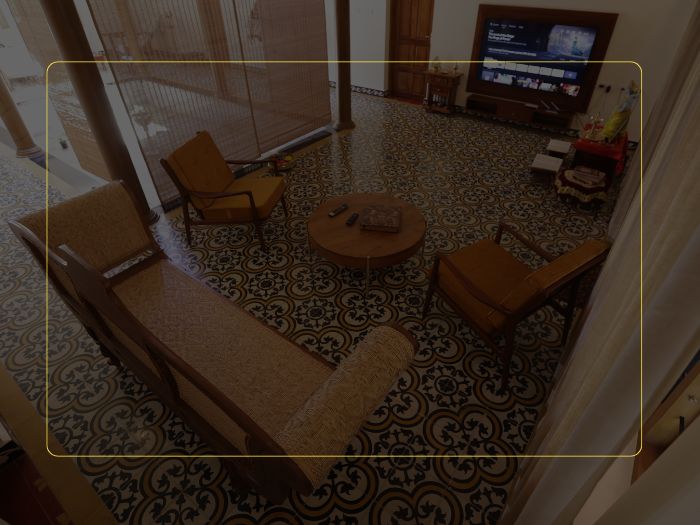
The entry veranda includes a low planter trough carved from a single timber section — a recycled dhoney plank, its hollowed profile original to its previous function. Orchids are planted directly into the cavity. Outdoor furniture in the courtyard follows the same logic: low round-topped pedestal tables in dark teak, paired with flat-woven cane mats. Nothing was purpose-manufactured; all pieces were sourced from existing heritage inventory.
FULL SCOPE OF WORKS
Woodwork components delivered
Hand-Forged Iron Hardware
Inspired by traditional temple and heritage architecture, this hand-forged iron locking system showcases intricate metalwork, decorative latch details, and artisan craftsmanship. Each element is shaped and assembled using time-honored forging techniques, creating a distinctive focal point for solid wood doors.
The combination of robust ironwork and carved timber delivers both functionality and character, making it ideal for heritage homes, luxury residences, resorts, and architectural restoration projects.
Antique Teak Pillars
Inspired by traditional heritage architecture, these antique-style teak pillars feature graceful tapered profiles, hand-carved capitals, and finely detailed bases. Crafted from solid teak, each pillar showcases the richness of natural wood and the skill of traditional woodworking techniques.
Ideal for verandas, courtyards, living spaces, and hospitality projects, these architectural elements add warmth, character, and a timeless sense of grandeur to both classic and contemporary interiors.
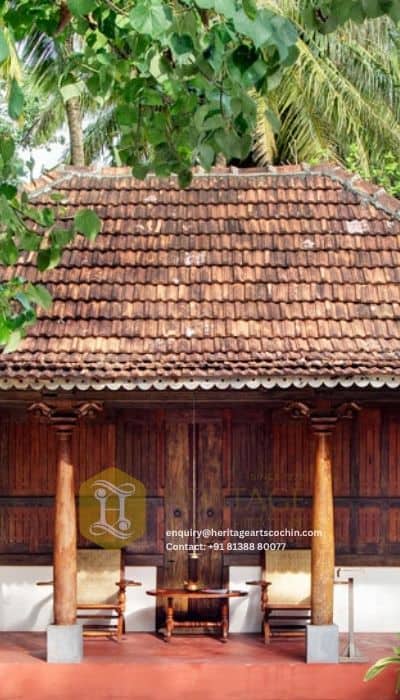
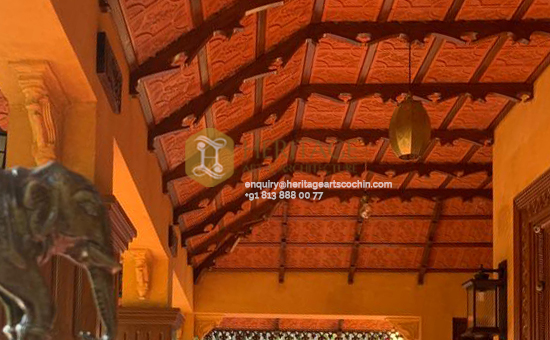
Traditional Clay Tile Roofing & Exposed Teak Framework
This roofing system combines handcrafted clay roof tiles with a structural teak framework inspired by traditional South Indian architecture. The sloping tiled roof provides natural insulation and efficient rainwater drainage, while exposed teak rafters, beams, and supporting members add warmth and architectural character.
Built using time-tested construction methods, the combination of solid timber and clay tiles creates a durable, climate-responsive structure that is well suited for heritage homes, villas, resorts, and hospitality spaces seeking authentic regional craftsmanship.
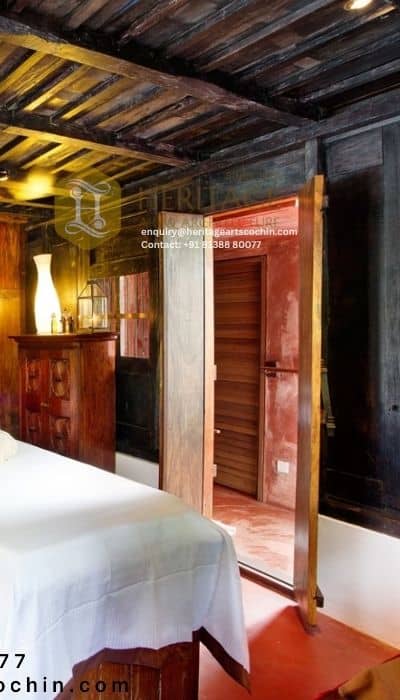
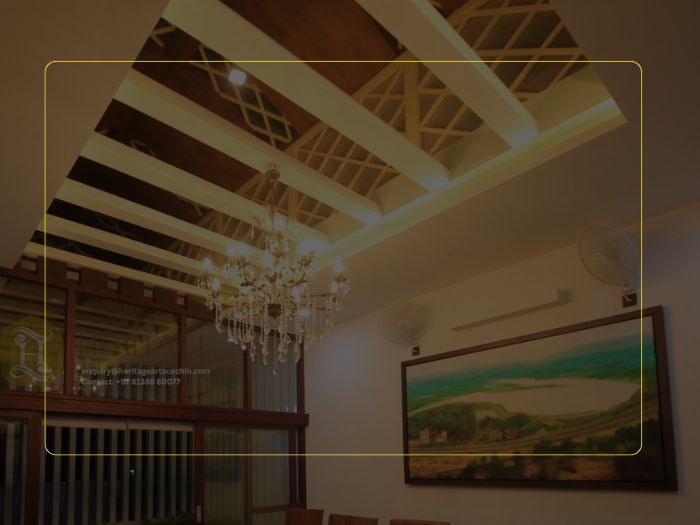
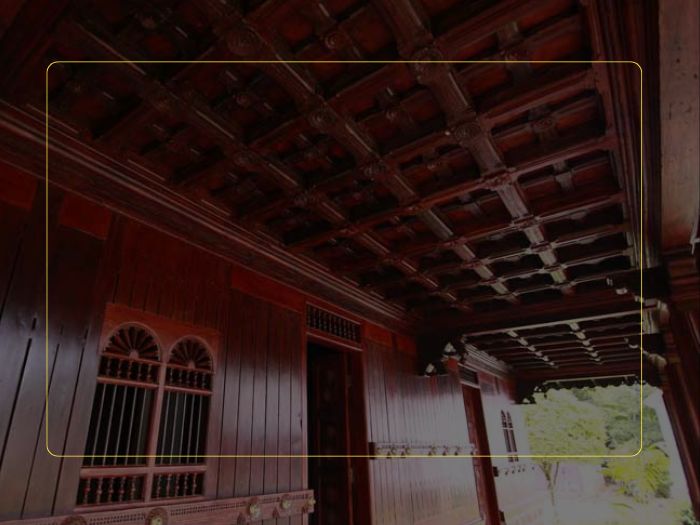
Traditional Teak Beam & Ceiling Cladding
This ceiling system features exposed teak beams, rafters, and timber cladding arranged in a traditional grid pattern that highlights the structural framework of the building. Crafted from reclaimed or solid teak, the exposed woodwork adds depth, warmth, and architectural character while showcasing the natural grain and richness of the timber.
Commonly found in heritage homes and courtyard residences, this style combines craftsmanship with durability, creating a timeless ceiling design that enhances both residential and hospitality spaces.