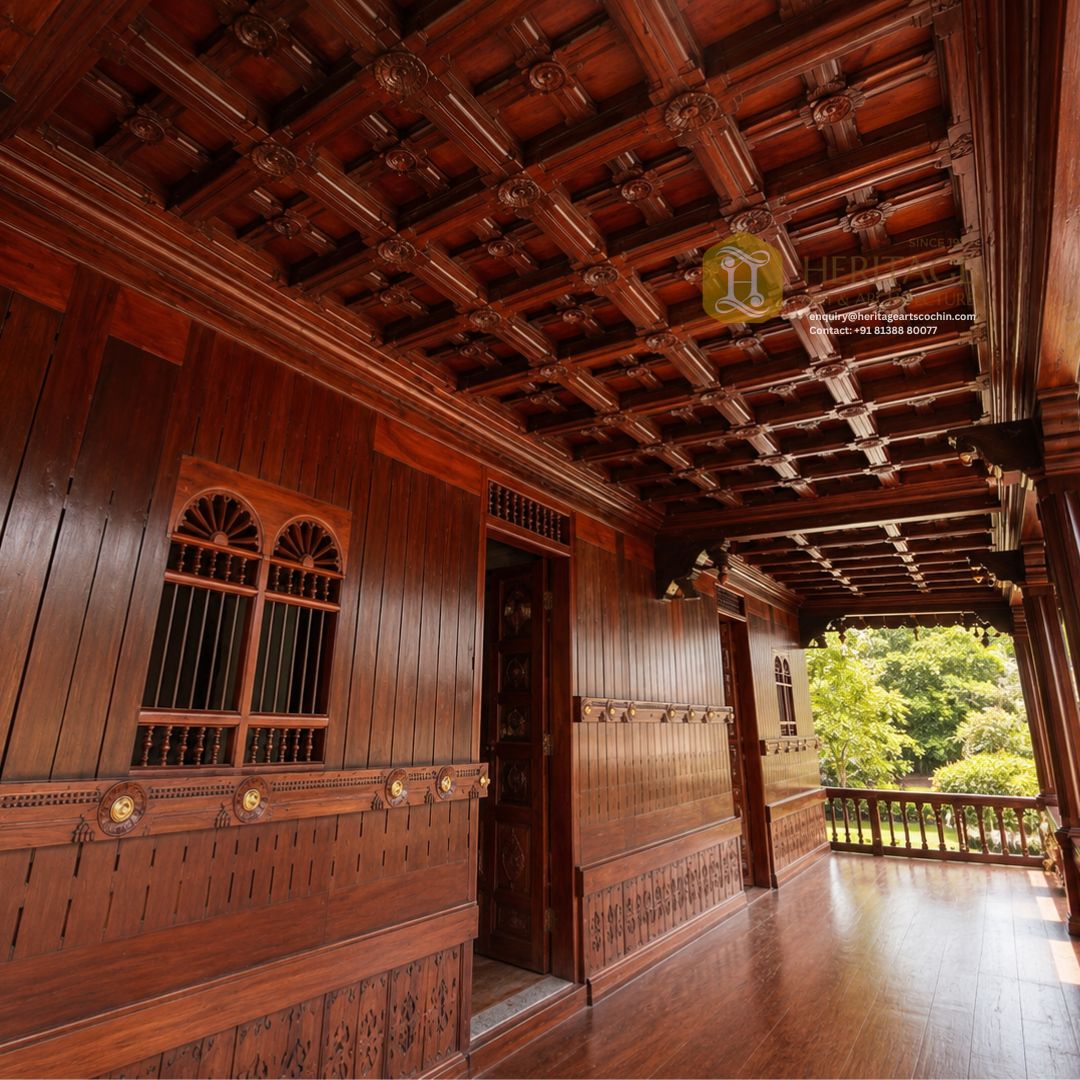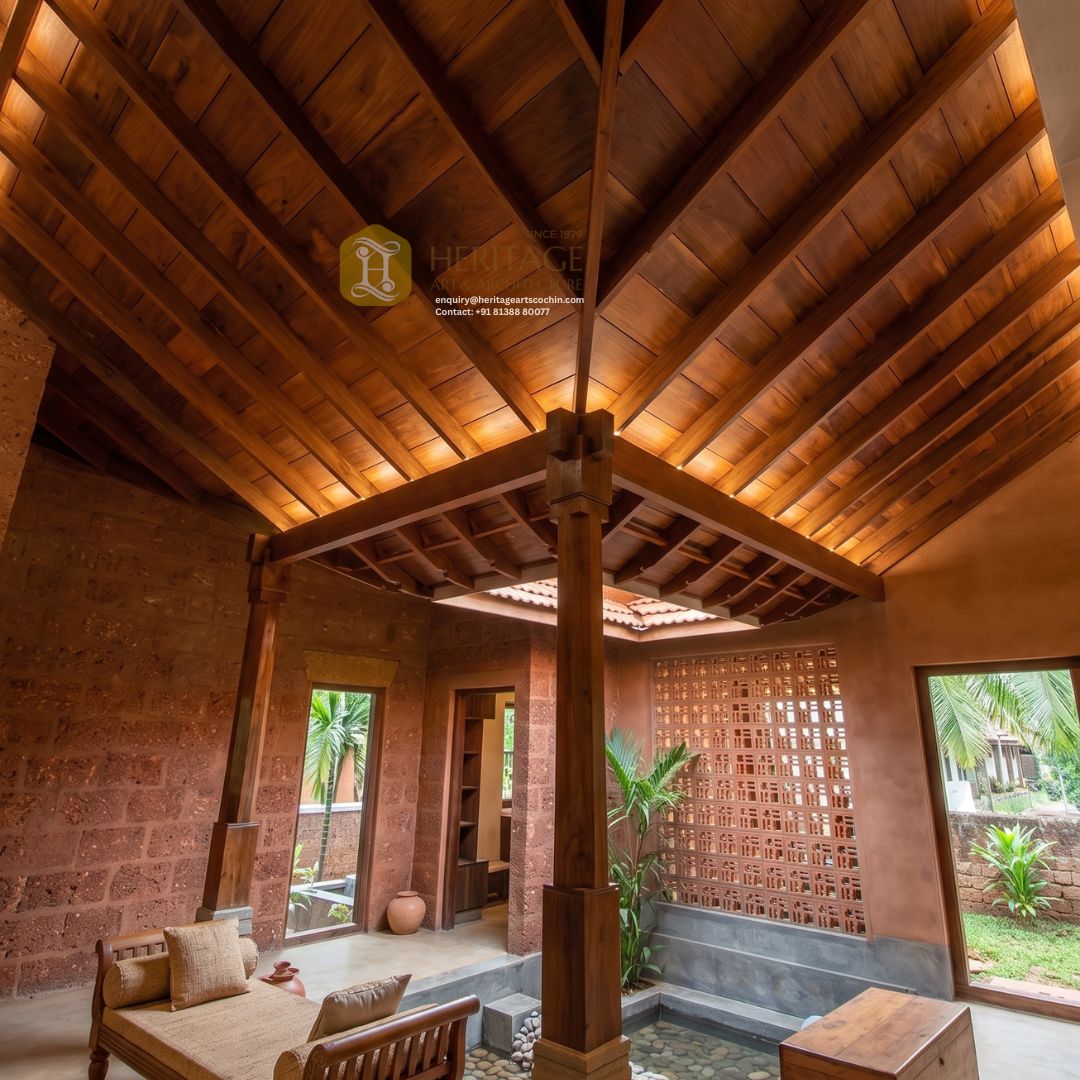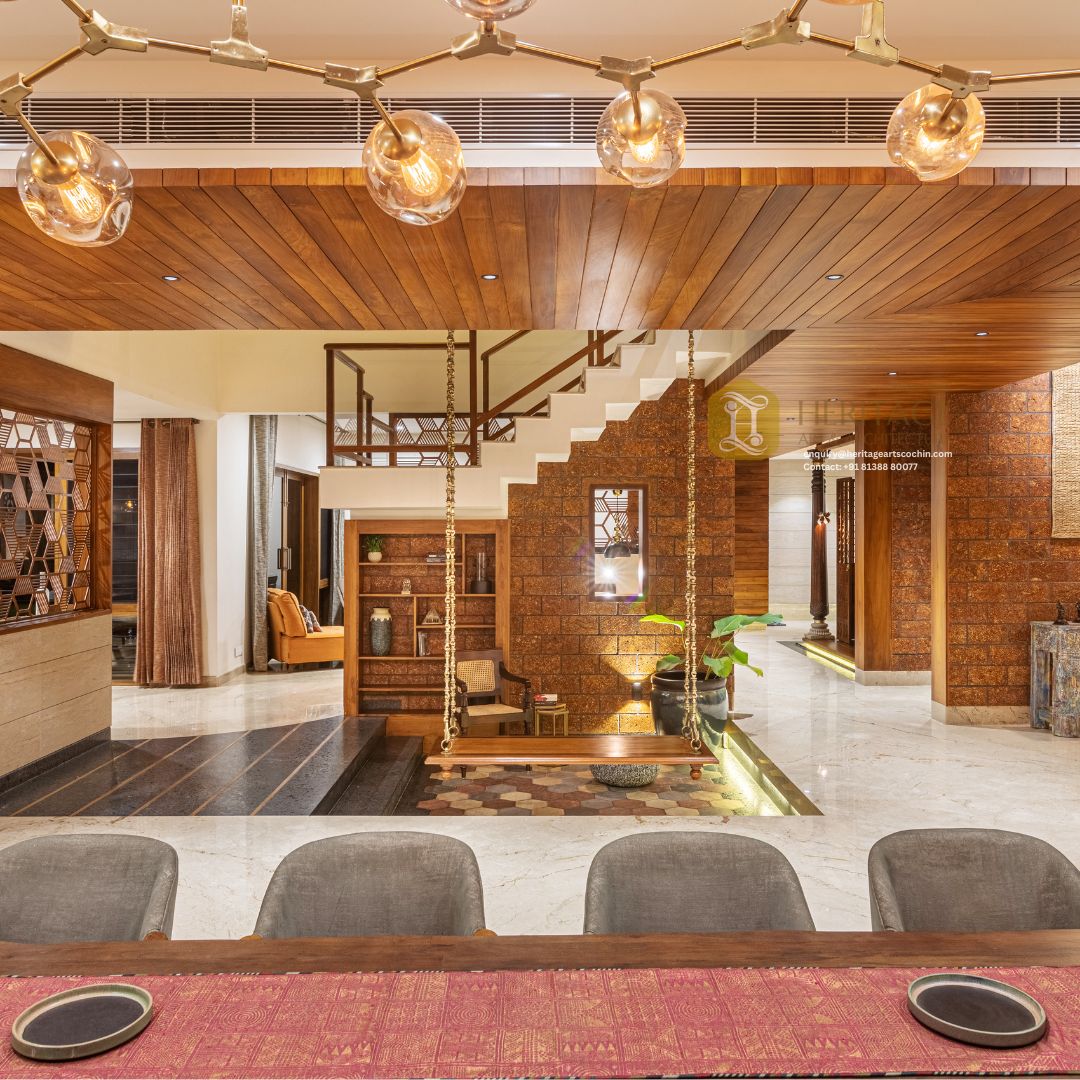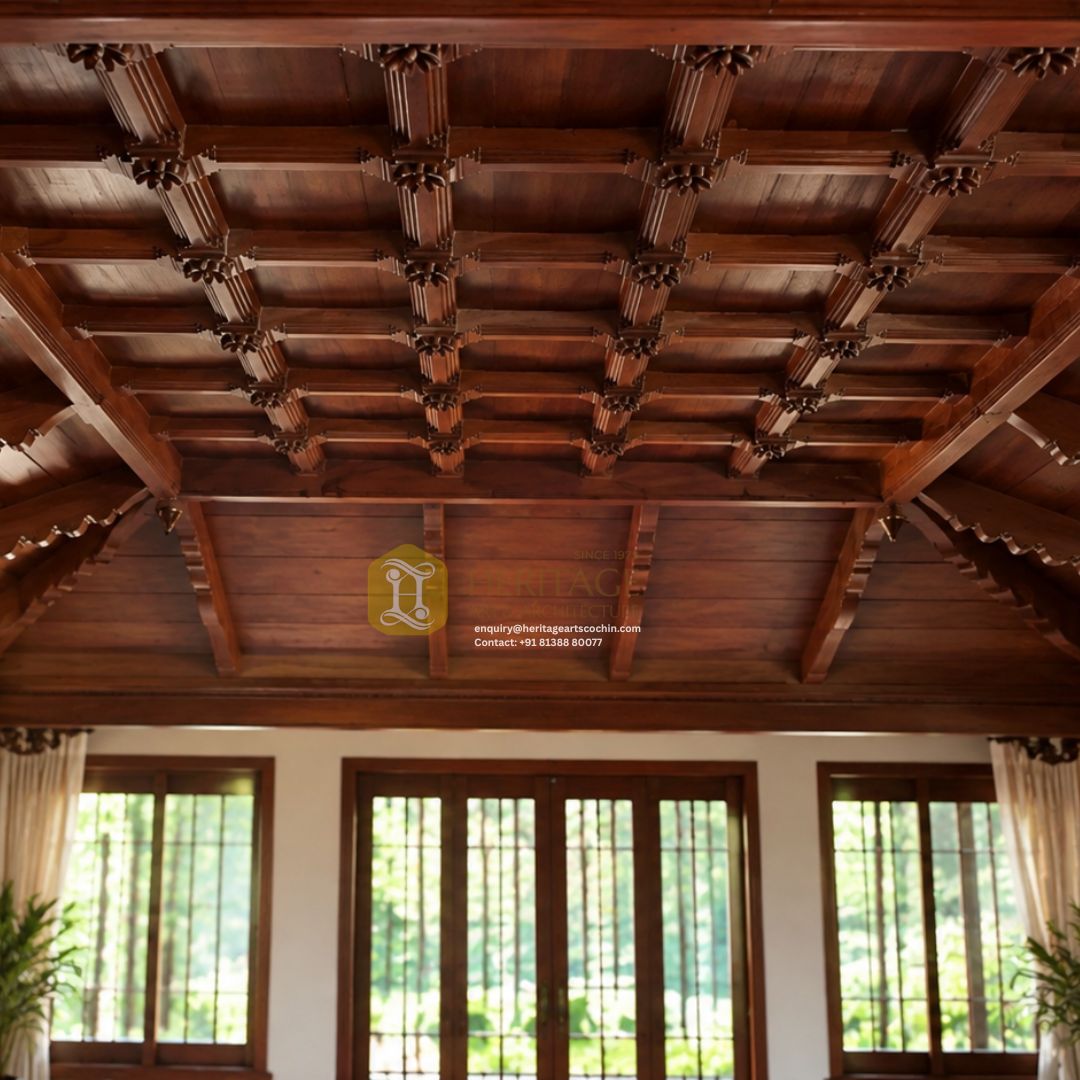
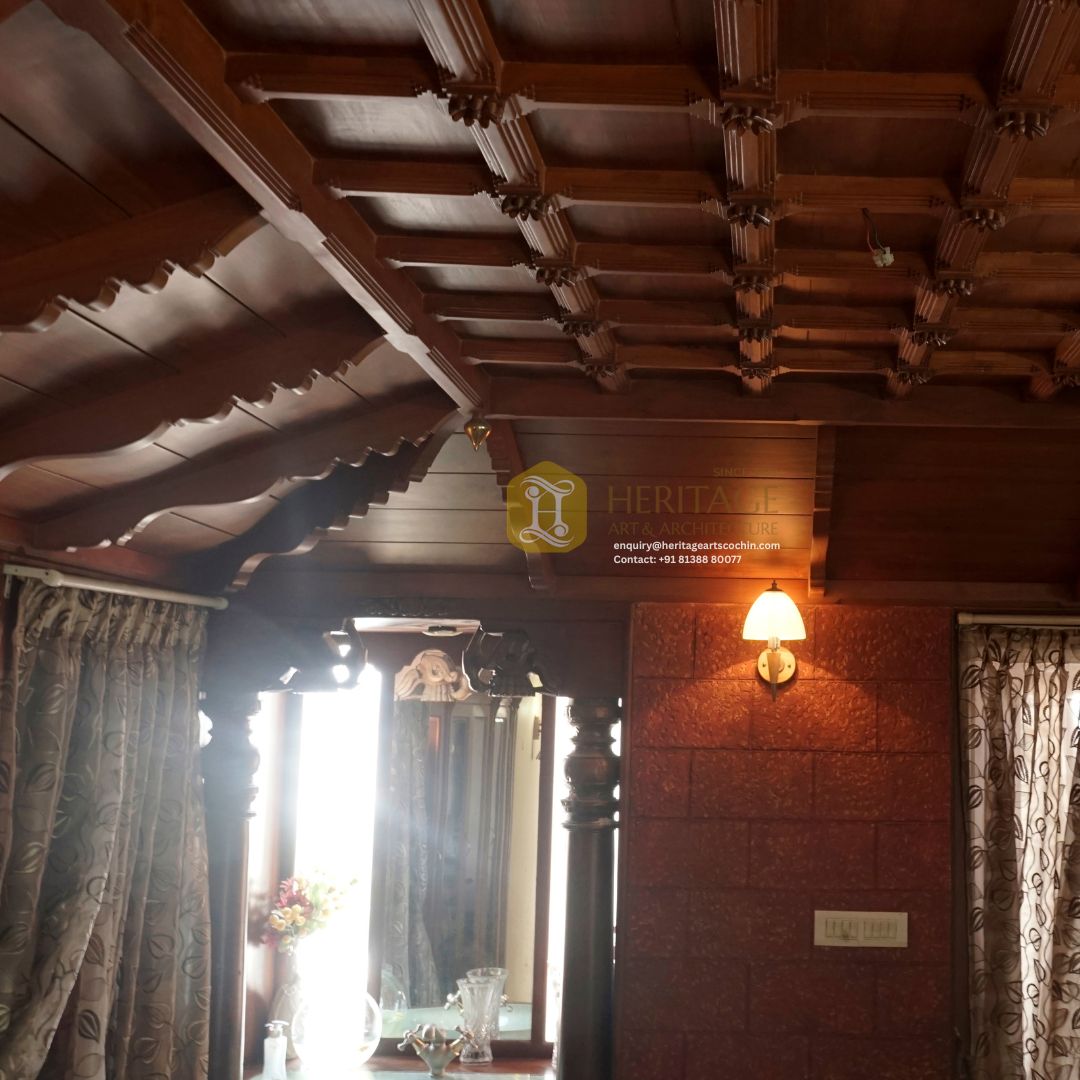
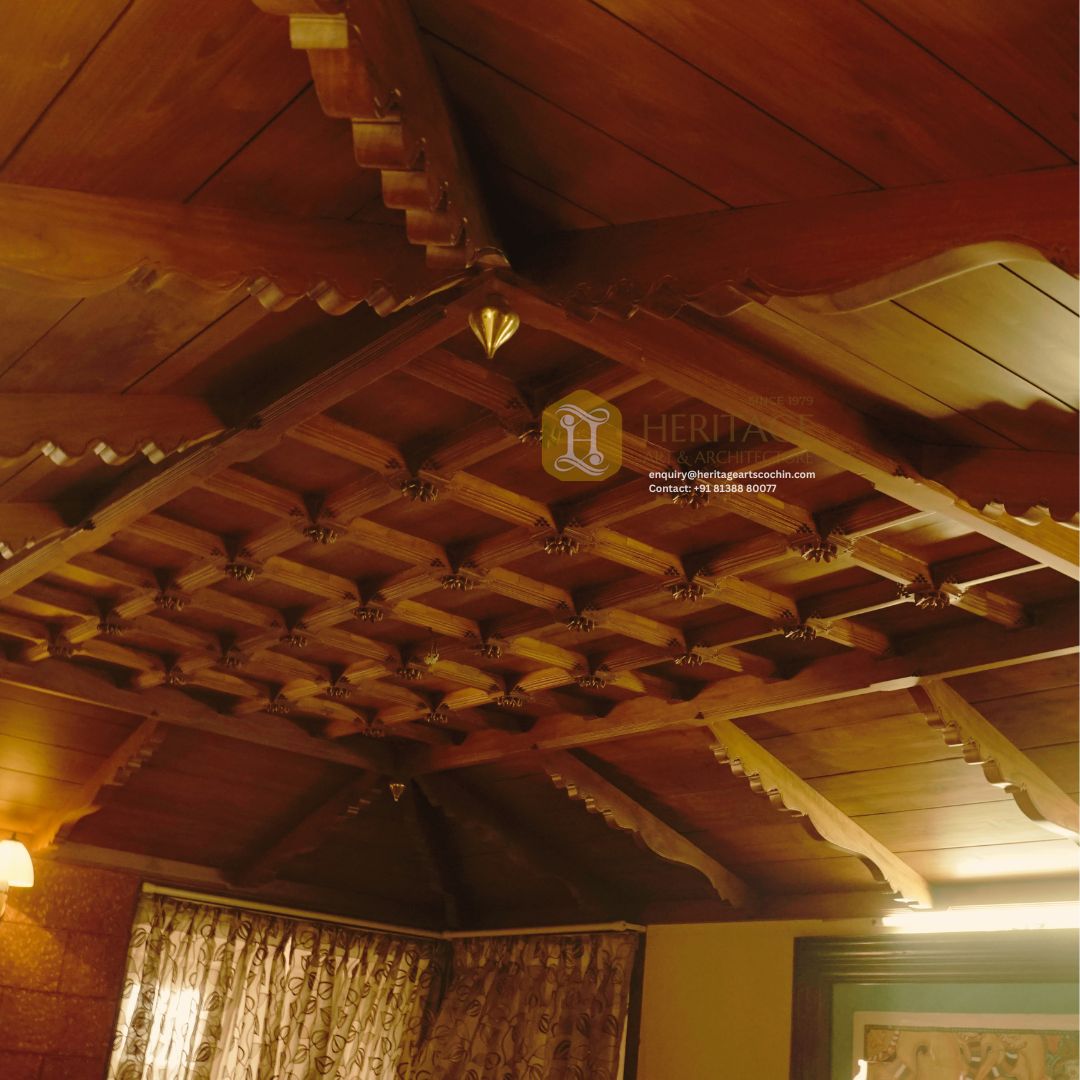
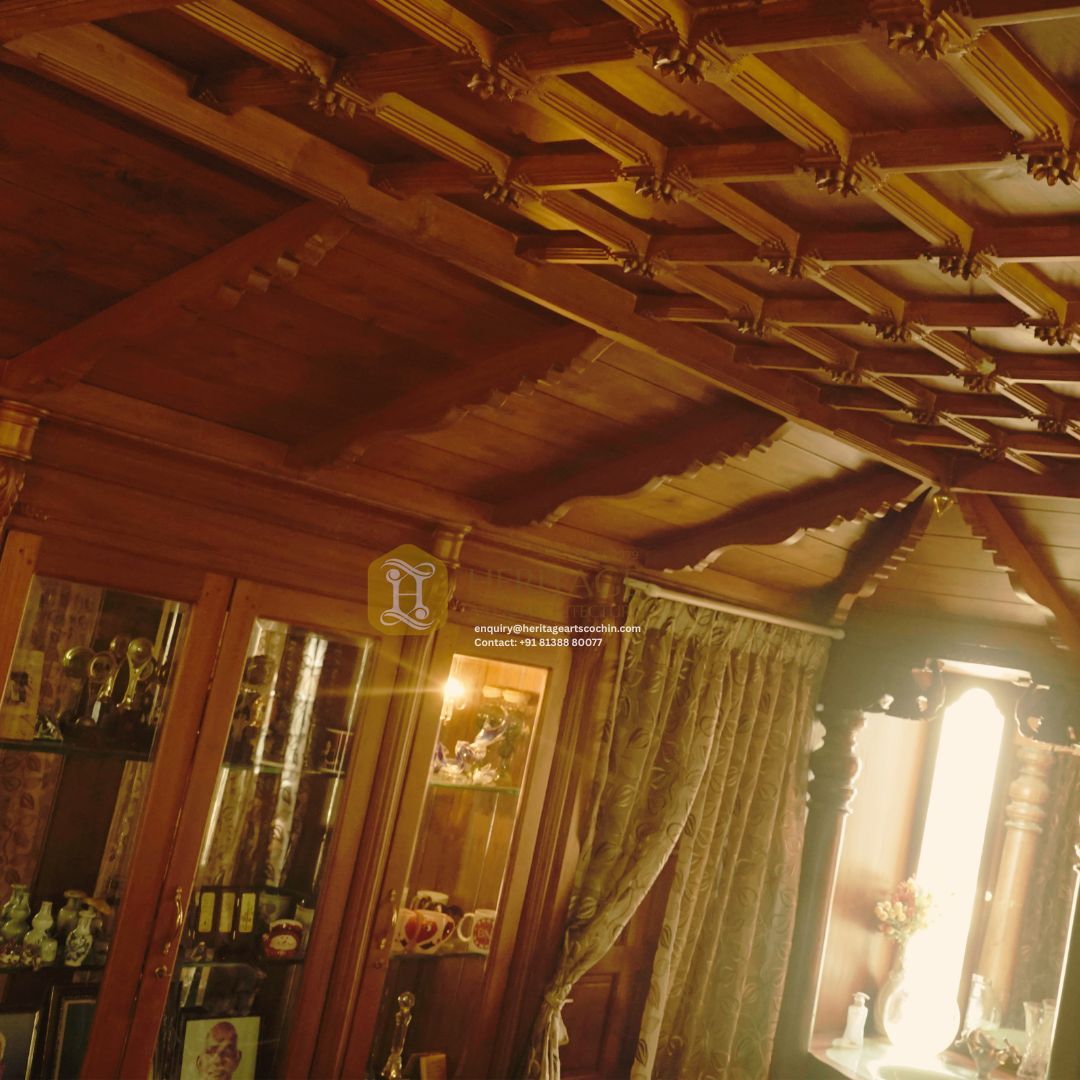
The ceiling system is composed of four primary interconnected components:
| Component Name | Description & Functional Role |
| 1. Central Coffered Grid (Chithra Thattu) | A suspended or direct-mounted waffle grid created by intersecting wooden runners. The recessed panels between the framework create a three-dimensional coffered ceiling effect. |
| 2. Carved Bosses / Pendents (Poo Motty) | Intricately carved floral or inverted-bud wood embellishments affixed to every intersection of the coffered grid. |
| 3. Sloping Rafters & Scalloped Trim (Uttupura / Kazhukolu) | Structural/decorative sloping wooden rafters with ornamental scalloped or wave-patterned lower edges extending toward the perimeter walls. |
| 4. Solid Wooden Planking (Ceiling Boarding) | Tongue-and-groove solid wood planks fitted behind the rafters and grid to seal the ceiling plane and provide structural backer. |
Craftsmanship
- Wood Working Technique: Crafted using traditional wood joinery techniques (mortise-and-tenon and lap joints), minimizing visible metallic fasteners.
- Carving Details: Hand-carved floral motif details on all ceiling grid intersections.
- Surface Treatment & Finish: Sanded to a smooth matte finish across all relief profiles.
Technical Specifications
- Primary Material Options: Teak Wood , Anjili Wood or Mahogany (based on client preference and budget).
- Grid Section Size (Coffers): Standard 300mm x 300mm to 450mm 450mm module size.
- Rafter Spacing: Standard 450mm to 600mm center-to-center.
- Ceiling Board Thickness: 12mm to 18mm tongue-and-groove planking.
- Coating: Multi-layer Stain + PU Matte/Satin finish.
- Weight Scale: Approximately 18kg – 25kg per square meter (varies by wood species chosen).