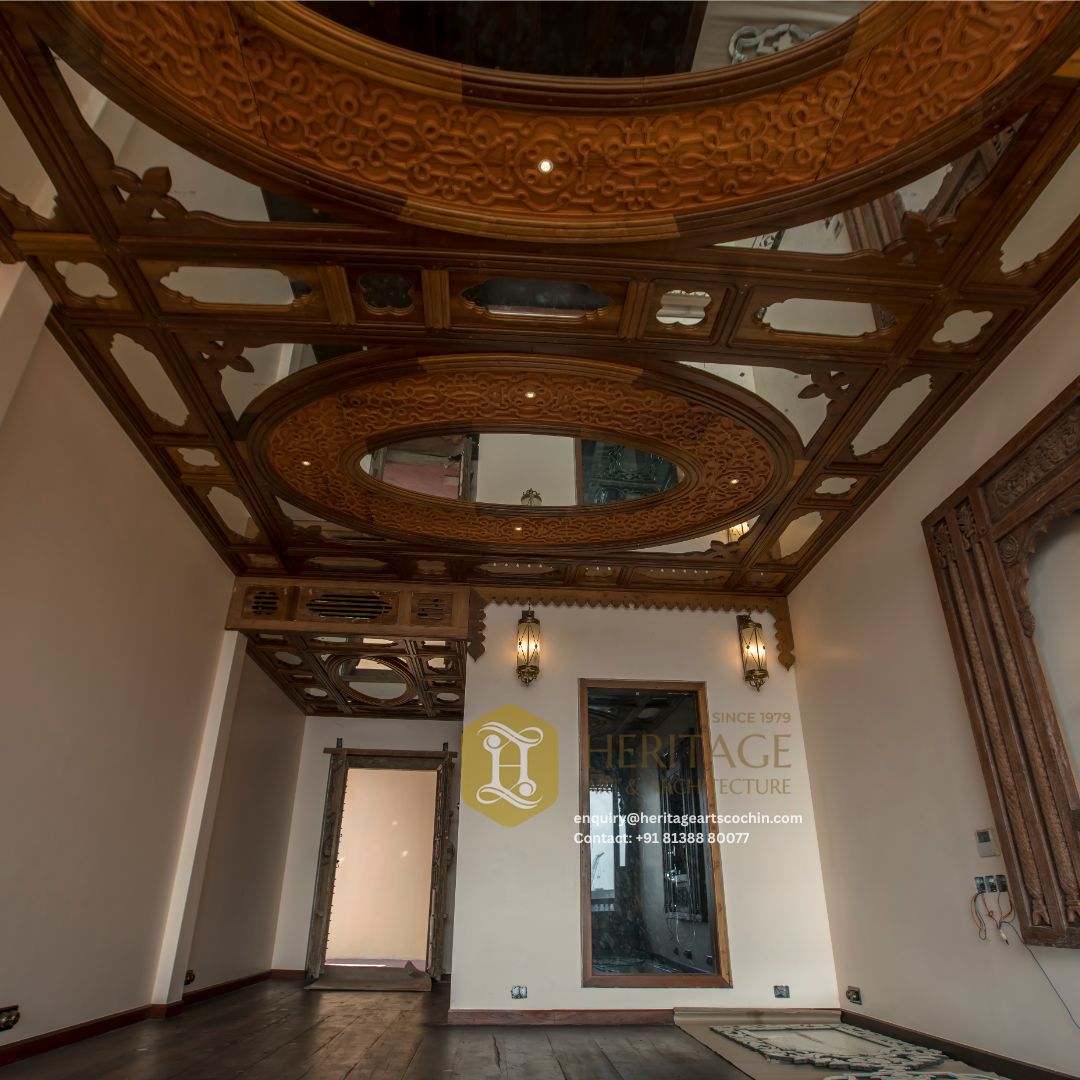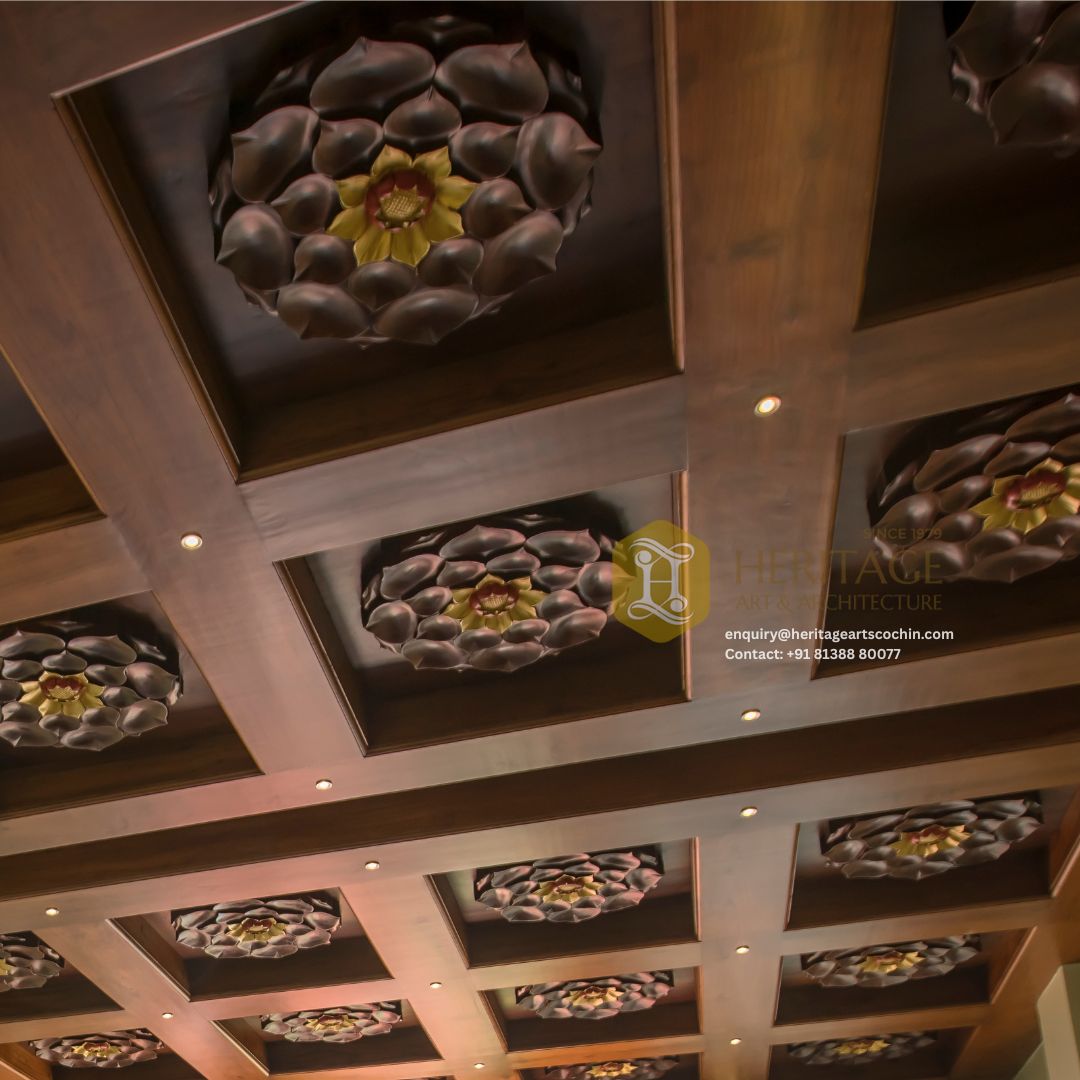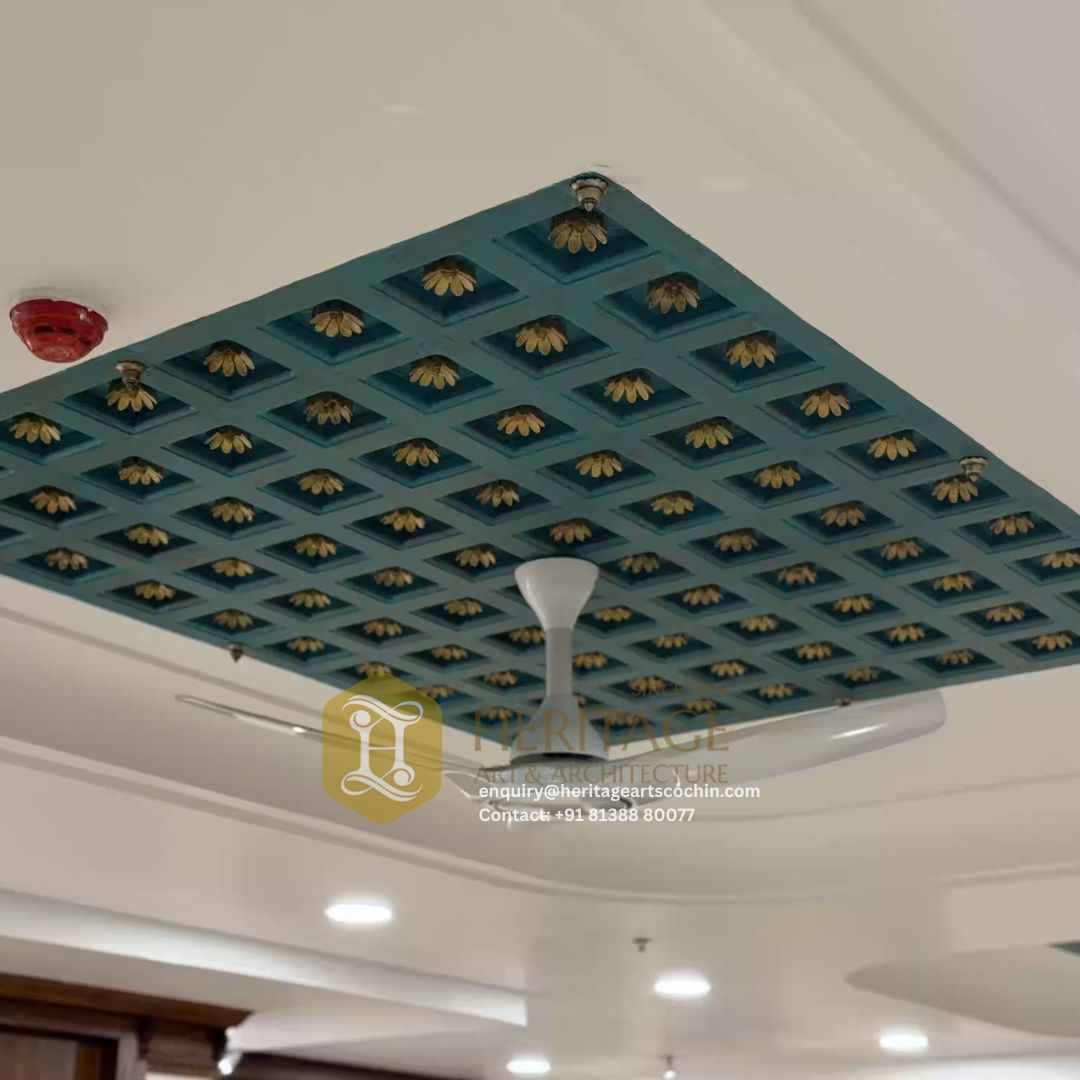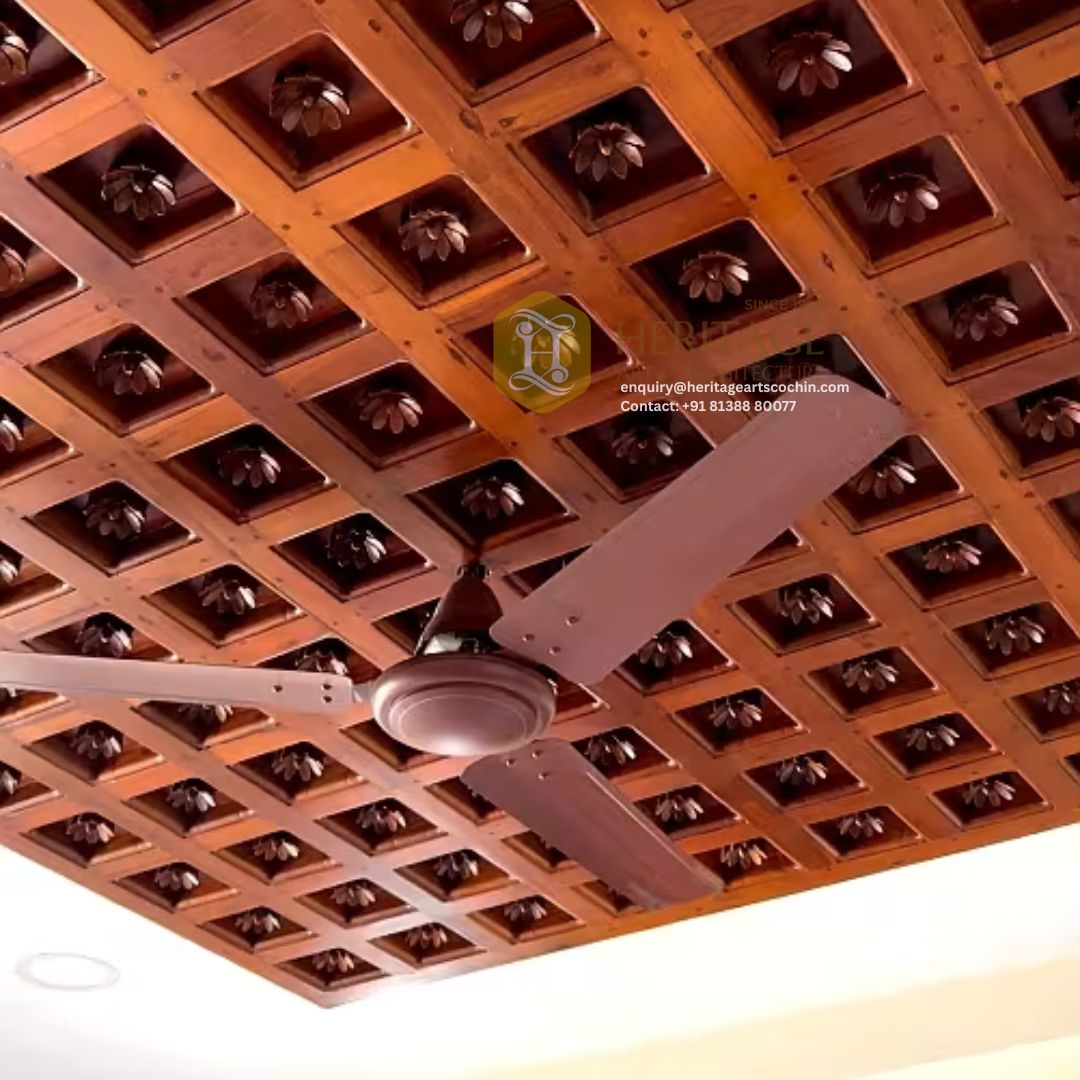
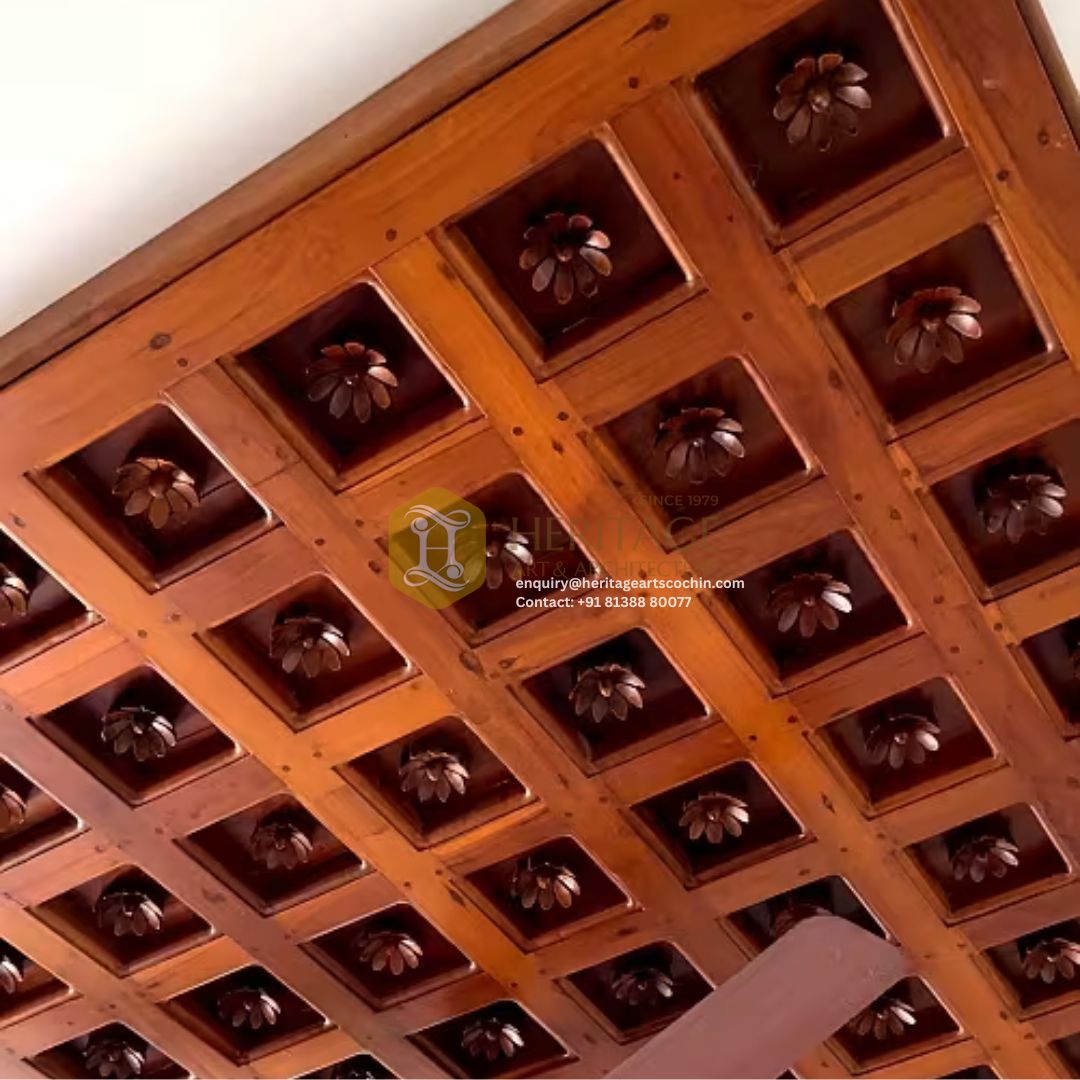
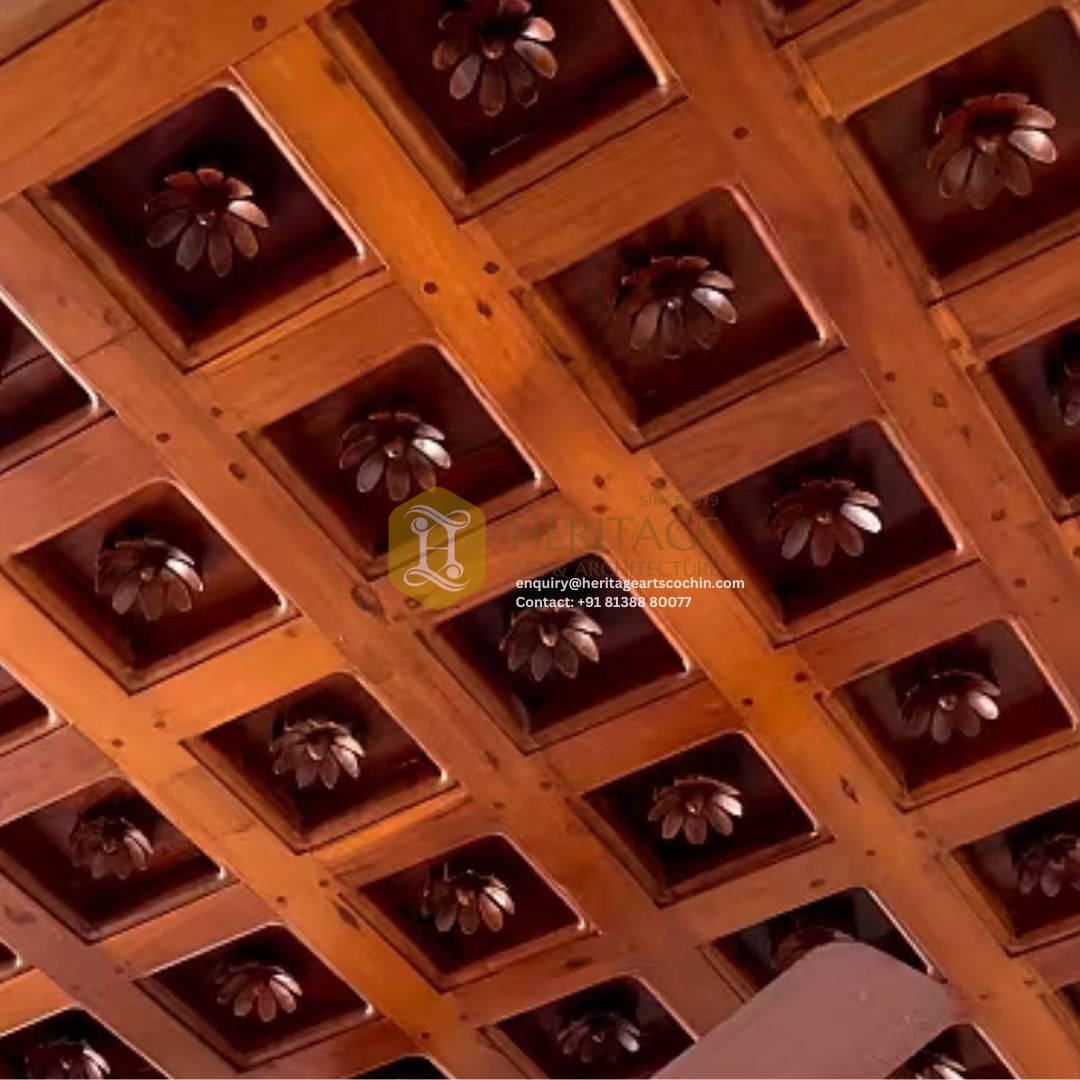
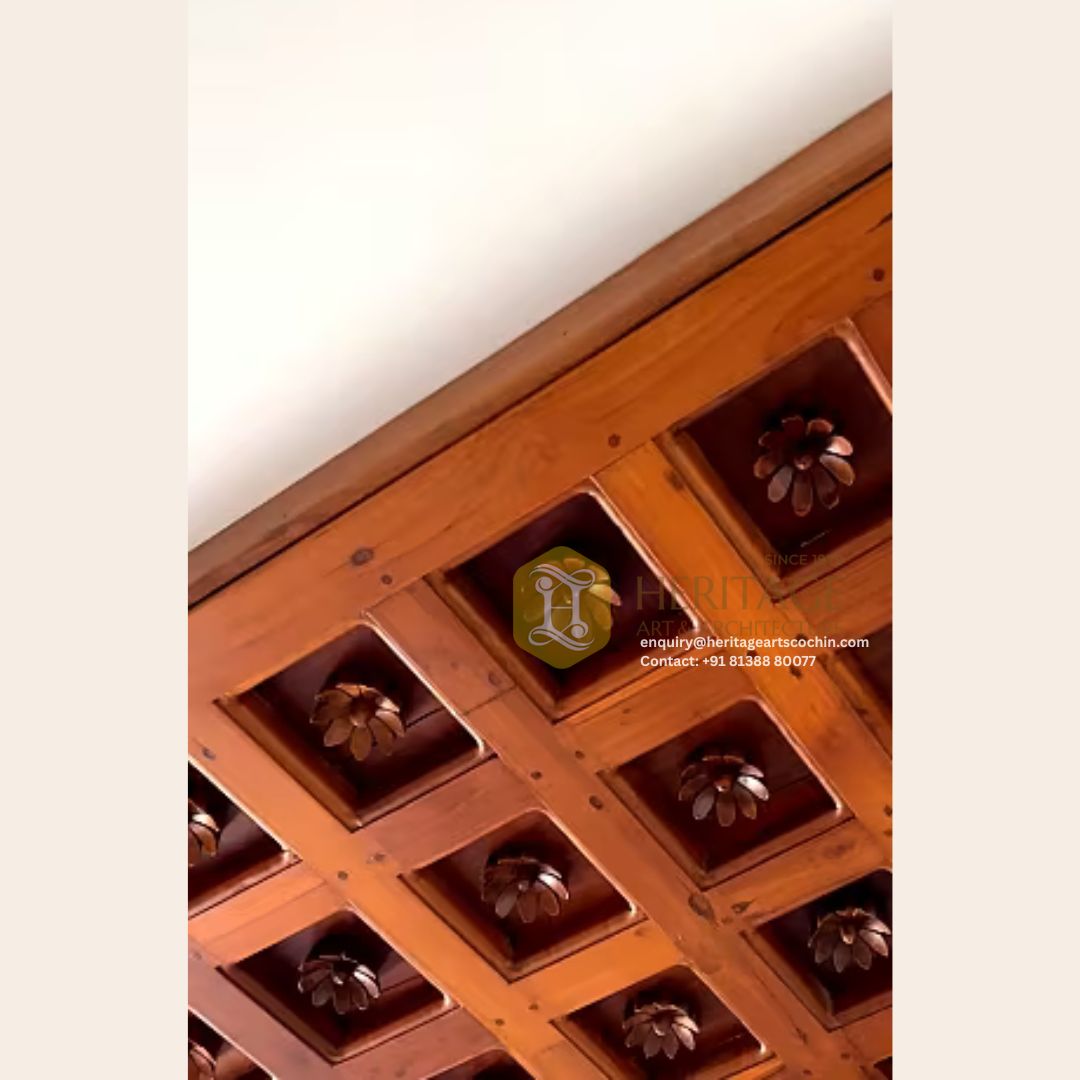
Each coffered panel is meticulously carved from matured teak, its depth holding not just air, but a sense of stillness and order. At the heart of every square, a hand-carved lotus medallion radiates calm—its petals unfolding in quiet symmetry, echoing the spiritual traditions of temple sanctums and ancestral homes. The grid itself is more than structure; it is a mandala of intention, a visual rhythm that guides the eye and soothes the mind.
Framing the entire composition, the smooth wooden borders give the ceiling a sense of completion and architectural grace. The Chitramukha Ceiling is not just a decorative element—it is a contemplative canopy, a stage for light to perform, and a tactile memory of Indian architectural soul. Whether installed in a pooja hall, living room, or verandah, it invites every visitor to pause, look up, and breathe in the beauty of sacred design.
1. Chitrakudam Panels (Coffered Grid Squares)
The sunken, framed squares that create the ceiling’s rhythmic grid. Each coffer is individually carved, offering depth, shadow, and a sense of sacred order. These panels are the heart of the design, holding space for both light and reflection.
2. Tamara Medallions (Lotus Centerpieces)
Hand-carved lotus motifs placed at the center of each coffer. These medallions symbolize purity, calm, and spiritual focus—turning every square into a visual prayer and infusing the ceiling with a sense of blessing and tranquility.
3. Mandala Frames (Grid Borders & Structure)
The interlocking wooden slats that form the matrix of the ceiling. These frames provide balance and geometric harmony, echoing the mandala patterns of Indian sacred art. They guide the eye across the ceiling, creating a sense of order and unity.
4. Rekha Edges (Perimeter Borders)
The smooth, finished wooden edges that frame the entire ceiling, giving it a sense of completion and architectural grace. These edges soften the transition between ceiling and wall, making the canopy feel both grounded and elevated.
Craftsmanship & Legacy
Carved from matured teak, assembled with mortise joinery, and finished to highlight the wood’s natural warmth. Inspired by Kerala’s Nalukettu homes and temple pooja halls, this ceiling adapts tradition for modern sanctuaries. Every square is a prayer in timber, every lotus a chant of design.
Ideal Setting
Perfect for pooja rooms, living rooms, verandahs, or any space seeking a touch of sacred geometry and timeless beauty. The Chitramukha Ceiling is not just a ceiling—it is a contemplative canopy, a quiet stage for light, and a living memory of Indian architectural soul.