Samavṛtta Cane and Teak Chair

/
/
Samavṛtta Cane and Teak Chair

Samavṛtta Cane and Teak Chair

Perfectly rounded / harmoniously complete” — a phrase from classical Sanskrit that signifies balance, rhythm, and quiet beauty. The name also refers to a metrical form in ancient poetry — one that is complete in itself.

Samavṛtta is not just a chair. It is a pause carved in wood — a metrical gesture, a seat of reflection, a sculpture of rest.Its name, drawn from poetic meter, speaks of cycles, symmetry, and sacred cadence. Just as a perfect stanza brings harmony to thought, Samavṛtta brings harmony to space.

Categories ,

Description

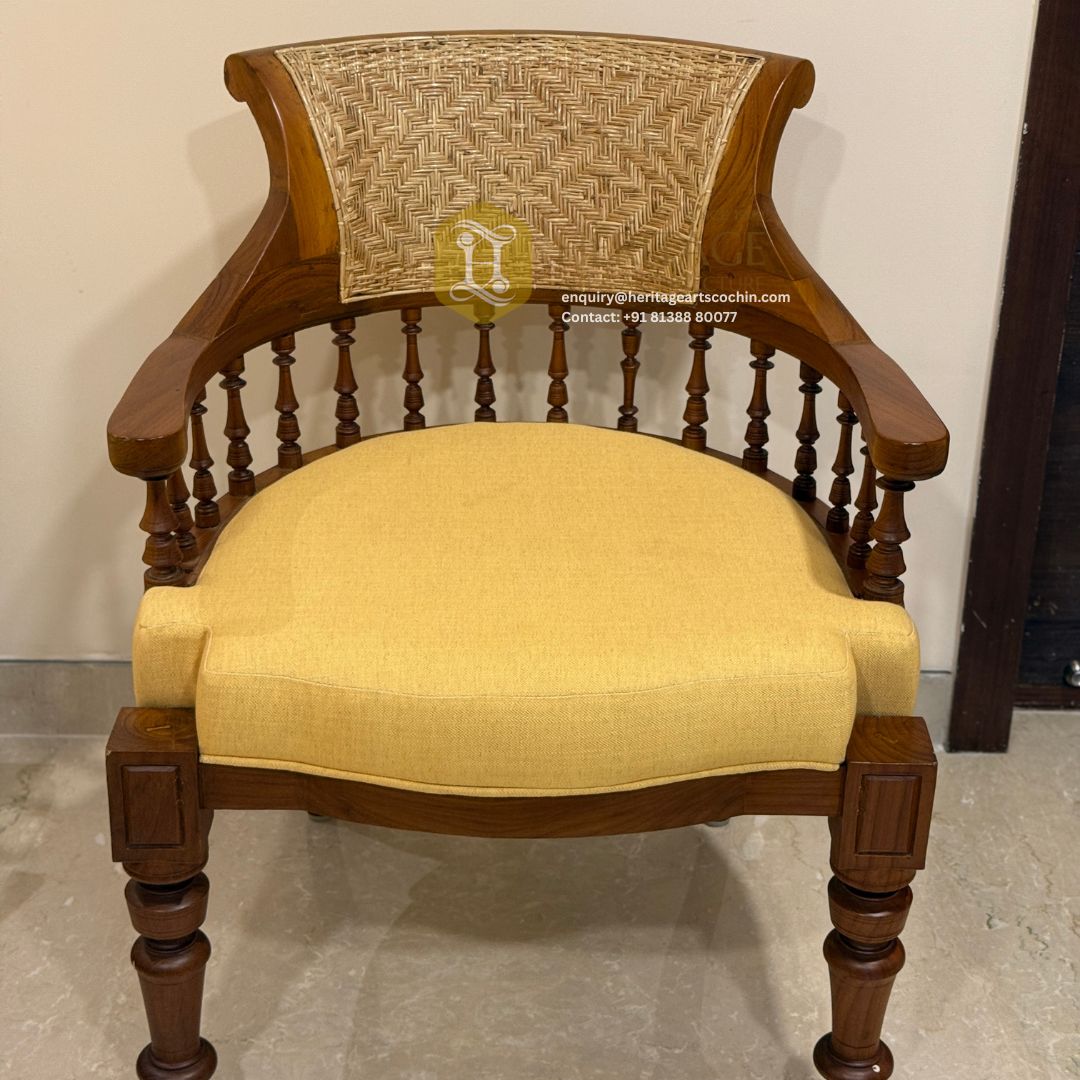
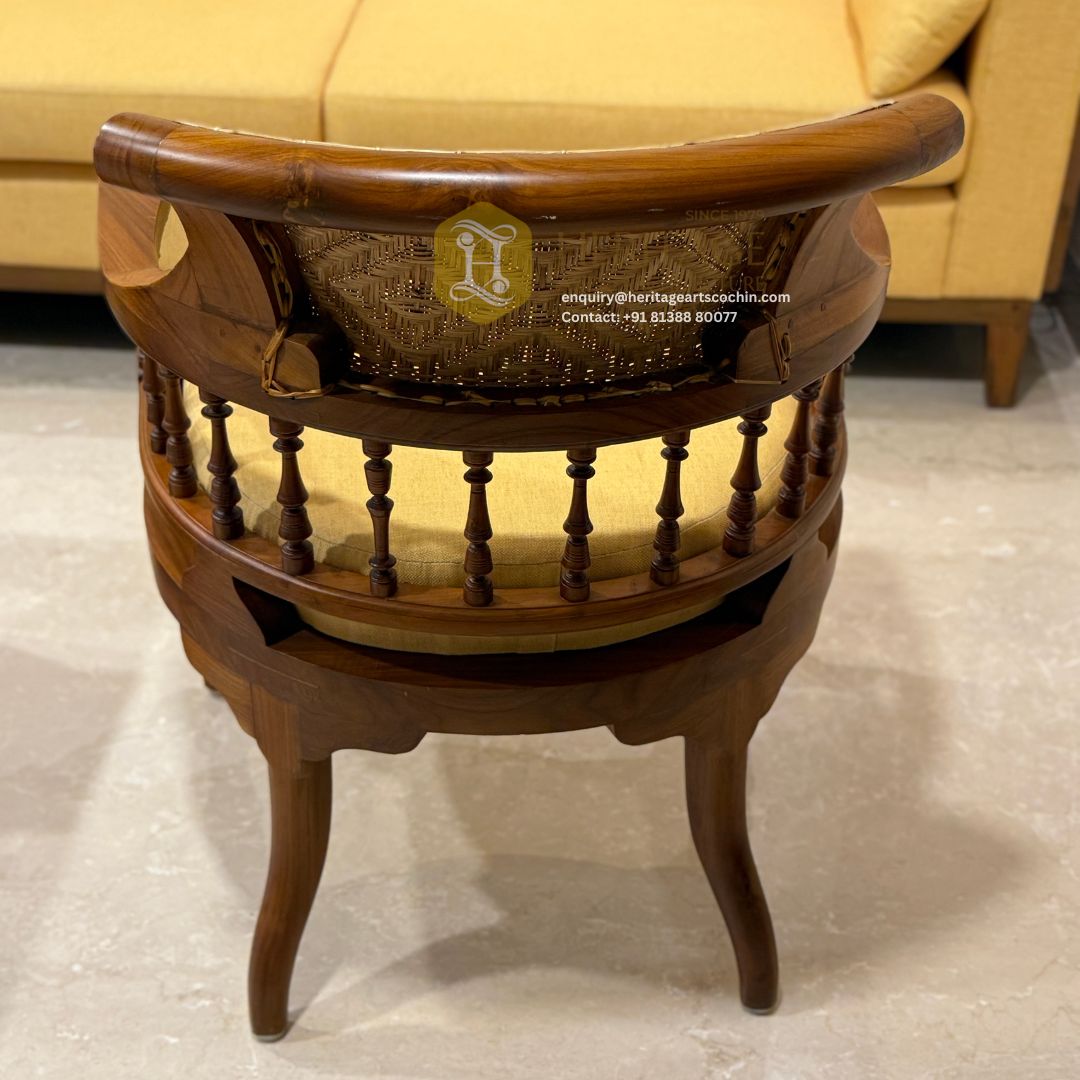
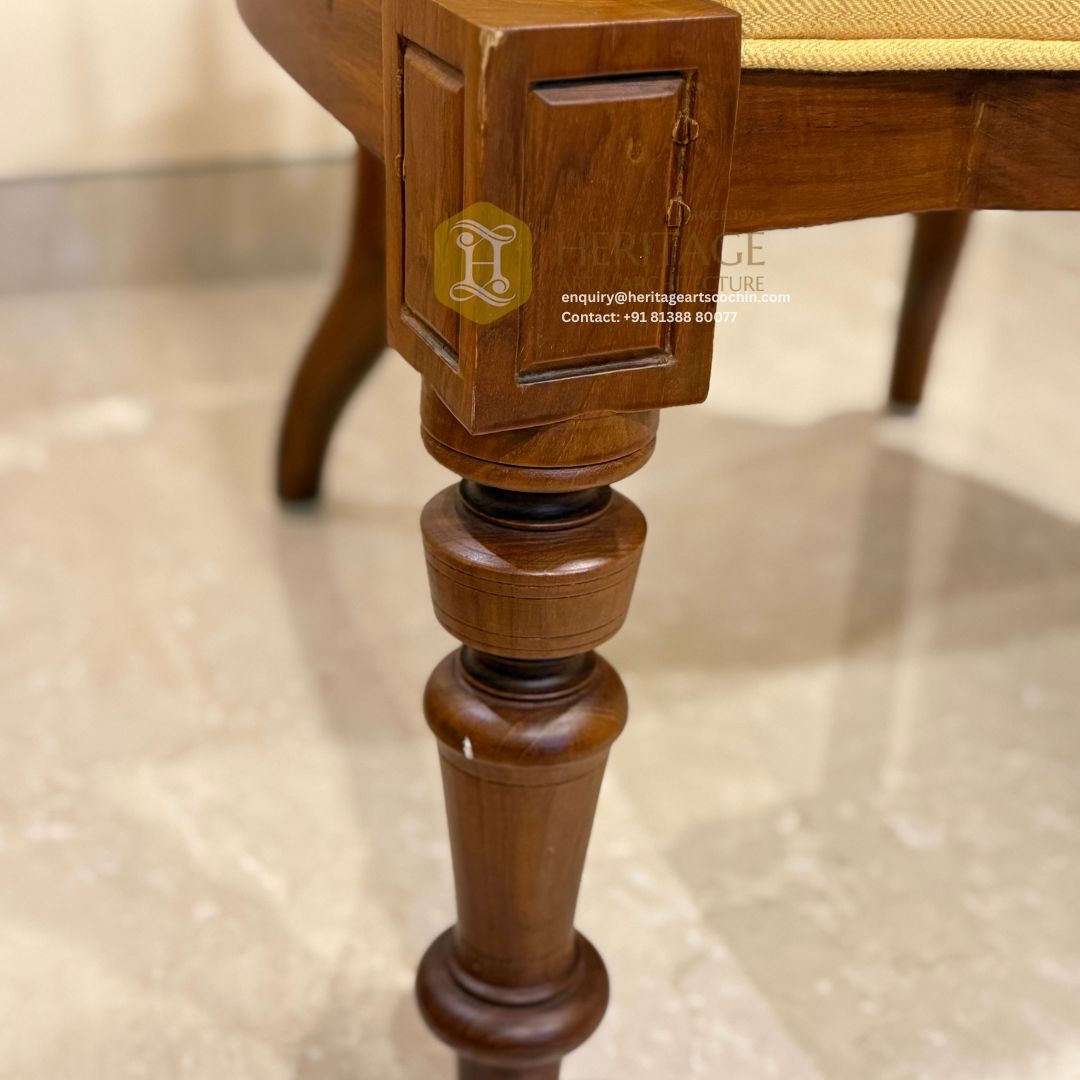
With a gently arched back, woven cane breath, and pillared legs, this single-seater recalls the quiet dignity of Kerala verandahs and the lyrical ease of classical dance. It cradles the body not with excess, but with intention. Every curve is softened, every line refined — offering repose without rigidity.

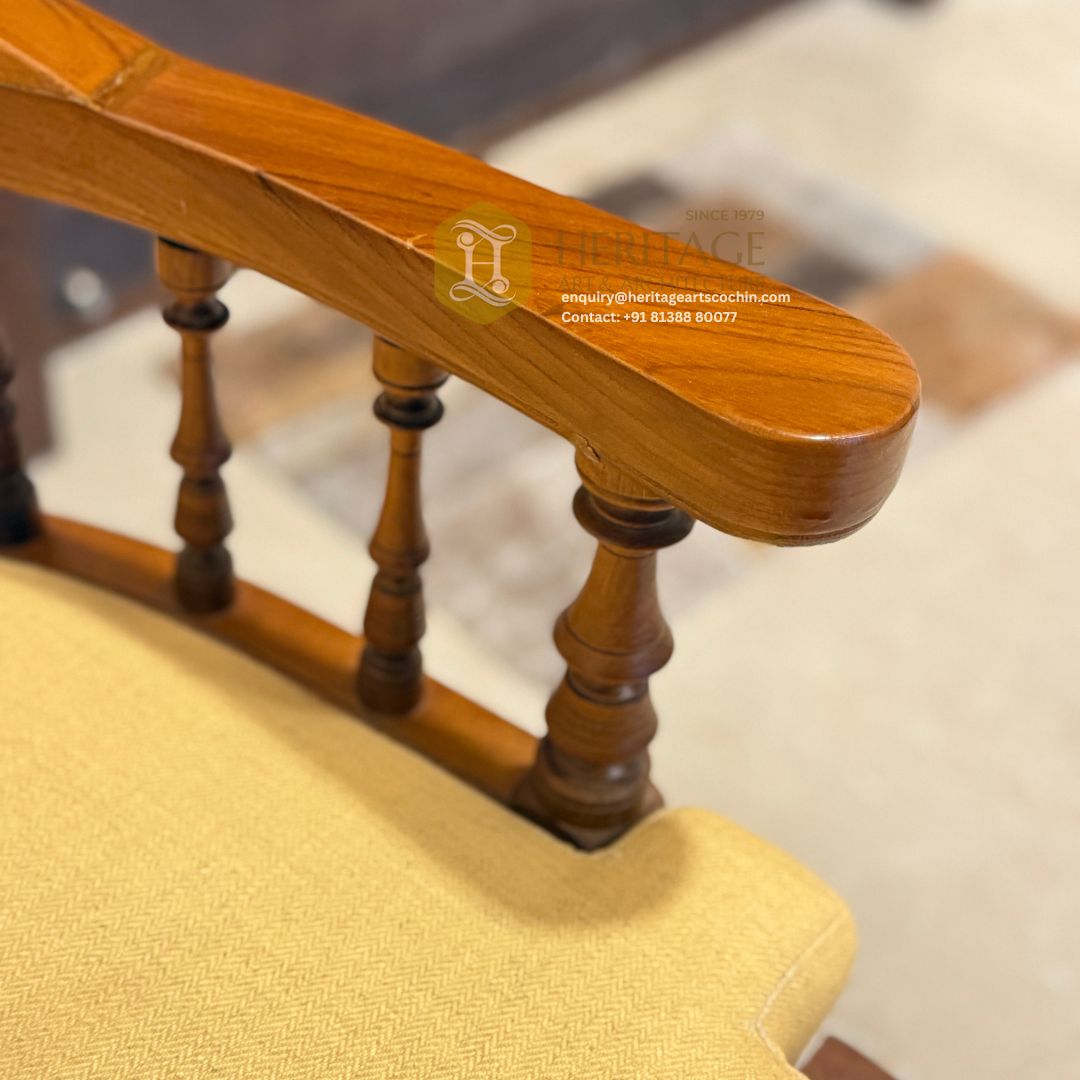
This is a chair that invites stillness. The seat, wide and lotus-like, allows one to linger — in conversation, contemplation, or simply the joy of being. The spindled balustrade at the back casts slender shadows, like jali patterns in temple corridors. The armrests flow outward like drawn brushstrokes — elegant, unbroken, serene.

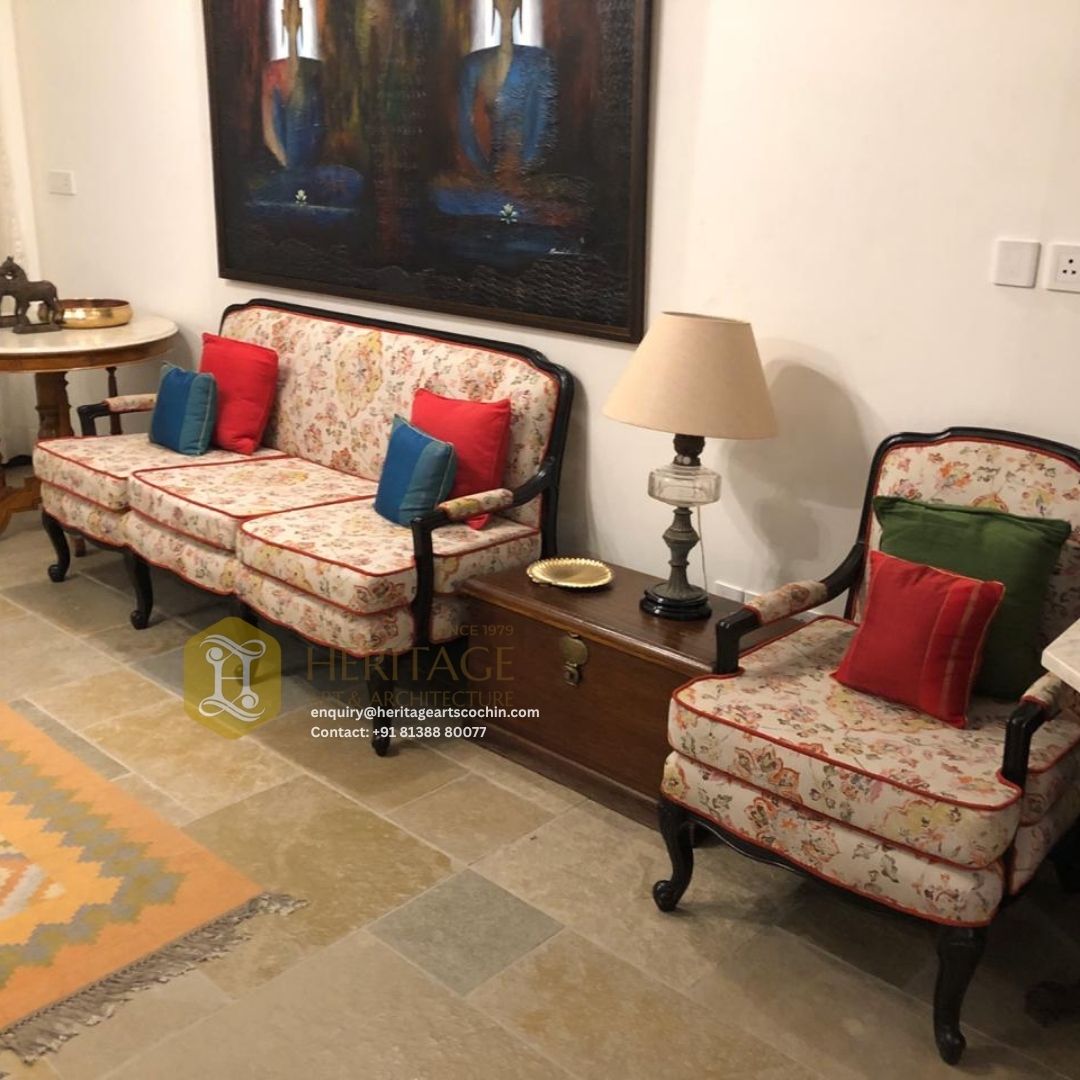
It pairs seamlessly with Sugandhira, its three-seater counterpart, yet stands beautifully alone in a writing nook, beside a brass lamp, or in the stillness of a reading alcove.

Whether in a restored haveli, a tropical villa, or a mindful studio apartment, Samavṛtta is for those who seek not just furniture — but presence.
It holds the body — yes. But it also holds pause, rhythm, and poetry.

Key Components 

1. Spandana — Arched Backrest

The back of Samavṛtta is crowned by a gentle toraṇa—an architectural arch in wood that reads like a metrical pause. It gathers the uprights, the spindles, and the cane into one composed gesture, holding the posture the way a raga holds its note. The arc is hand‑shaped, then hand‑rubbed until the grain glows softly; when you lean back, the curve finds your shoulders without insisting, a quiet alignment of body and line. By day it frames light; by night, it frames stillness

2. Sutrajal — Cane Inset Panel

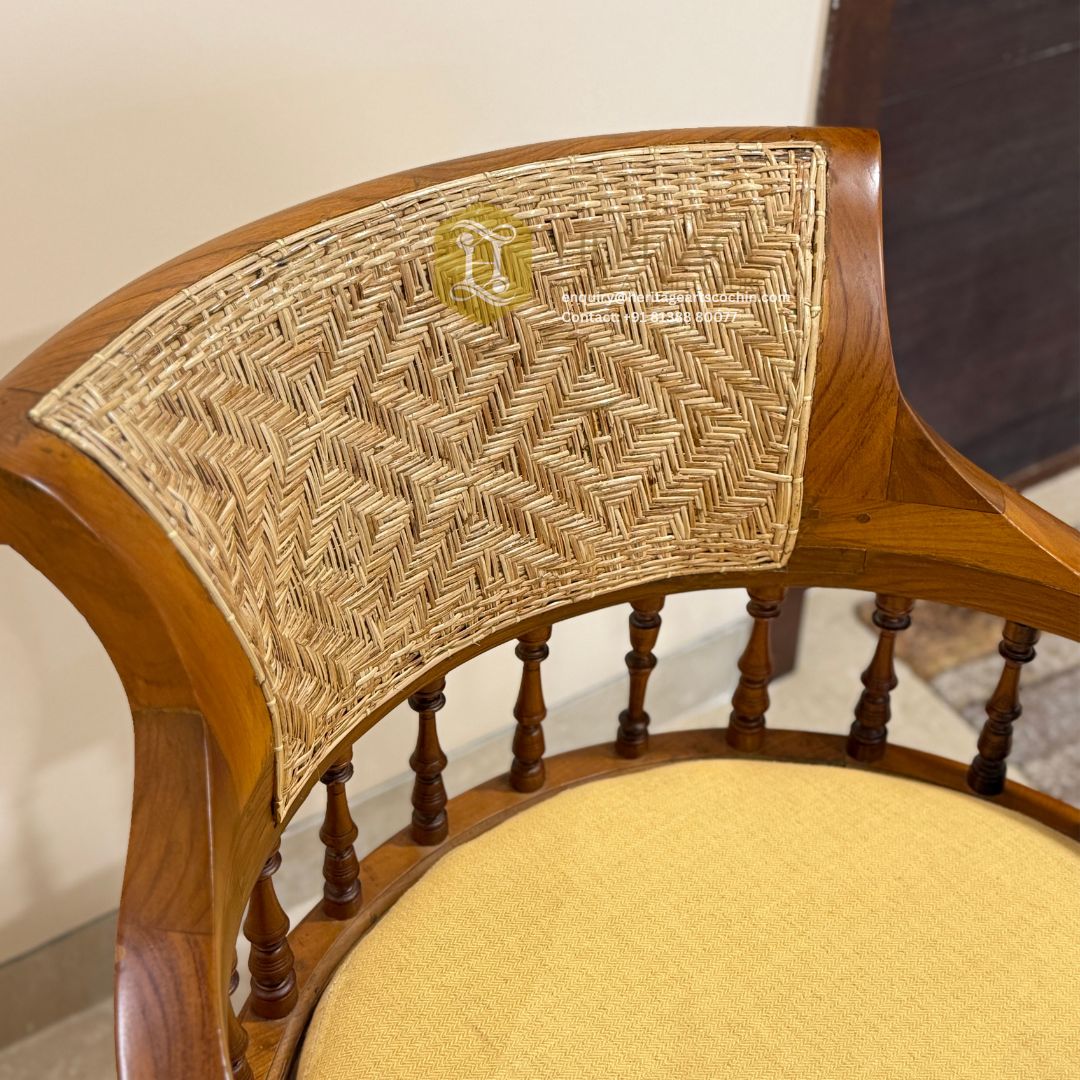
The woven heart. Natural cane is split fine, soaked, and threaded into a living lattice; the pattern is a breath you can see. It tempers Kerala’s warmth, lets air move behind the spine, and throws a delicate shadow onto the seat—like palmyra fronds across a courtyard floor. Edges are bound and tucked by hand so the weave sits proud and clean within its wooden frame, ready to mellow into a golden patina with time.

3. Laya tarang— Spindle Rail

A cadence of turned spindles runs below the arch: rising, falling, resolving—like syllables in a perfectly measured stanza. Each spindle is turned one at a time on a simple lathe, then knife‑finished so the ridge lines remain crisp to the eye and soft to the touch. Together they lend rhythm and strength, keeping the back light yet steadfast, lyrical yet load‑bearing.

4. Bahulekha— Armrests

Brushstrokes in wood. The arms begin as straight intent and taper into rounded ease, their tops slightly domed so the forearm finds a natural rest. Underneath, the arris is softened—no hard corner to catch fabric, no abrupt end to break the line. From front post to back post, the arms carry the gesture of welcome; from palm to shoulder, they carry the body without weight.

5. Vishrantika— Seat Cushion

A lotus of repose. The cushion is firm at the core for posture, gentle at the surface for linger—wrapped in a breathable, hand‑tailored cover that stays cool in Kerala’s weather and warm in the monsoon. Its proportions are deliberate: wide enough to change position without shifting mood, deep enough to sit forward for conversation or settle back for contemplation. A hidden zip allows the cover to breathe, air, and renew.

Craftsmanship & Materials

  • Wood: Matured teak or Indian rosewood, hand-selected for grain and strength
  • Cane: Natural cane, woven using traditional handloom techniques
  • Upholstery: Cotton-linen blend in earthy tones; removable and breathable
  • Finish: Hand-rubbed oil polish — matte, low-sheen, or heritage glaze
  • Joinery: Mortise & tenon with turned and carved components — no visible screws or nails
  • Artisan Work: Each chair is made by skilled craftsmen in South India, trained in heirloom joinery traditions

Ideal Placement

  • Beside a tulsi altar or prayer niche
  • In reading corners, under brass wall lamps
  • In quiet studio spaces or heritage-style salons
  • Paired with antique chests, cane sofas, or mural backdrops
  • In tropical-modern interiors that blend memory with minimalism
More Products

Established in 1979, we carry a legacy that we proudly unfold in front of you. Here tradition blends with creation, art blends with heritage, and finally, a whole new story is carved out in pure wood exclusively for you. 

Shopping Cart0

Cart

Shopping Cart0

Cart

Description

With a gently arched back, woven cane breath, and pillared legs, this single-seater recalls the quiet dignity of Kerala verandahs and the lyrical ease of classical dance. It cradles the body not with excess, but with intention. Every curve is softened, every line refined — offering repose without rigidity.

This is a chair that invites stillness. The seat, wide and lotus-like, allows one to linger — in conversation, contemplation, or simply the joy of being. The spindled balustrade at the back casts slender shadows, like jali patterns in temple corridors. The armrests flow outward like drawn brushstrokes — elegant, unbroken, serene.

It pairs seamlessly with Sugandhira, its three-seater counterpart, yet stands beautifully alone in a writing nook, beside a brass lamp, or in the stillness of a reading alcove.

Whether in a restored haveli, a tropical villa, or a mindful studio apartment, Samavṛtta is for those who seek not just furniture — but presence.
It holds the body — yes. But it also holds pause, rhythm, and poetry.

Key Components 

1. Spandana — Arched Backrest

The back of Samavṛtta is crowned by a gentle toraṇa—an architectural arch in wood that reads like a metrical pause. It gathers the uprights, the spindles, and the cane into one composed gesture, holding the posture the way a raga holds its note. The arc is hand‑shaped, then hand‑rubbed until the grain glows softly; when you lean back, the curve finds your shoulders without insisting, a quiet alignment of body and line. By day it frames light; by night, it frames stillness

2. Sutrajal — Cane Inset Panel

The woven heart. Natural cane is split fine, soaked, and threaded into a living lattice; the pattern is a breath you can see. It tempers Kerala’s warmth, lets air move behind the spine, and throws a delicate shadow onto the seat—like palmyra fronds across a courtyard floor. Edges are bound and tucked by hand so the weave sits proud and clean within its wooden frame, ready to mellow into a golden patina with time.

3. Laya tarang— Spindle Rail

A cadence of turned spindles runs below the arch: rising, falling, resolving—like syllables in a perfectly measured stanza. Each spindle is turned one at a time on a simple lathe, then knife‑finished so the ridge lines remain crisp to the eye and soft to the touch. Together they lend rhythm and strength, keeping the back light yet steadfast, lyrical yet load‑bearing.

4. Bahulekha— Armrests

Brushstrokes in wood. The arms begin as straight intent and taper into rounded ease, their tops slightly domed so the forearm finds a natural rest. Underneath, the arris is softened—no hard corner to catch fabric, no abrupt end to break the line. From front post to back post, the arms carry the gesture of welcome; from palm to shoulder, they carry the body without weight.

5. Vishrantika— Seat Cushion

A lotus of repose. The cushion is firm at the core for posture, gentle at the surface for linger—wrapped in a breathable, hand‑tailored cover that stays cool in Kerala’s weather and warm in the monsoon. Its proportions are deliberate: wide enough to change position without shifting mood, deep enough to sit forward for conversation or settle back for contemplation. A hidden zip allows the cover to breathe, air, and renew.

Craftsmanship & Materials

  • Wood: Matured teak or Indian rosewood, hand-selected for grain and strength
  • Cane: Natural cane, woven using traditional handloom techniques
  • Upholstery: Cotton-linen blend in earthy tones; removable and breathable
  • Finish: Hand-rubbed oil polish — matte, low-sheen, or heritage glaze
  • Joinery: Mortise & tenon with turned and carved components — no visible screws or nails
  • Artisan Work: Each chair is made by skilled craftsmen in South India, trained in heirloom joinery traditions

Ideal Placement

  • Beside a tulsi altar or prayer niche
  • In reading corners, under brass wall lamps
  • In quiet studio spaces or heritage-style salons
  • Paired with antique chests, cane sofas, or mural backdrops
  • In tropical-modern interiors that blend memory with minimalism