
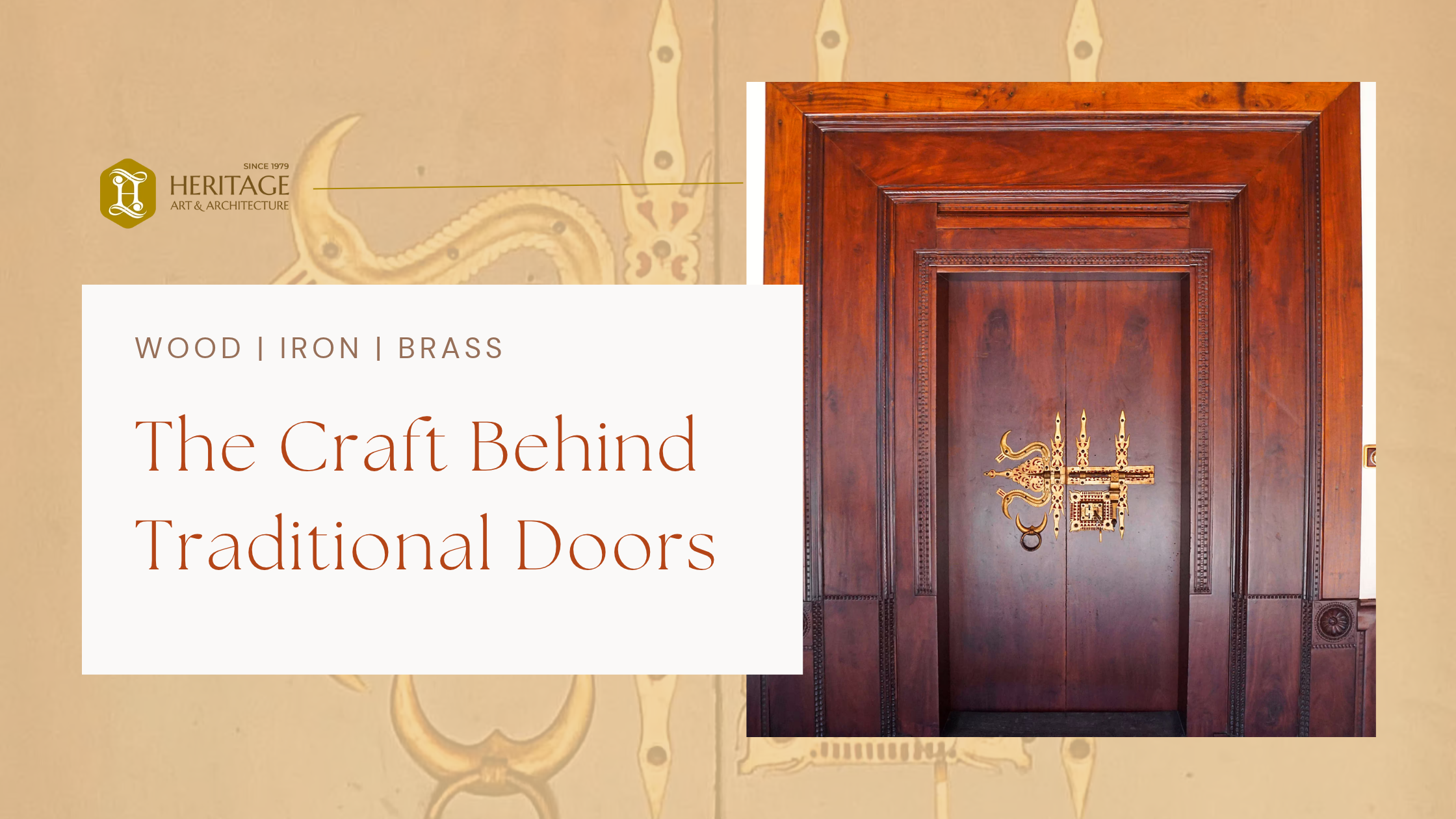
Walk down an old street in Kochi and you’ll notice the doors before anything else. They’re heavy and dark with age, and fitted with iron and brass that generations of hands have touched. In a traditional South Indian home, the main door says a lot. It shows who built the house, how well they built it, and what the family valued.
These doors also did a practical job. South India’s weather is hard on buildings, with heavy monsoons, damp air, heat and, near the coast, salt. The people who built these houses knew that, and they chose their materials with it in mind.
Wood Comes First
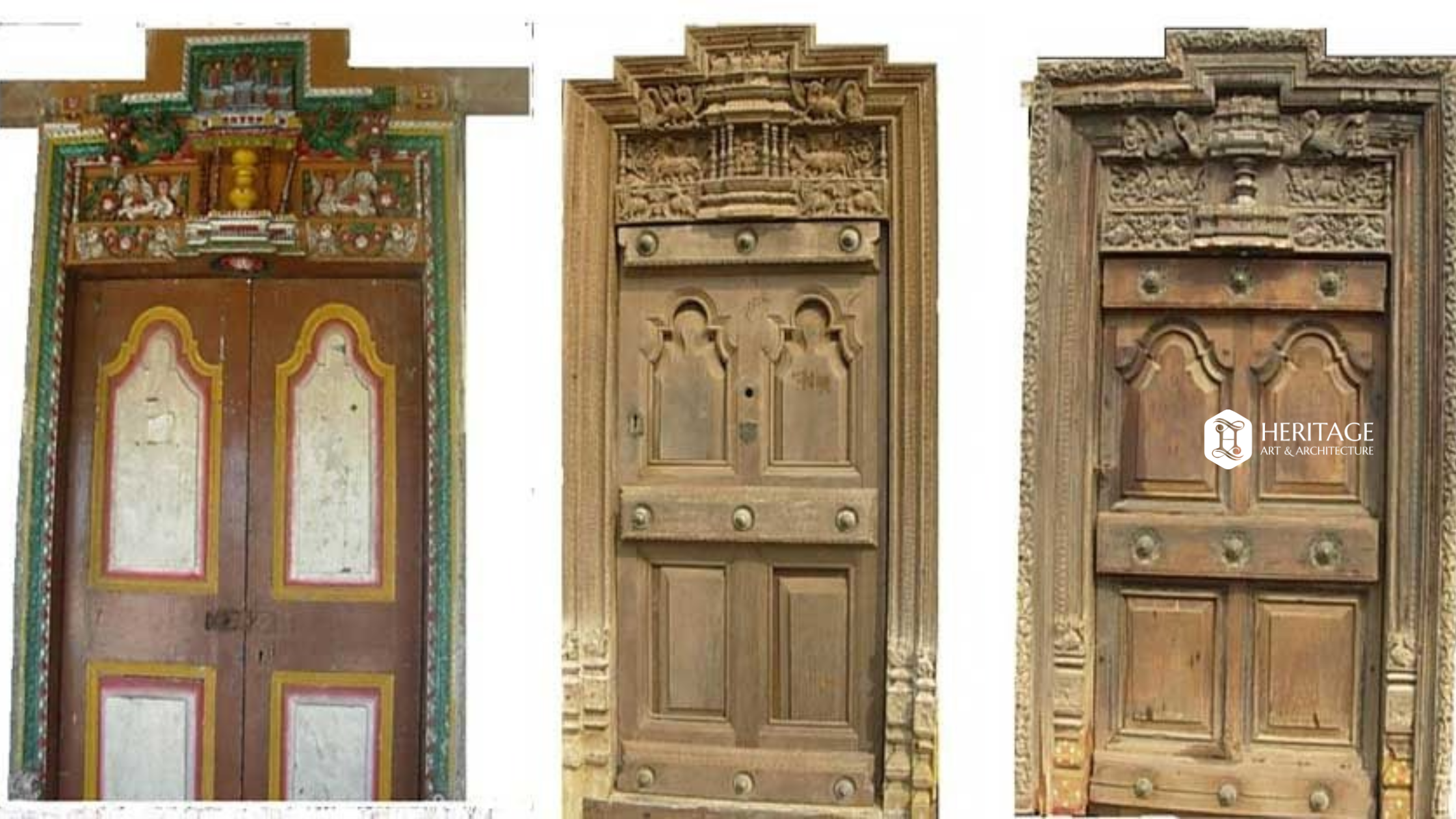
Timber has been the base of South Indian building for centuries. In Kerala especially, old houses use wood almost everywhere: doors, windows, pillars, ceilings and the roof structure. Teak and rosewood were favourites, along with other local hardwoods. They were strong, good-looking and workable enough for carvers to shape.
Old main doors often have deep carving, raised panels, traditional motifs and thick frames. None of it is only for show. A solid timber door gives privacy, keeps the house secure and helps insulate against heat, while still feeling welcoming from the street.
In Kochi, wooden doors and windows are part of the city’s architectural identity. Many homes in and around the city carry joinery made by local craftsmen over several generations. That work still inspires homeowners who want some of that character in a modern house.
Wood does need care, though. Humidity makes it swell, shrink and sometimes warp. Seasoned timber, a good protective finish, well-made joints and regular upkeep go a long way. Look after a wooden door properly and it can serve for decades.
Iron Does the Heavy Lifting
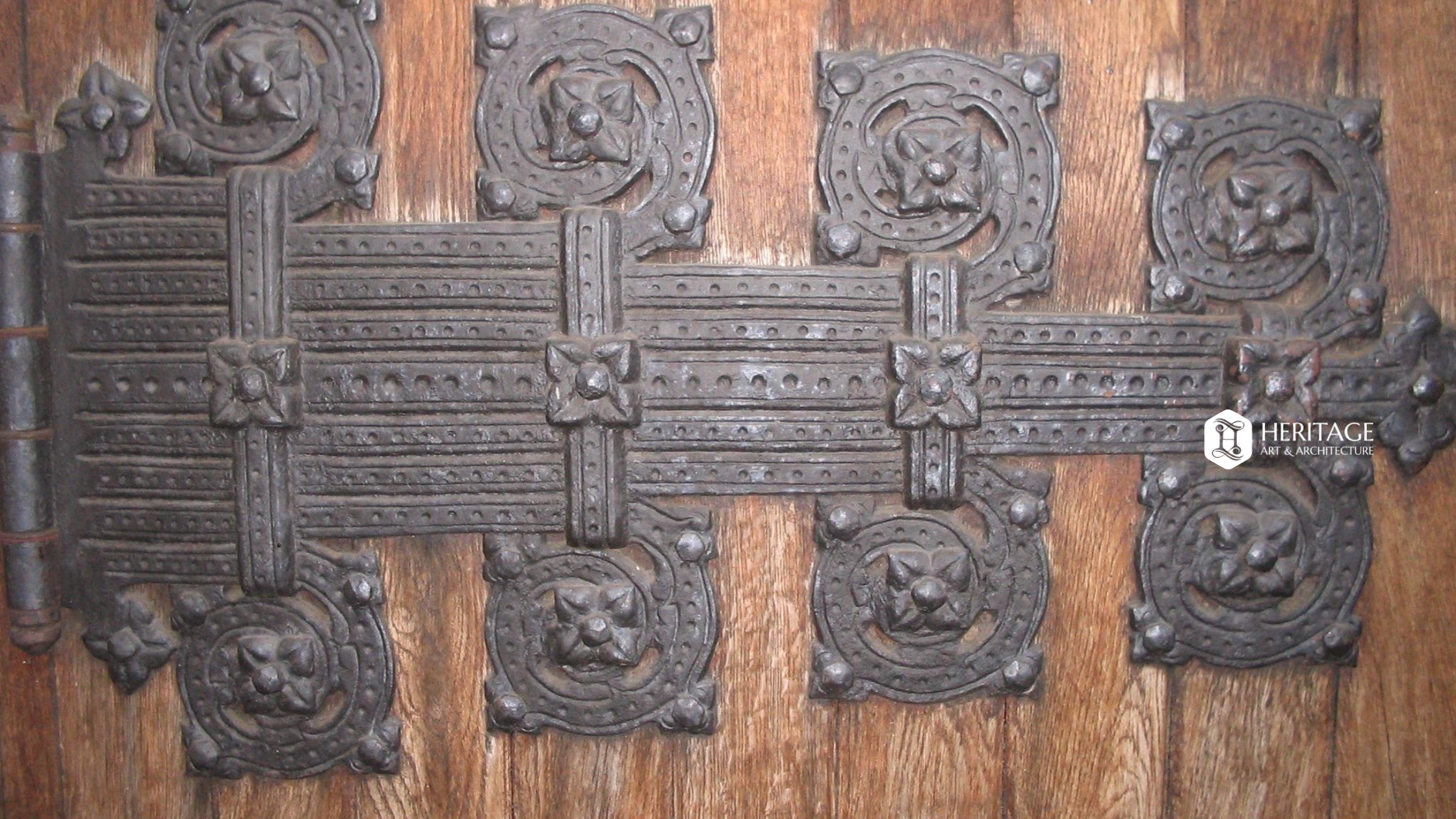
If wood gives a door its warmth, iron gives it strength. Hinges, bolts, locks, brackets and reinforcing straps were commonly made of iron in South Indian doors.
Local blacksmiths often forged these fittings by hand. Some were plain and purely useful. Others were decorative and echoed the carving on the door.
Hinges mattered most. A large timber shutter is heavy, and it needs hinges that can carry that weight year after year without sagging.
The trouble with iron near the coast is rust. Older households dealt with it through routine habits: cleaning the metal, applying a protective coat and treating exposed parts every so often. Today, vintage-style iron hardware is popular in restorations and new homes. Paired with solid wood, it gives an entrance that feels authentic without looking dated.
Brass and the Way It Ages
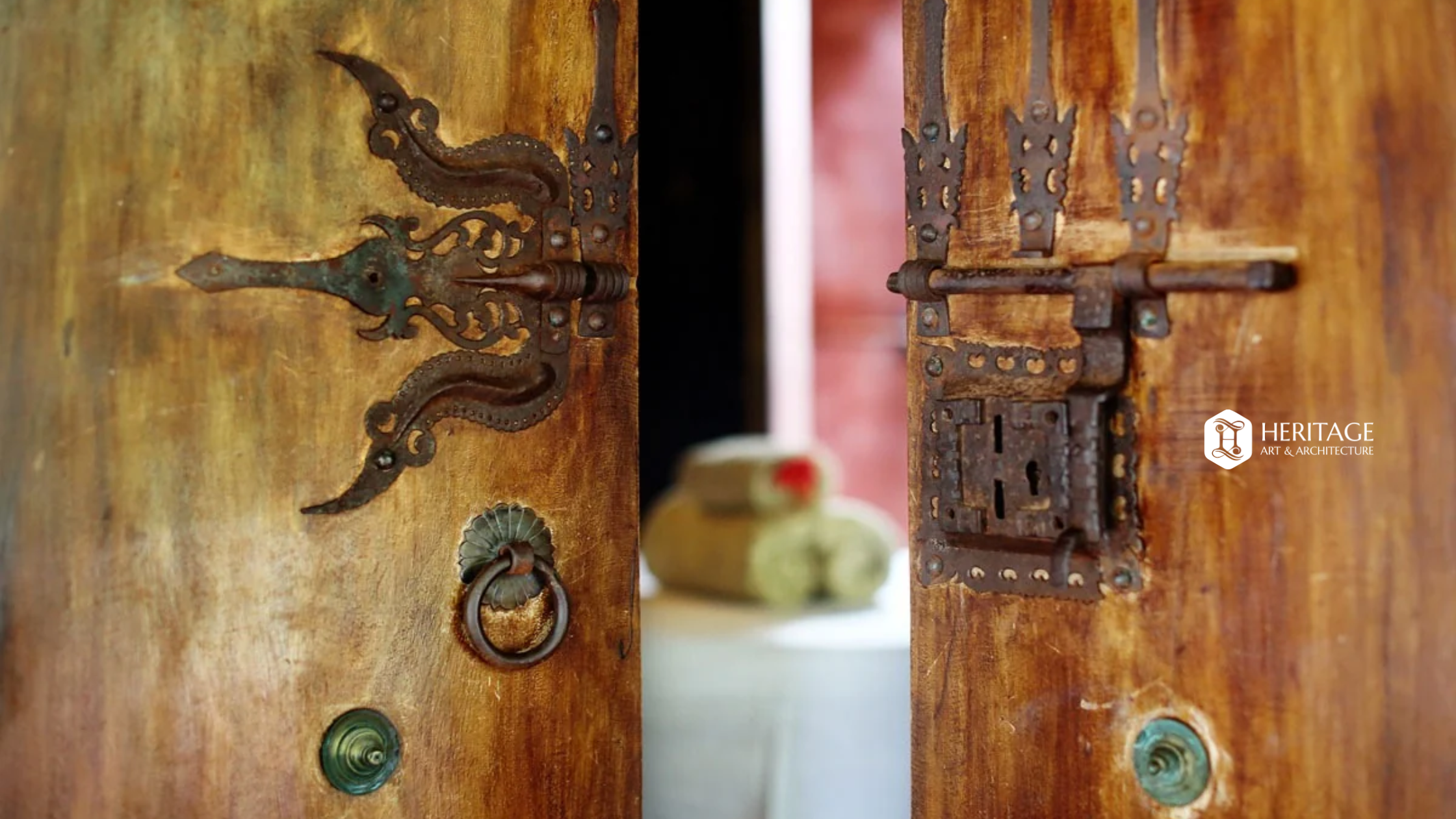
Brass is what gives these doors their glint. You’ll find it on handles, knockers, decorative plates, locks and small fittings, and its golden colour looks great against dark wood.
It’s practical too. Brass generally resists corrosion better than untreated iron, and with a little maintenance it copes well with humid weather.
Old brass knockers and handles are often lovely objects in themselves, with traditional motifs and geometric patterns that vary from region to region. As the metal ages, it picks up a soft patina. Plenty of materials only look good when they’re new and polished. Brass gets better with time, which is why it works so well in heritage-style homes.
Why This Combination Suits Kerala’s Weather
Kerala throws a lot at a building: heavy rain, high humidity, warm temperatures and, near the coast, salty air. Wood and metal react to those conditions in different ways.
Builders handled this by giving each material a job. Timber gave strength and a natural finish. Iron held things together. Brass added decoration and stood up reasonably well to corrosion.
The house itself helped too. Deep verandahs, covered porches, raised plinths and sloping roofs kept rain and standing moisture off the doors and windows. So weather resistance came from more than choosing the right material. It came from understanding how the materials, the building and the climate worked together.
Anyone interested in wooden architecture and interiors in Kerala can learn a lot from this.
Bringing Old Door Ideas Into a Modern Home
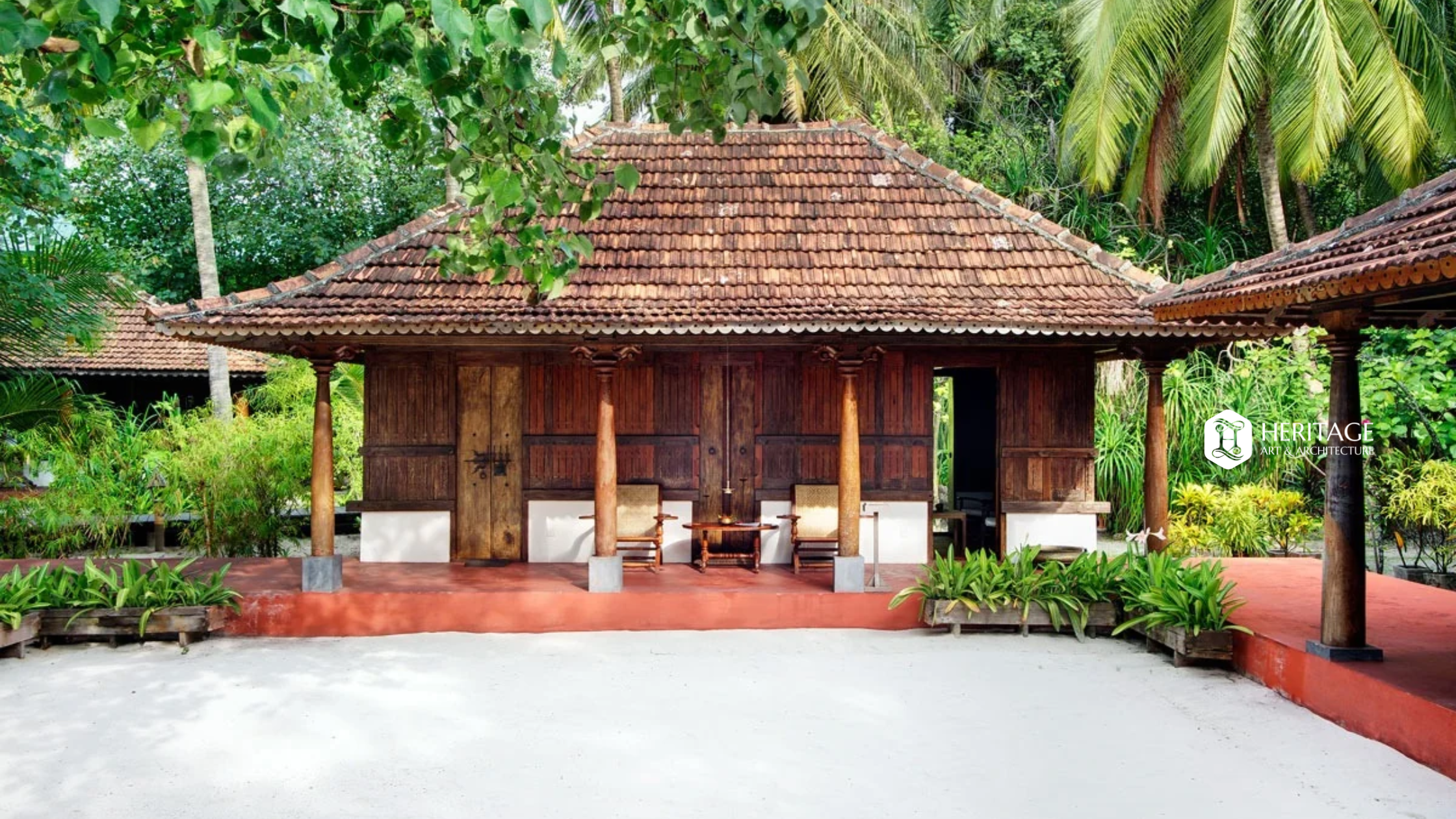
Interest in vintage South Indian doors hasn’t faded. More homeowners are choosing heritage-inspired entrances, restored timber panels, traditional brass fittings and handmade iron hardware.
You don’t need a fully traditional house to do it. A solid wooden main door with plain brass handles can anchor a whole facade. Reclaimed timber panels with understated iron fittings can bring warmth to a minimalist interior.
When you’re choosing materials, think about where the wood came from, how it was seasoned and treated, how it will be installed and what upkeep it needs. In coastal areas, pay extra attention to moisture protection and corrosion-resistant hardware.
Good design respects old craftsmanship while meeting today’s practical needs.
Keeping the Craft Alive
Vintage South Indian doors tell you a lot about the people who made them: their skill, their resourcefulness and how well they understood their surroundings. Wood, iron and brass were each chosen for a reason, and each had a job to do.
The fact that these doors still appeal to us shows that traditional building has real lessons for modern homes, particularly in a tropical climate. Whether you’re restoring an old property or planning a new one, using these materials thoughtfully gives you an entrance that looks distinctive and is built to last.
That balance of natural materials, skilled hands and design shaped by climate and culture is what makes these doors special.
To read more blogs, click here: 7 Nalukettu Design Elements in Modern Houses and Resorts