The Etching: Enough, Not More
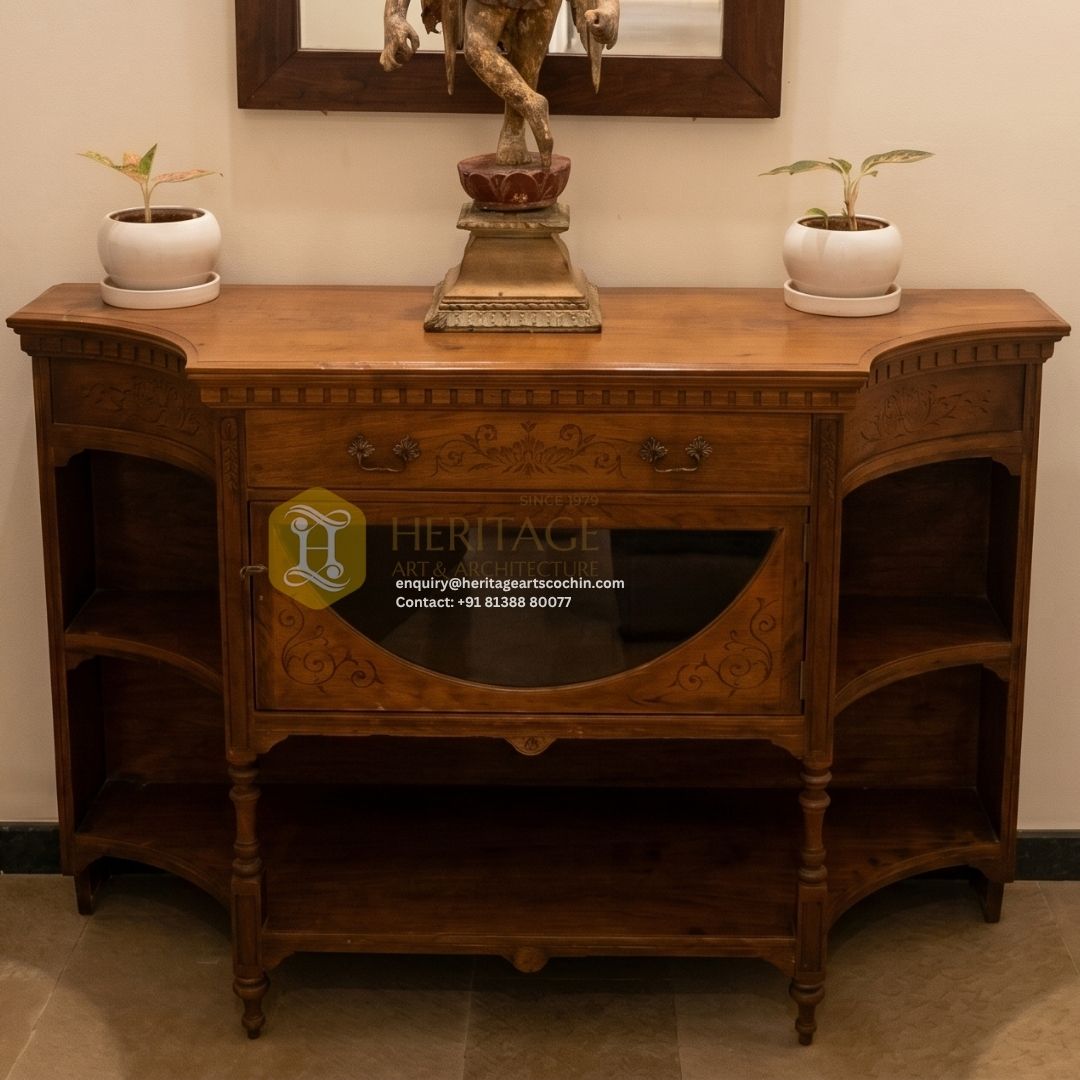
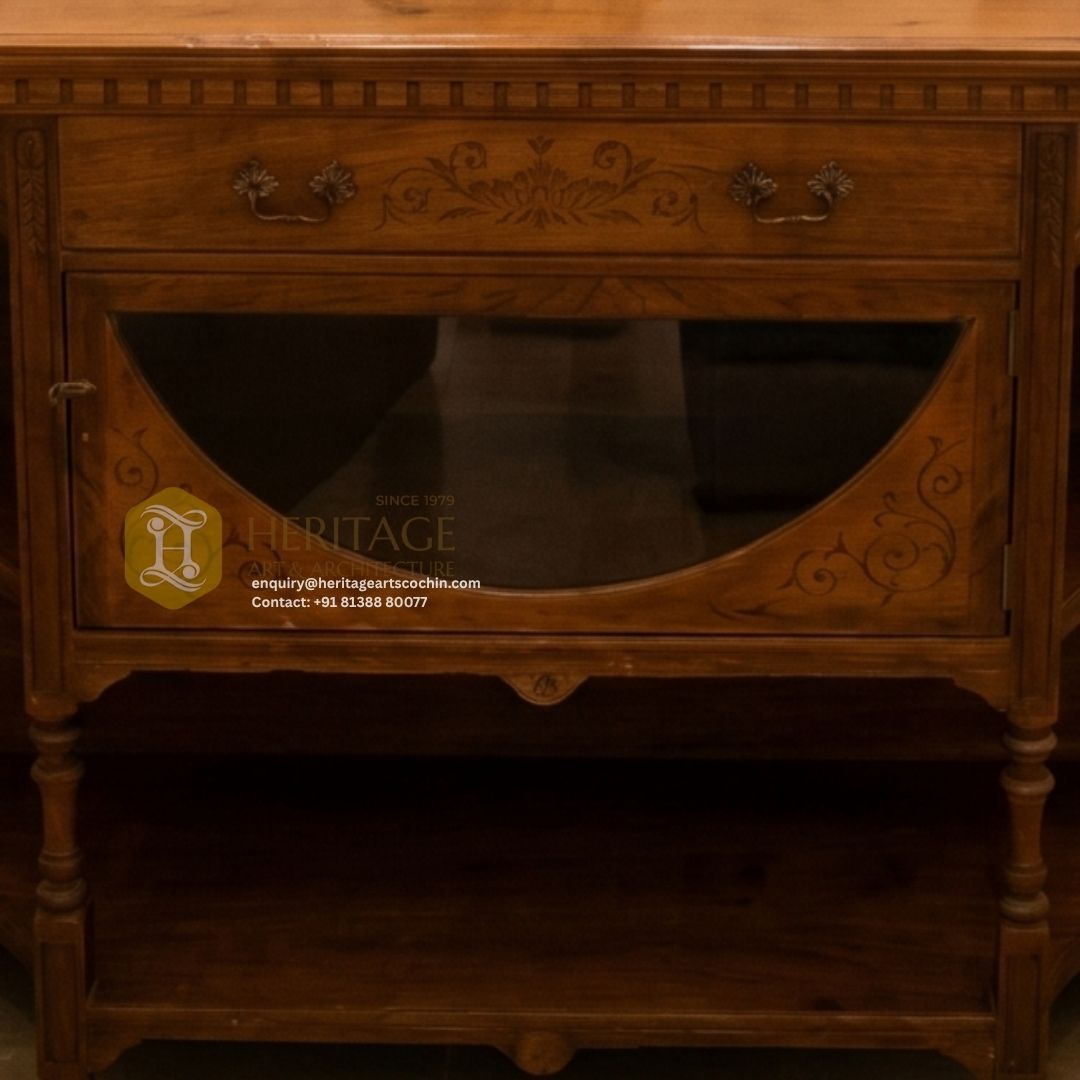
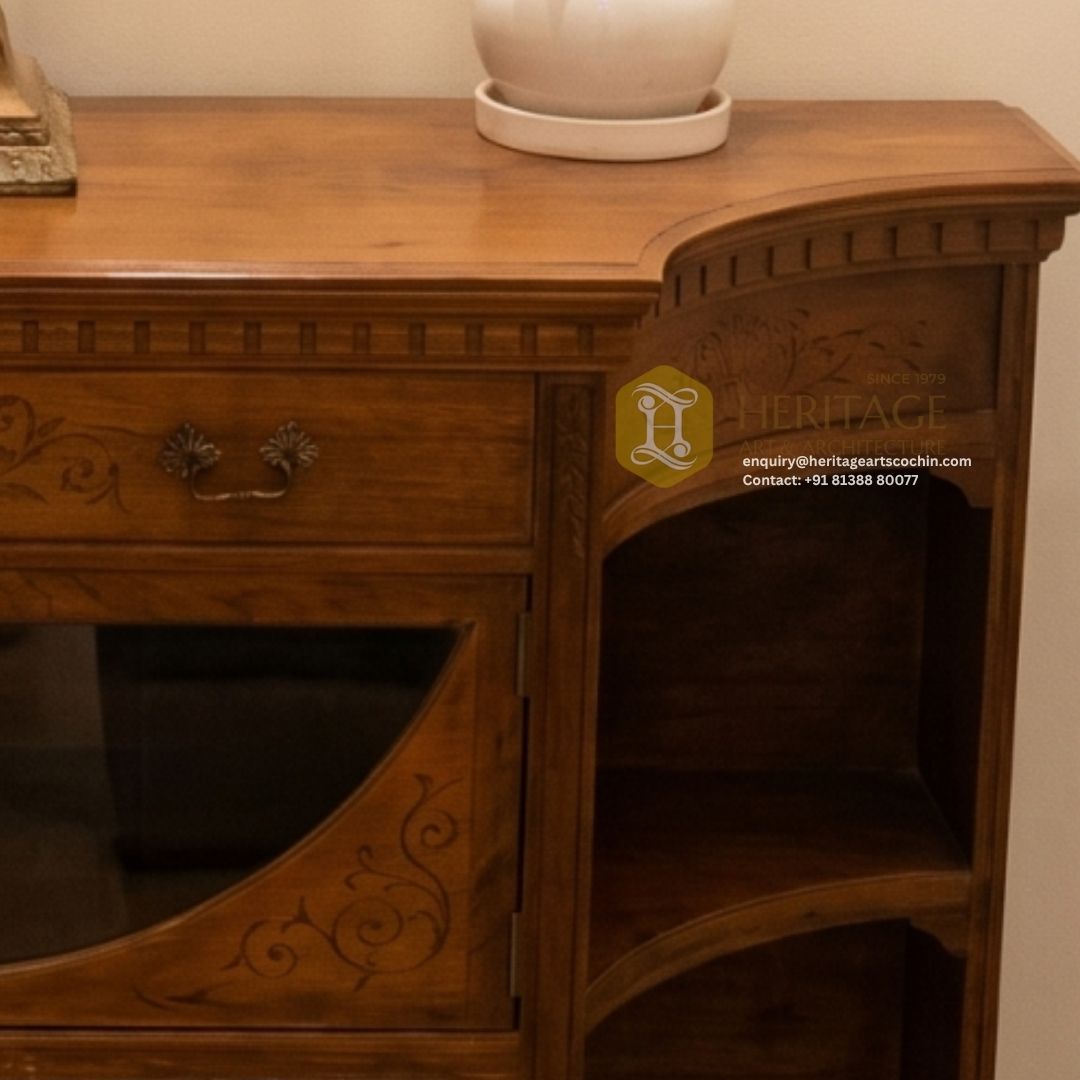
One of the stronger decisions in the Elmsbury’s design is what wasn’t carved. The central drawer face carries a loose floral vine motif — scrolling outward from the centre in low relief. The cabinet door echoes it. The flanking side panels get arched relief carving, minimal and clean.
That restraint matters. Heavily carved Anglo-Indian pieces can feel like they’re performing. This one doesn’t. The etching gives the eye a place to land without demanding attention it hasn’t earned.
The Concave Shelves
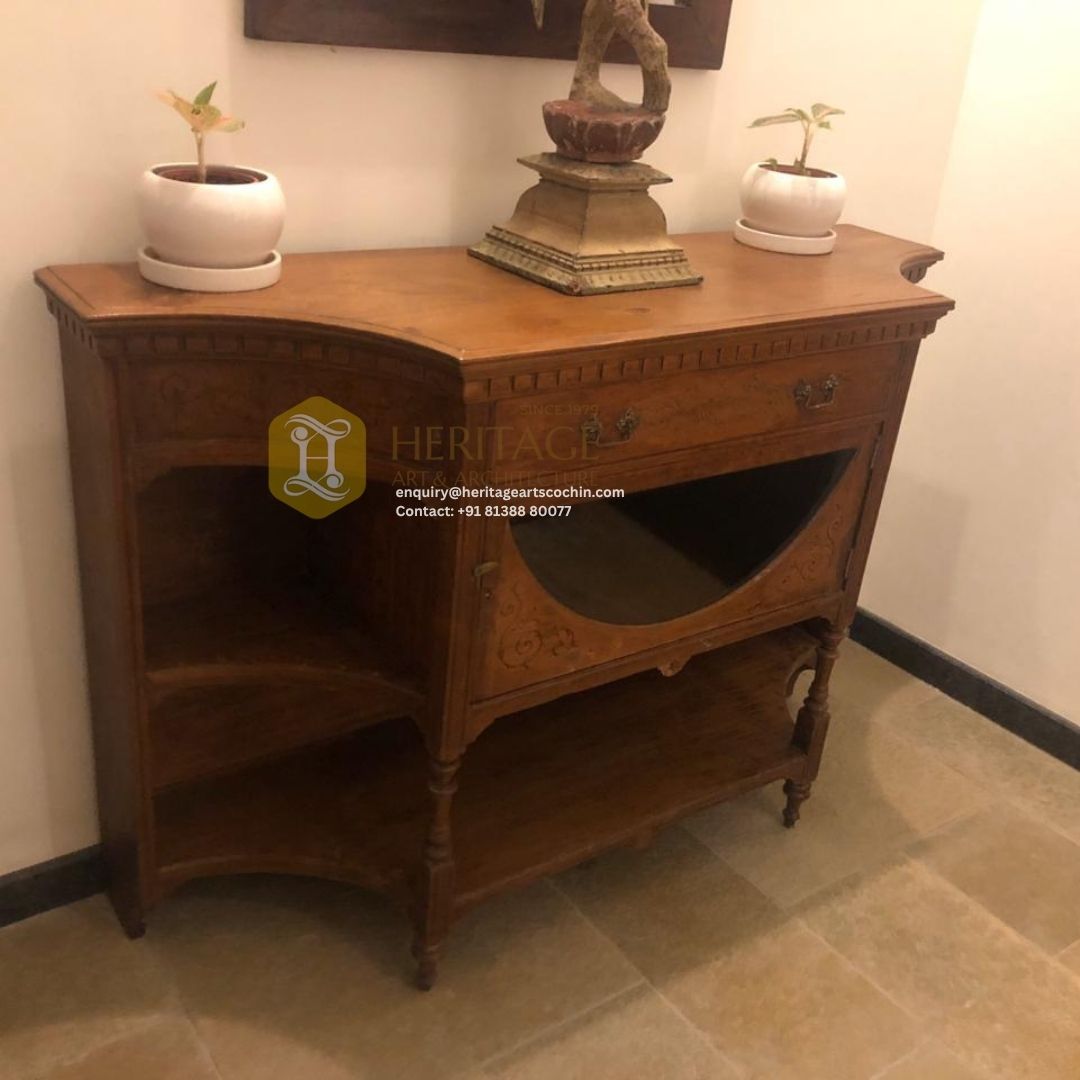
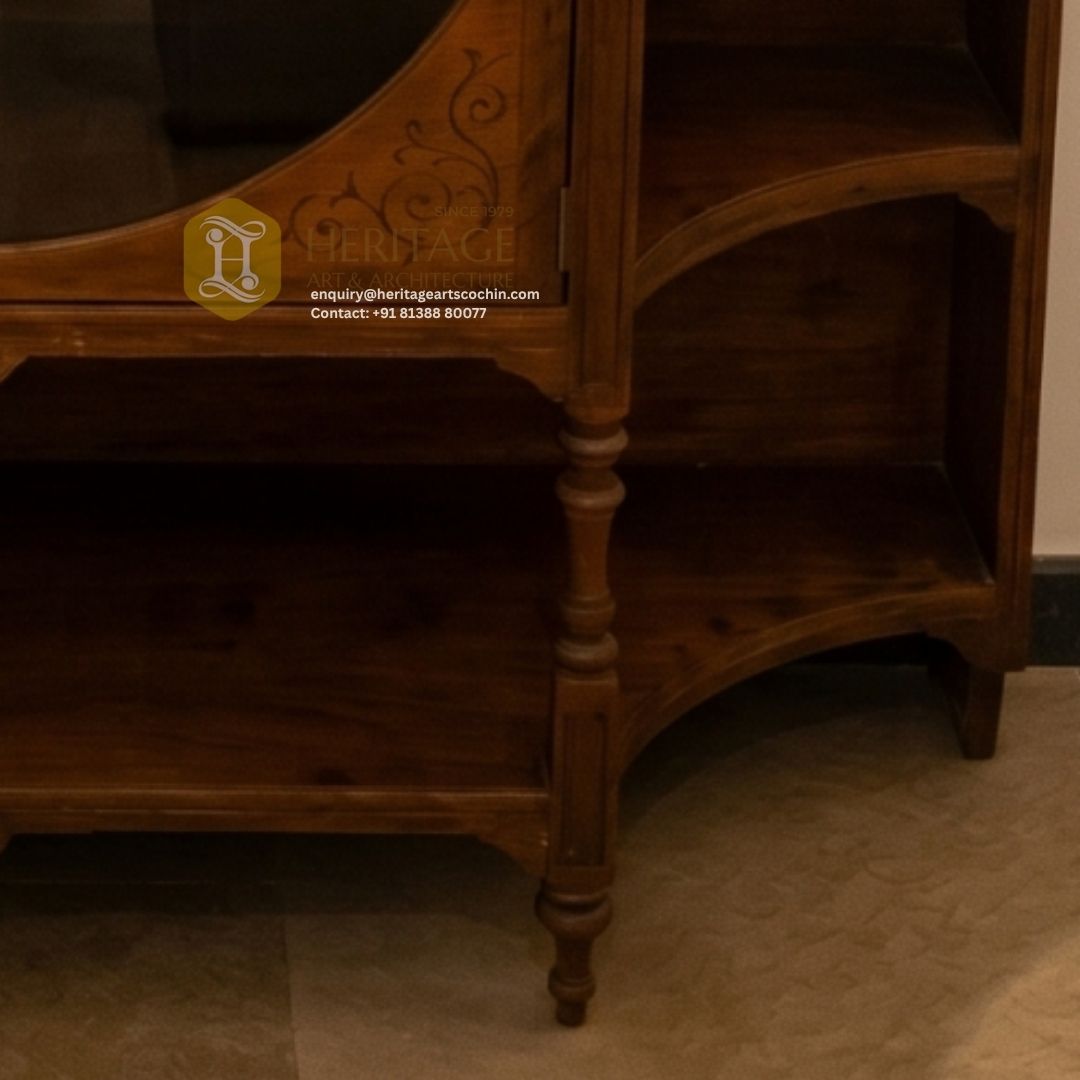
The open side shelves are where the console departs from standard logic. Rather than flat rectangular niches, each side section curves inward — a concave recess framed by an arched fascia above and a full-width lower shelf below.
Functionally, this creates a display alcove that holds objects without needing them to be pushed flush against a back wall. A small sculpture, a stack of books, a low vase — each sits inside the curve and reads as deliberately placed. The geometry does the styling work for you.
The lower shelf, which runs the full width beneath the cabinet and side sections, gives the piece a grounded horizontal base. It prevents the turned legs from making the console feel too leggy or delicate.
The Cabinet
At the centre, a glass-panelled cabinet door with a crescent-cut lower profile sits beneath the single drawer. The glass panel is set into a curved wooden surround, and the interior is visible but not fully exposed. It’s practical for storing things you want accessible but not on display.
The drawer pulls are shell-form brass — small, correct, and period-appropriate.
How It Sits in a Room
The console works hardest in an entry corridor or against a dining room wall where it can hold decorative objects on top and the concave shelves can be used without the space feeling cluttered. The warm wood tone pairs naturally with terracotta, aged brass, off-white plaster walls, or darker accent pieces.