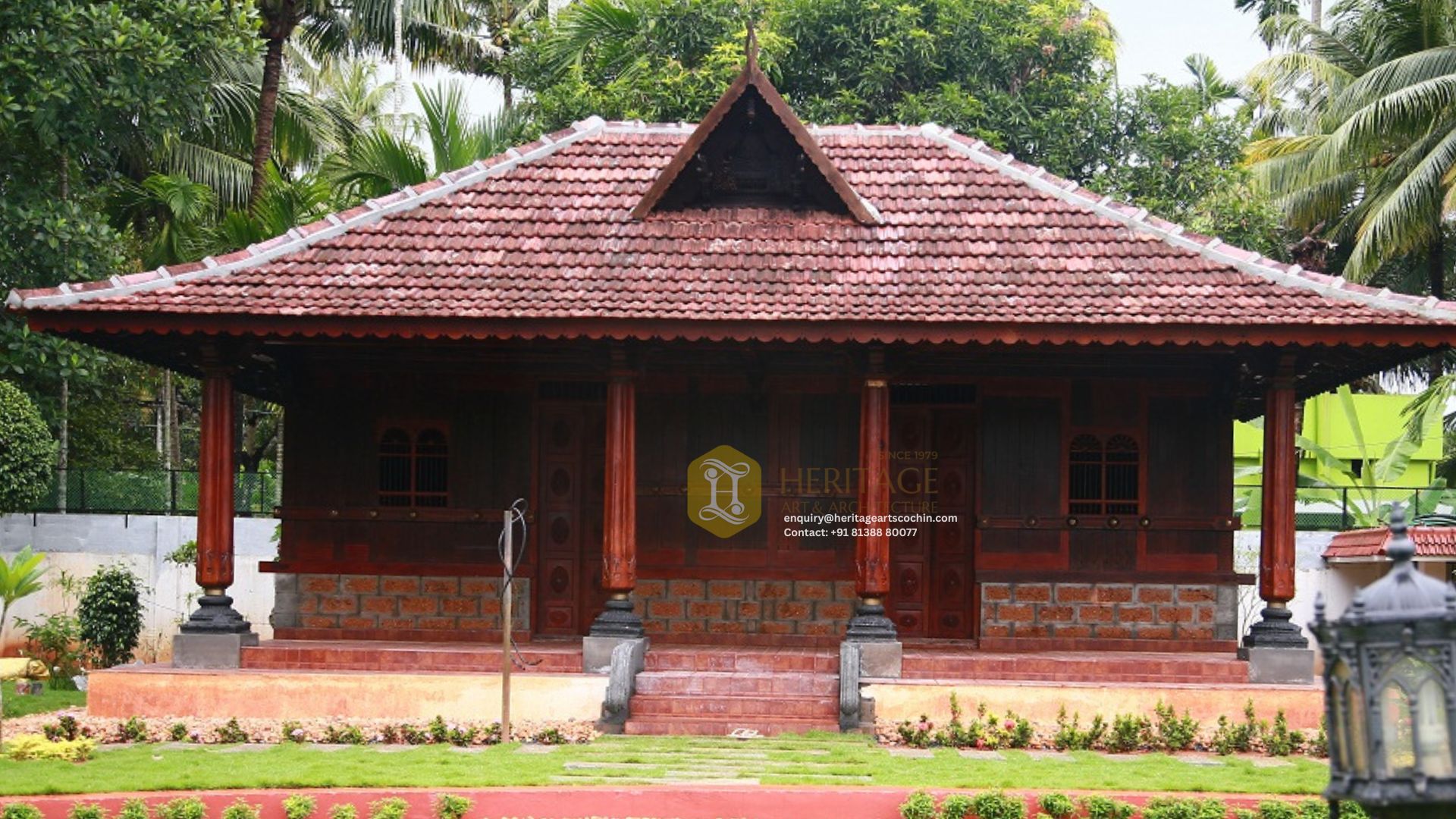
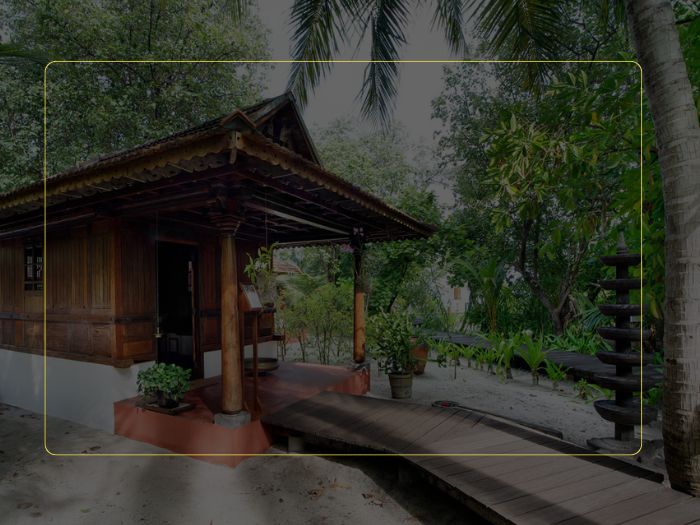
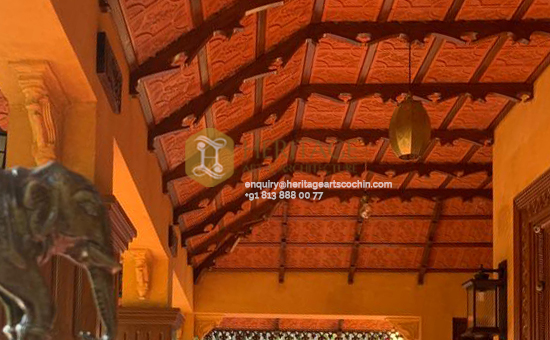
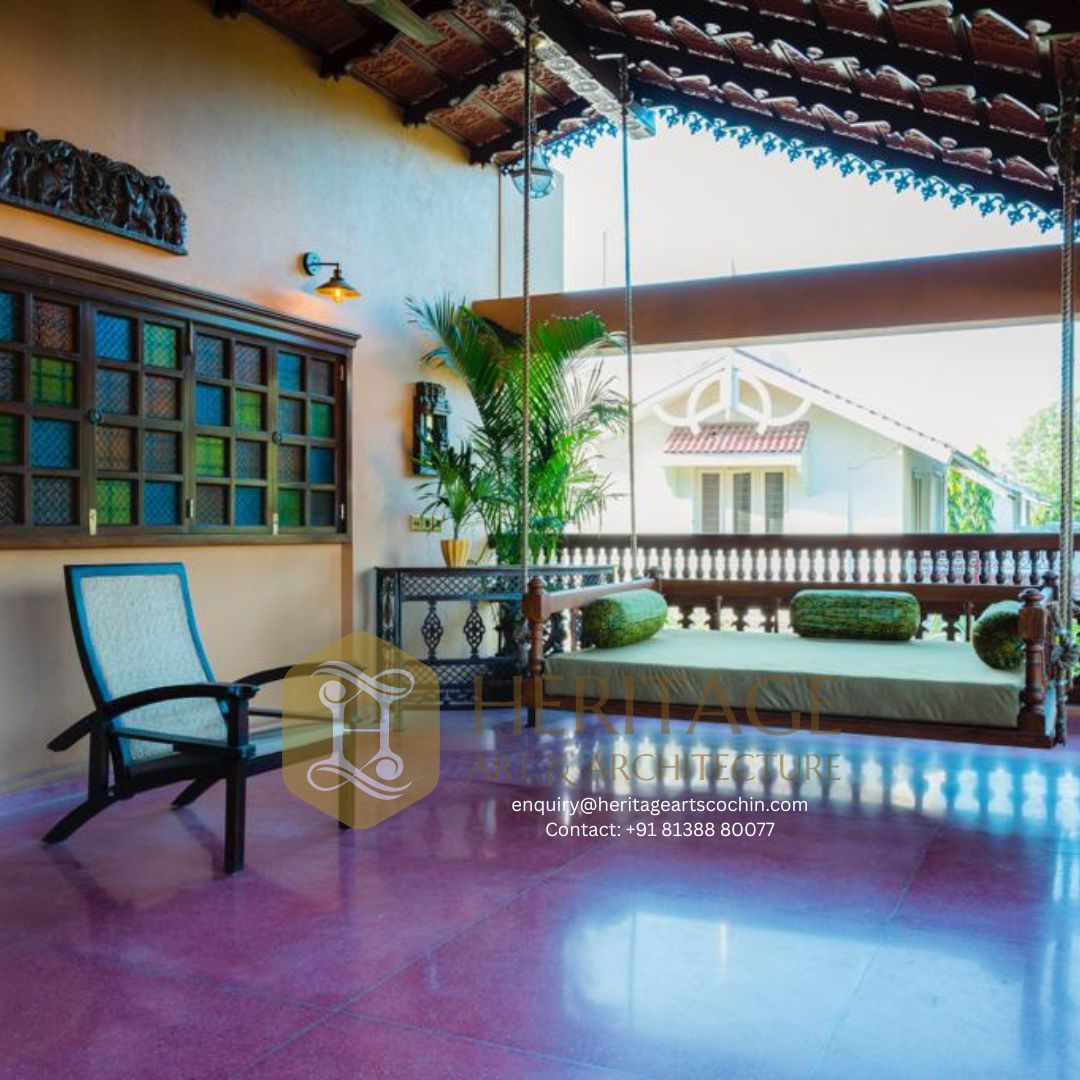
One of the most distinctive features of a traditional Kerala house is its sloping roof. Covered with red clay tiles, the steeply pitched structure is designed to handle the region’s heavy monsoon rains, allowing water to drain quickly and efficiently. The roof extends well beyond the walls, creating deep overhangs that protect the house from harsh sunlight and wind-driven rain. These extended eaves also help keep the interiors cool by reducing direct heat exposure.
The Craftsmanship
Above
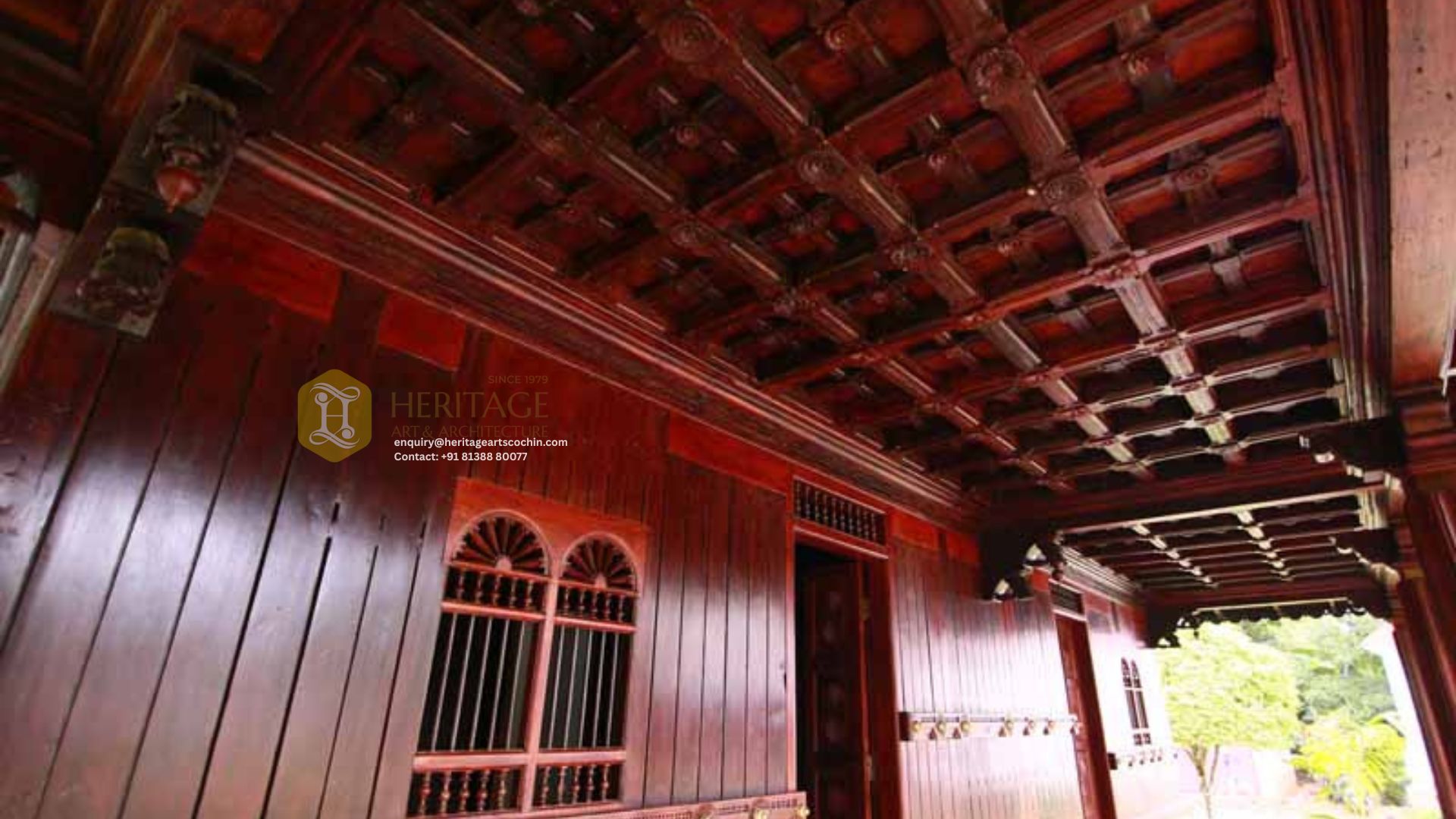
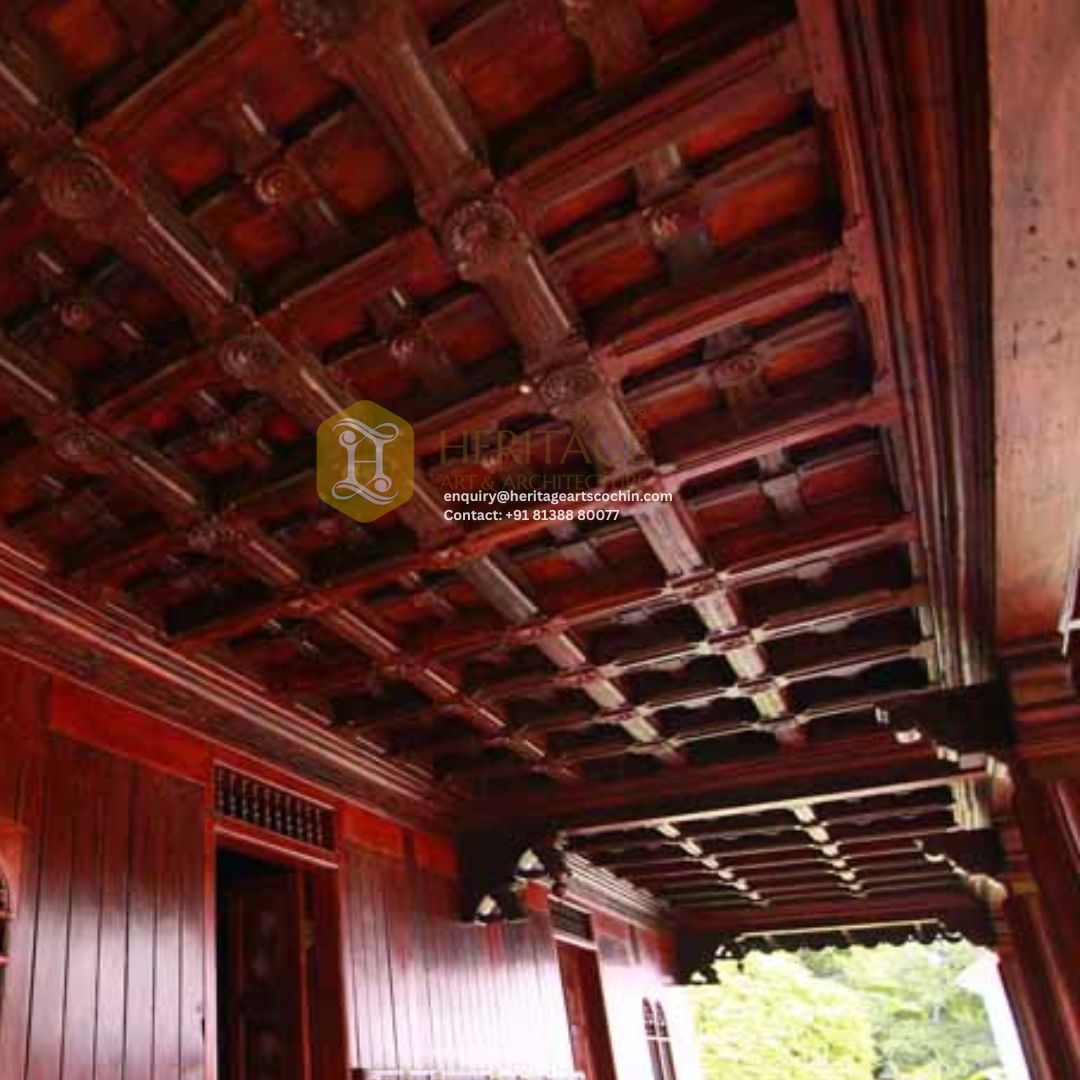
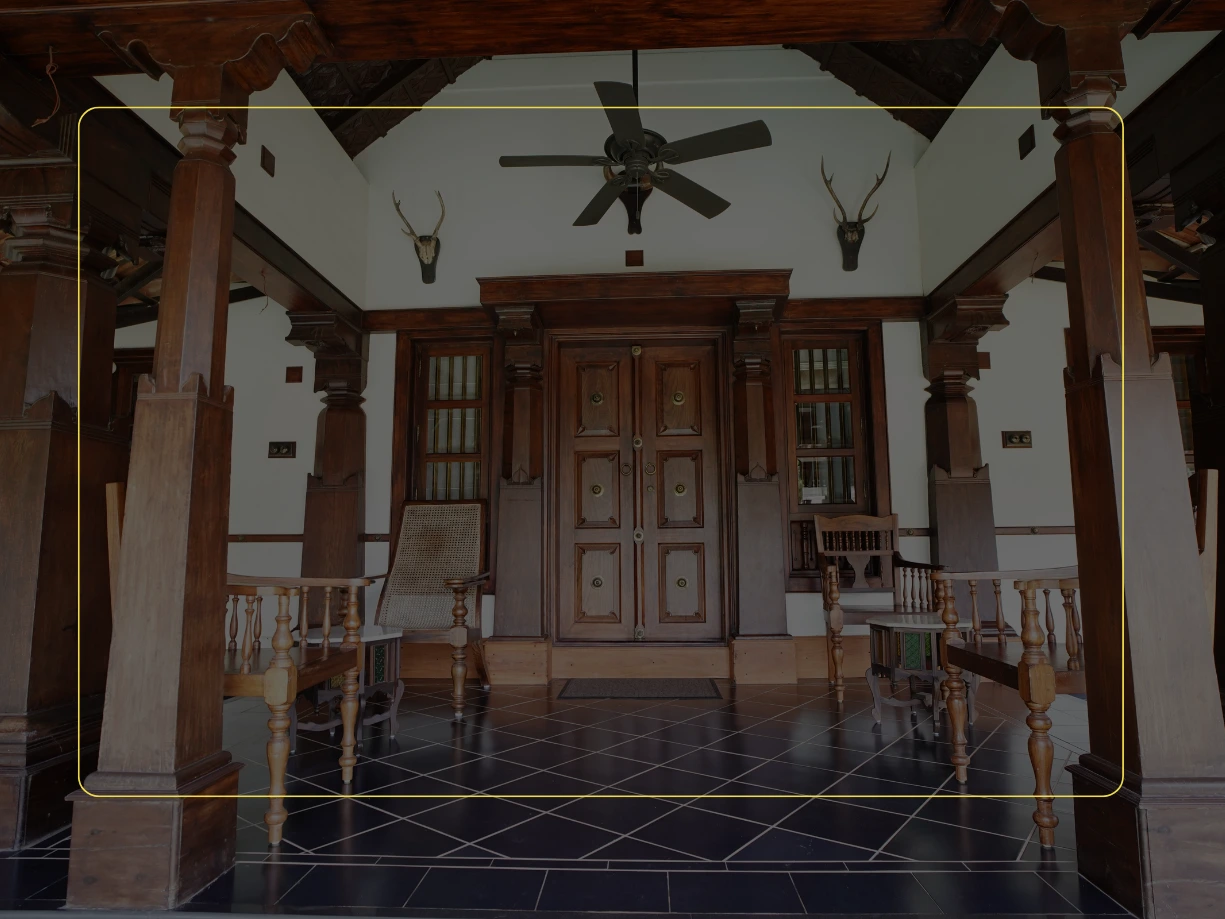
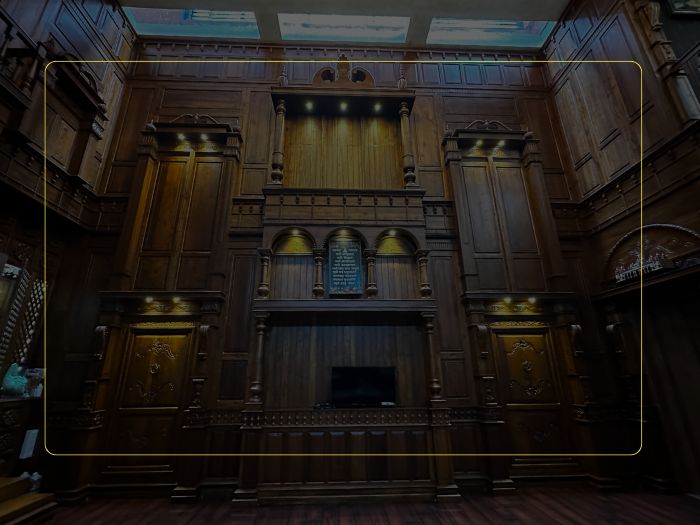
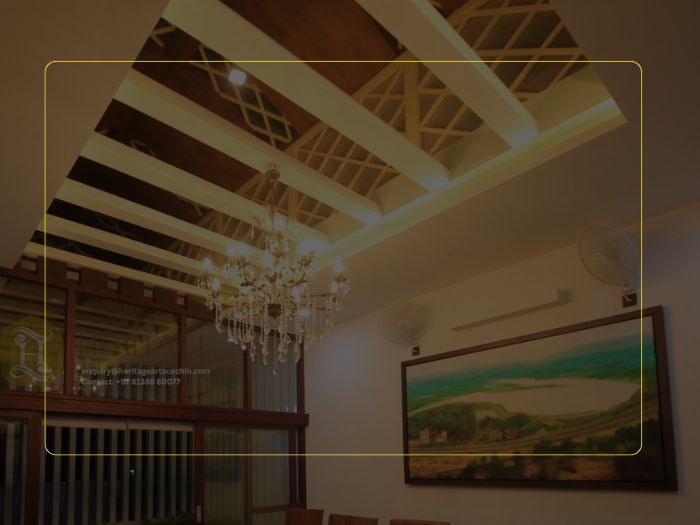
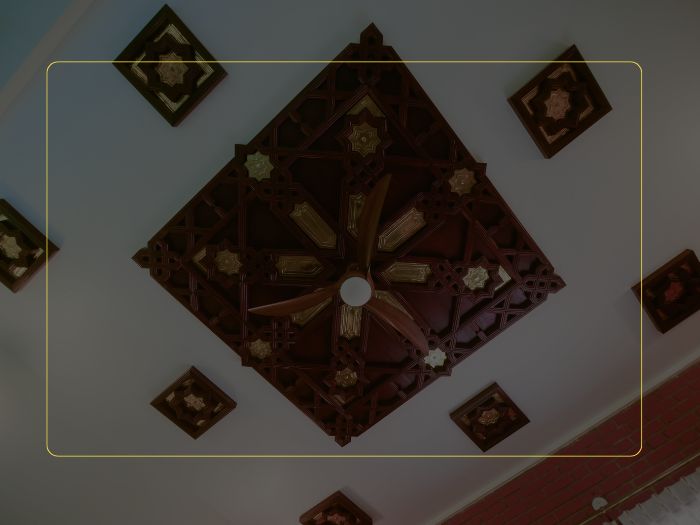
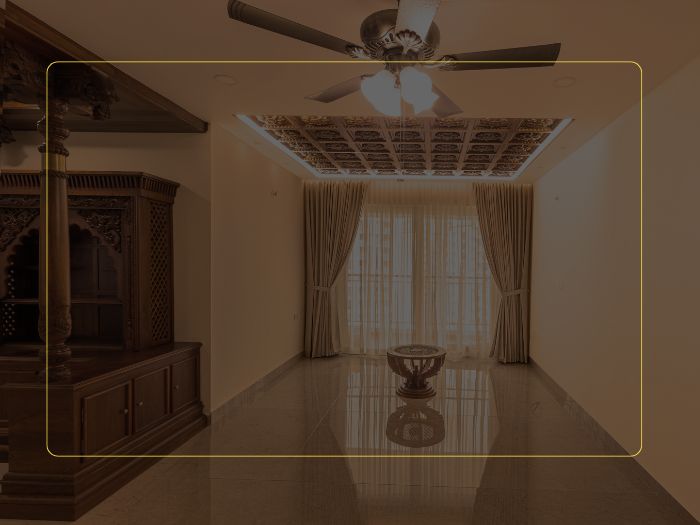
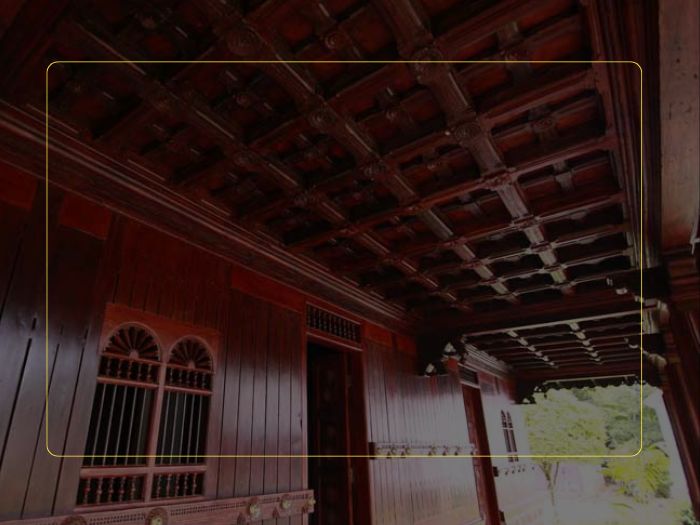
The ceiling often reveals the remarkable skill of traditional Kerala carpenters. Long before modern construction methods became common, these homes were built using carefully crafted wooden joinery instead of nails and metal fasteners.
The wooden beams are arranged with impressive precision, creating a balanced framework that supports the roof while adding visual character to the space. Many of these structural elements feature subtle hand-carved details such as lotus motifs, grooves, and decorative patterns, reflecting the pride and artistry of the craftsmen who built them.
The Strength of the
Verandah
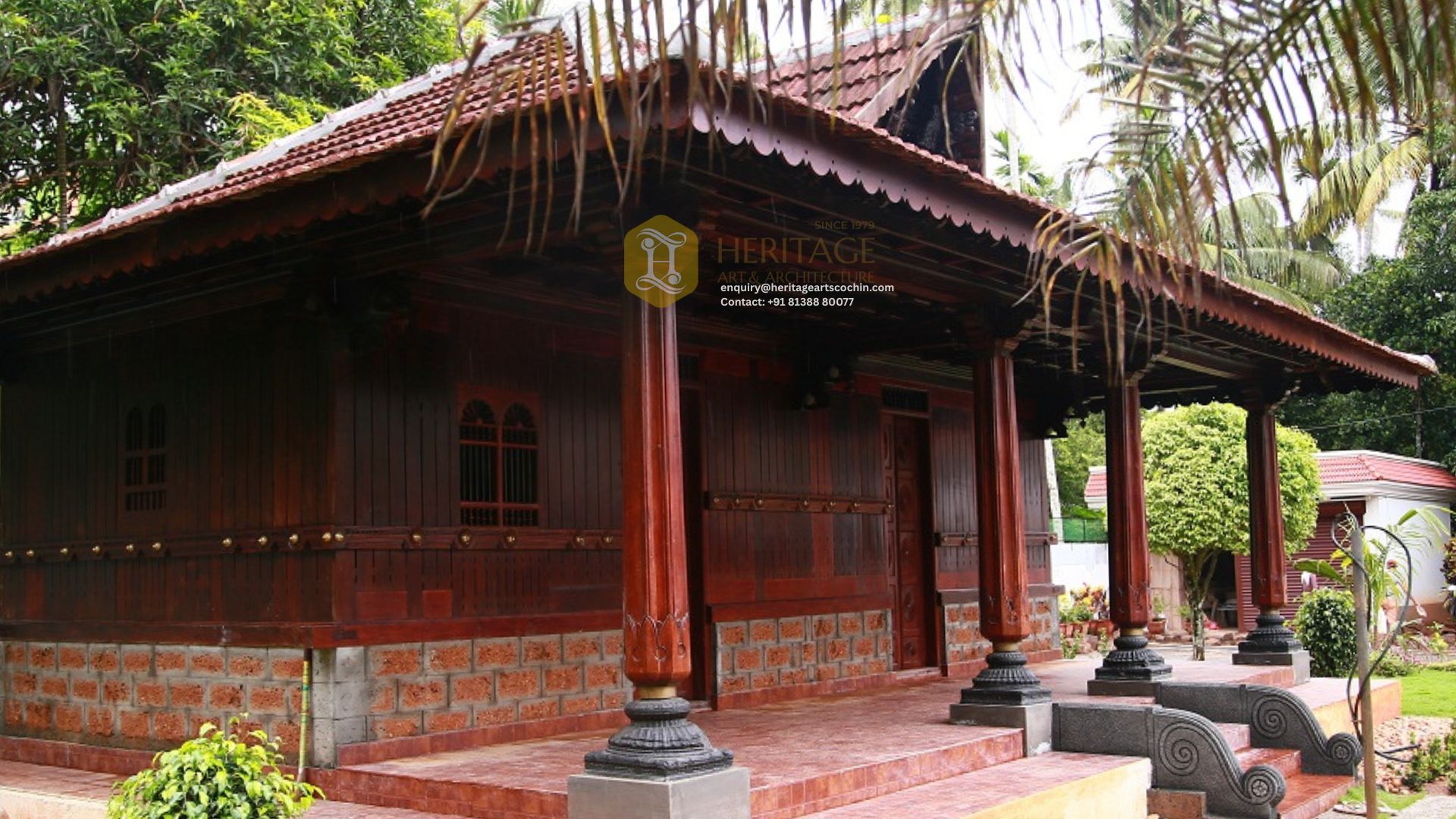
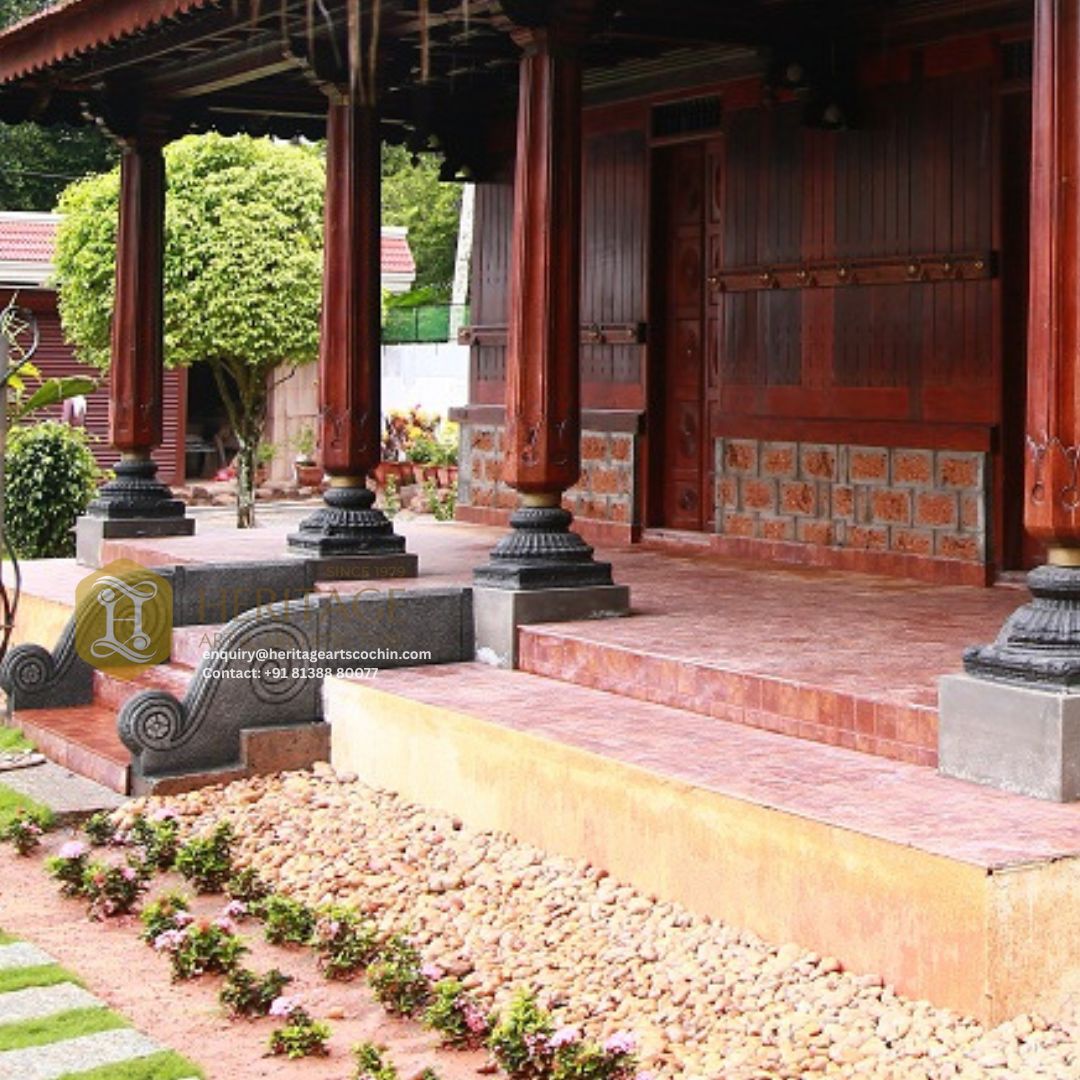
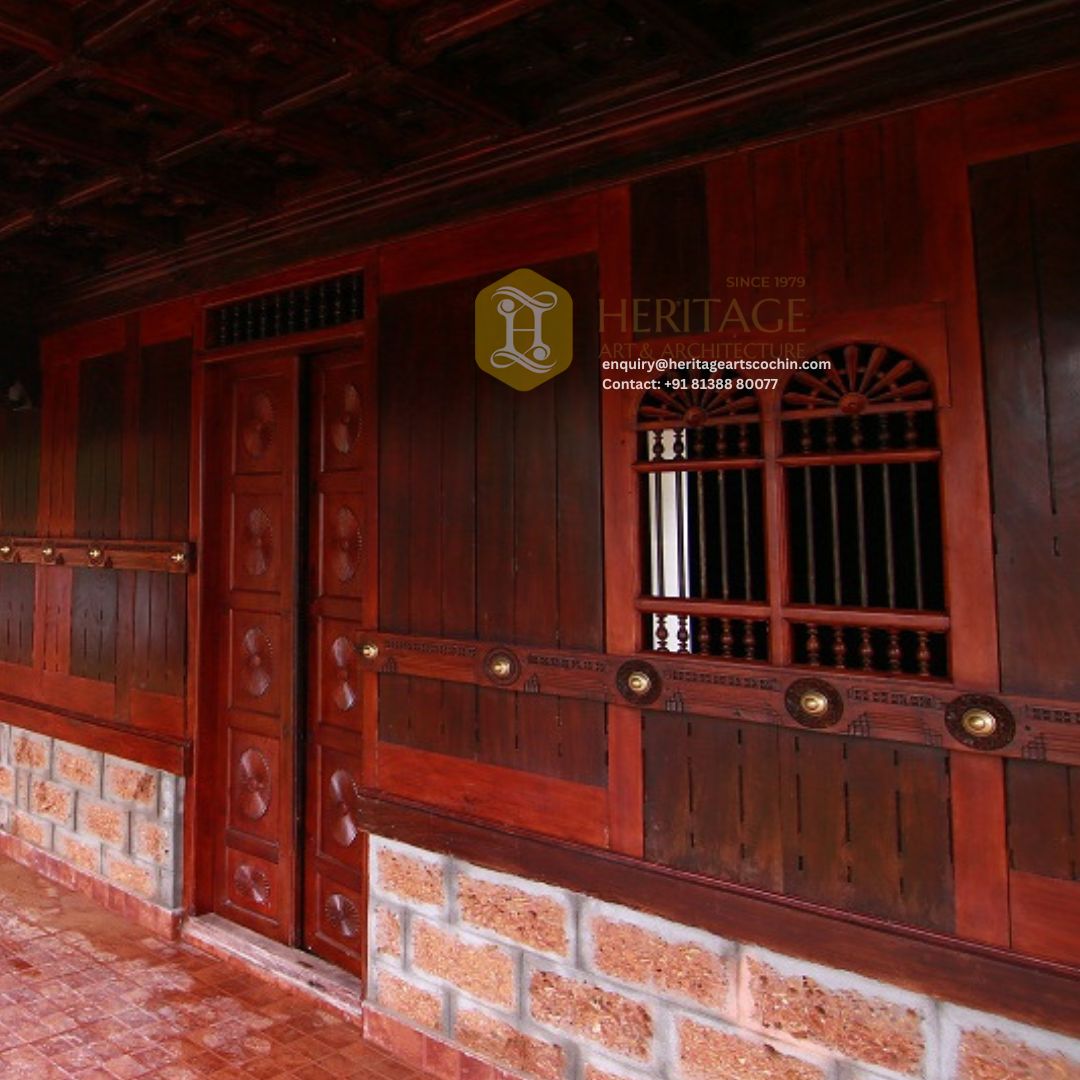
The verandah serves as an important transition between the outdoors and the interior of the house. Its most striking elements are the large wooden pillars that support the roof.
Each pillar stands on a stone base that protects the timber from moisture rising from the ground. Often carved from a single piece of teak or rosewood, the columns are shaped with gentle curves and decorative detailing. In many homes, brass strips are added to wooden panels and joints, providing both reinforcement and an elegant visual touch.