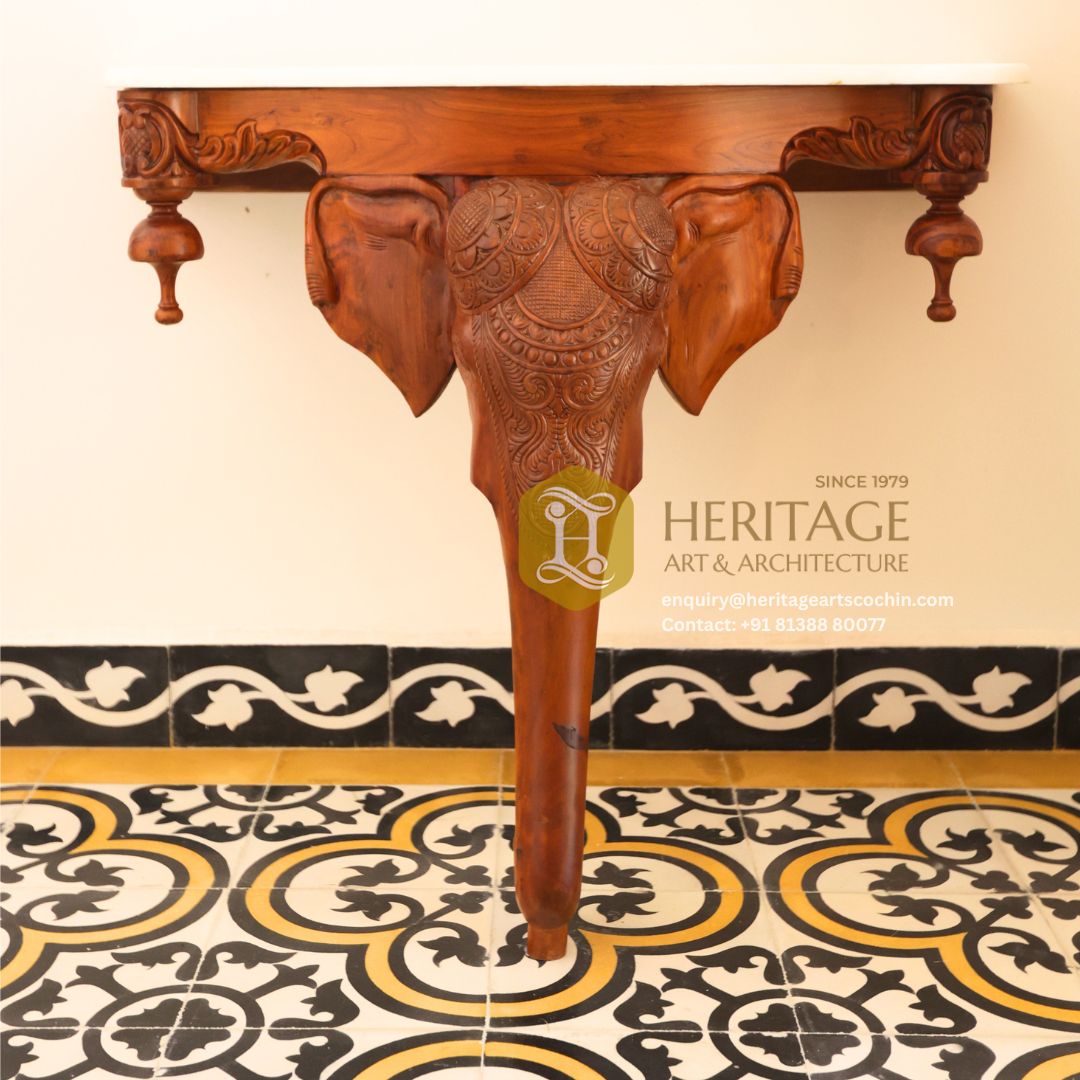
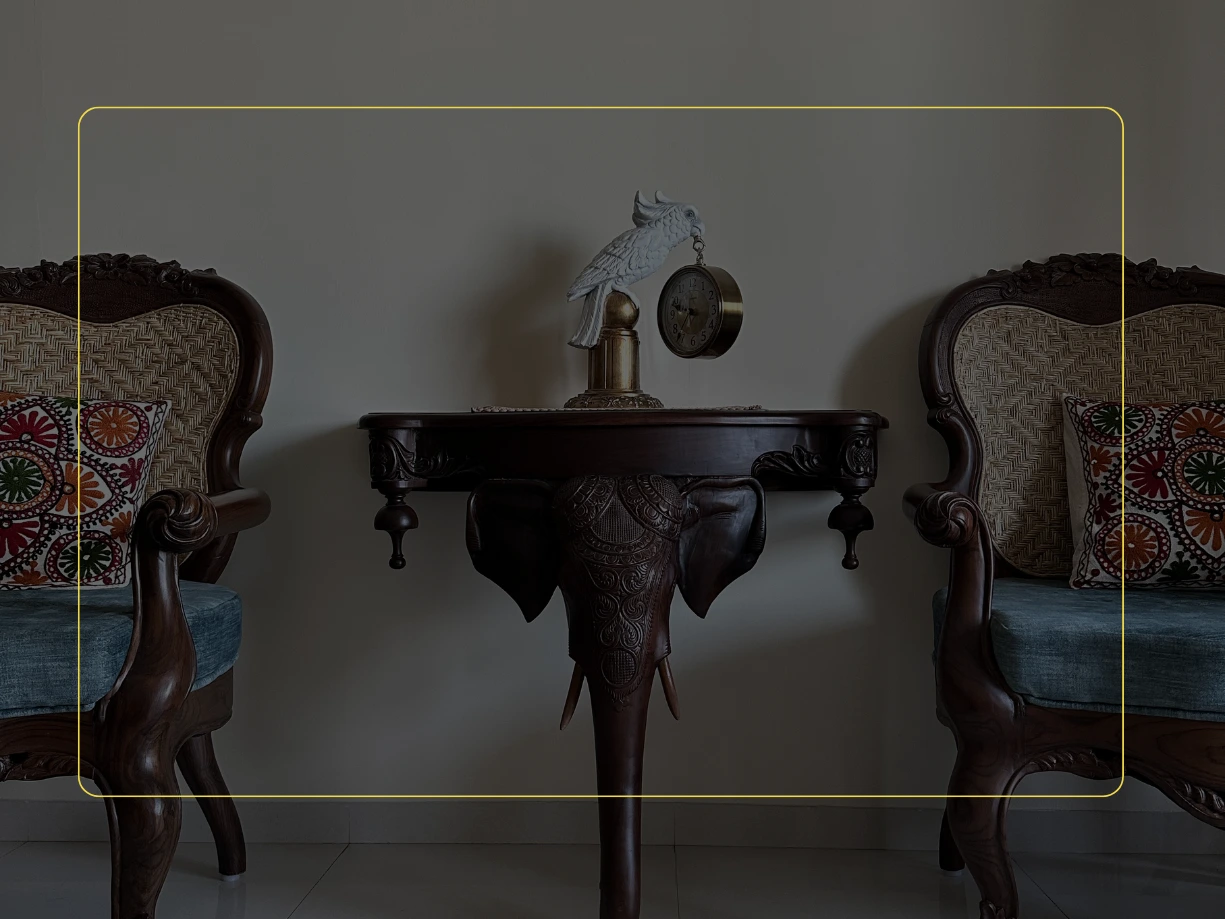
This particular piece carries the deep amber tone the wood is known for, one that darkens and deepens with age and handling. Chisel work was used for the ears, tusks and folds of the trunk instead of machine tools, keeping the surface slightly uneven in a way that catches light differently across the day. The finish is left natural, so the grain stays visible and the colour continues to develop over the years rather than staying fixed at the point of purchase.
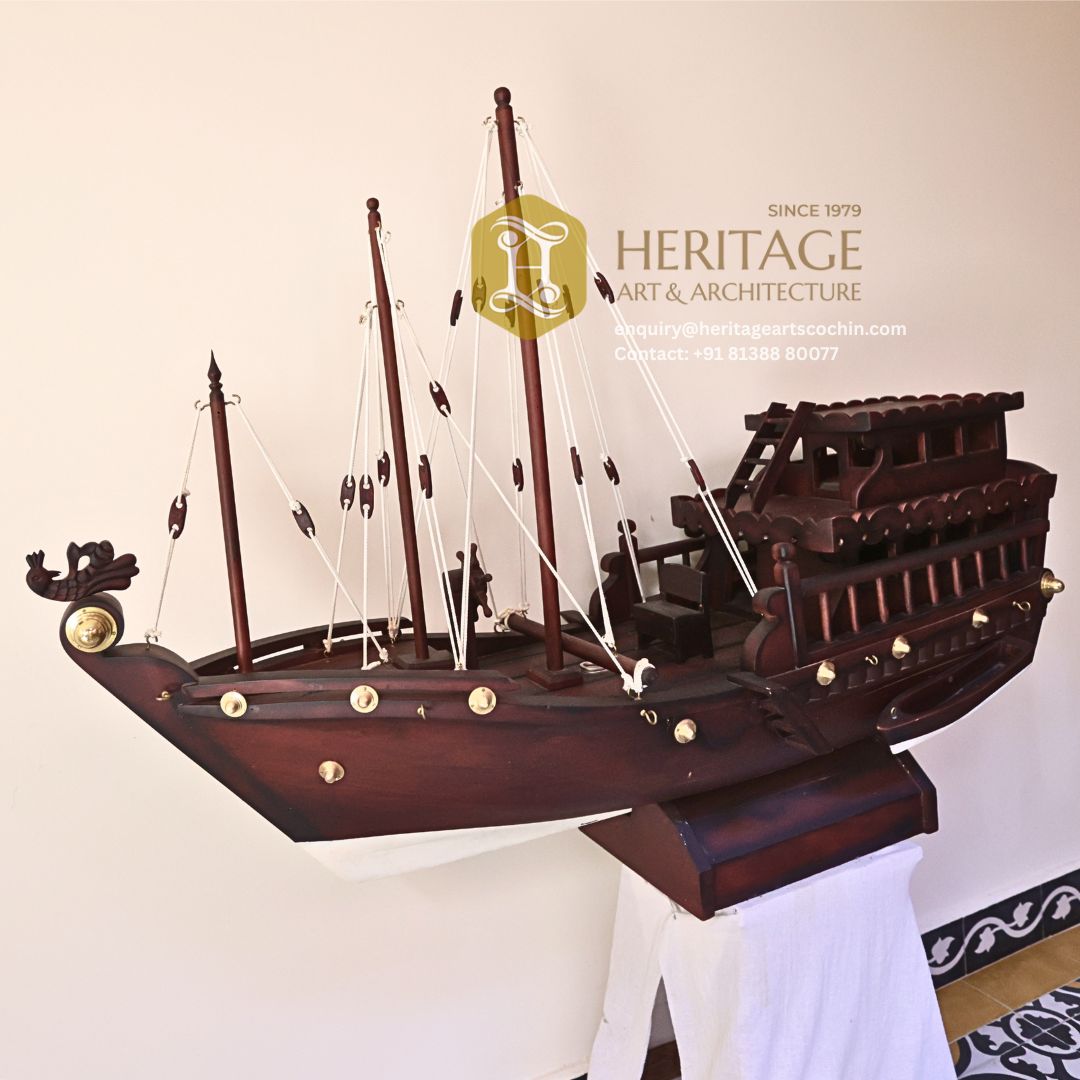
Handcrafted Boat Model
Wooden boat models have long marked homes along Kerala’s backwaters, built as a record of the boats that carried goods and families across them. This model was constructed plank by plank in teak, mirroring traditional boat-building joinery on a smaller scale. It’s built to be kept rather than displayed once and forgotten, the kind of piece a family passes down instead of replacing.
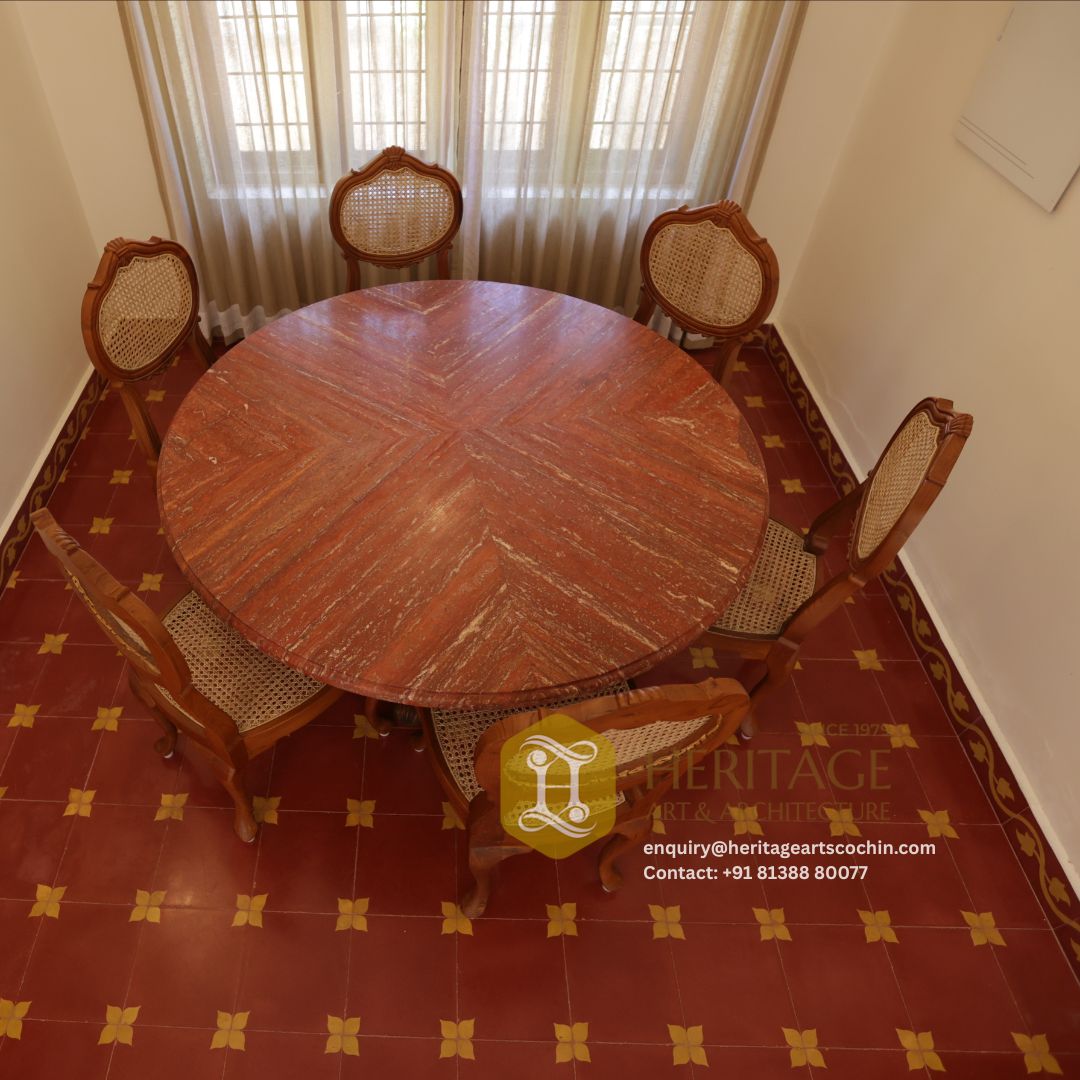
Round Dining Table
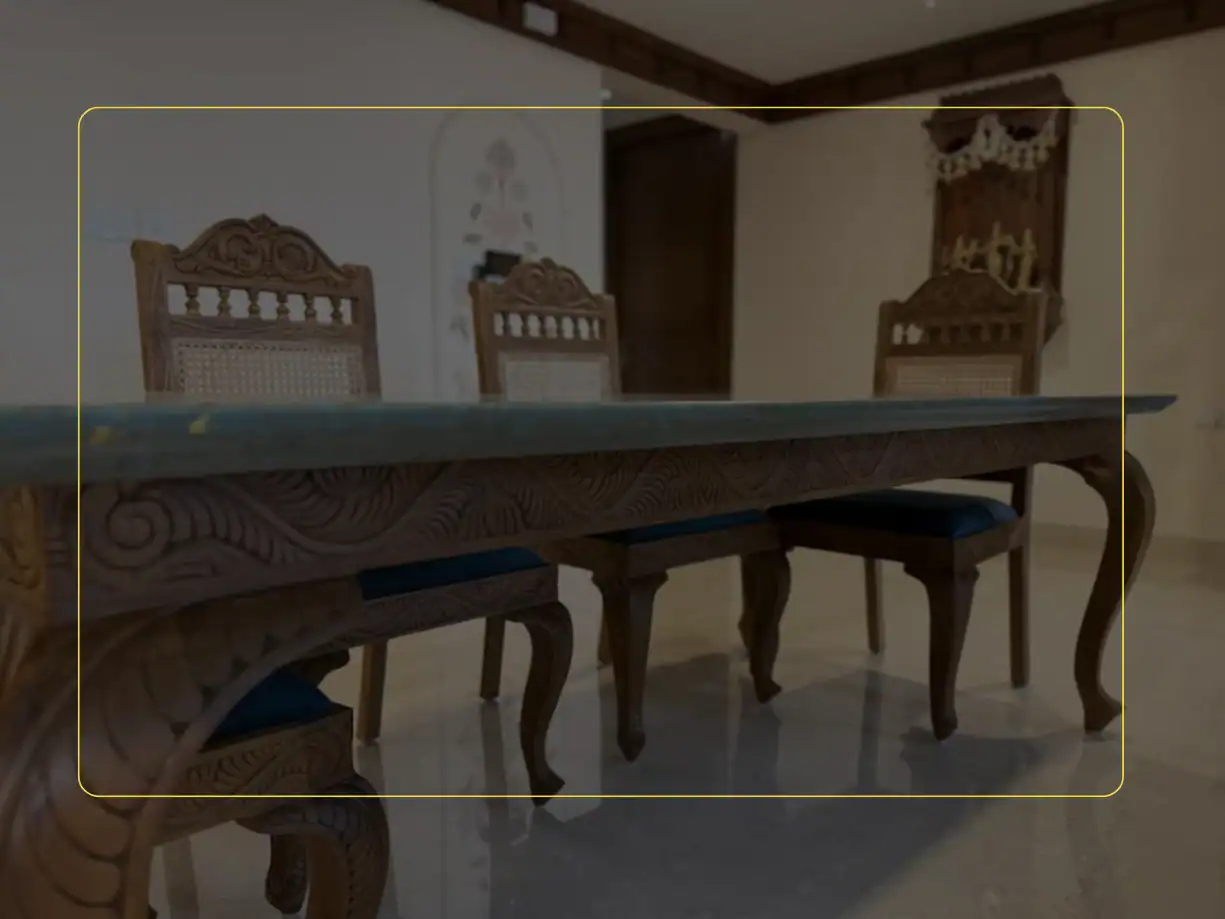
The dining table was designed around a simple idea: a round table has no head and no foot, so everyone seated at it faces each other equally. The teak top was cut and joined to keep the grain running continuously around the circle, with a solid turned base built to carry the weight of daily use for decades.
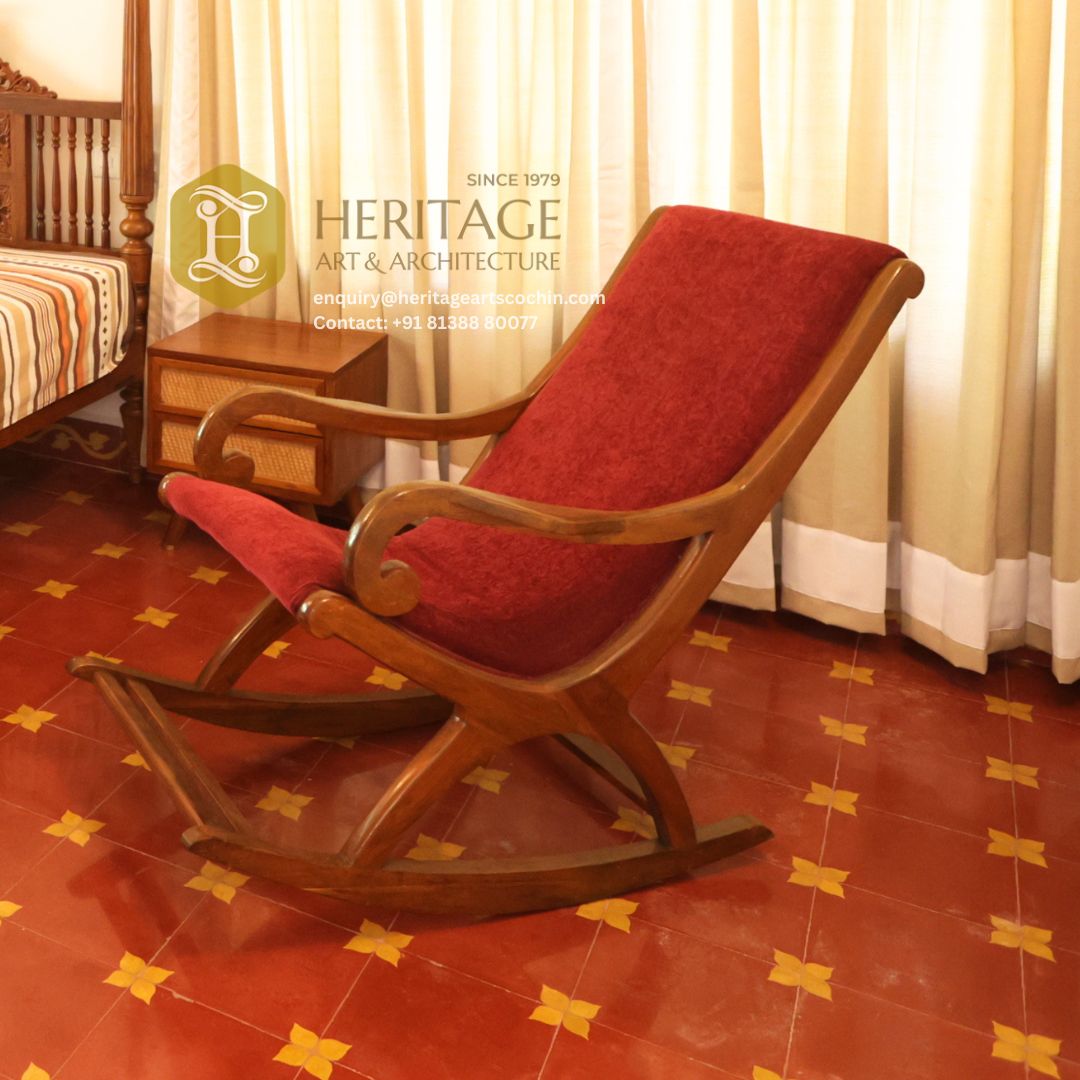
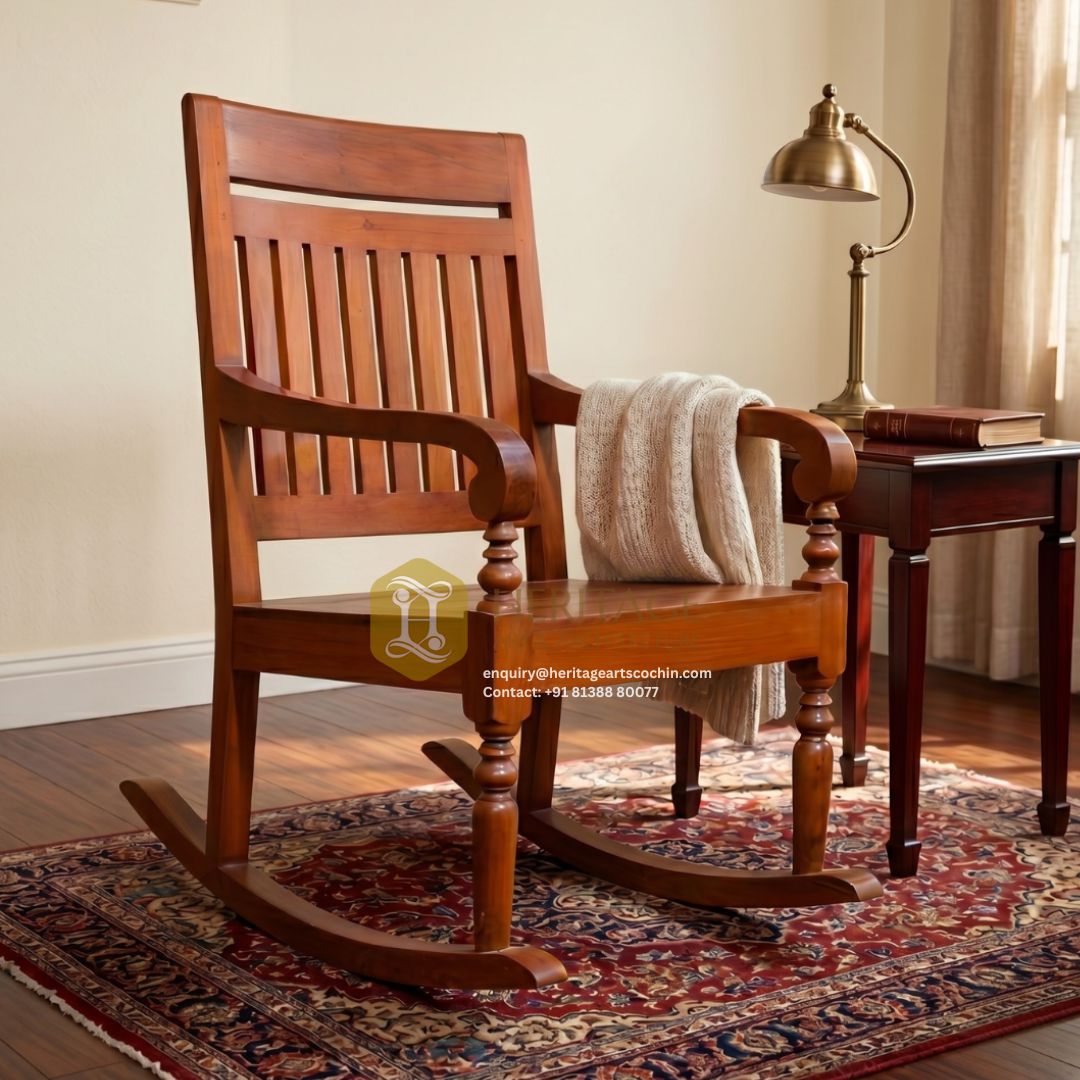
Rocking Chair, Bedroom
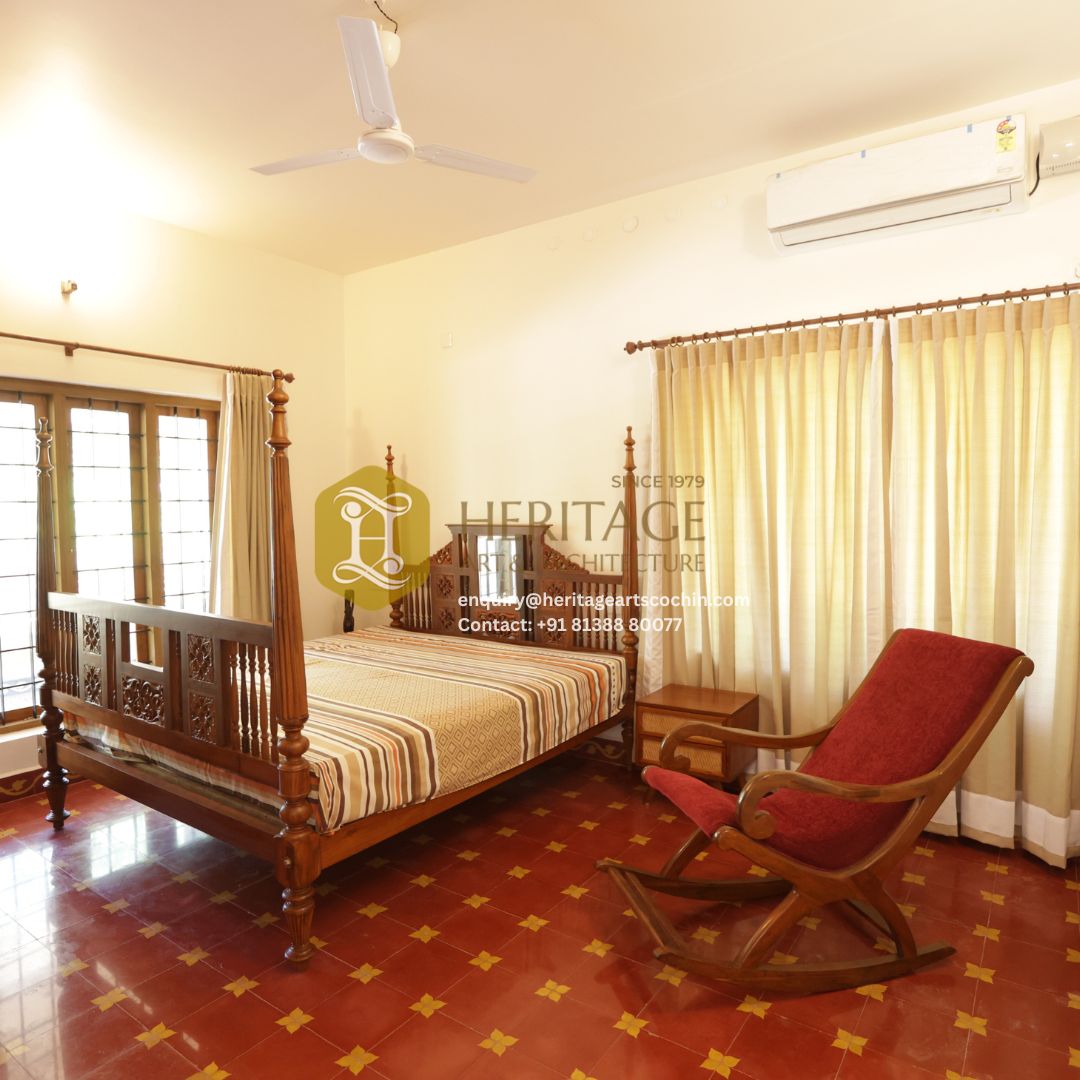
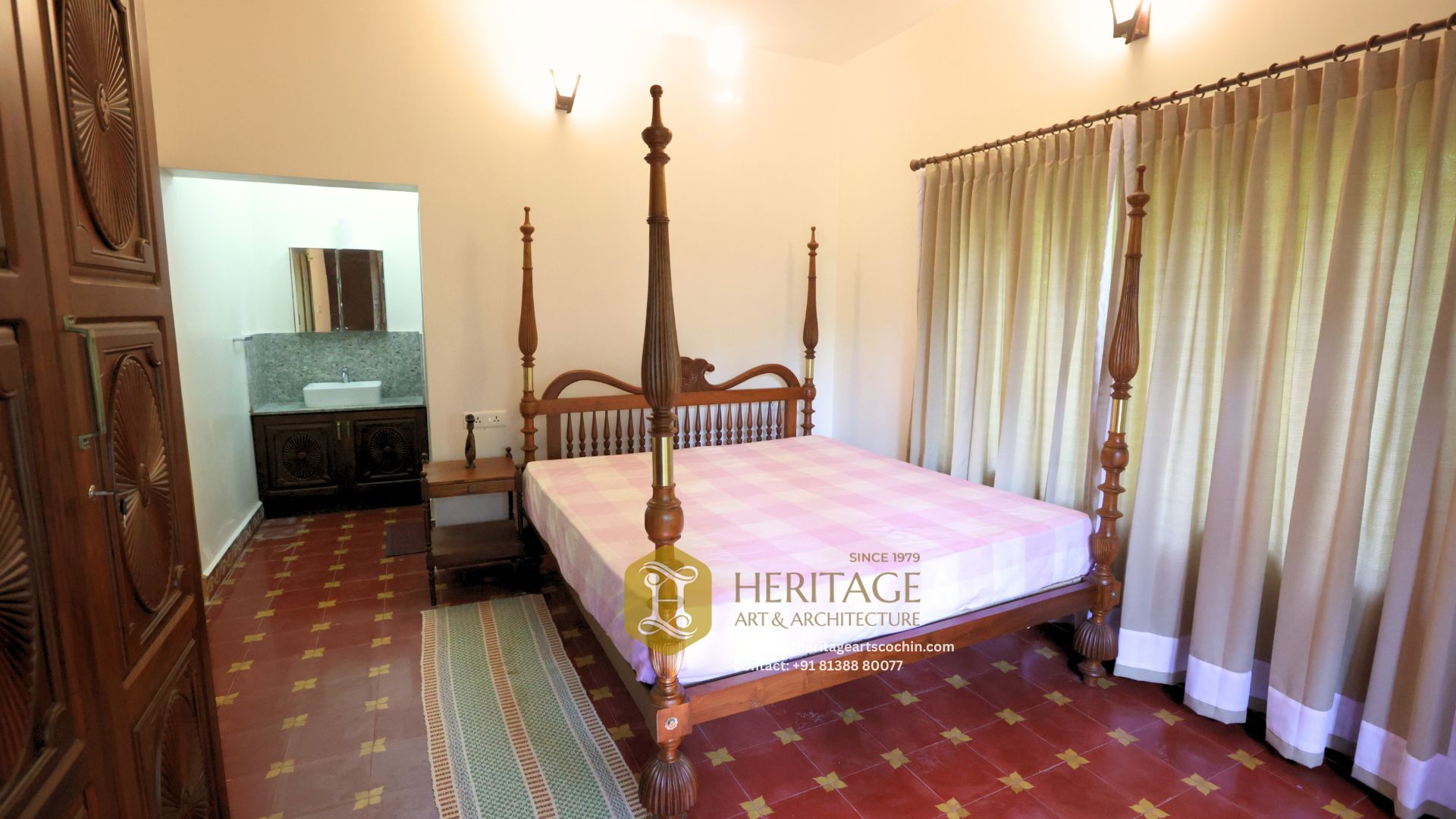
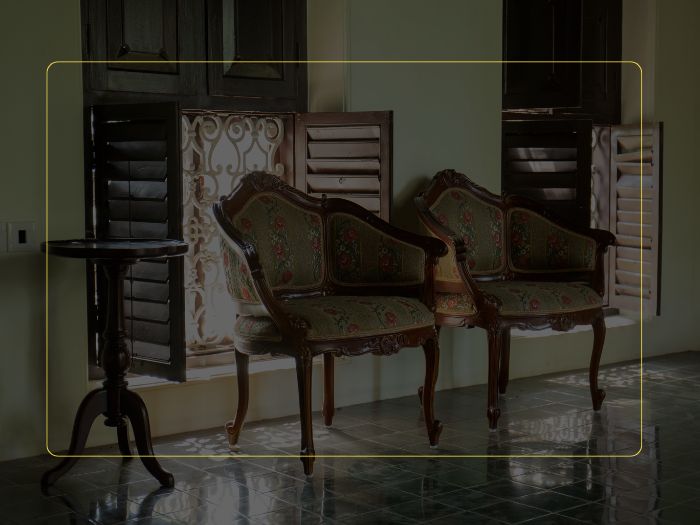
Placed at the entrance to the bedroom, the rocking chair is upholstered in velvet, giving the piece a more formal, dressed-up presence than the teak pieces elsewhere in the home. The four-poster bed – its scale and turned posts draw on Regency-era furniture design. The height and canopy frame give the bed a sense of enclosure, built for restand rejuvenation.
Custom Furniture and Athangudi Tiles
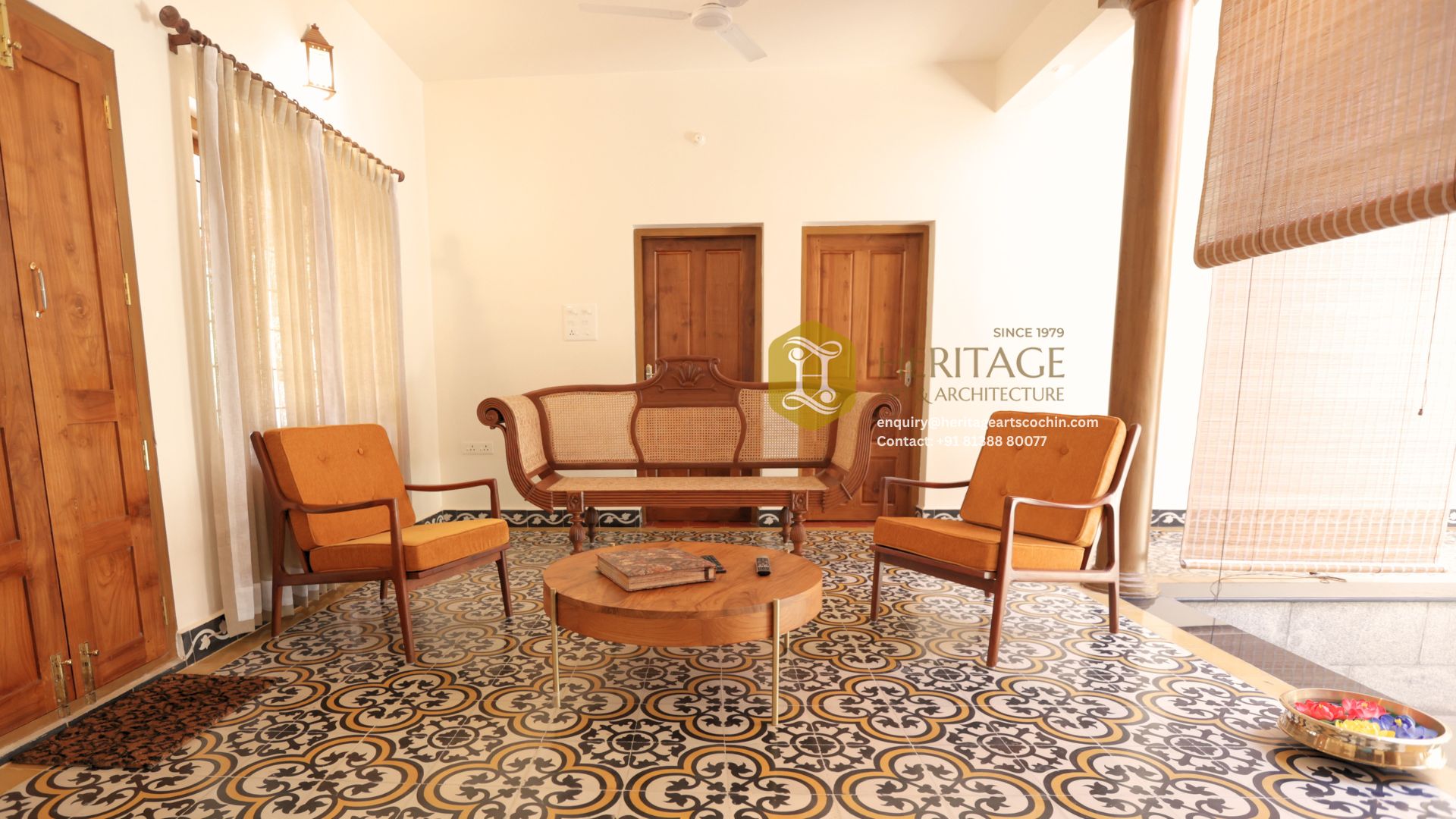
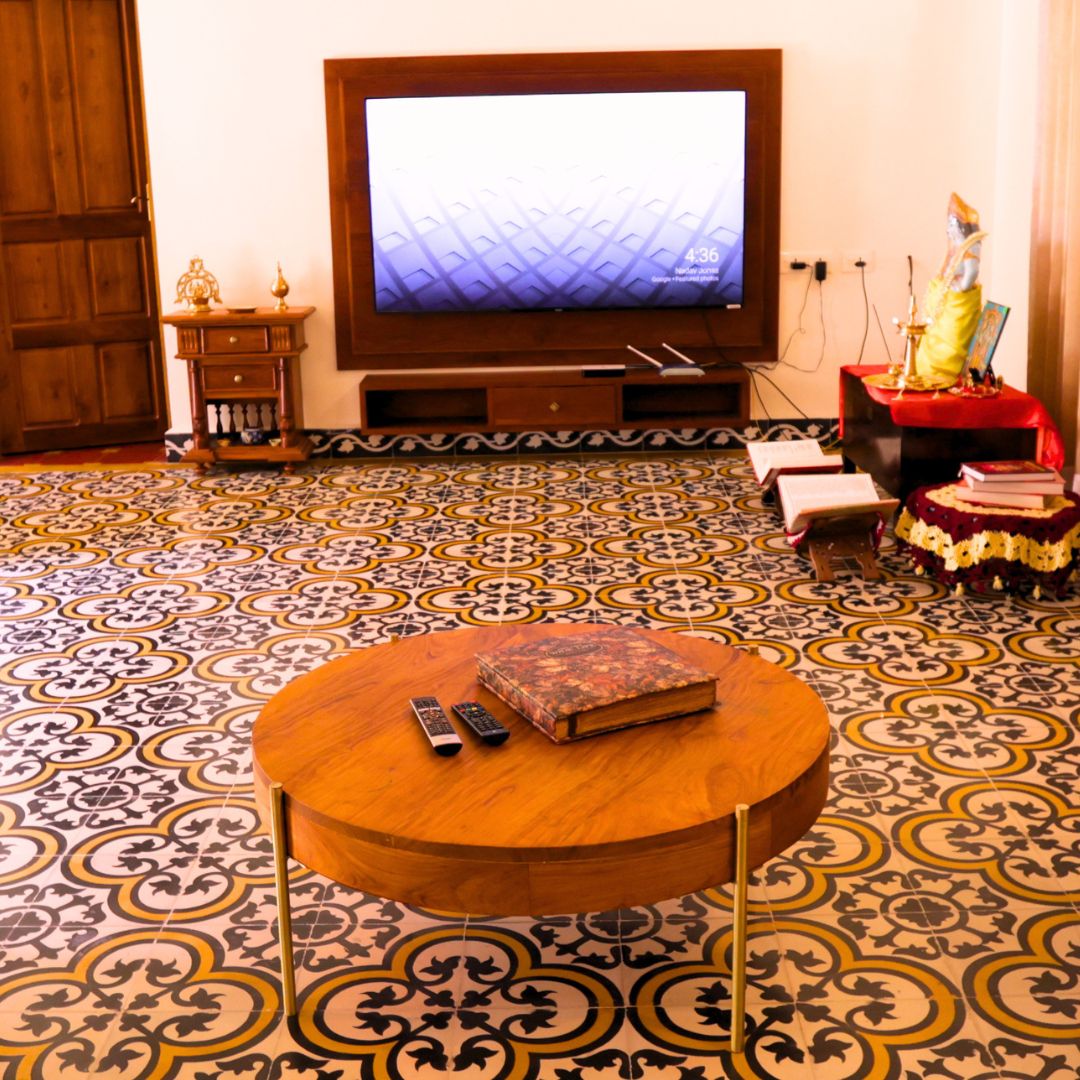
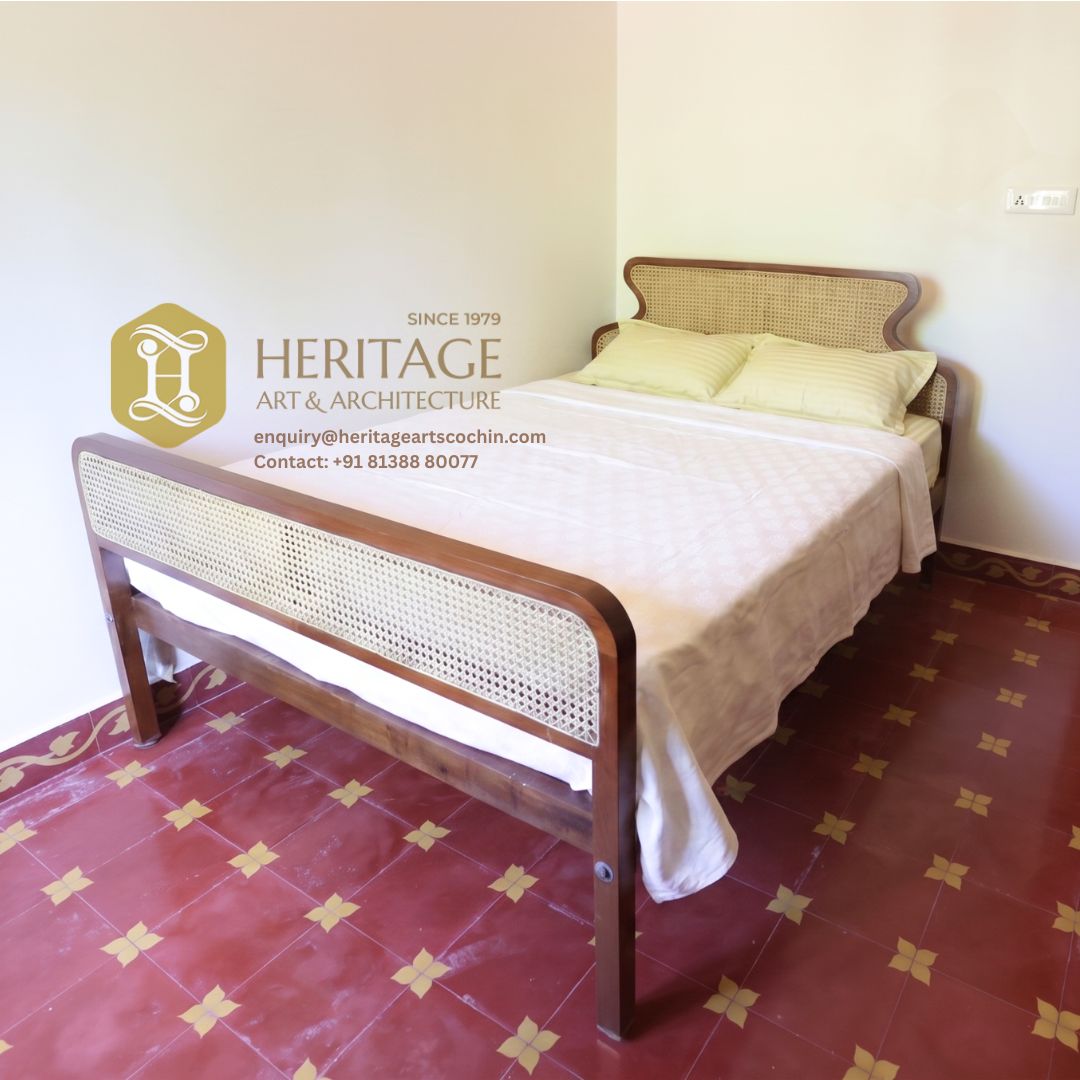
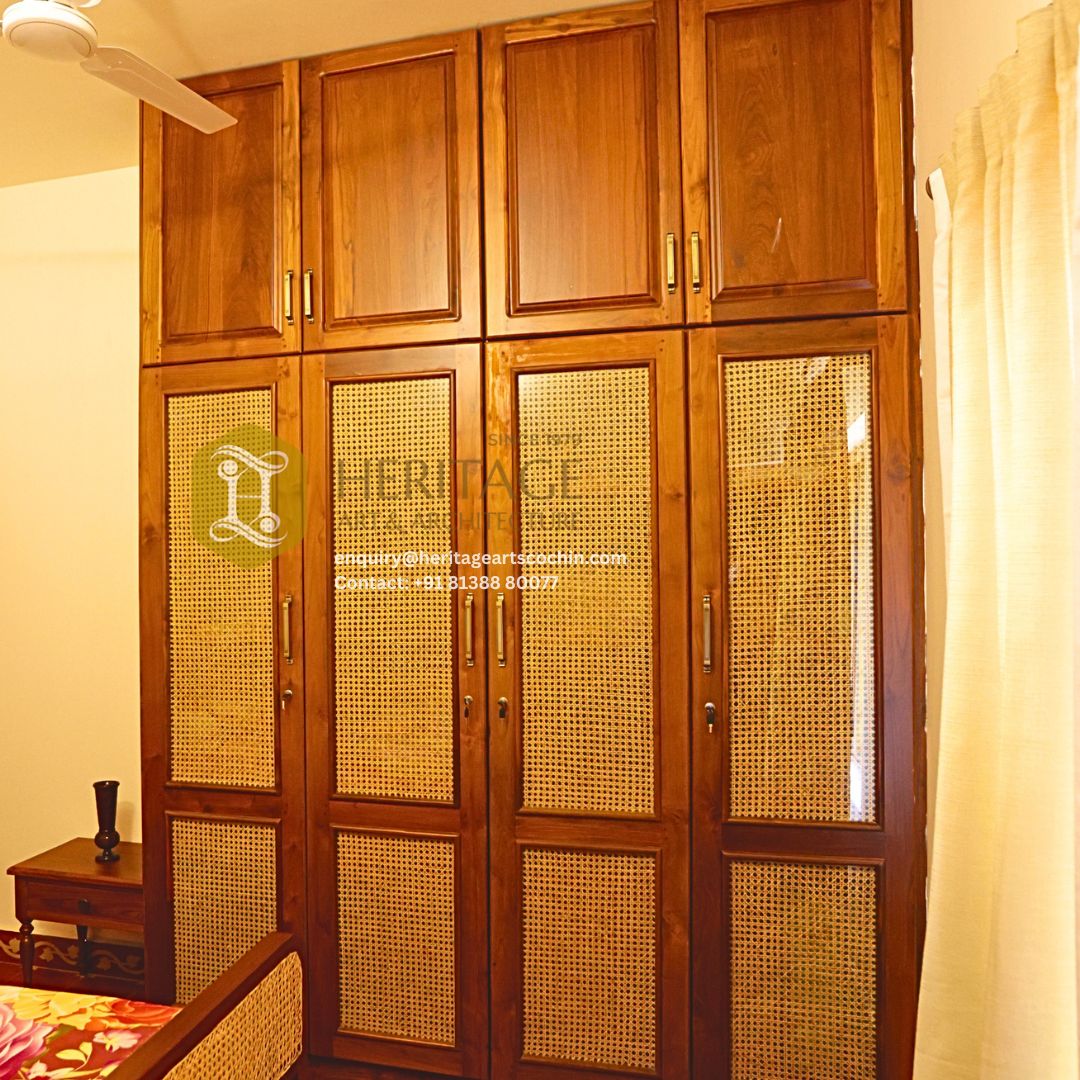
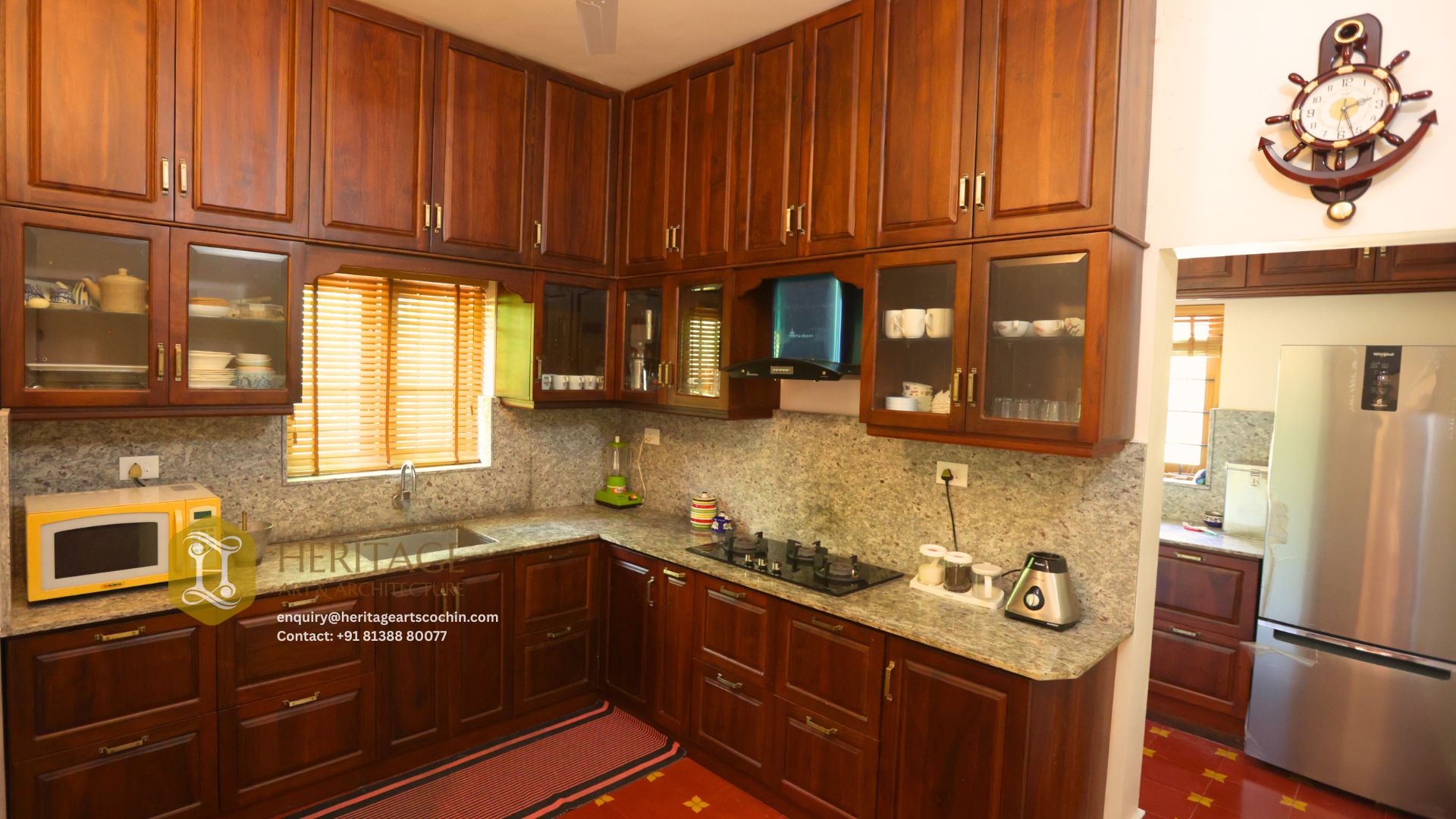
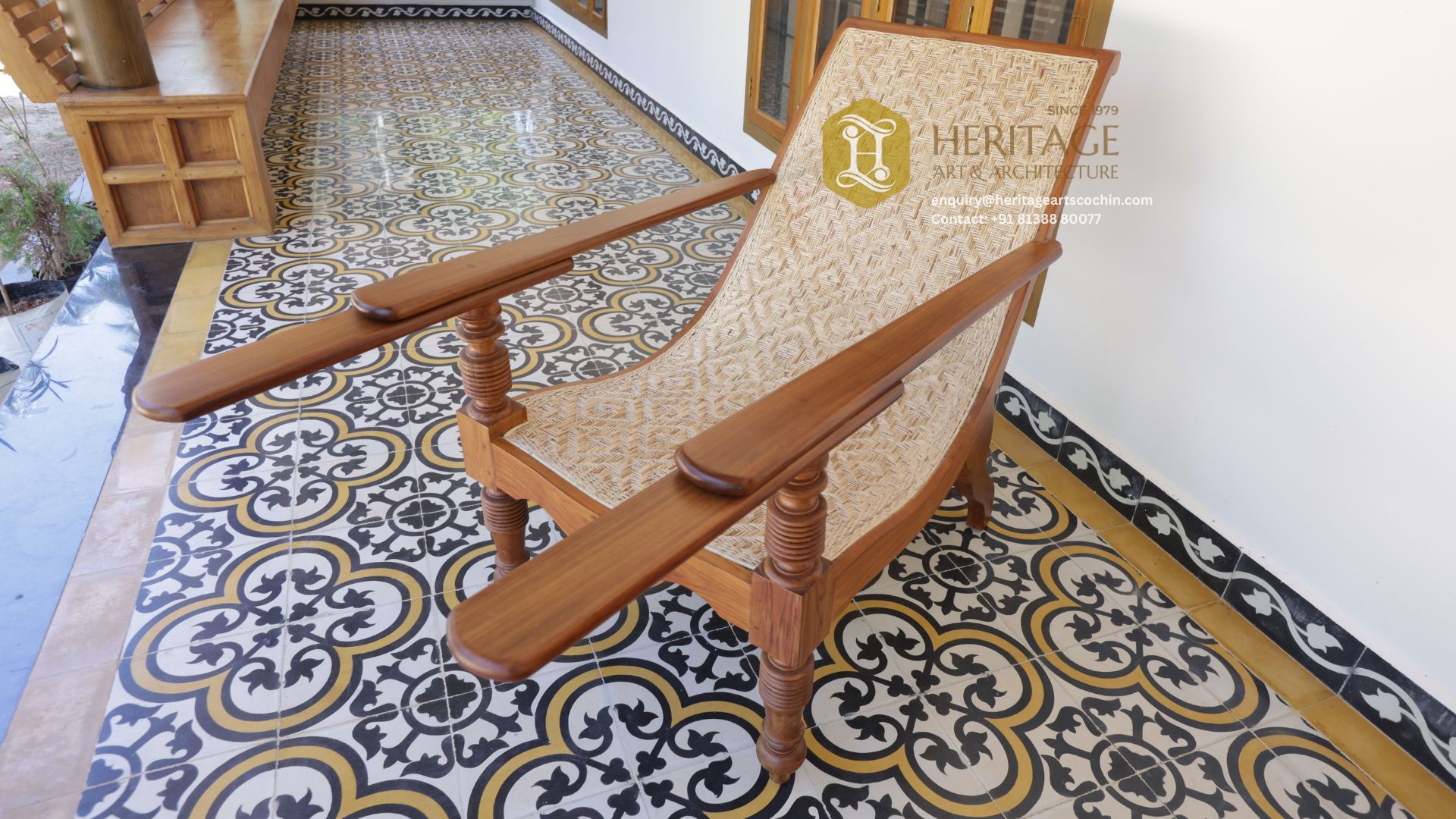
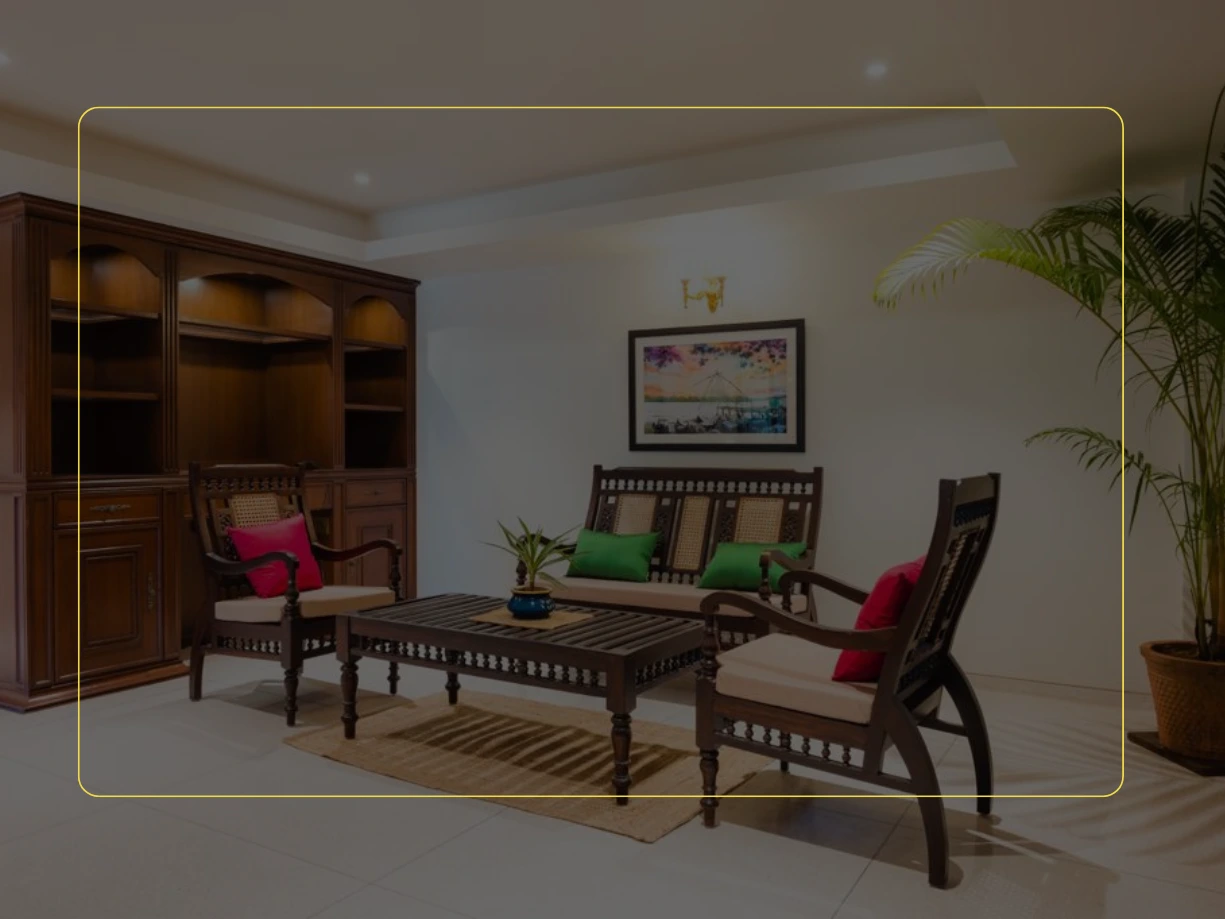
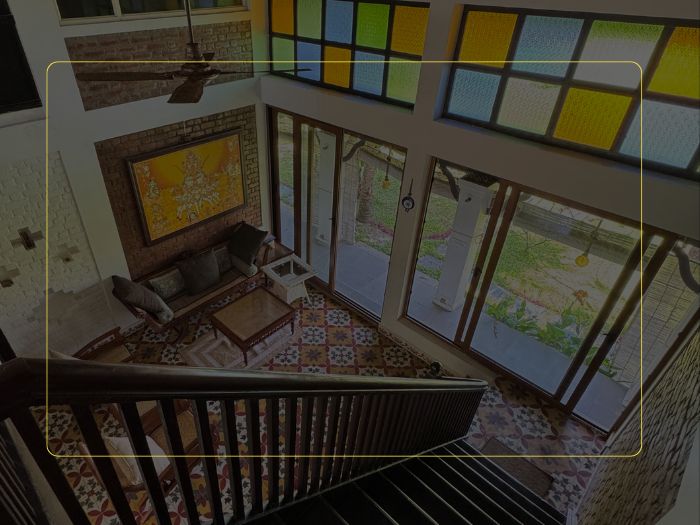
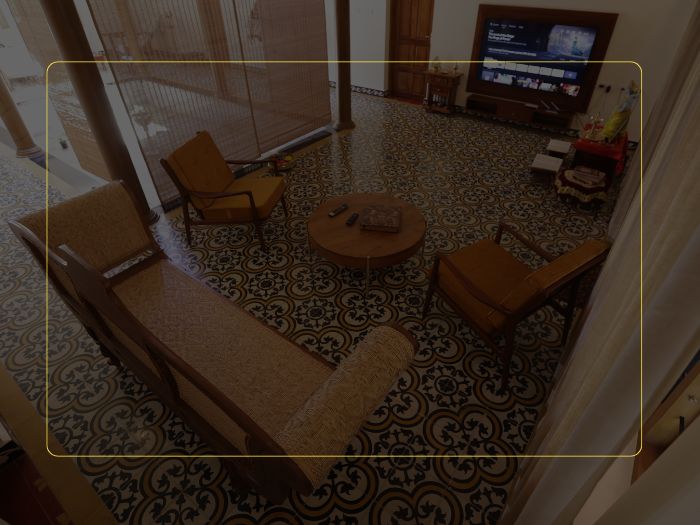
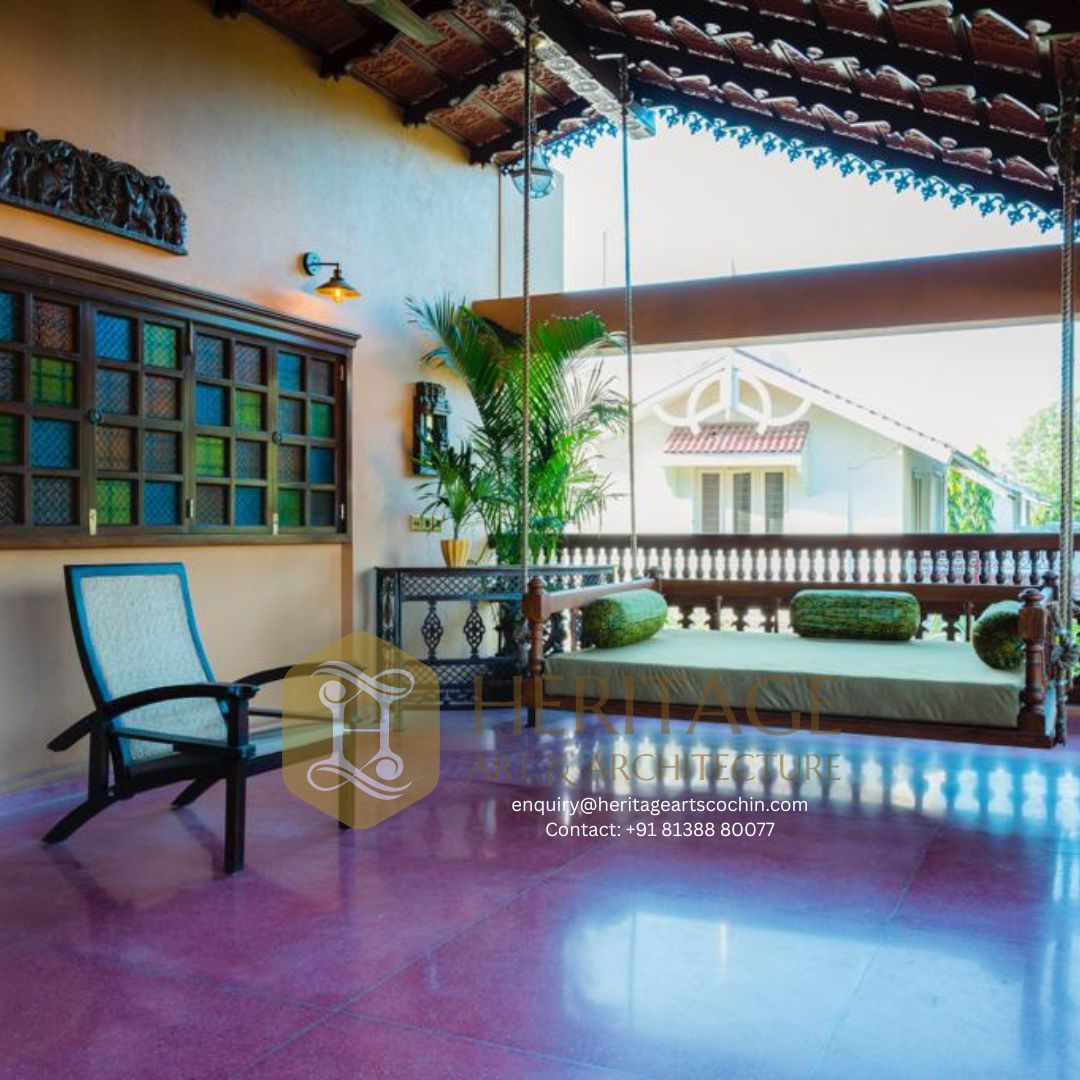
The flooring throughout the house uses Athangudi tiles, hand-poured in Tamil Nadu using a technique that dates back over a century. No two tiles are identical, since each is cast individually and left to cure before laying. Paired with the custom teak furniture made for this project, the tiles carry the same idea through the house: pieces made by hand, meant to outlast the people who commissioned them.
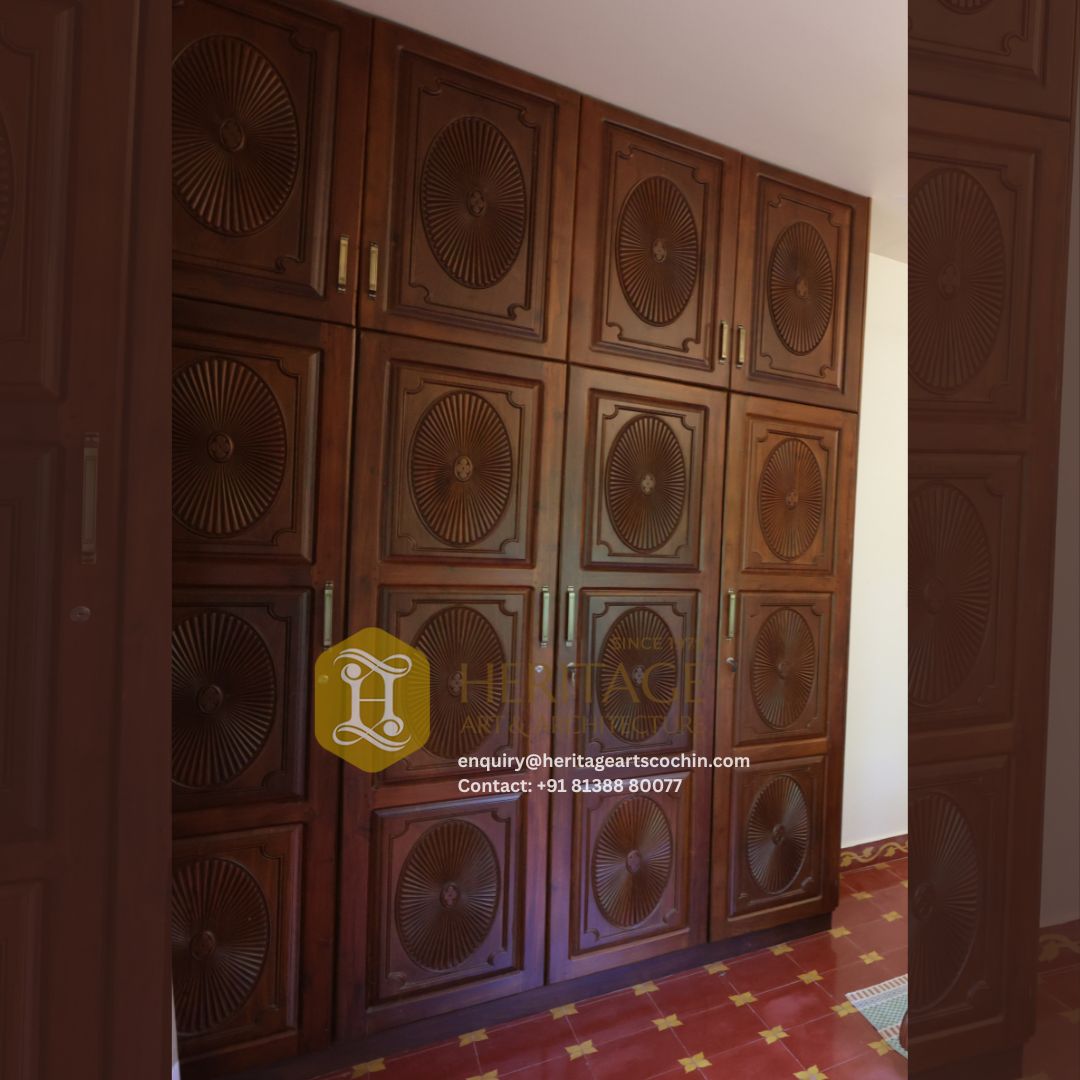
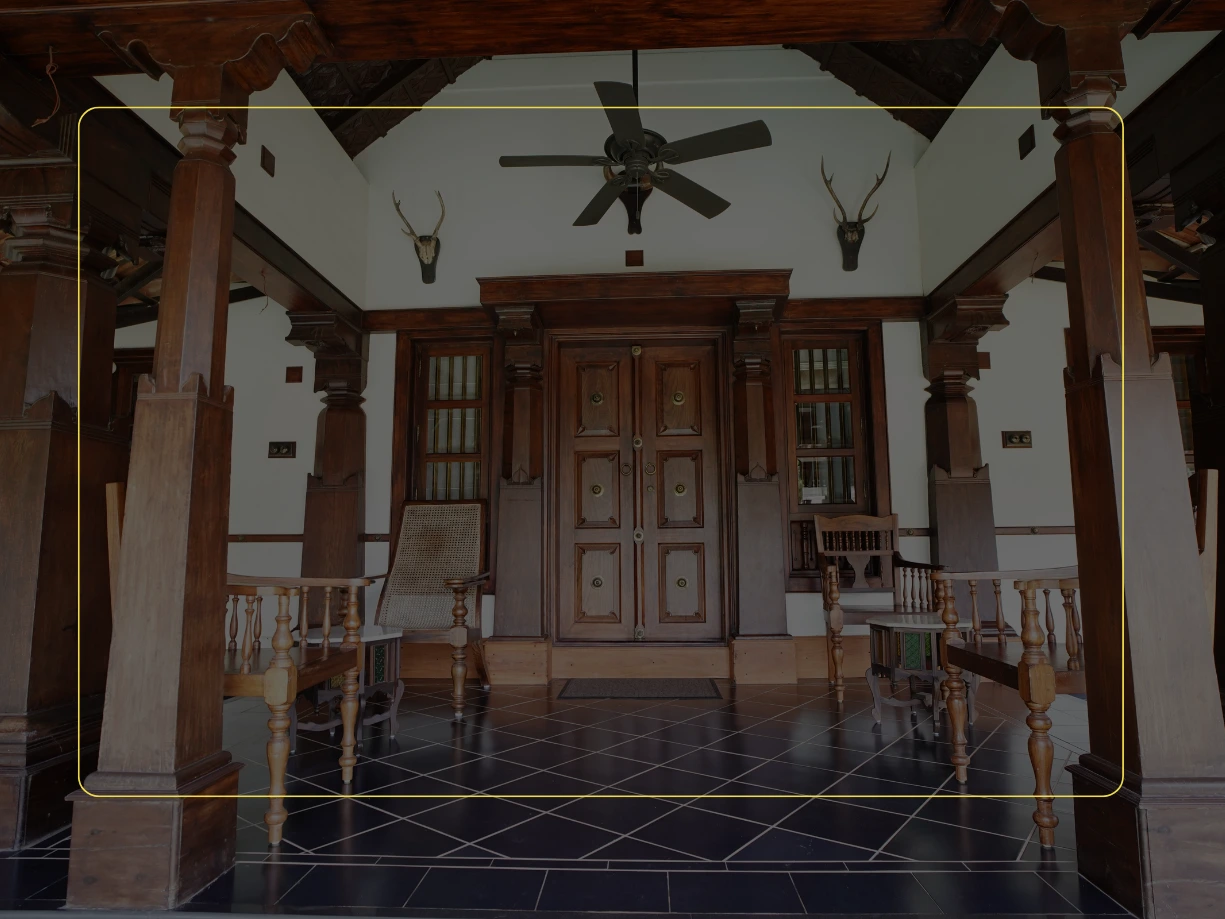
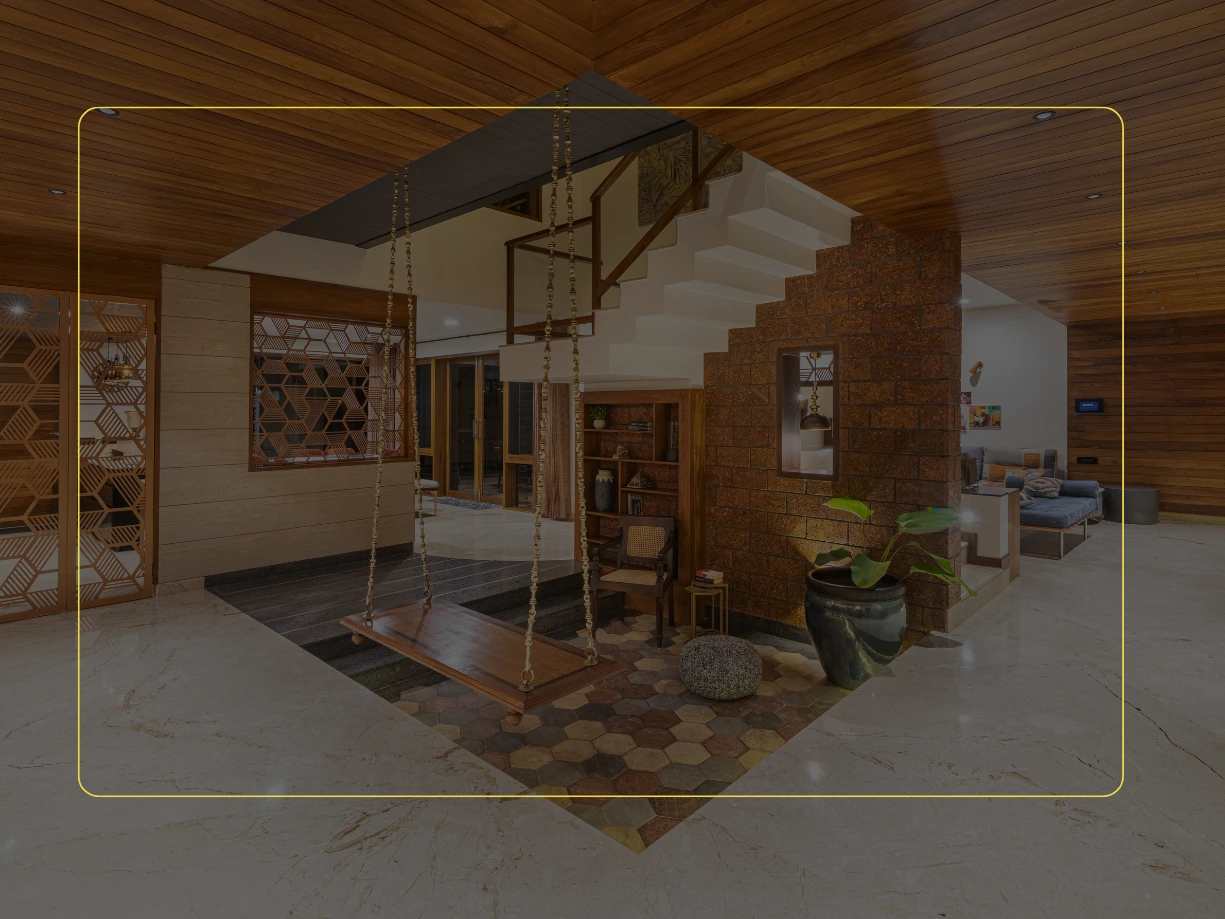
Aambal Lakefront House was built for a family that wanted the interiors to hold as much history as the setting. Every piece was made in-house at our Heritage workshop, using teak sourced authentically and seasoned throughly.