Palmgrove Villa

/
/
Palmgrove Villa

A room-by-room look at the design choices that define the space

 
Lorem Ipsum is a standard placeholder text used in printing, typesetting, and digital design to simulate readable content without distracting from layout.
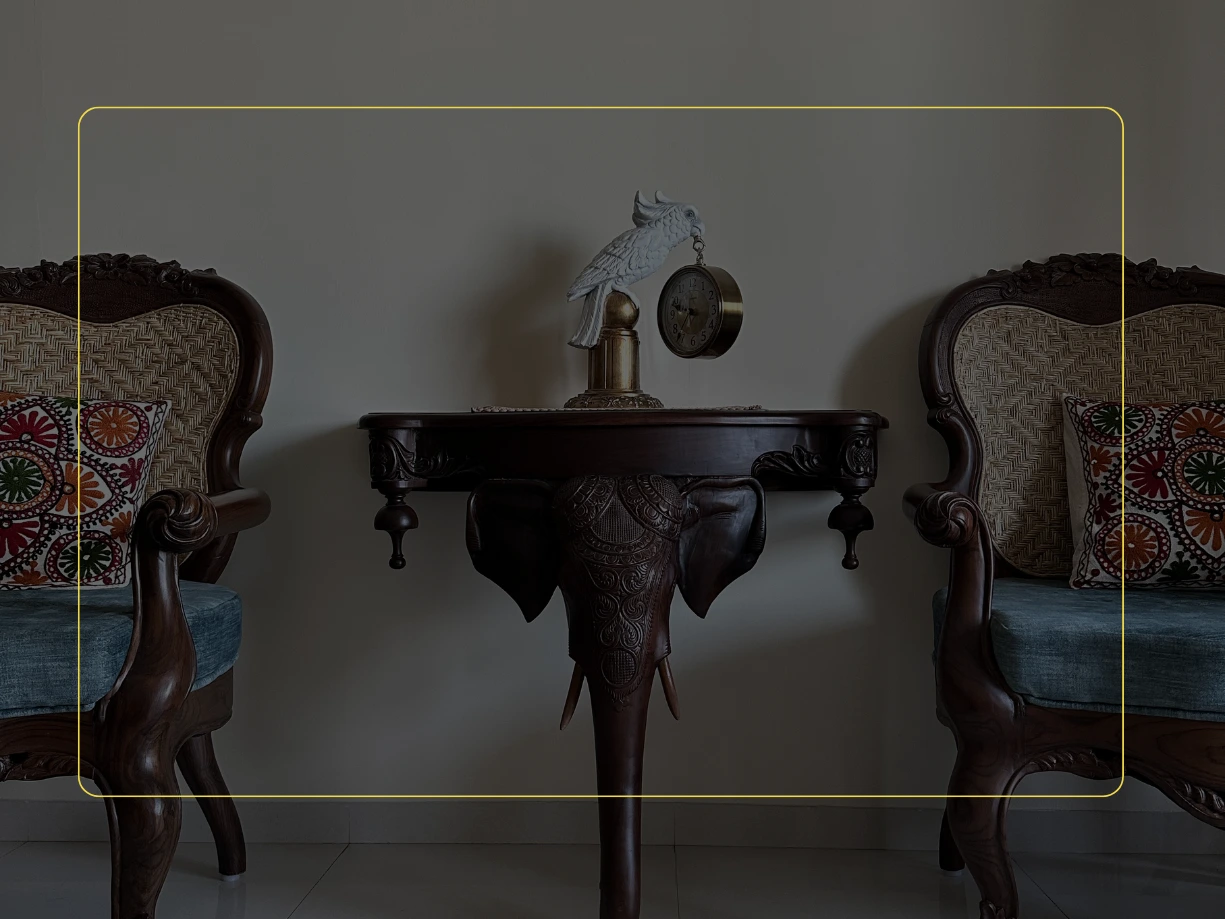
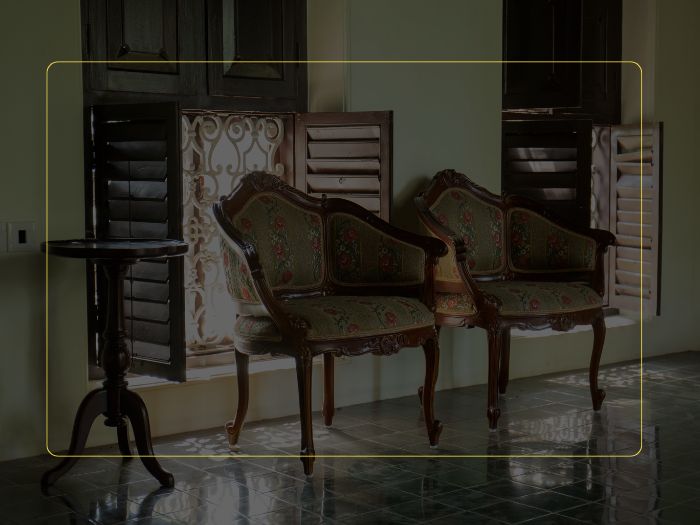
Custom Furniture
Antique Decor
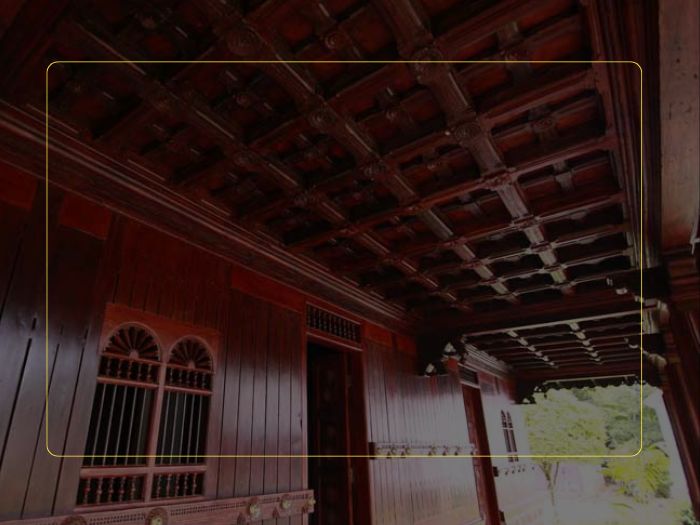
Outdoor Ceilings
Pooja Mandap

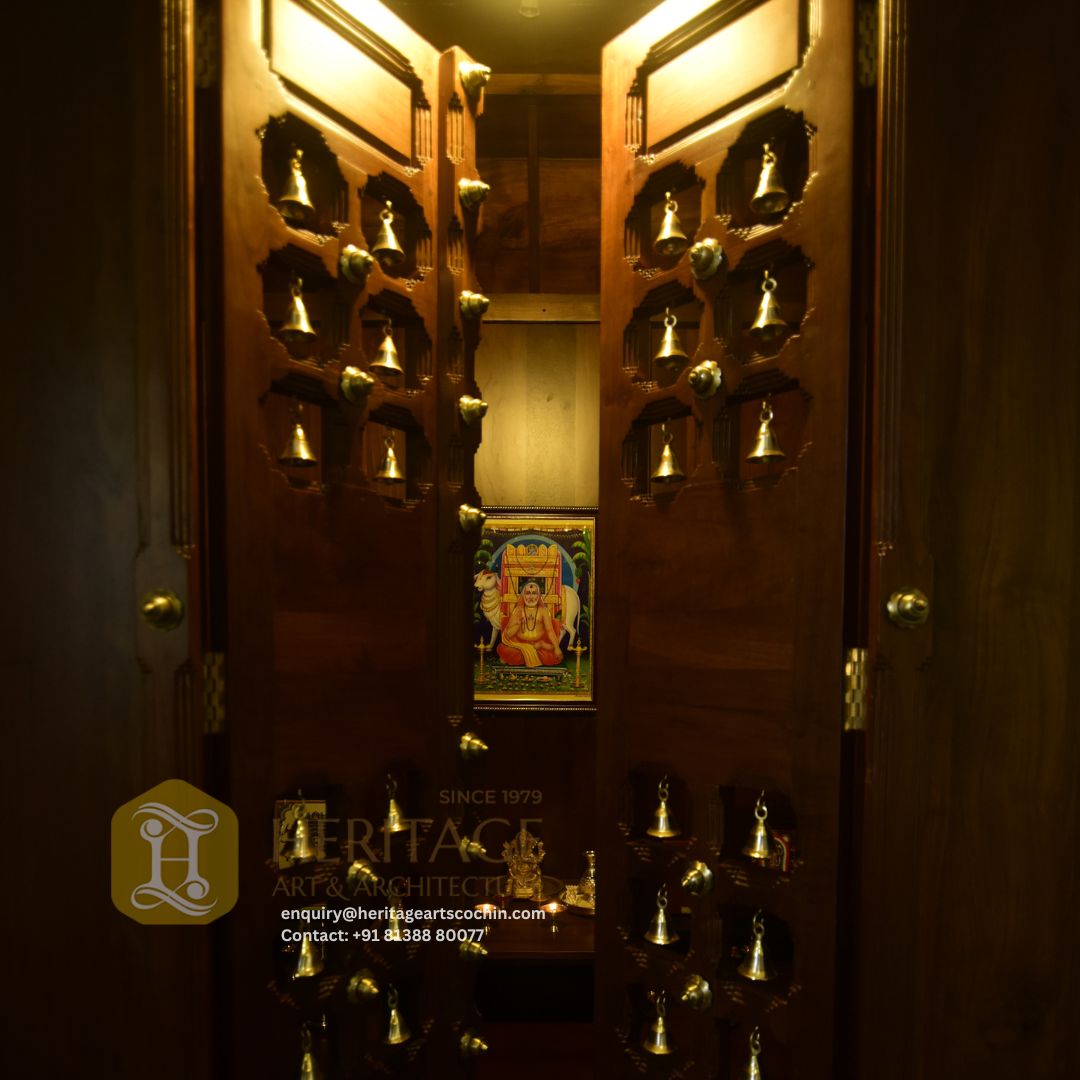
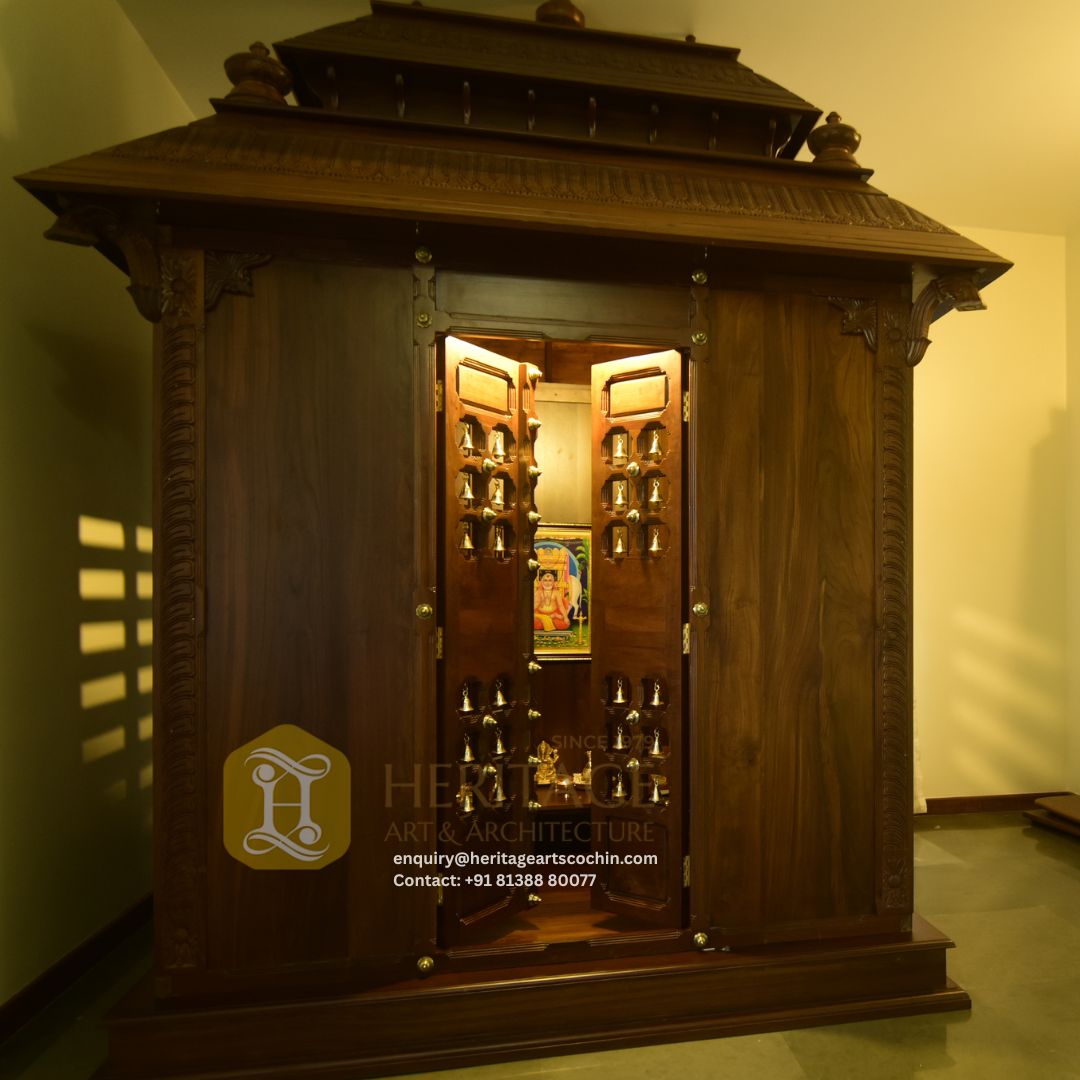
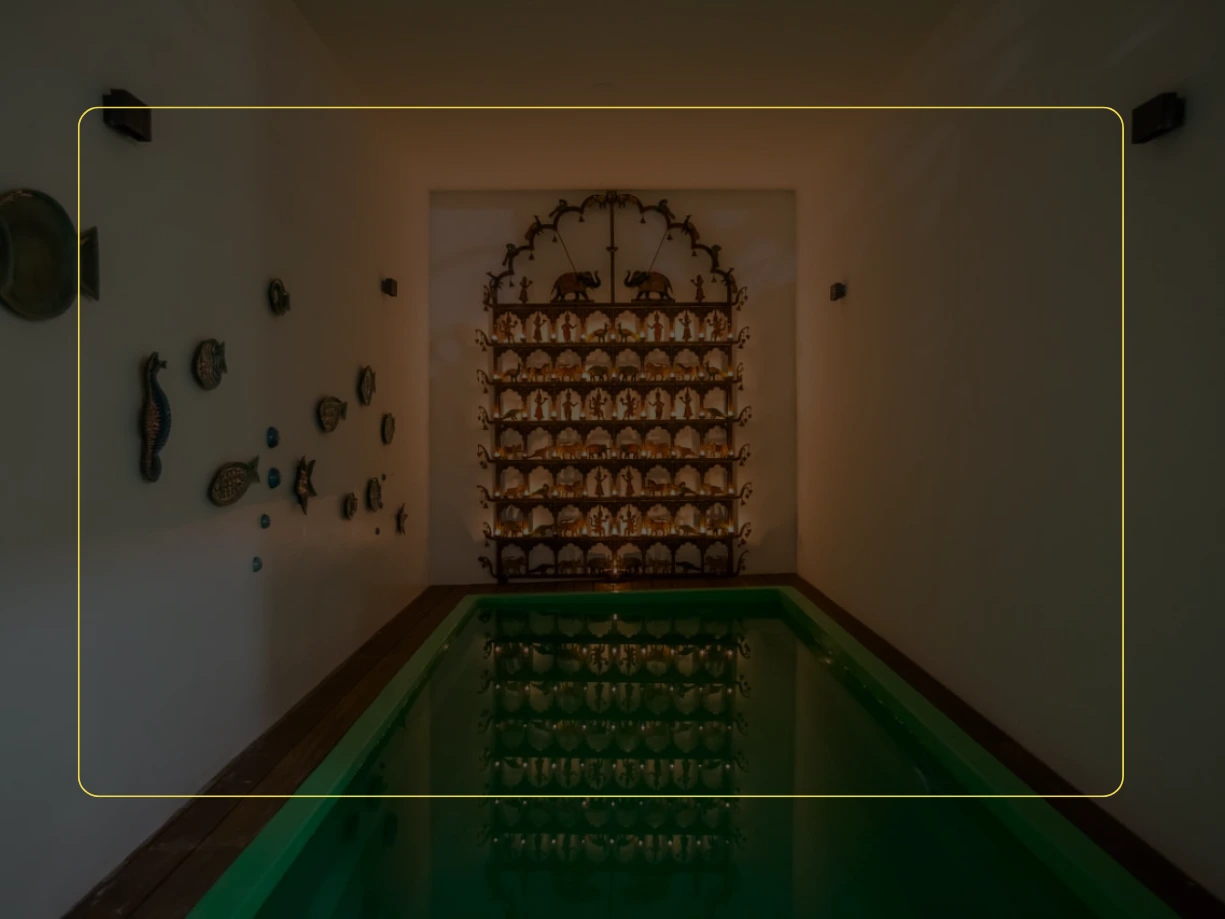
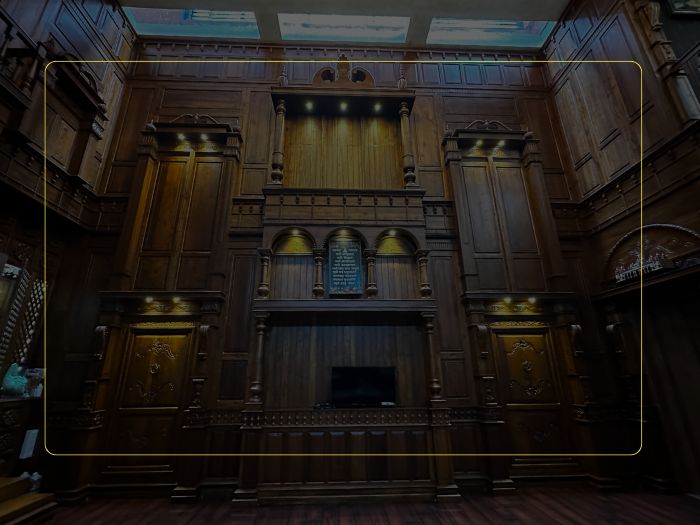
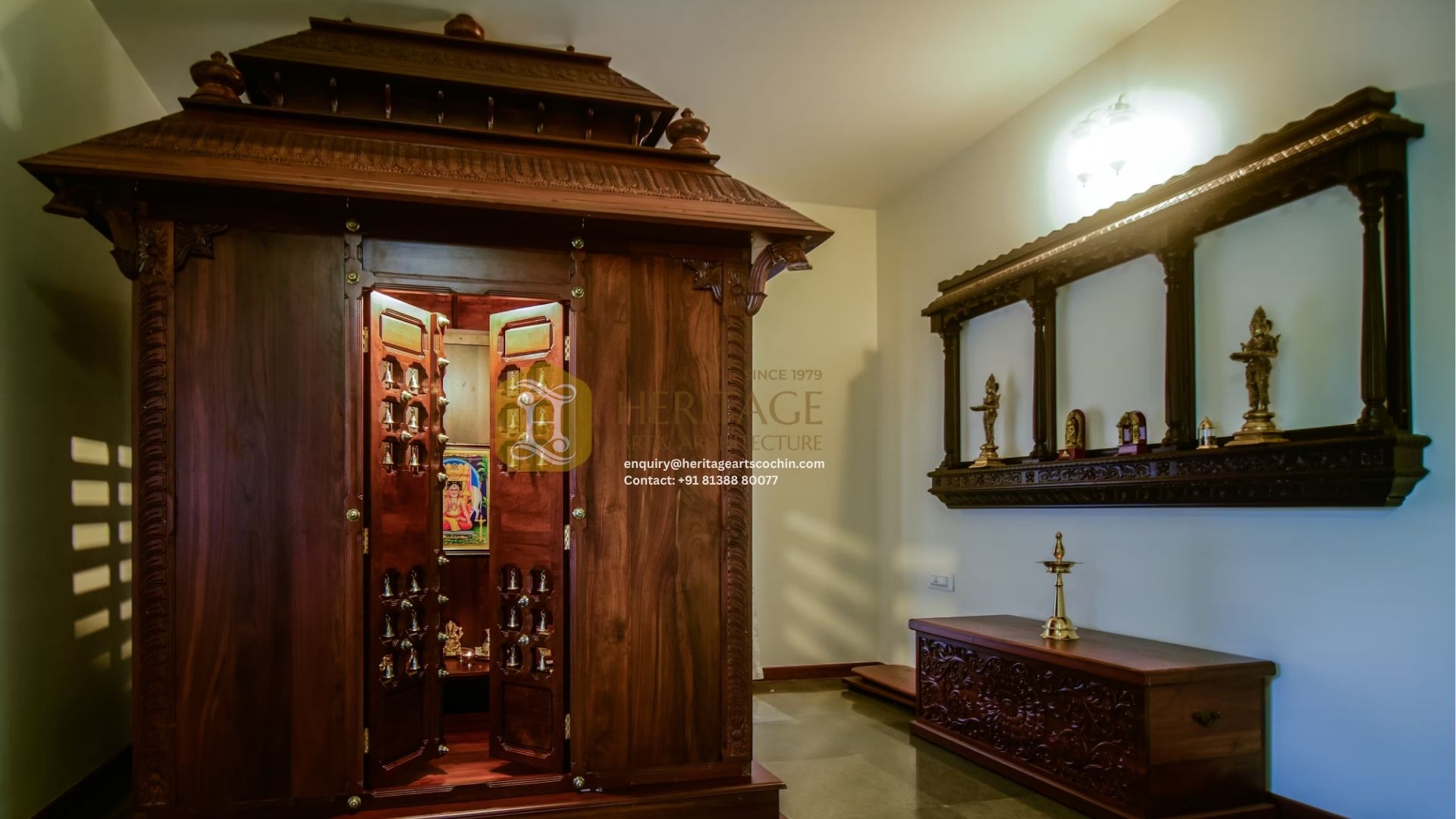
The shrine chamber is built with vertical emphasis — a gopuram-inspired wooden canopy draws the eye upward and frames the sacred space distinctly from the rest of the room. Carved alcoves hold brass figurines, positioned so candlelight or lamps cast across the surface rather than flatten it.

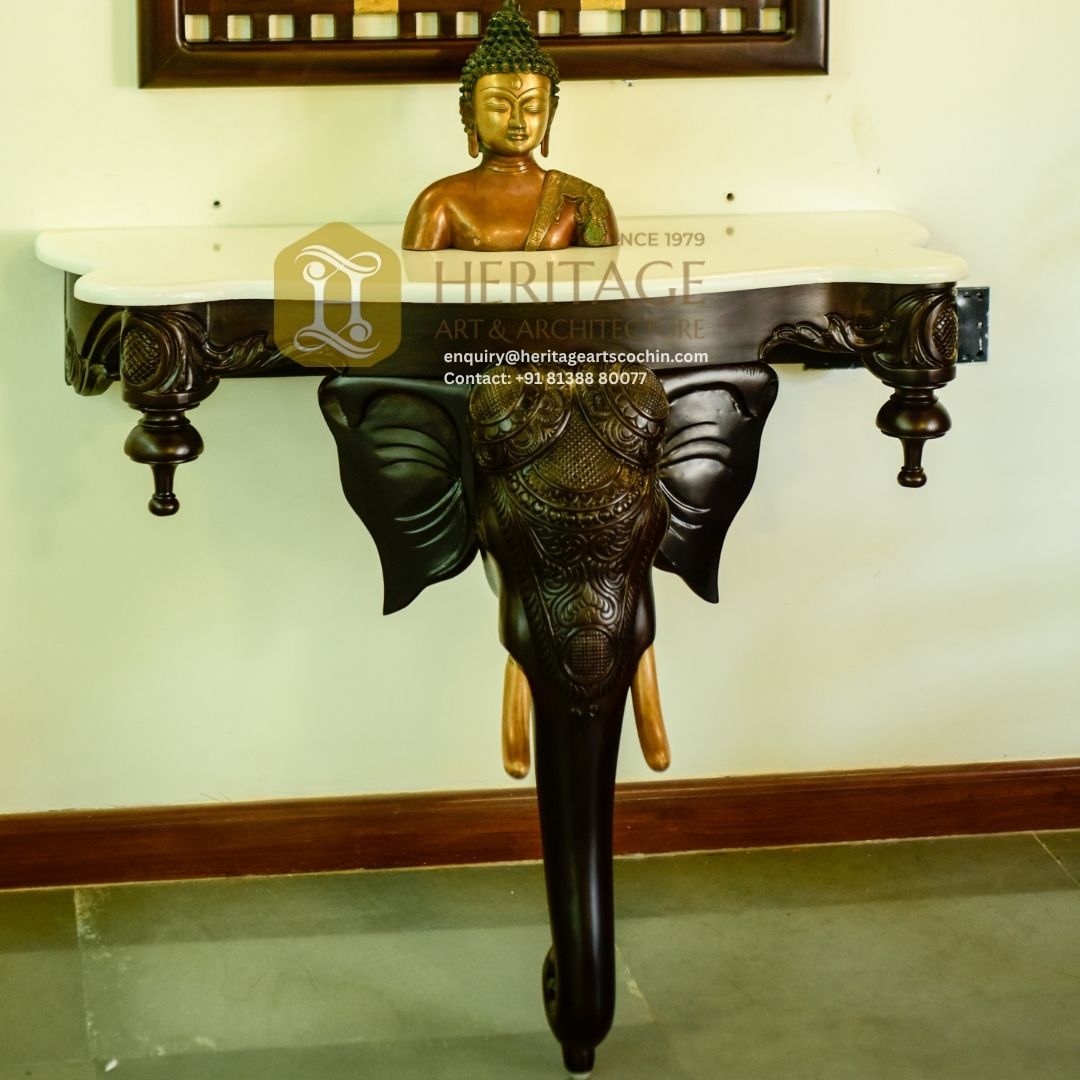
A wall-mounted altar extends the devotional zone without requiring a second chamber, making it functional for daily use while maintaining the architectural seriousness of the main mandap.

Lounge

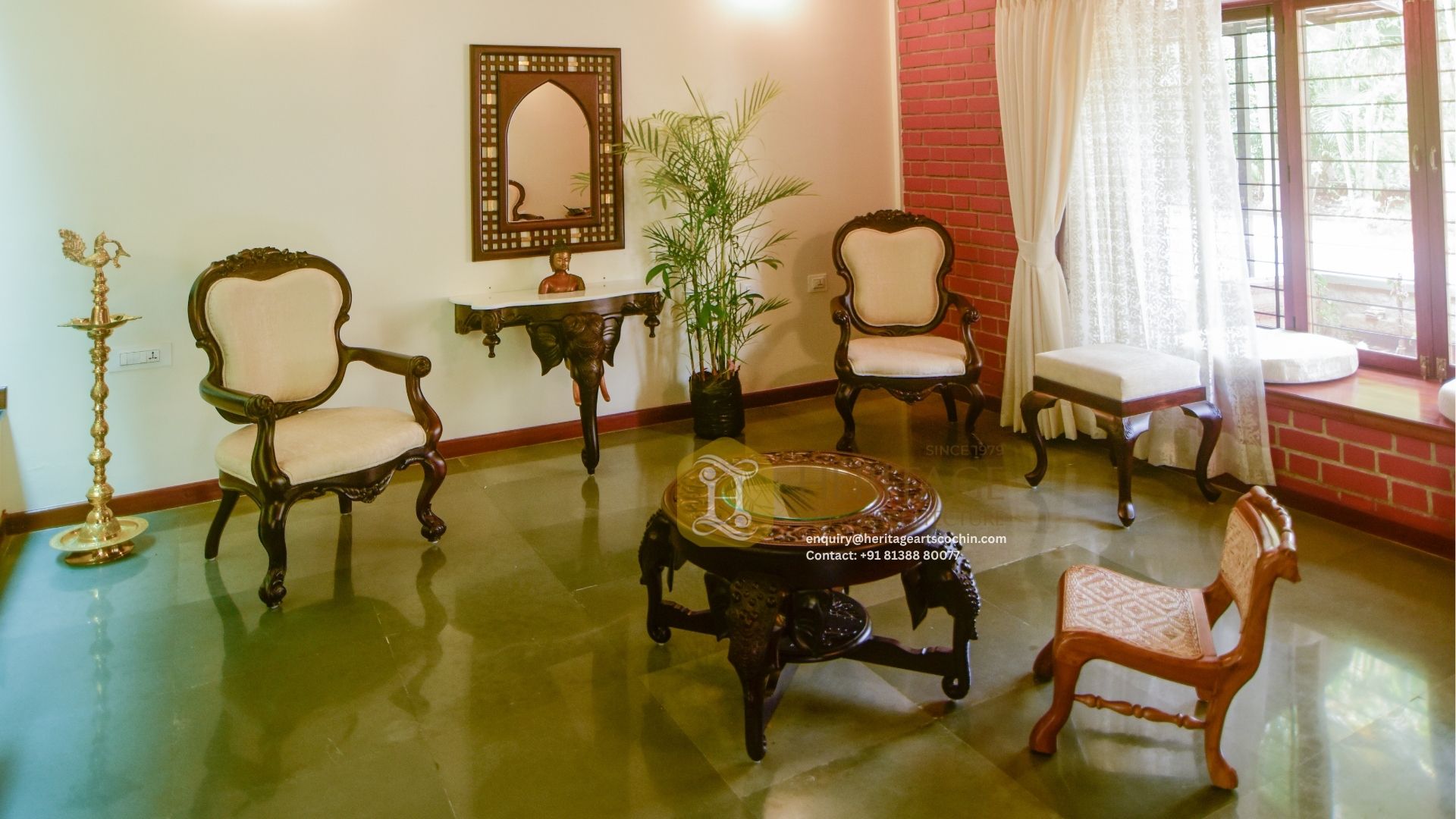
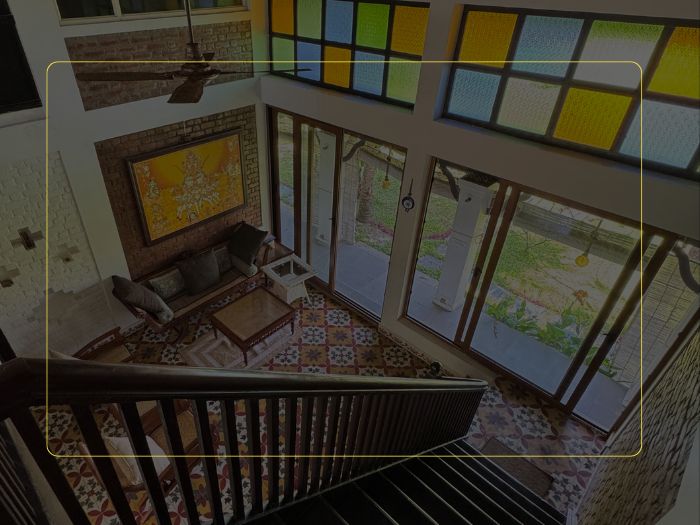
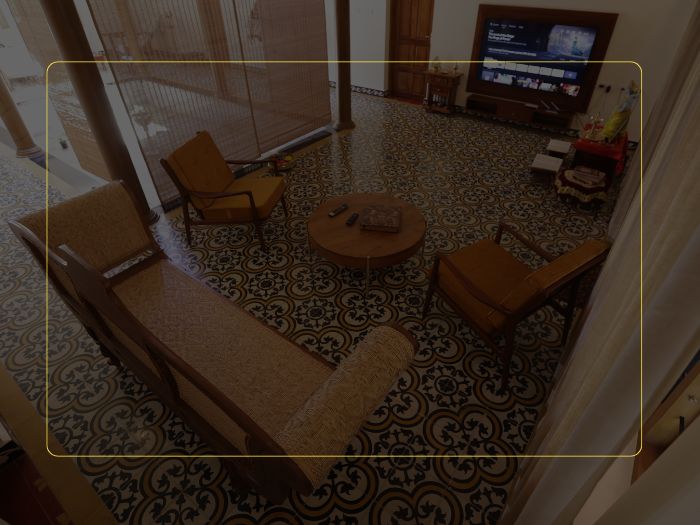
The lounge is arranged for conversation, not display.

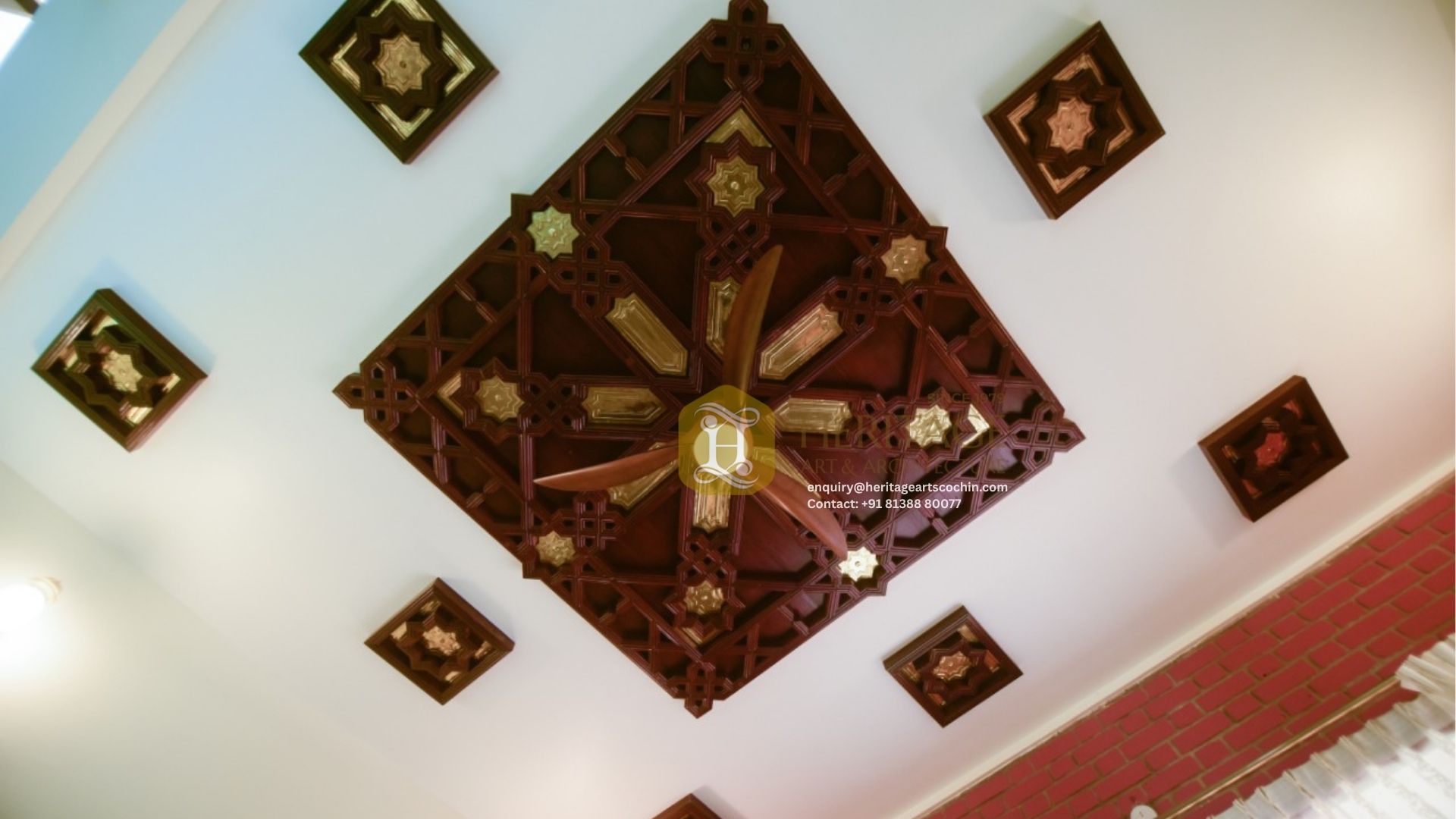
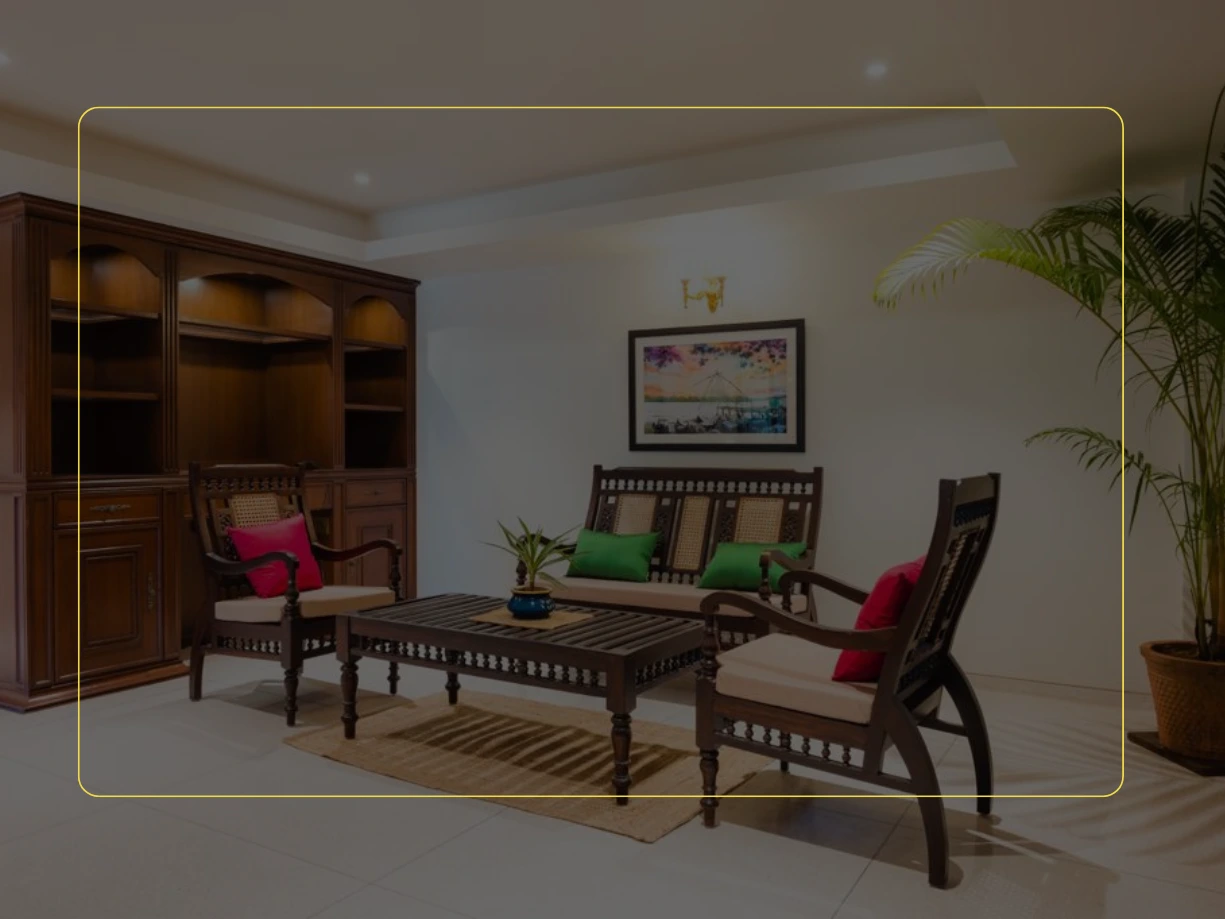
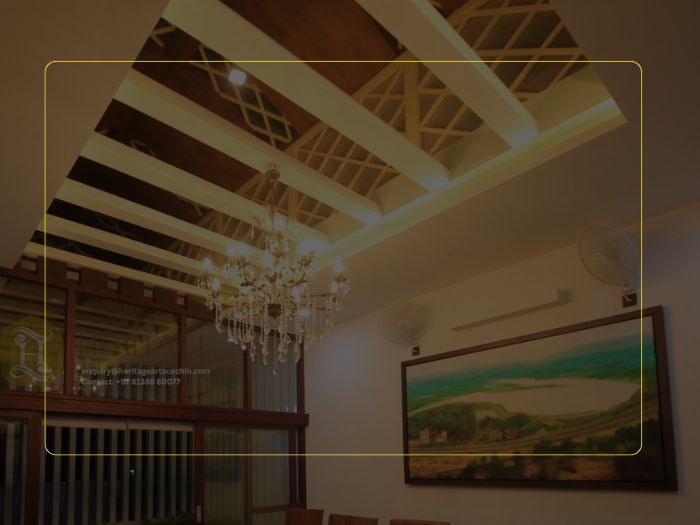
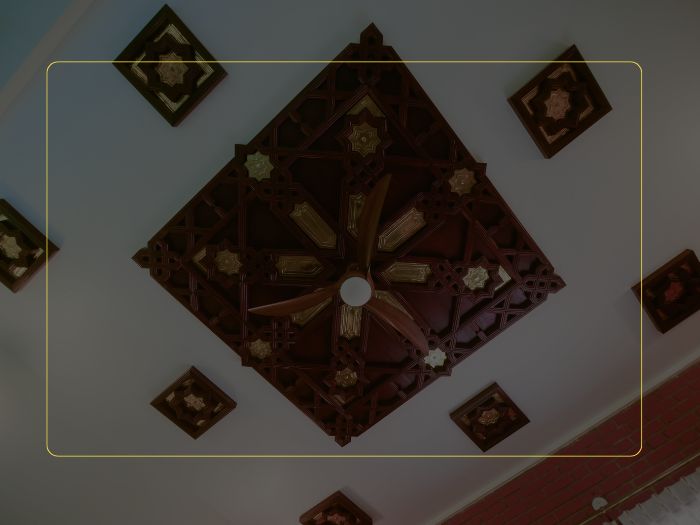
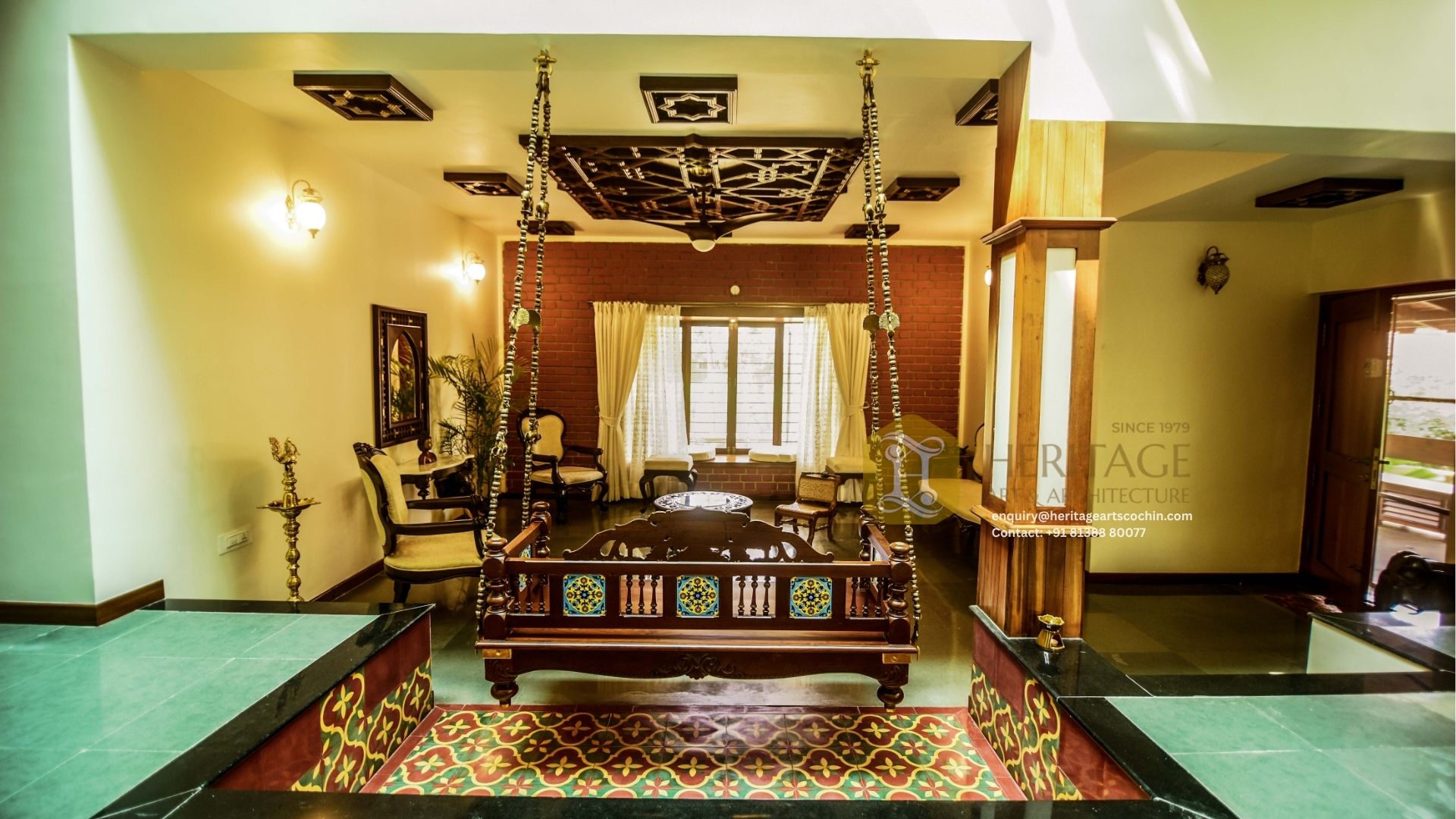
High-backed chairs in cream upholstery face inward around a carved circular table — the circular form matters here because it eliminates head-of-table hierarchy. Every seat is equal. The ceiling does more work than most: a lattice-and-star motif turns overhead space into a structural detail that also controls light diffusion from brass lamps mounted below it.

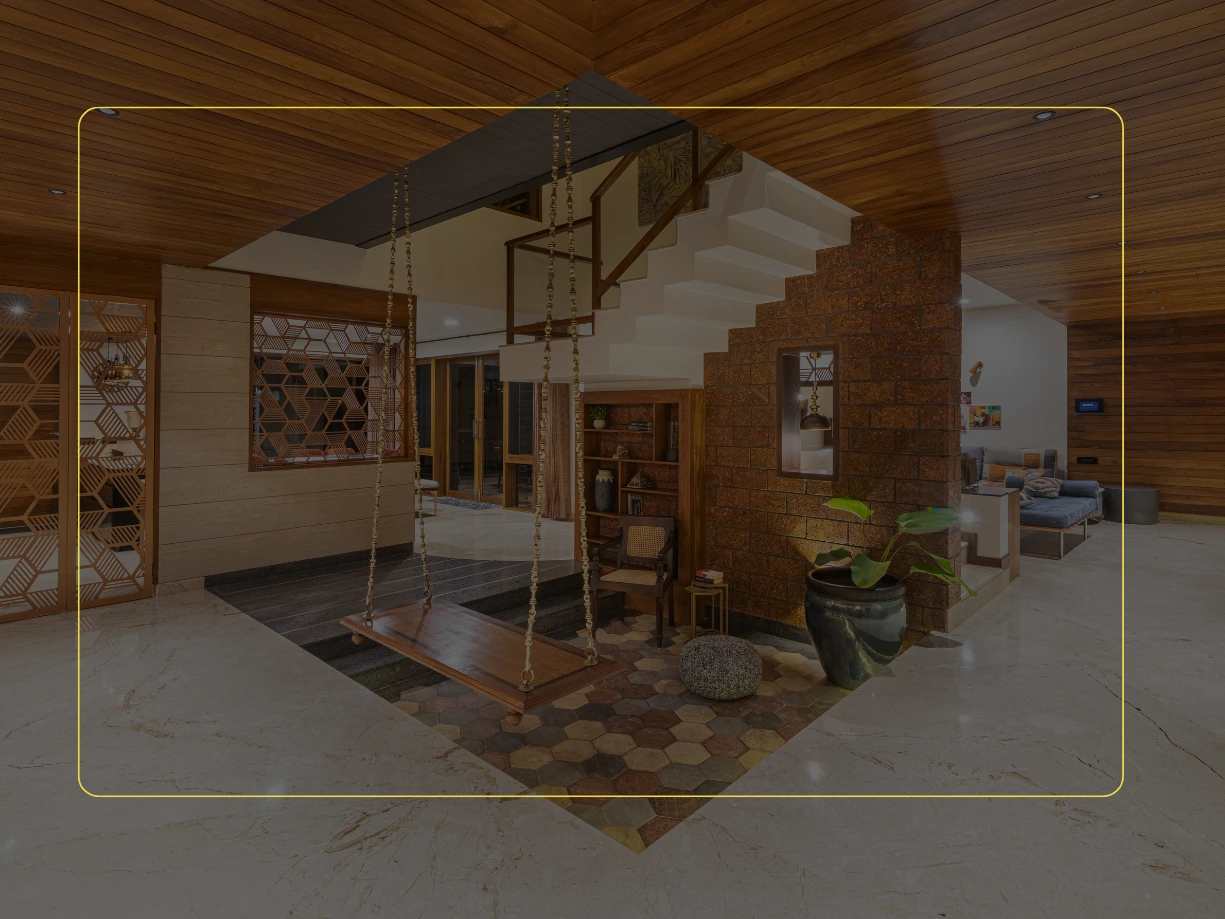
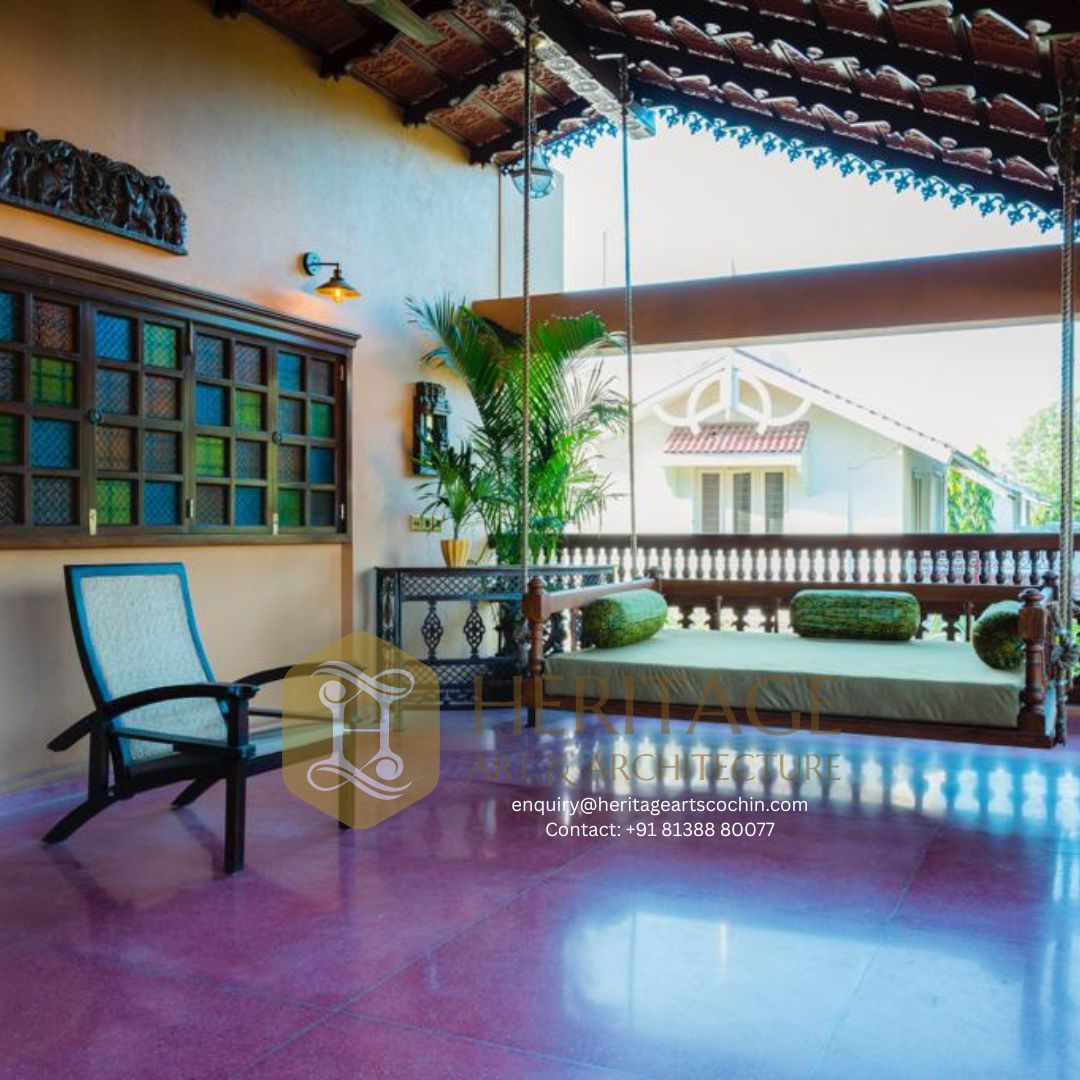
Along one wall, a swing on brass chains is set above patterned floor tiles. It functions as seating that moves, which changes how people use the space — it tends to become the most occupied spot in the room.

Corridors and Thresholds

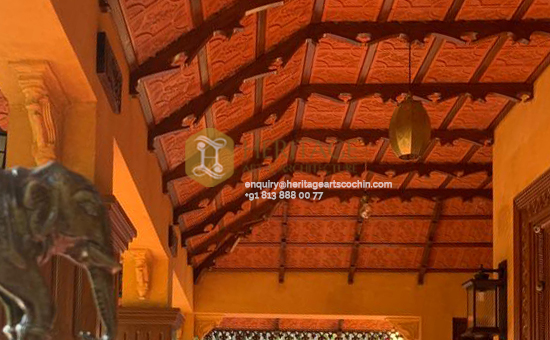
The corridors at Palmgrove villa are not left neutral.

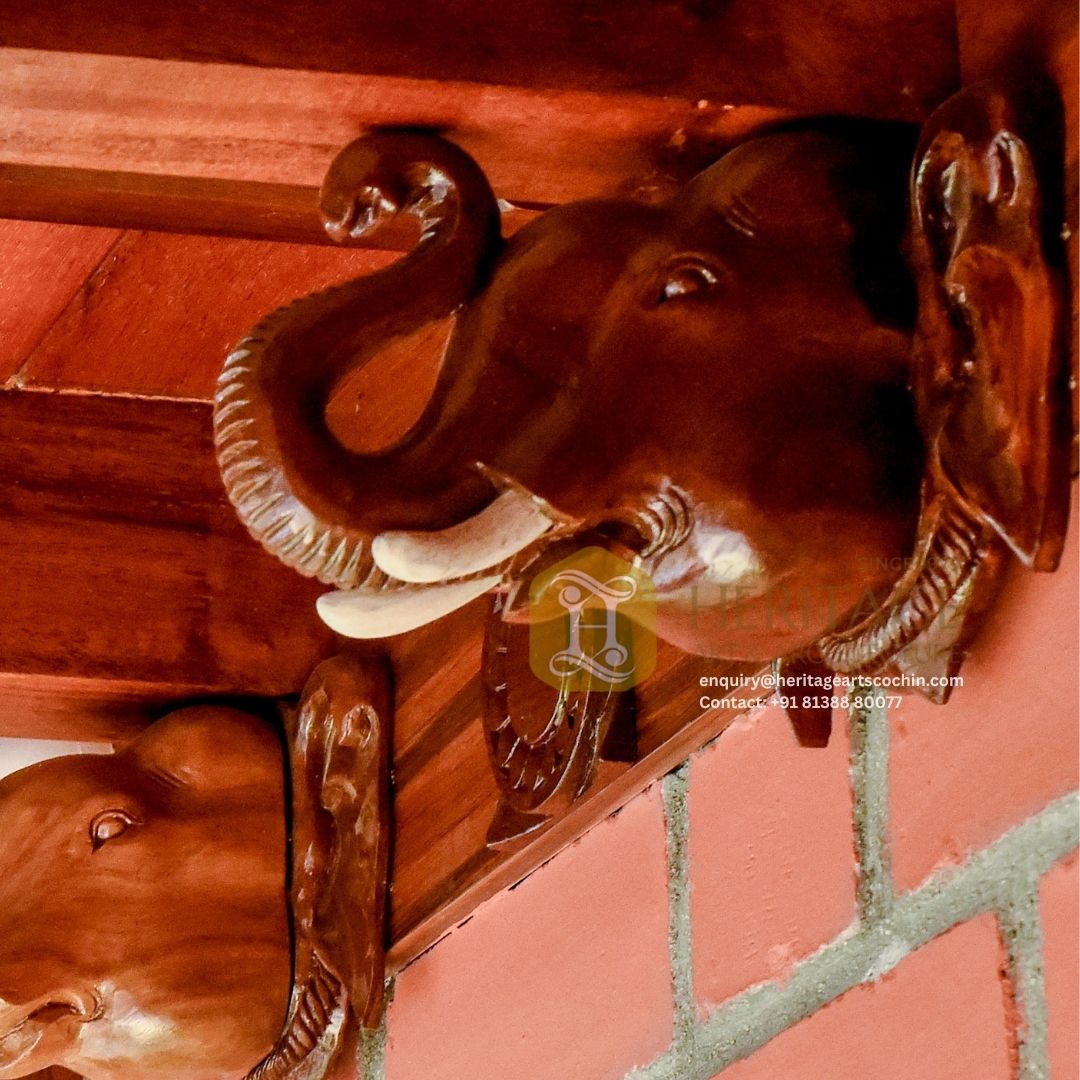
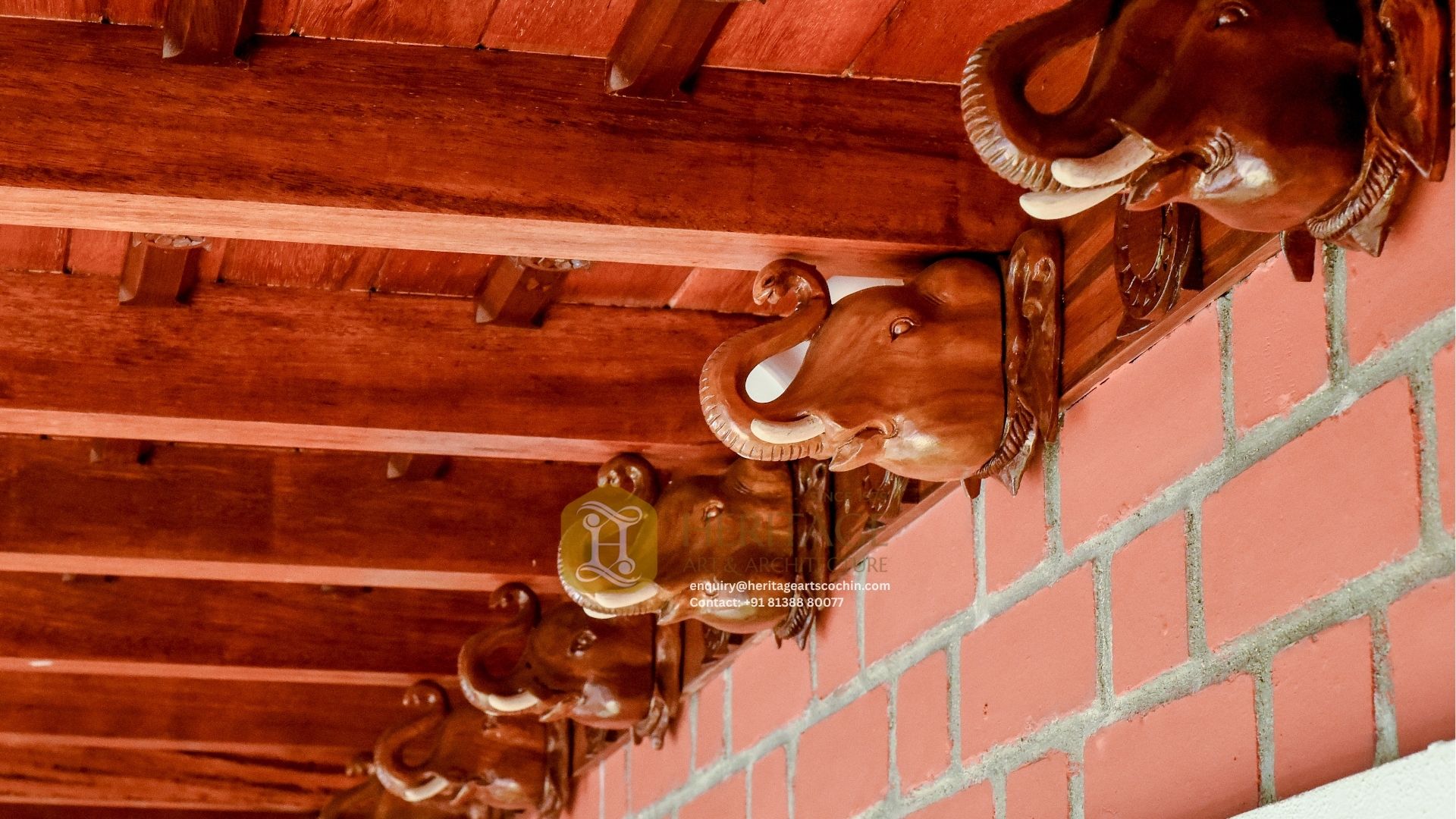
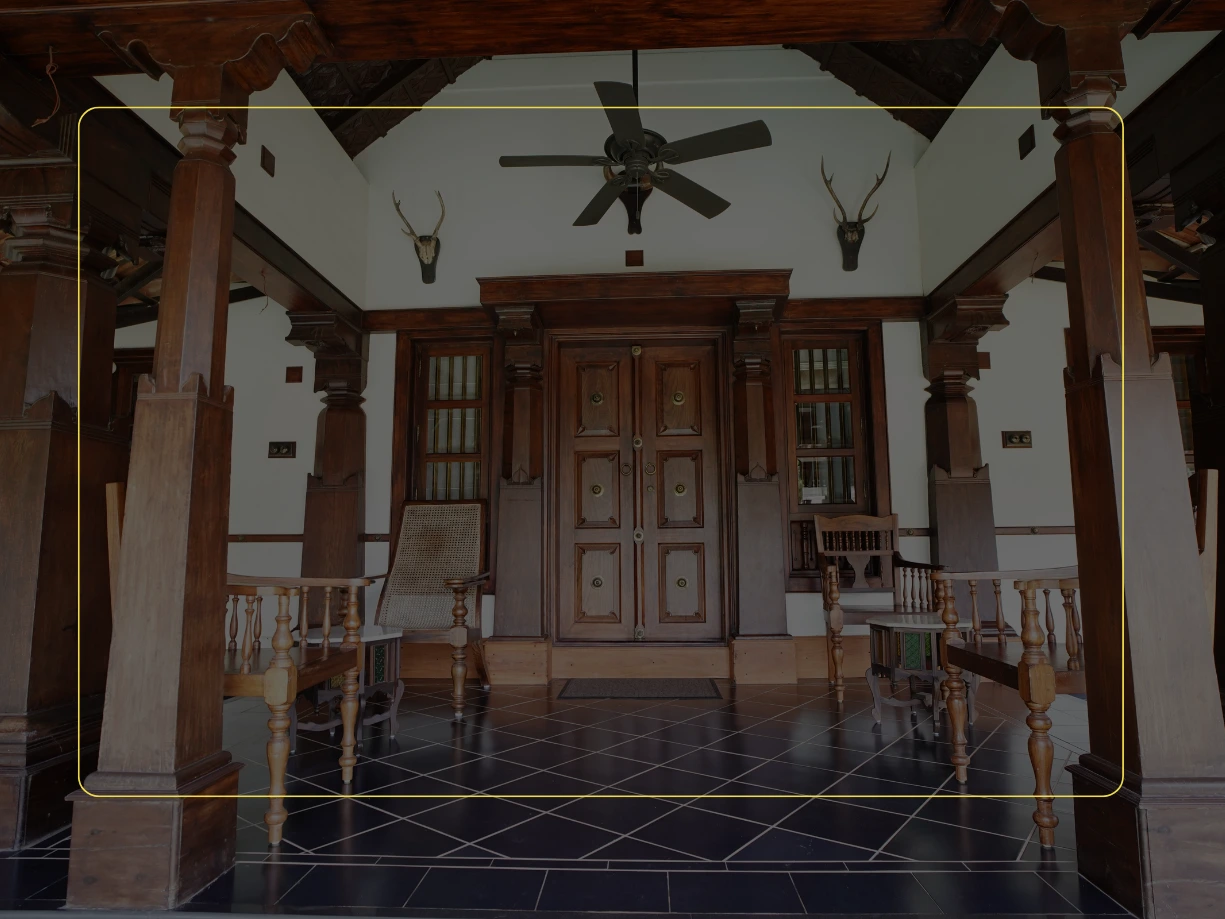
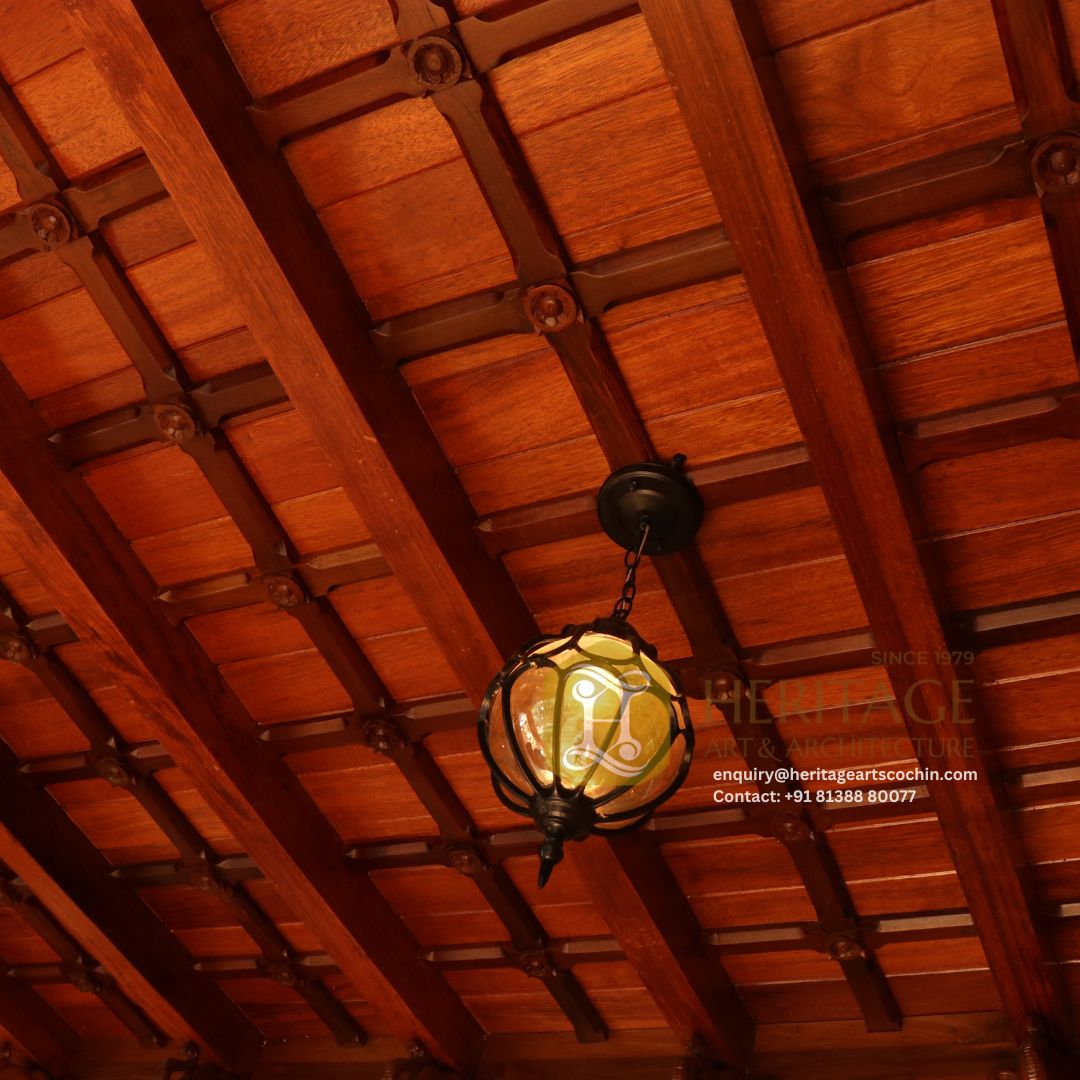
 Carved elephant heads emerge from varnished beams at intervals — these are architectural brackets, not applied decoration, so they carry structural logic alongside visual weight. Lanterns hang between them at mid-height, which keeps the ceiling plane clean while throwing warm light at eye level along polished timber and brick. The result is a passage that has a clear beginning and end rather than a generic throughway.

Other Designs & Furniture Featured in This Project

Dining Area

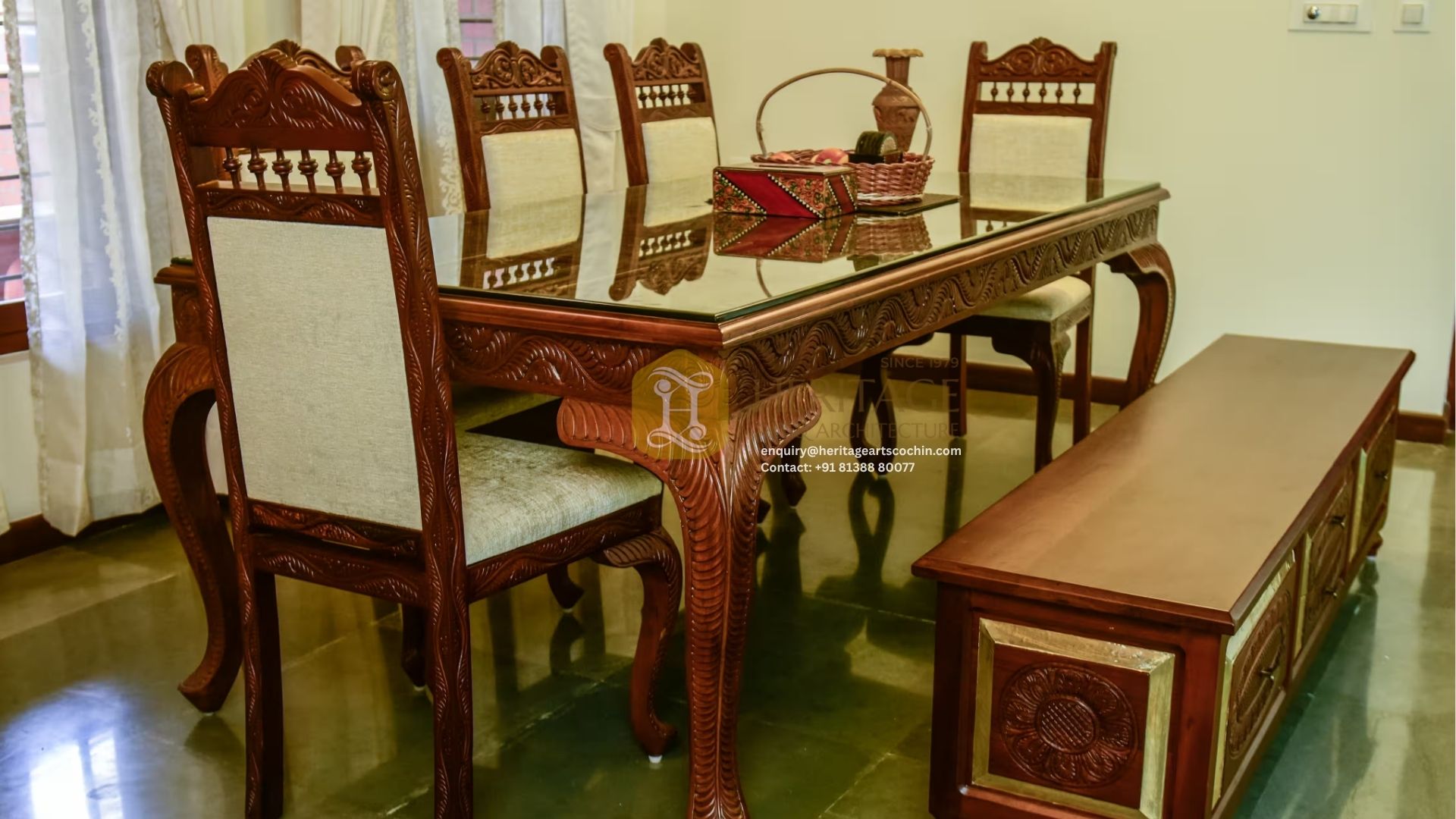
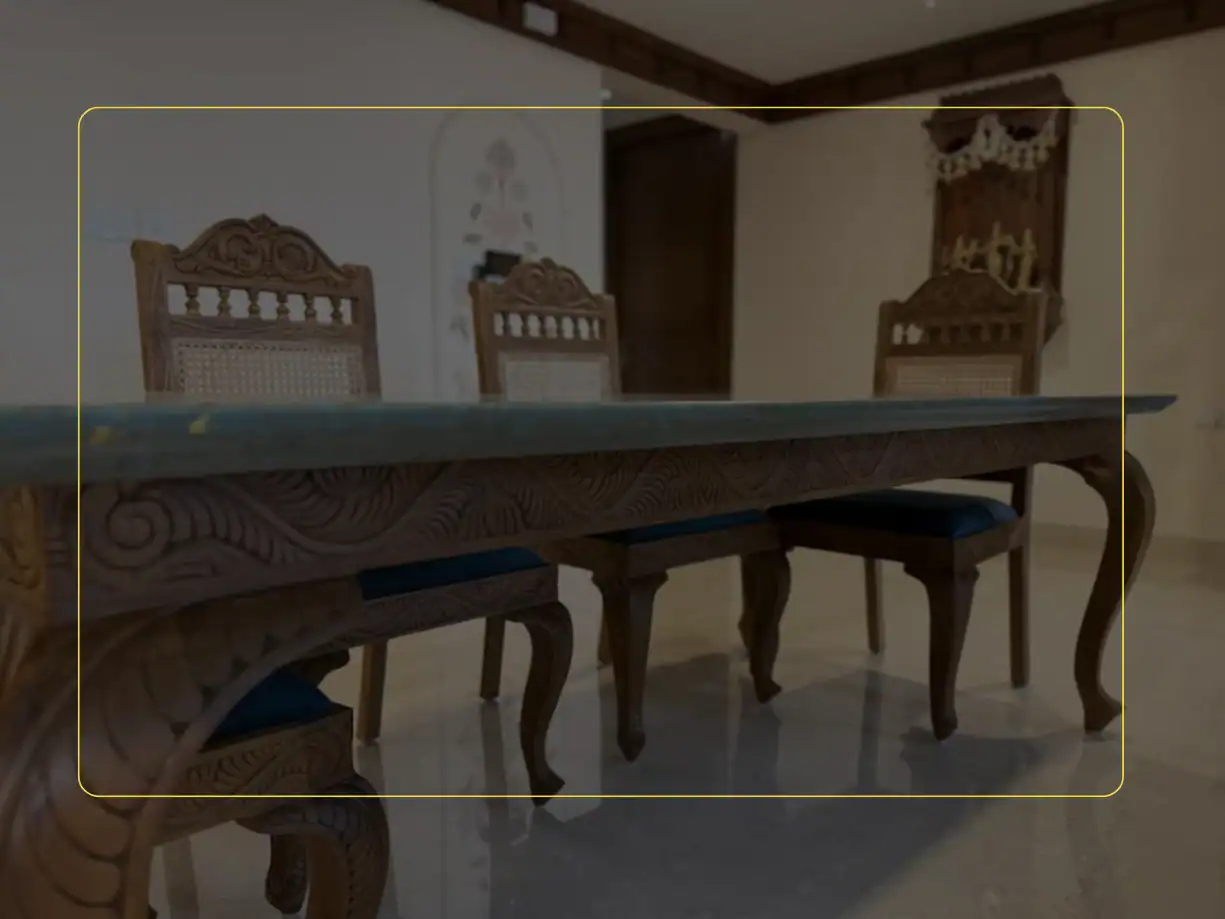
The dining table is the largest horizontal surface in the home and the most-used. The design reflects that. A glass top keeps the visual weight light while protecting carved wood beneath it. Flanking chairs are richly carved but kept at a consistent height — no mismatched scales that break the table line.

A long wooden bench with brass-inlaid drawers runs one side: it seats more people when needed and stores linen or serving essentials when it doesn't. The bench is the most practical piece in the room, and it earns its place.
Veranda Bar

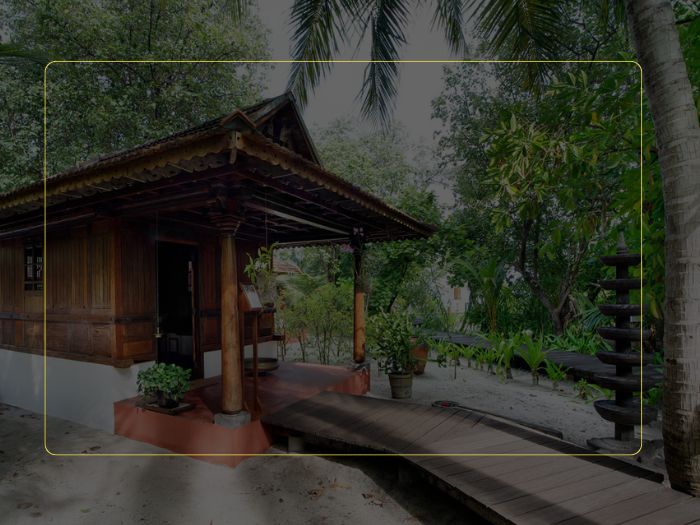
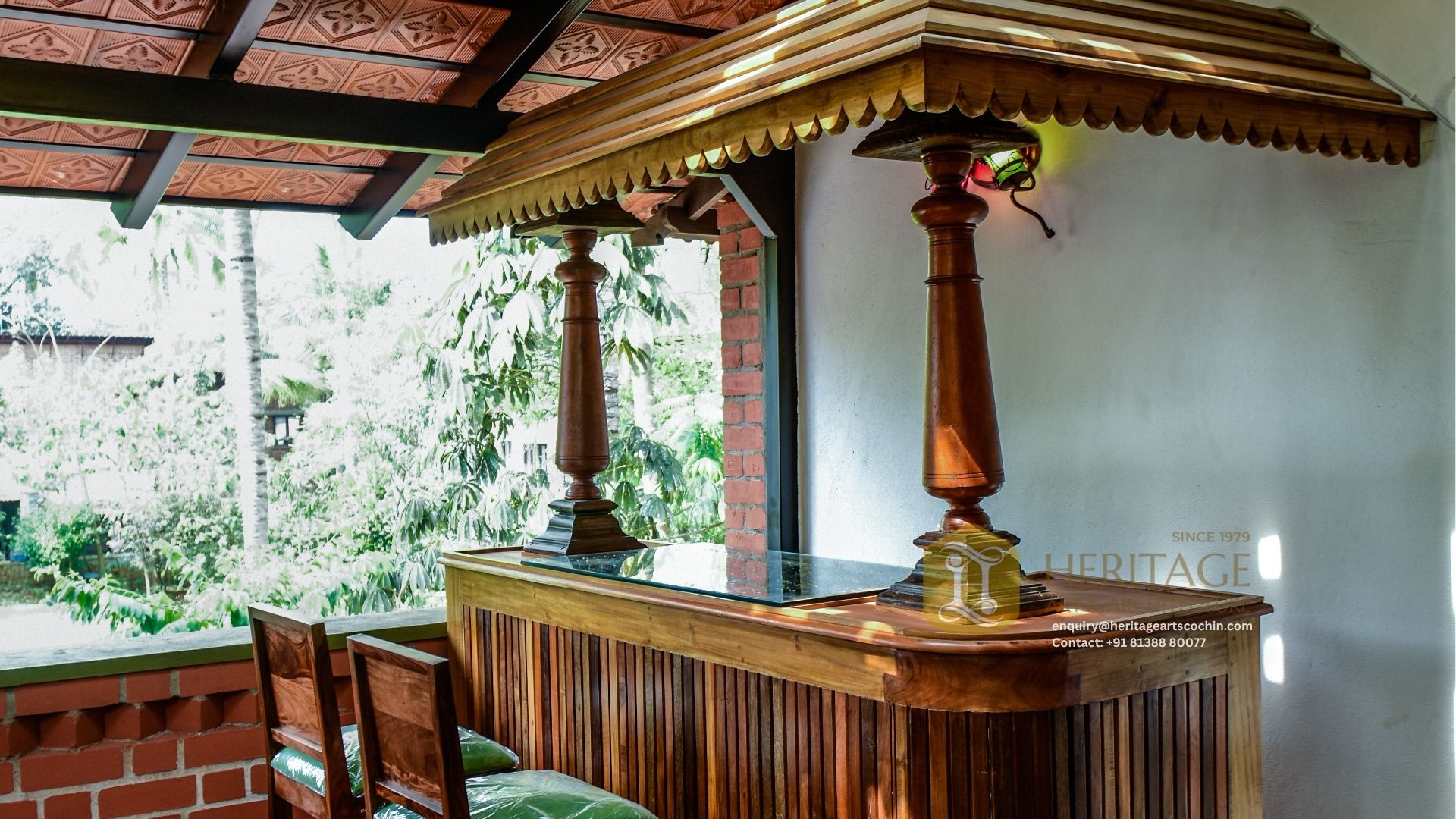
The bar on the veranda is built with the same formal vocabulary as the rest of the villa — turned wooden columns, a canopy derived from temple pavilion proportions — but the function shifts entirely. Bar-height stools replace chairs, patterned tiles carry the floor identity from interior to exterior, and the open-air setting means the canopy is doing real work against sun and rain rather than acting purely as a visual device.

The design doesn't treat leisure as a departure from the home's character; it extends the same material language into a more casual register.
Bedroom

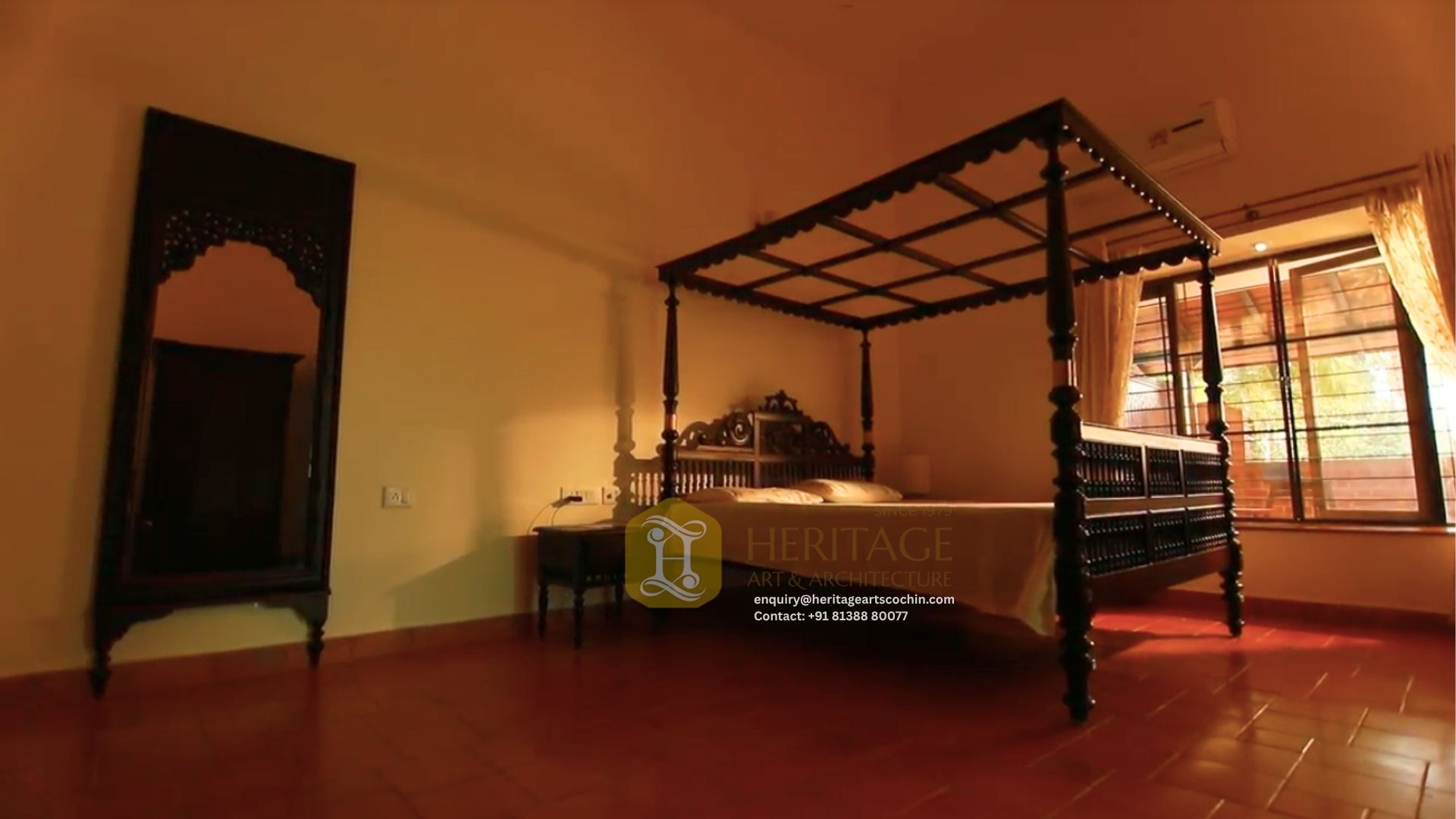
The four-poster bed is the dominant structure in the room. The scalloped canopy and carved headboard are not decorative choices made independently — they echo the proportions and motifs used across the villa's woodwork, which is how the bedroom reads as part of the same home rather than a separate style exercise. Brass accents repeat the hardware language seen in the dining bench and mandap.

Terracotta floors anchor the warmth of dark wood above without competing with it. White linen on the bed is the only neutral in the room, and it works because everything around it is already resolved.
Contact Us

for Traditional Interior And Furniture Projects

Name

Shopping Cart0

Cart

Shopping Cart0

Cart