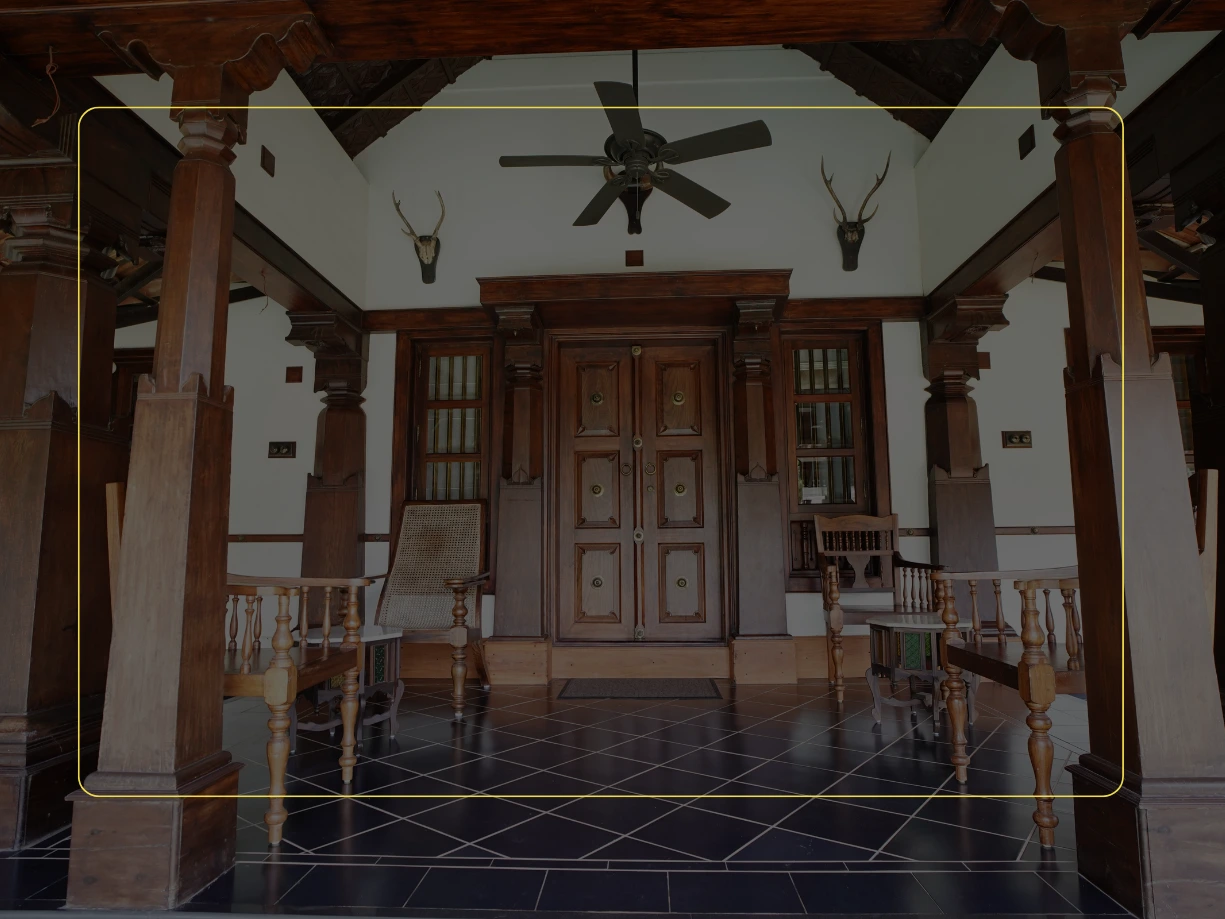
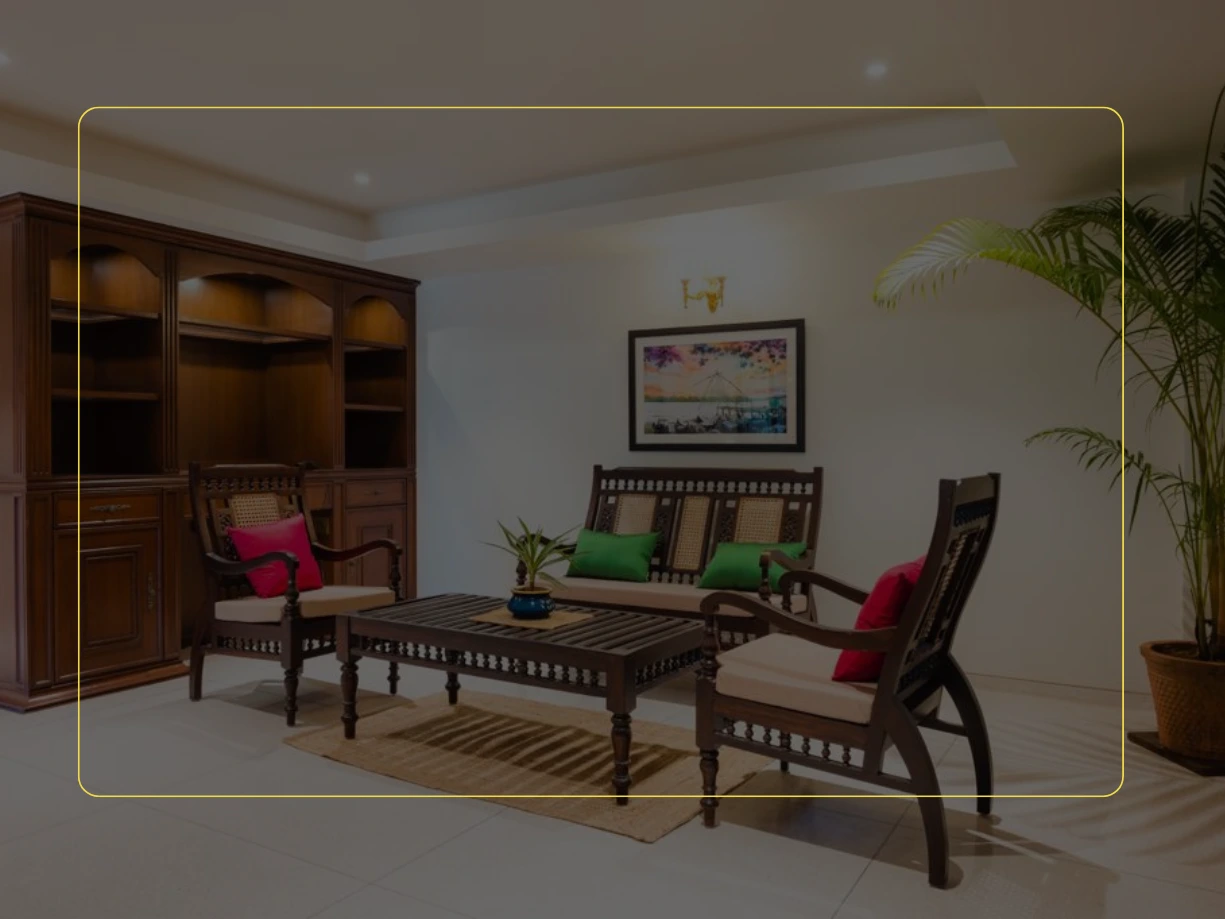
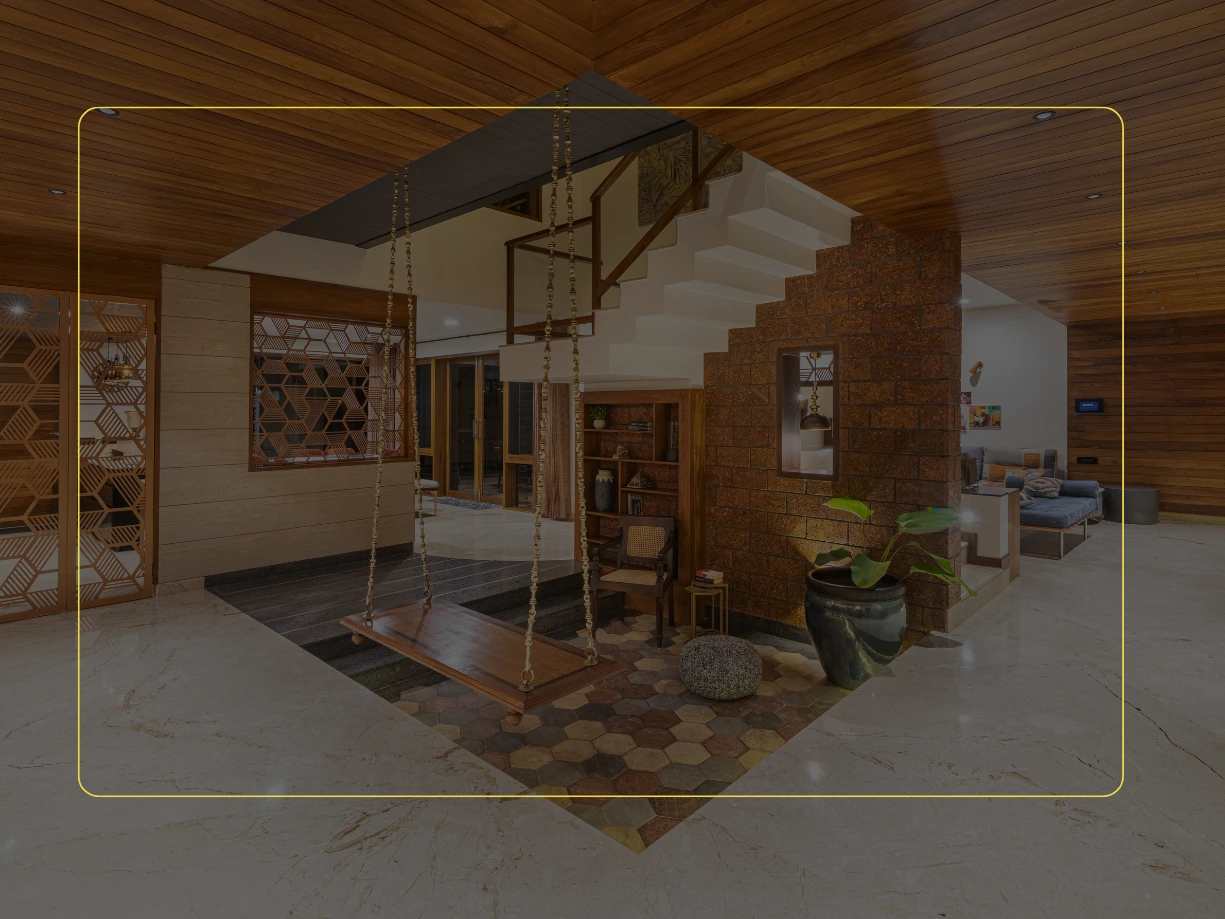
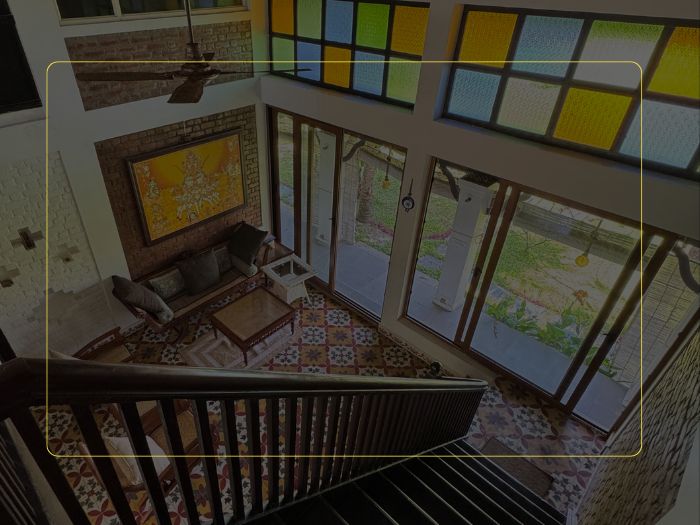
Saaranga House is a full apartment interior in Kerala where the material choices were made before the colour palette, before the furniture plan, before anything decorative entered the conversation. Laterite stone on the foyer wall. Hand-carved teak for the pooja mandap. Exposed brick in the kitchen. Floral relief ceilings.
Each decision came from a specific tradition. The project’s task was to make them cohabit in a contemporary floor plan without flattening any of them. The design’s coherence comes from specificity, not from a unifying style. Each material is handled on its own terms. Together they produce a home that is particular to its owners, its craftsmen, and its place.
The laterite is structural in its presence. The carved mandap sits at furniture scale but reads as architecture. The ceilings carry ornamental work that belongs to a building tradition older than the apartment typology it now inhabits.
Expert Craft
Premium Wood
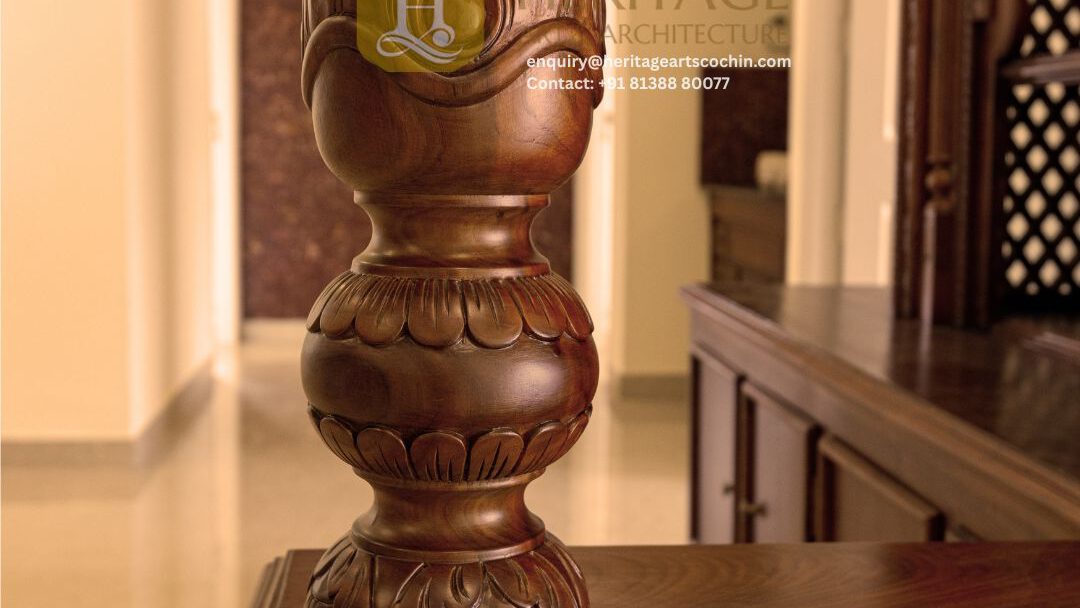
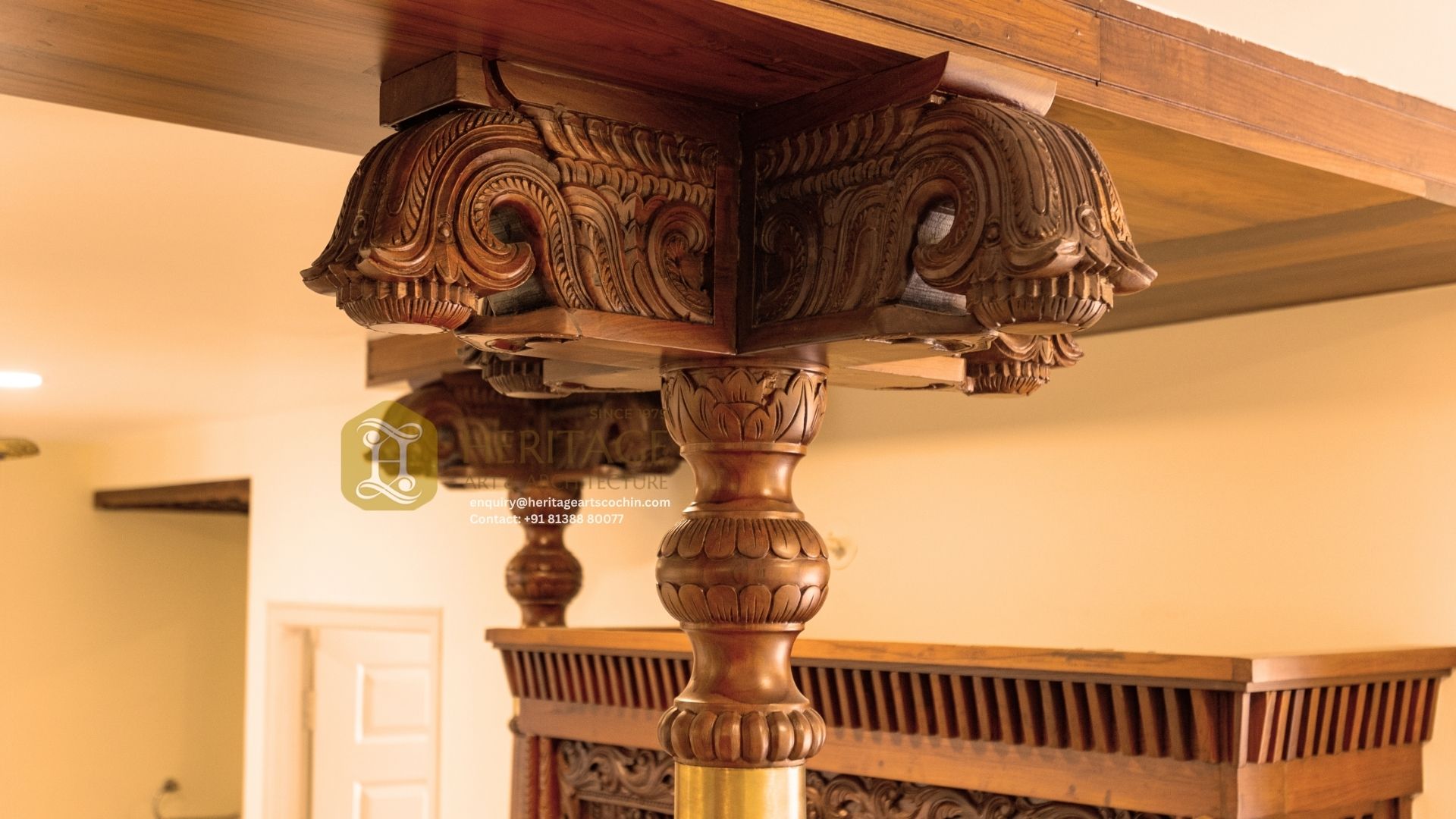
Carved Pillars
Entry Foyer
Laterite and the Weight of First Contact
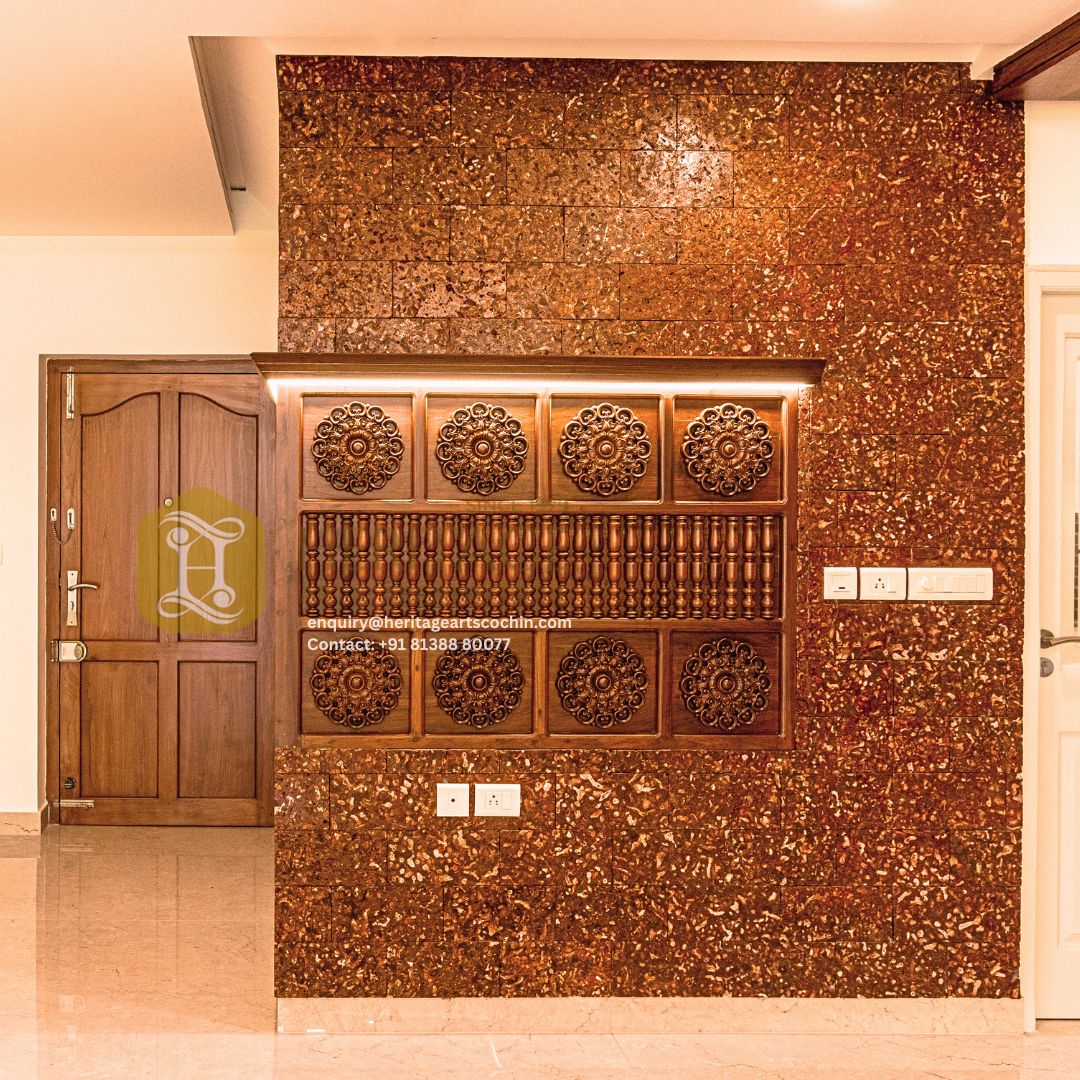
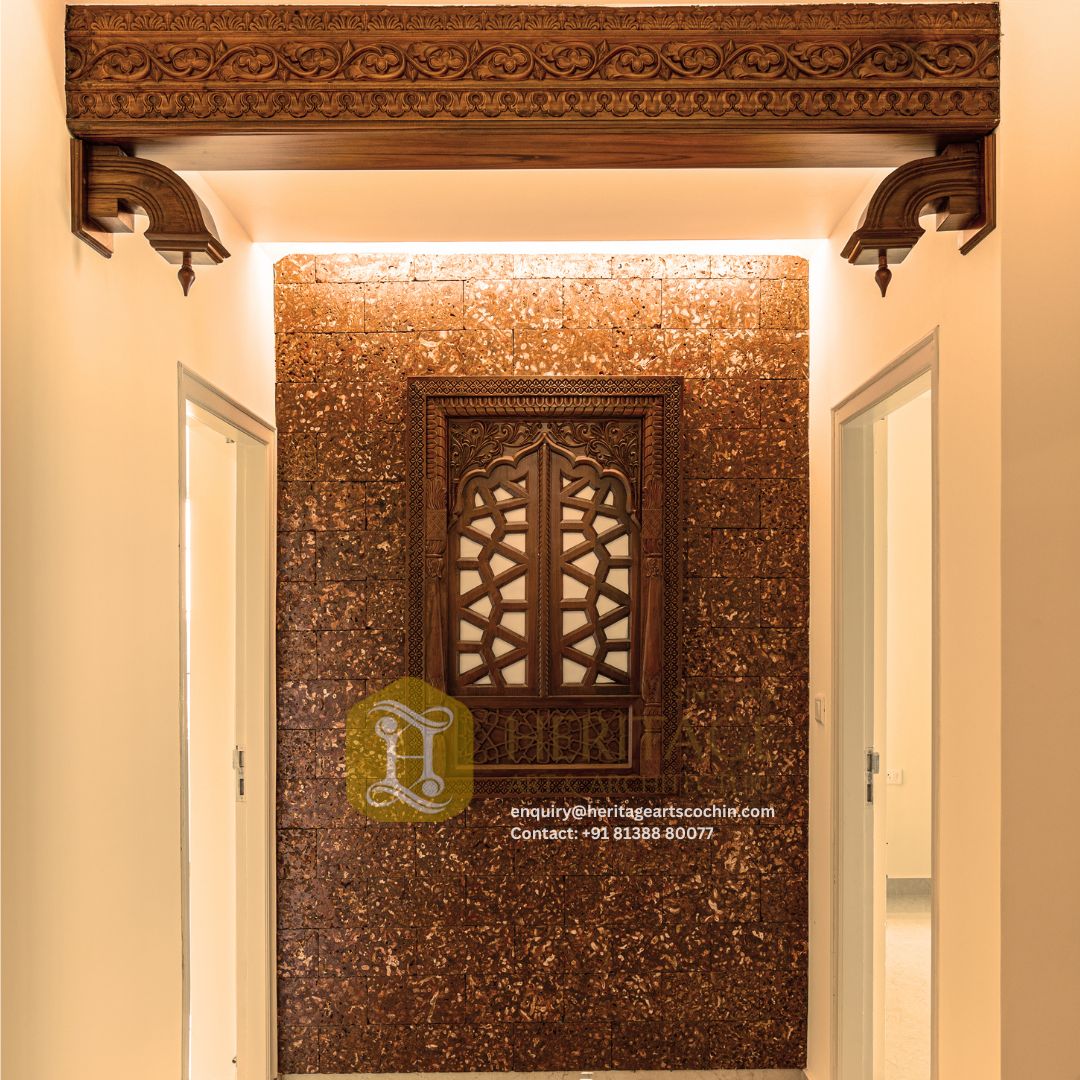
The foyer wall is laterite — the same iron-rich stone used in old Malabar plinths and fort walls, here taken vertical and interior. It is coarse-surfaced and dense in colour, running floor to near-ceiling without interruption.
Set into it is a recessed wooden panel: hand-carved floral medallions in two registers, separated by a row of turned spindles, with cove lighting running along the top edge. The carving sits forward from the laterite surface, so the shadow lines shift across the day.
This is the first thing a visitor encounters. The material does all the grounding work.
The Kitchen
Precision and the Unfinished Surface
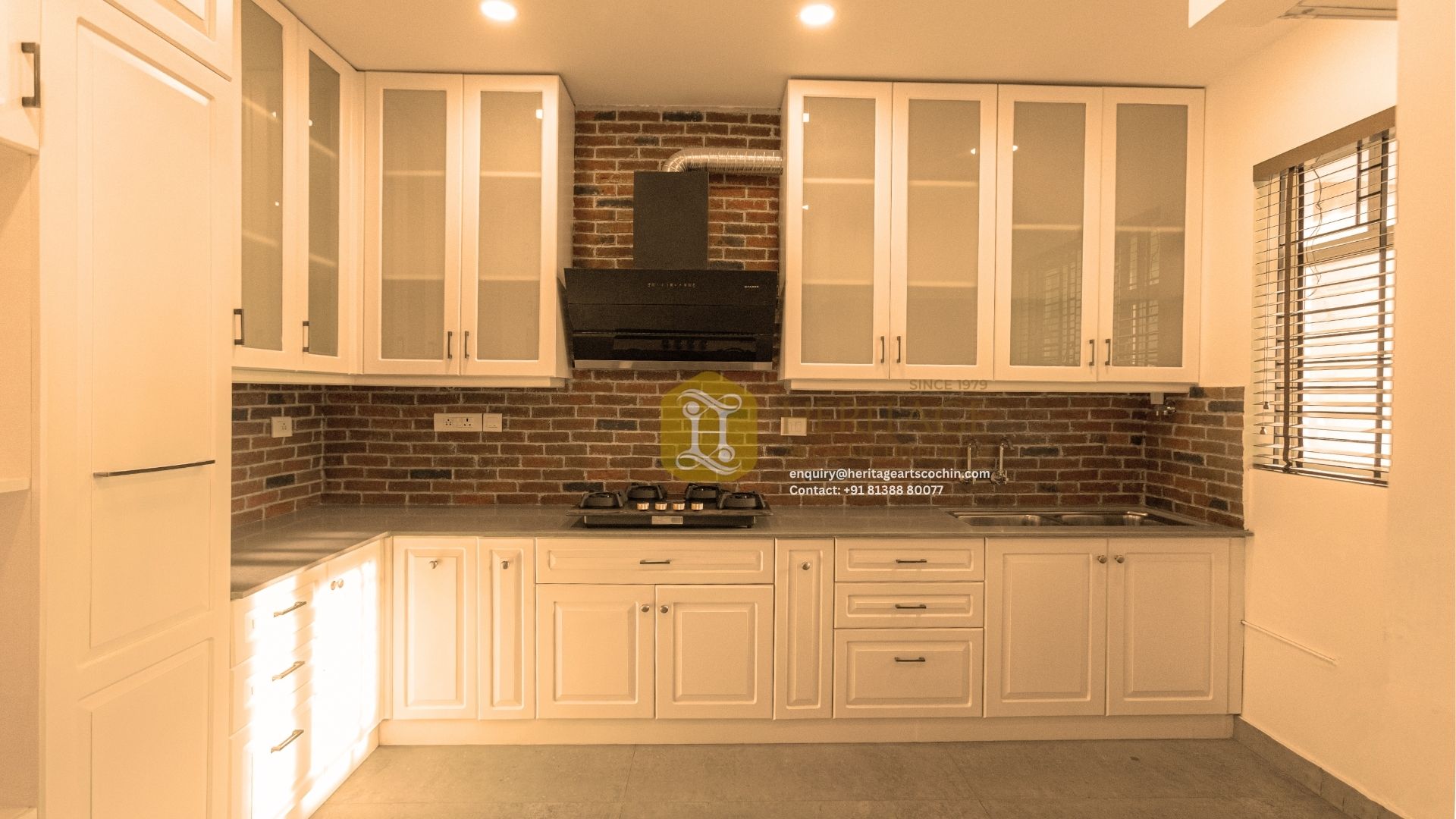
White shaker-profile cabinetry on two walls, grey granite counter, matte black hardware throughout. On the cooking wall, the backsplash is exposed red brick — laid in standard bond, unplastered, with recessed jointing. Upper cabinets use frosted glass panels with internal lighting.
The pairing of painted cabinetry and raw brick is not a contrast for effect. The brick is old-building material; the cabinetry is precision joinery. In a kitchen that functions daily, both need to hold up on their own terms.
The project's coherence comes from specificity, and not from a unifying style. Each material is handled on its own terms. Together they produce a home that is particular to its owners, its craftsmen, and its place.
The Pooja Mandap
Teak, Hand-Carved
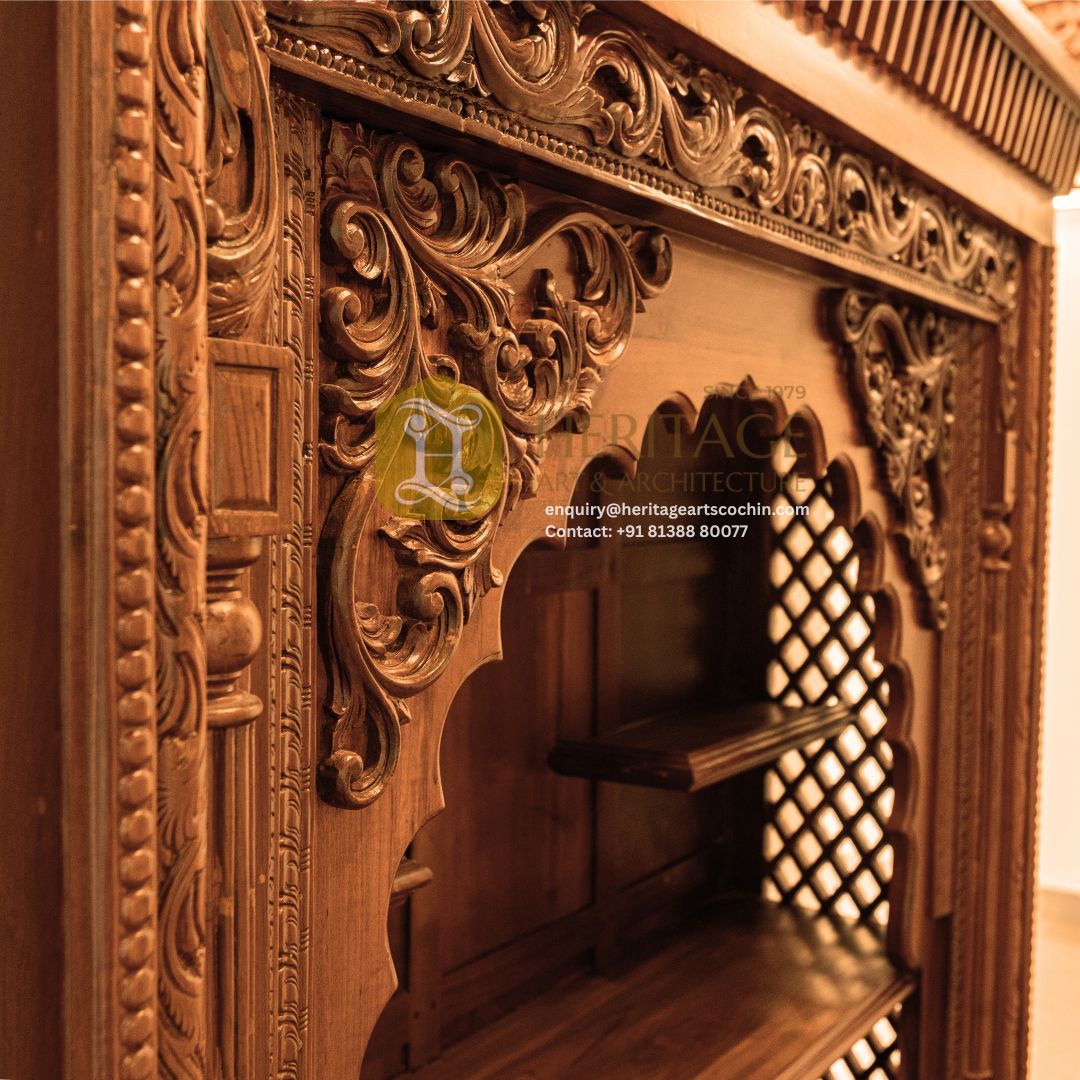
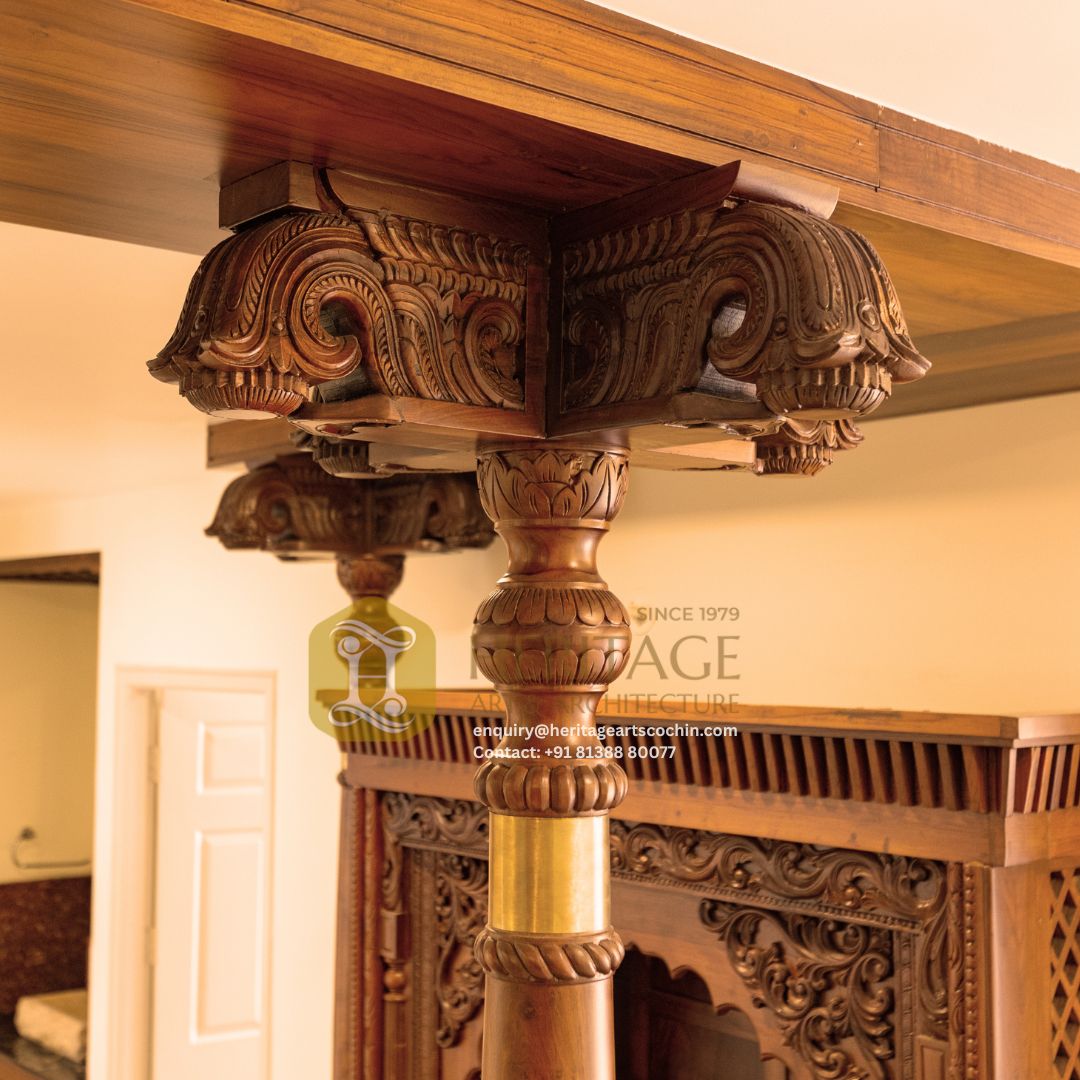
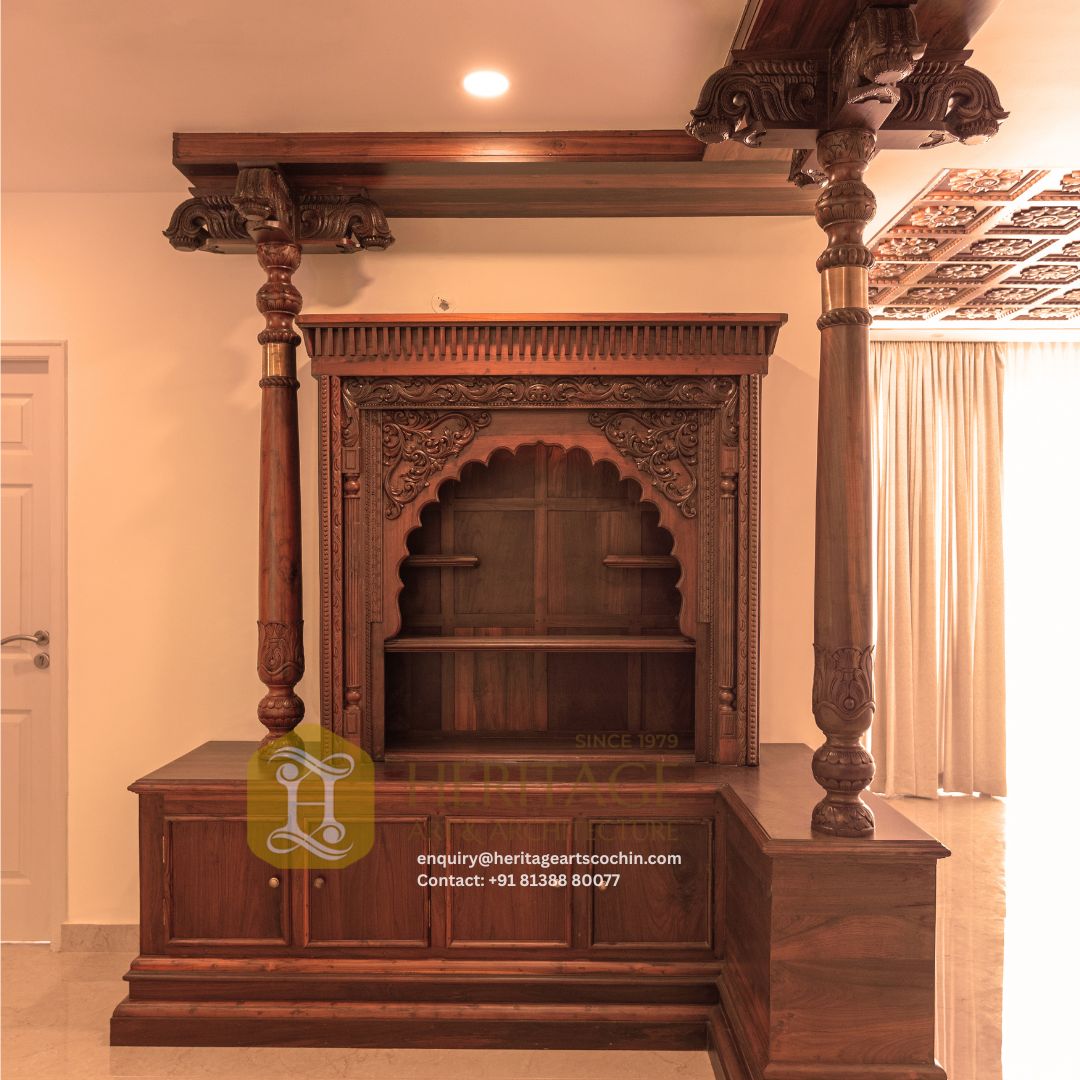
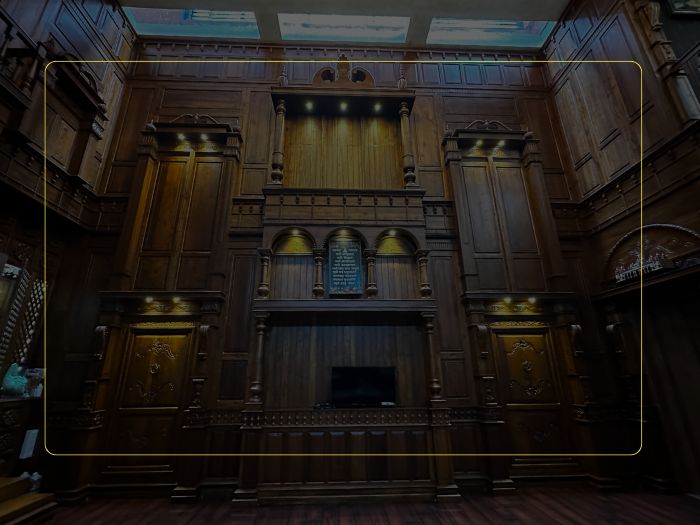
The mandap is carved teak, built over several weeks by craftsmen from Kerala’s temple woodwork lineage.
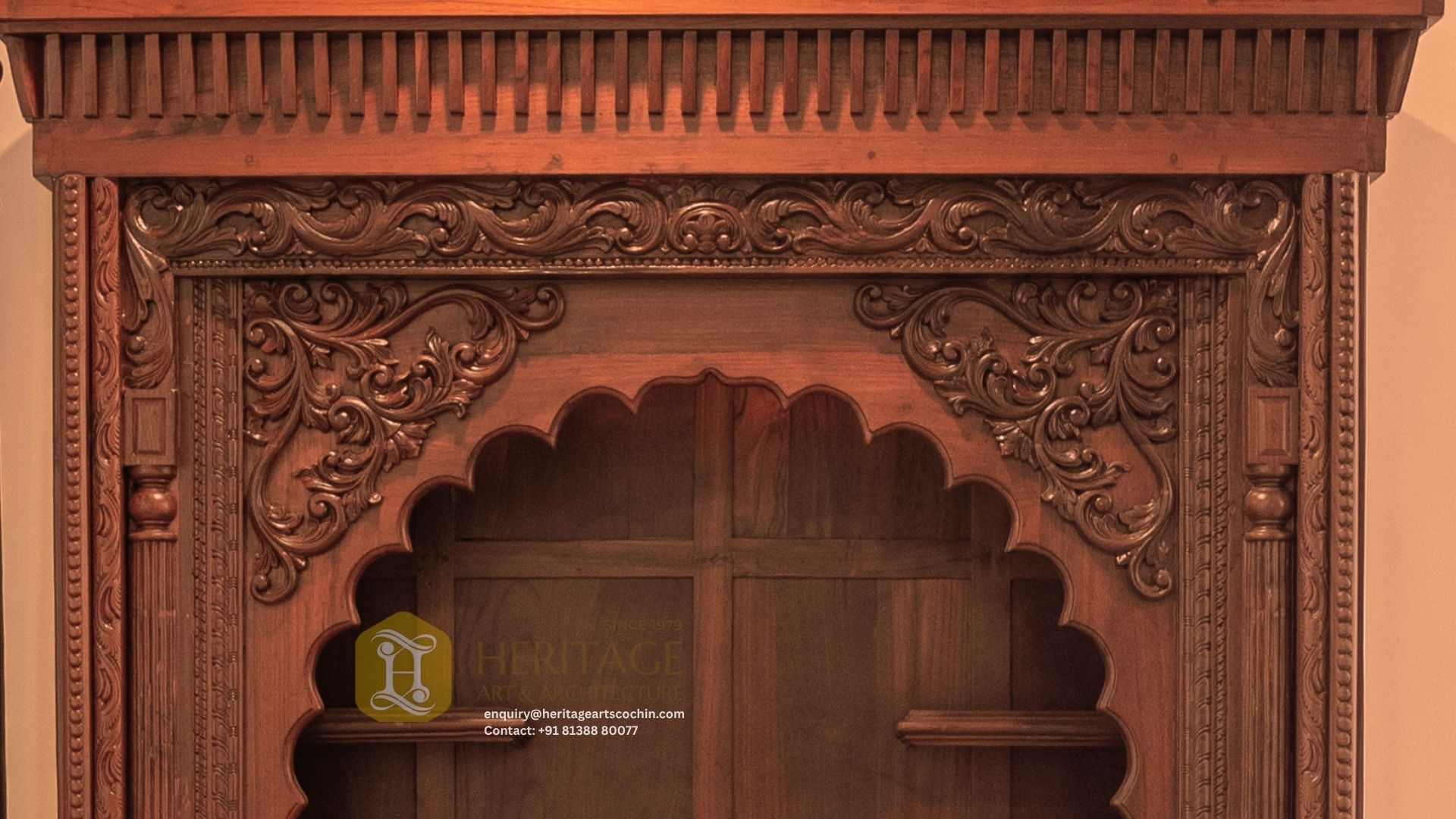
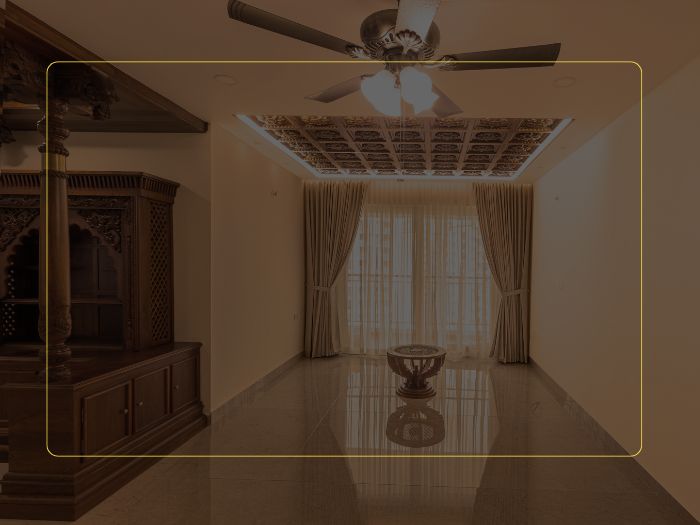
The structure has a dentil-moulded cornice at the crown. Below it, acanthus-scroll and floral relief carving runs the full frame width, framing a cusped multi-foil arch at the niche. Flanking columns carry lotus-base finials, rope-twist shafts, and foliate capitals. The niche interior uses plain-panel shelving so nothing competes with the carved frame.
The carving is load-bearing in an aesthetic sense — remove it and the mandap has no structure left. It is also the kind of work that cannot be accelerated. The detail count in the acanthus scrolls alone represents hours of chisel work.
Ceilings
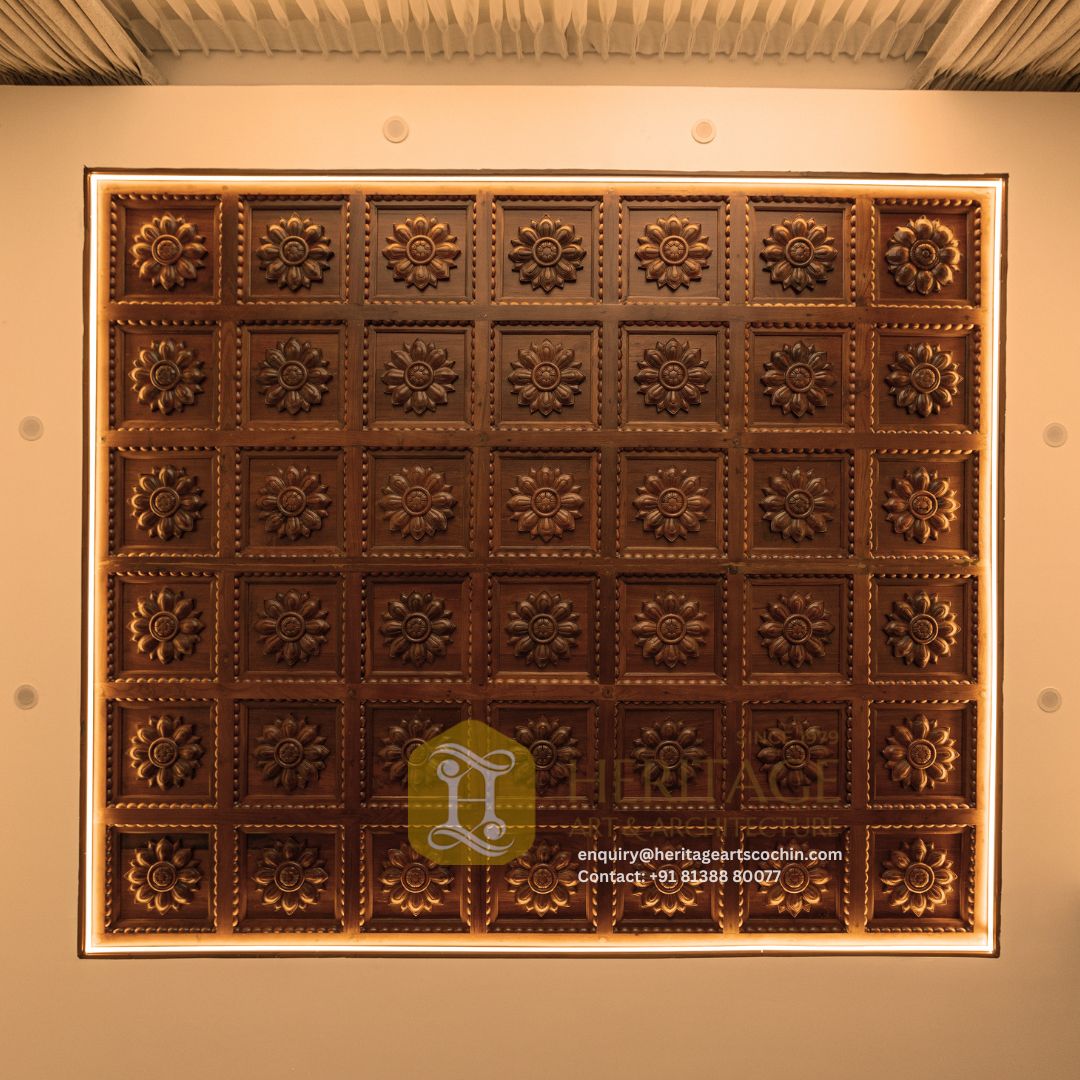
Floral Relief and Layered Plasterwork
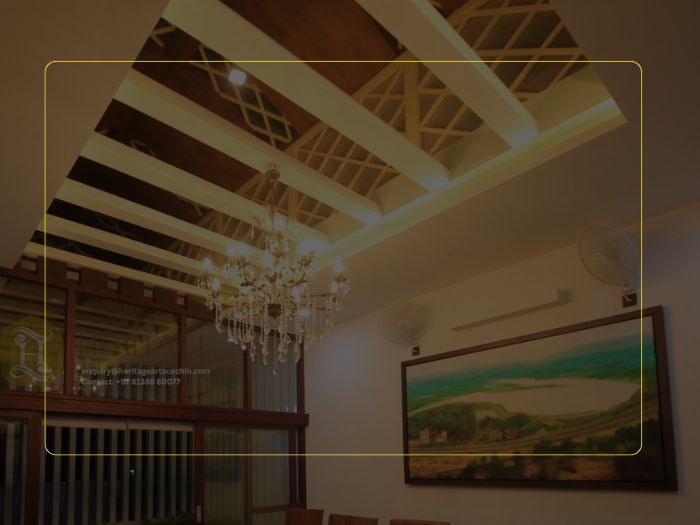
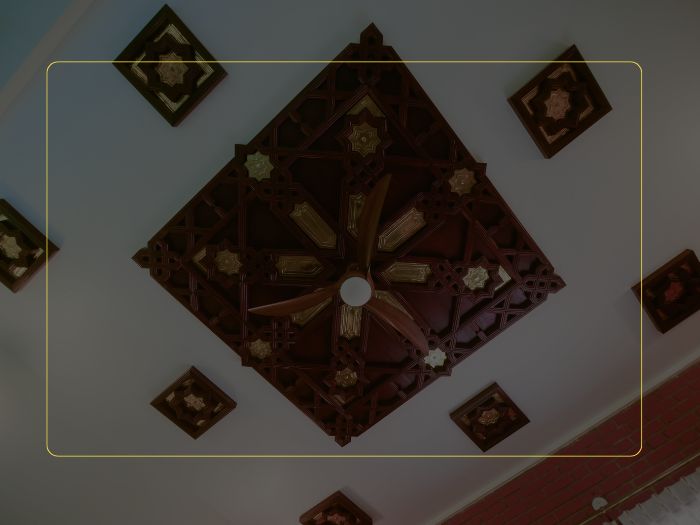
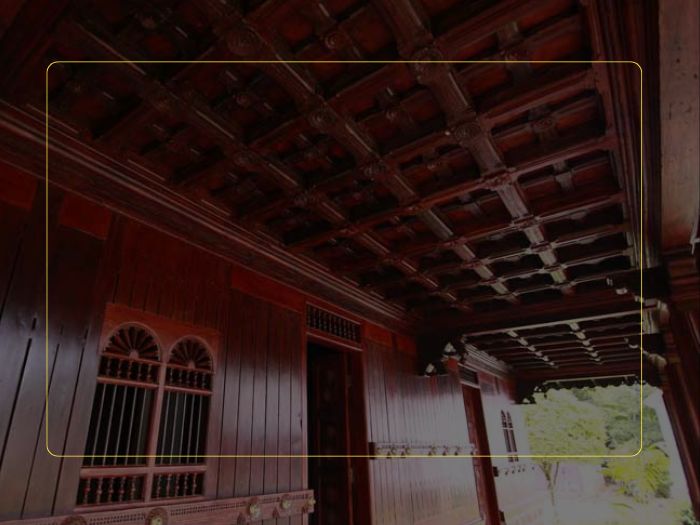
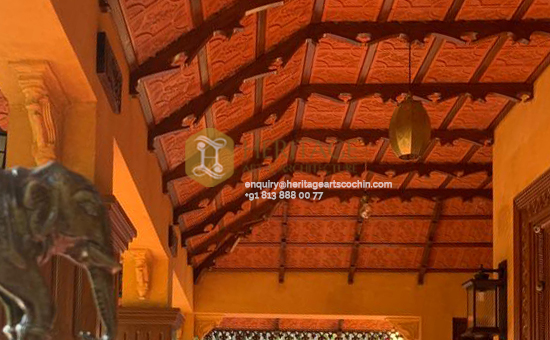
The ceiling plane here is not neutral. It is treated as a fifth surface, consistent with how Kerala’s traditional naalukettus handled interior overhead space — not left plain, not over-ornamented, but given deliberate pattern that registers only when you pause long enough to look up.
The transition between ceiling zones follows the room geometry rather than using dropped false-ceiling boxes as dividers. Where the living space meets the entry volume, the relief pattern scales down rather than cuts off.